
Advanced Anti-Termite Technologies Protecting Buildings Worldwide
Advanced Anti-Termite Technologies Protecting Buildings Worldwide
1/31/20268 min read
Introduction to Termite Infestations
Termites are small, social insects belonging to the order Isoptera and are highly known for their wood-consuming habits. They thrive in colonies and are found in various regions around the world. Among the numerous species, four types are particularly notorious for their destructive capabilities: subterranean termites, drywood termites, dampwood termites, and Formosan termites. Each type exhibits unique behavioral characteristics and preferences for different environments, making them a widespread threat to structures.
Subterranean termites, which dwell underground, are often the most damaging. These termites require moisture to survive, and they typically build tunnels to access wood and vegetation above ground. In contrast, drywood termites infest wooden structures and do not require contact with soil, often being found in attics and furniture. Dampwood termites, as their name suggests, favor wood that is unusually moist, typically arising from decaying trees or logs. Lastly, Formosan termites are considered one of the most aggressive species, commonly found in warmer climates and often devastating in their impact.
The behavior of termites involves foraging for food, which they primarily obtain from cellulose-containing materials such as wood, paper, and plant matter. This dietary preference can lead to significant damage when infestations occur within buildings. Termites are capable of consuming large quantities of wood over time, weakening structural components and posing safety risks. The damage caused by these pests is not only structural but can also lead to costly repairs and financial losses for homeowners and businesses alike.
Prompt detection and management of termite infestations are critical to mitigating their potential damage. Effective monitoring and early intervention strategies can help prevent extensive harm to properties. Understanding the behavior, identification, and habitats of various termite species is essential for developing appropriate control measures.
The Evolution of Anti-Termite Technologies
Anti-termite technologies have significantly evolved over the decades to adapt to the increasing challenges posed by termites, which are notorious for damaging wooden structures and other cellulose-based materials. Traditional methods, primarily involving baiting systems and soil treatments with insecticides, laid the groundwork for pest management in the past. These approaches, while somewhat effective, often required repeated applications and constant monitoring.
In the early 20th century, pest control primarily relied on the application of chemical treatments directly to affected areas. Workers would excavate around buildings to apply soil barriers of insecticides, providing limited protection against termites. During this era, the understanding of termite biology and behavior was scarce, resulting in a trial-and-error approach to pest management.
With advancements in entomology and material sciences, the 1980s saw the introduction of more sophisticated methods, including the development of liquid chemical barriers and baiting systems. These innovations leveraged the termites' social behavior, utilizing slow-acting toxins placed in bait stations to eradicate entire colonies. This era marked a shift in focus from merely treating infestations to proactive prevention.
In recent years, technology has revolutionized the field of pest control further. The integration of smart monitoring systems, which use sensors and real-time data to track termite activity, allows for more precise interventions. Furthermore, research into biopesticides and eco-friendly solutions has gained momentum, prioritizing safety for humans and the environment while maintaining effectiveness against termites. As a result, contemporary anti-termite technologies not only provide better protection but also seek to minimize ecological footprints.
Thus, the evolution of anti-termite technologies reflects a continuous journey of innovation, showcasing the enhancement of protection strategies to confront the persistent threat posed by these destructive pests.
Innovative Chemical Treatments for Termite Control
Termite infestations present significant challenges, leading to extensive damage to structures and considerable economic loss. Innovative chemical treatments have emerged over the years to effectively combat these pests, enhancing the protection of buildings worldwide. Various advanced chemical formulations have been developed, each engineered to disrupt the biology and behavior of termites.
One of the most notable advancements is the use of non-repellent insecticides. Unlike traditional repellents, which cause termites to avoid treated areas, non-repellents remain undetected, allowing termites to inadvertently consume the toxic particles and transfer them back to their colonies. This indirect approach not only aids in eradicating individual pests but can also lead to the eventual elimination of entire colonies. Products containing fipronil and imidacloprid fall into this category, showcasing high efficacy rates in both treatment and prevention.
Moreover, advancements have led to the development of baiting systems, which utilize slow-acting toxins. These formulations allow for gradual exposure, ensuring that termites are not only eliminated but also prevented from developing resistance. By luring termites to bait stations filled with cellulose materials embedded with these chemicals, the pest's foraging behavior can be disrupted, effectively controlling populations over time.
While these chemical treatments are effective, their environmental impact warrants careful consideration. Leading manufacturers strive to create formulations that are less harmful to non-target organisms and the ecosystem. Additionally, thorough safety assessments are conducted to ensure the well-being of residents and users, emphasizing the importance of adhering to application guidelines and best practices during treatment.
In conclusion, the evolution of innovative chemical treatments for termite control represents a crucial development in pest management strategies. Through their effective and environmentally responsible application, these solutions play an essential role in protecting buildings from the destructiveness of termites.
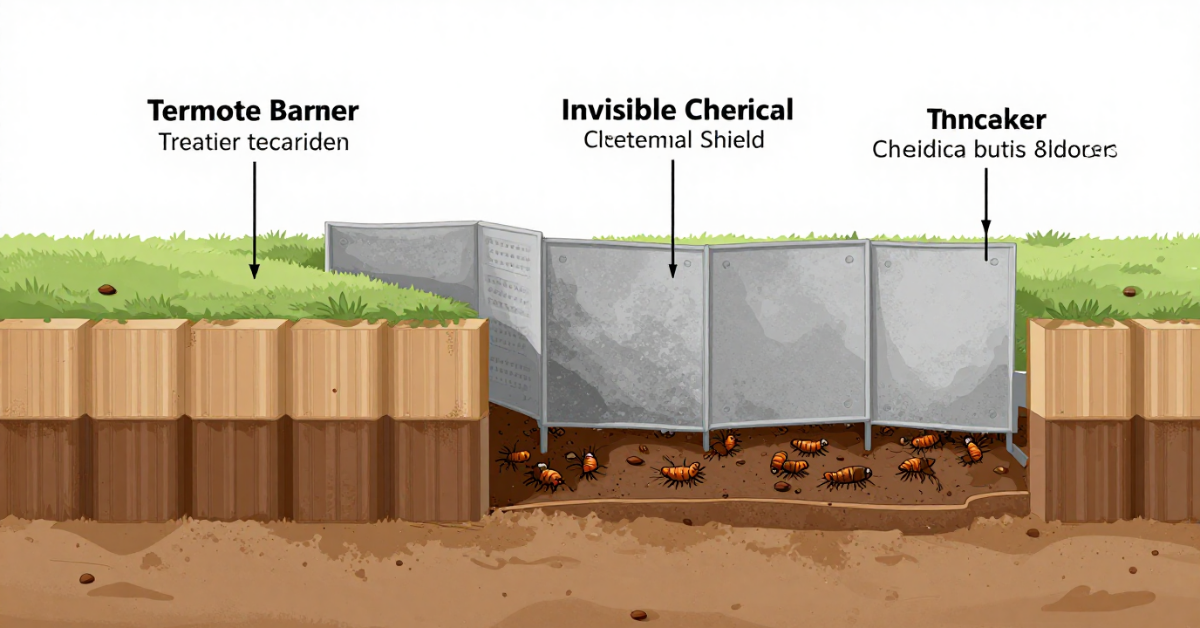
Physical barriers have emerged as a fundamental strategy in the ongoing fight against termite infestations. Designed to impede termite access, these barriers can effectively protect buildings from destructive species. Generally, there are two principal types of physical barriers: the chemical barriers and the non-chemical, structural barriers. The latter is particularly noteworthy as it includes materials specifically engineered to withstand termite activity.
Common materials used in the construction of physical barriers include stainless steel mesh, concrete, and other durable substances that offer resistance against termite penetration. Stainless steel mesh, for example, is crafted with dense fibers that discourage termites from burrowing through them. Other solutions like reinforced concrete slabs provide a solid foundation that is difficult for termites to breach.
The installation process of these barriers often entails careful planning and execution to ensure effectiveness. Typically, barriers must be installed prior to the construction of a building for optimal results. This involves placing the physical barriers beneath foundations, in the wall cavities, and around any potential entry points. Additionally, areas susceptible to moisture should be monitored, as damp conditions can attract termites.
Once in place, physical barriers offer long-term protection and can significantly reduce the likelihood of termite infestations, thus enhancing the overall sustainability of building structures. Unlike chemical treatments that may require regular reapplication, these robust barriers provide a durable line of defense without the need for continuous intervention. Ultimately, employing physical barriers in termite prevention can protect structural integrity and reduce maintenance costs associated with termite damage.
The Use of Smart Technology in Termite Detection
In recent years, the integration of smart technology in termite detection systems has revolutionized how property owners manage pest control. Traditional methods of termite detection, often reliant on visual inspections and chemical treatments, have been significantly enhanced by innovative tools and devices that utilize advanced technologies. These modern solutions not only offer increased efficiency but also mitigate the potential for severe damage caused by termite infestations.
One of the leading examples of smart technology in this domain is the use of acoustic sensors. These devices are capable of detecting the sounds produced by termites as they tunnel through wood or wooden structures. By employing sophisticated algorithms, acoustic sensors can differentiate between common household noises and the distinct sounds indicative of termite activity. This feature allows for early identification of infestations, ultimately leading to more effective intervention strategies.
Another noteworthy tool is the moisture meter, which helps identify areas of increased moisture content that may attract termites. These handheld devices can easily pinpoint locations within a structure that are more susceptible to infestations. By continuously monitoring moisture levels, property owners can proactively address potential problems before they escalate into significant damage.
Moreover, smart surveillance systems equipped with motion detection technology can monitor regions prone to termite activity. By integrating these systems with mobile applications, property owners receive real-time alerts regarding any unusual activity, enabling them to act swiftly and decisively. This level of responsiveness minimizes the need for extensive repairs and costly treatments associated with advanced termite infestations.
Overall, the adoption of smart technology in termite detection reflects a promising shift towards more proactive and efficient pest management practices. As these technologies evolve, they hold the potential to challenge traditional pest control methods, providing a reliable line of defense against the pervasive threat of termite infestations.
Global Trends in Termite Management Practices
The increasing awareness of the damaging effects termites can have on structures has prompted various regions across the globe to adopt advanced anti-termite technologies. Countries such as Australia, the United States, and Japan have emerged as leaders in termite management practices, incorporating a blend of innovative strategies and technological advancements to combat termite infestations effectively.
In Australia, one notable example is the use of reticulation systems for chemical treatment of the soil around buildings. This method ensures uniform distribution of insecticides, creating a continuous barrier against termite invasion. Additionally, the Australian termite management standards emphasize the need for regular inspections and proactive maintenance, which has proven highly effective in preventing infestations in various residential and commercial properties.
Meanwhile, the United States has seen a surge in the use of baiting systems that monitor termite activity and eliminate colonies. These advanced baiting systems utilize a slow-acting insecticide that allows termites to carry the poison back to their nests, effectively targeting the entire colony. Case studies in regions like the Southeast have shown a significant reduction in termite damage following the implementation of these targeted strategies.
In Japan, cultural practices play an essential role in termite management, where natural materials, such as wood and soil, are often treated with organic compounds that deter termites. Innovative building techniques, such as elevated structures and the use of stainless steel for critical areas, are increasingly popular as preventative measures. Local success stories highlight how communities have collaborated on pest control initiatives, leading to a sustainable decline in termite-related damage.
As global awareness grows, combining traditional methods with modern technology offers a comprehensive approach to termite management. This collaboration across regions illustrates how knowledge sharing can enhance the understanding of effective strategies, leading to more successful outcomes in termite control and prevention worldwide.
Future Directions in Anti-Termite Technologies
As the global construction landscape evolves, the demand for effective termite management solutions is becoming increasingly urgent. Ongoing research in anti-termite technologies is focusing on developing innovative methods that enhance protection against these destructive pests. One promising area of exploration involves the use of **biocontrol agents**, which incorporate natural predators or pathogens of termites to minimize their populations without resorting to chemical pesticides. This approach not only preserves ecological balance but also promotes sustainable practices vital for both urban and rural environments.
Another exciting frontier in termite management is the advancement of **smart materials** and **nanotechnology**. Researchers are investigating the potential of smart polymers that respond to environmental cues, such as humidity or temperature, which may indicate termite activity. These materials could change their properties in response to threats, effectively providing a proactive barrier against infestations. The integration of nanotechnology into termite control could lead to the creation of nanoparticles that specifically target termite physiology, offering a method of pest management that is not only efficient but also less harmful to the surrounding ecosystem.
Moreover, the importance of **renewable resources** cannot be underestimated in the furtherance of anti-termite technologies. By utilizing materials derived from renewable sources, the construction industry can decrease its reliance on traditional, often environmentally harmful, treatments. The development of wood treatments that are environmentally friendly and long-lasting focuses on creating a sustainable infrastructure resistant to termite damage.
The convergence of these advanced methodologies signifies a paradigm shift towards an integrated approach in termite management. It is essential for stakeholders across the construction and pest management sectors to stay informed about these innovative techniques. By embracing research and committing to sustainable solutions, the future of anti-termite technologies can significantly enhance the integrity and longevity of buildings worldwide.
Address:
264/5, Kamal Soroni Road, Mirpur, Dhaka-1216
Contact
Your Quaries on pest control askings
pestexterminatorbd@gmail.com
+8801642008383 +8801988300003, 01723057746
© 2025. All rights reserved. to Urban Pest Control Pvt. Ltd. this site is powered by Our Own IT Team