
Air Pollution and Climate Change: The Hidden Connection Explained
2/24/20268 min read

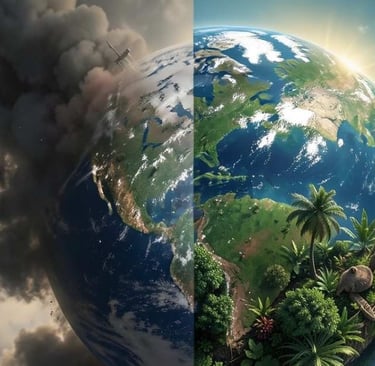
Defining Air Pollution and Climate Change
Air pollution refers to the presence of harmful substances in the atmosphere, which may consist of various pollutants originating from different sources. The primary pollutants include particulate matter (PM), nitrogen oxides (NOx), sulfur dioxide (SO2), carbon monoxide (CO), and volatile organic compounds (VOCs). These elements can have severe health impacts on humans, animals, and ecosystems, leading to respiratory diseases, cardiovascular complications, and premature mortality. Common sources of air pollution include vehicular emissions, industrial discharges, and agricultural practices, all of which contribute to deteriorating air quality.
Climate change, on the other hand, is driven by long-term alterations in temperature and weather patterns largely attributed to increased concentrations of greenhouse gases (GHGs) in the atmosphere. These gases, such as carbon dioxide (CO2) and methane (CH4), are produced through various human activities, including fossil fuel combustion, deforestation, and industrial processes. The implications of climate change are vast, affecting agricultural productivity, increasing the frequency of extreme weather events, and altering ecosystems. Additionally, shifts in climate ultimately lead to disruptions in air quality.
While air pollution and climate change are distinct issues, they are inextricably linked through human activities impacting the environment. For instance, the burning of fossil fuels not only increases greenhouse gas emissions, contributing to climate change but also releases multiple air pollutants harmful to human health. Moreover, the rising global temperatures associated with climate change can exacerbate the formation of ground-level ozone, a potent air pollutant. Consequently, addressing air pollution can have a dual benefit—it will not only improve air quality but also mitigate the adverse effects of climate change.
The Role of Fossil Fuels in Environmental Degradation
The combustion of fossil fuels, including coal, oil, and natural gas, is one of the primary drivers of both air pollution and climate change. When fossil fuels are burned for energy, they release significant quantities of harmful pollutants, including particulate matter, sulfur dioxide, nitrogen oxides, and volatile organic compounds. These emissions contribute to deteriorating air quality, which poses serious health risks for humans and ecosystems alike. Inhalation of polluted air can lead to respiratory illnesses, cardiovascular problems, and premature mortality.
Furthermore, the burning of fossil fuels is a major source of greenhouse gas emissions—predominantly carbon dioxide (CO2)—which trap heat in the atmosphere and contribute to global warming. The Intergovernmental Panel on Climate Change (IPCC) has noted that a substantial portion of the increase in atmospheric CO2 levels since the Industrial Revolution can be attributed to fossil fuel use. This rise in temperature has far-reaching implications for climate patterns, leading to more frequent and severe weather events, rising sea levels, and shifting ecosystems.
Data from recent years indicate an alarming trend: despite the growing awareness of climate change and the push for cleaner energy, fossil fuel consumption remains high globally, driven largely by industrial activities, transportation, and energy production. Transitioning to renewable energy sources, such as solar, wind, and hydroelectric power, has emerged as a viable solution to mitigate the adverse effects of fossil fuel consumption. By harnessing these sustainable energy alternatives, we can reduce greenhouse gas emissions, improve air quality, and promote overall environmental health.
The nexus of fossil fuel consumption and environmental degradation underscores the urgent need for policy changes and innovation in energy technologies. Accelerating the transition to cleaner energy sources is critical not only for combating climate change but also for protecting public health and ensuring a sustainable future.
Methane (CH₄) and carbon dioxide (CO₂) are among the most significant greenhouse gases contributing to climate change. While both have a profound impact on the planet’s warming, they differ markedly in their sources, effects, and persistence in the atmosphere.
Methane is produced through a variety of natural and human activities, including agriculture, fossil fuel extraction, and waste management. Its global warming potential is over 25 times greater than that of carbon dioxide over a 100-year period. This means that on a per molecule basis, methane is significantly more effective at trapping heat in the atmosphere. However, methane has a shorter atmospheric lifetime of approximately 12 years, which is substantially less than that of carbon dioxide, which can remain in the atmosphere for hundreds to thousands of years.
Carbon dioxide, on the other hand, is mainly emitted through the burning of fossil fuels, deforestation, and various industrial processes. It is the most prevalent greenhouse gas and accounts for approximately 76% of all greenhouse gas emissions in the United States. The long-term effects of CO₂ are particularly concerning, as its longevity means that it contributes to a stable, ongoing shift in climate patterns, making mitigation efforts complex and essential.
Recent studies show significant trends in the levels of both CH₄ and CO₂. According to the National Oceanic and Atmospheric Administration (NOAA), atmospheric CO₂ concentrations surpassed 410 parts per million in 2020, exacerbating concerns over global temperatures rising above 1.5 degrees Celsius. Meanwhile, methane levels have also increased, primarily driven by agricultural practices and fossil fuel production. Addressing emissions of both gases is crucial for combatting climate change and requires targeted policies aimed at reducing emissions from both agricultural and industrial sources.
The Black Carbon Effect: Understanding Its Impact
Black carbon is a significant yet often overlooked component of air pollution, primarily generated through incomplete combustion of fossil fuels and biomass. It forms as a result of burning processes in vehicles, industrial activity, and household heating. Unlike carbon dioxide, black carbon consists of fine particulate matter (PM2.5) that can penetrate deep into the lungs and even enter the bloodstream, posing severe health risks.
The health effects associated with black carbon exposure are profound. Studies have shown that inhalation of black carbon can lead to respiratory and cardiovascular problems, exacerbating conditions such as asthma and chronic obstructive pulmonary disease (COPD). Furthermore, black carbon has been linked to premature mortality due to its toxic nature, making its monitoring and regulation crucial for public health.
In addition to its health implications, black carbon plays a significant role in climate change. When suspended in the atmosphere, it absorbs sunlight and converts it into heat, contributing to atmospheric warming. Its global warming potential is estimated to be thousands of times greater than carbon dioxide when considering its short-term effects. Black carbon particles, when deposited on snow and ice surfaces, reduce their albedo, leading to increased absorption of sunlight and accelerated melting. This phenomenon not only affects local ecosystems but also has broader implications for climate systems worldwide.
Moreover, the relationship between black carbon and other pollutants complicates climate and air quality models. Addressing black carbon emissions could be essential in mitigating short-lived climate forcing agents and improving air quality simultaneously. Thus, understanding the black carbon effect is crucial for devising effective strategies to combat both climate change and its associated health risks.
The Acceleration of Global Warming
Global warming is an urgent issue that is influenced by numerous factors, particularly human activities. One significant contributor is the burning of fossil fuels, which releases considerable amounts of carbon dioxide (CO2) and other greenhouse gases into the atmosphere. These emissions trap heat, leading to an enhanced greenhouse effect that accelerates global warming. Moreover, industrial processes, deforestation, and agricultural practices further exacerbate this situation by increasing greenhouse gas concentrations globally.
Climate feedback loops also play a critical role in intensifying the rate of warming. For instance, as global temperatures rise, polar ice caps and glaciers melt, reducing the Earth’s albedo effect—the reflection of solar energy back into space. This darkens the surface, leading to increased absorption of solar radiation and consequently, prompting further warming. Additionally, the melting permafrost releases stored methane, a potent greenhouse gas, which can accelerate temperature increases at an alarming rate.
Future projections from climate models underscore the severity of these factors. Data illustrates that if current trends continue—without significant intervention—global temperatures could rise by over 2 degrees Celsius by the end of the century. This temperature increase poses existential threats to ecosystems and human societies alike. Urgent action is necessary to mitigate these impacts through international cooperation and sustainable practices.
It is imperative to understand these dynamics, as they highlight the interconnectedness of human actions and climatic systems. Addressing air pollution and its links to climate change is crucial in efforts to slow down global warming, promote environmental health, and secure a sustainable future for all.
International Agreements: The Paris Agreement and Its Influence
The Paris Agreement, adopted in December 2015, represents a landmark international treaty designed to combat climate change and its associated impacts, including air pollution. One of its primary objectives is to limit global warming to well below 2 degrees Celsius above pre-industrial levels, with a target of restricting the increase to 1.5 degrees Celsius. By setting these ambitious goals, the agreement aims not only to mitigate climate change but also to address the pressing issue of air quality, as both phenomena are intricately linked.
The commitments made under the Paris Agreement involve nationally determined contributions (NDCs) from each participating country. These NDCs outline specific goals for greenhouse gas emissions reduction, promoting sustainable practices, and enhancing resilience to climate impacts. Importantly, these commitments reflect the unique circumstances and capabilities of each nation, thereby fostering a sense of ownership and accountability. However, the enforceability of these agreements remains a concern. The Global Stocktake mechanism, implemented every five years, encourages countries to enhance their efforts and ensure transparency but does not impose punitive measures for non-compliance.
Despite the encouraging framework set by the Paris Agreement, significant challenges persist in its implementation. Issues such as differing national interests, economic priorities, and political will can hinder collective progress. Moreover, the relationship between climate change and air pollution complicates efforts, as measures taken to tackle one issue can inadvertently impact the other. For instance, reducing fossil fuel emissions can lead to improvements in air quality, but incentivizing renewable energy also presents socioeconomic challenges that need to be addressed.
Global cooperation is essential in mitigating both climate change and air pollution. The success of the Paris Agreement hinges on the commitment to shared goals, mutual support among nations, and the integration of sustainable development practices. Through collaborative efforts, the international community can forge pathways to a healthier future, ultimately benefiting the planet and its inhabitants.
Aligning with Sustainable Development Goals
The interconnection between air pollution and climate change serves as a crucial focal point for the achievement of the United Nations Sustainable Development Goals (SDGs). Various SDGs are directly or indirectly influenced by air quality and climate stability, highlighting the need for an integrated approach to sustainable development. Goals such as Clean Air and Water (SDG 6), Sustainable Cities and Communities (SDG 11), Climate Action (SDG 13), and Life on Land (SDG 15) delineate the necessity for policies and practices that address both air pollution and climate change.
Reducing air pollution directly leads to enhanced public health outcomes, which is closely linked to the objective of good health and well-being (SDG 3). Additionally, clean air contributes to the sustainability of cities, encompassing plans for urban development that consider the impacts of pollution and climate change on community resilience.
Integrating climate action into these policies requires a systematic approach that acknowledges the synergies between mitigating climate change and reducing air pollution. Solutions, such as transitioning to clean energy, implementing stricter emission controls, and promoting sustainable transportation options, not only assist in achieving climate targets but also improve air quality. This dual benefit illustrates the interconnected nature of these challenges and emphasizes the importance of collaboration among key stakeholders, including governments, businesses, and civil society.
Moreover, linking air pollution reduction efforts with climate adaptation strategies can further enhance sustainable development outcomes. For instance, communities that actively engage in tree plantation initiatives can mitigate both air pollution and enhance urban greenery, contributing to climate resilience while aligning with environmental goals.
In this context, it is imperative that policymakers prioritize integrated actions that address the dual crises of air pollution and climate change. The achievement of the SDGs relies on a holistic understanding of these issues, urging a collective effort to create a sustainable future for generations to come.
Address:
264/5, Kamal Soroni Road, Mirpur, Dhaka-1216
Contact
Your Quaries on pest control askings
pestexterminatorbd@gmail.com
+8801642008383 +8801988300003, 01723057746
© 2025. All rights reserved. to Urban Pest Control Pvt. Ltd. this site is powered by Our Own IT Team