
Air Pollution: Causes, Effects, and Prevention Strategies to Protect Public Health
2/24/20268 min read

What is Air Pollution?
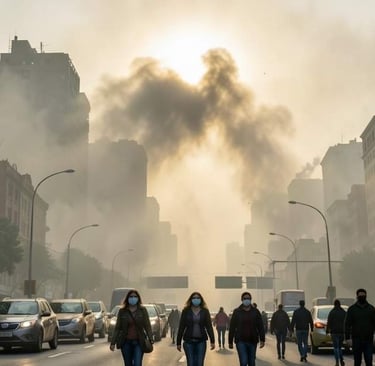
Air pollution refers to the presence of harmful substances in the atmosphere, which can adversely affect human health, the environment, and overall quality of life. It arises from various sources including industrial emissions, vehicle exhaust, and agricultural practices. The significance of understanding air pollution lies in its widespread impact on public health and its role in climate change. With an increasing global population and rapid urbanization, the issue of air pollution has become a critical concern that demands urgent attention.
Key pollutants contributing to poor air quality include particulate matter (PM), nitrogen oxides (NOx), sulfur dioxide (SO2), carbon monoxide (CO), and volatile organic compounds (VOCs). Particulate matter, particularly fine particles (PM2.5), is known for penetrating deep into the lungs and entering the bloodstream, potentially causing respiratory diseases, cardiovascular problems, and even premature death. Nitrogen oxides and sulfur dioxide are primarily produced from burning fossil fuels and are known to contribute to the formation of ground-level ozone, leading to smog and adverse health impacts.
Additionally, carbon monoxide, which is colorless and odorless, poses significant risks especially in urban areas, where vehicle emissions are prevalent. Volatile organic compounds, often released from household products and industrial processes, contribute to air quality decline and can result in long-term health effects. Understanding the complexities of air pollution is crucial, as it is not only a matter of environmental sustainability but also directly relates to public health outcomes, economic stability, and quality of life.
Types of Air Pollutants
Air pollutants can significantly impact environmental and public health. There are several types, each with distinct characteristics and sources. Understanding these pollutants is crucial for developing effective solutions to combat air quality issues.
One common type of air pollutant is PM2.5, which refers to particulate matter with a diameter of less than 2.5 micrometers. These tiny particles can penetrate deep into the lungs and even enter the bloodstream, leading to severe health issues such as cardiovascular diseases and respiratory problems. PM2.5 mainly originates from vehicle emissions, industrial processes, and combustion of fossil fuels.
PM10 particles, larger than PM2.5, measure up to 10 micrometers. They can cause similar health effects but are less likely to penetrate as deeply into the lungs. PM10 sources include dust, pollen, and smoke from various combustion processes. The inhalation of these particles can aggravate asthma and other lung conditions.
Nitrogen Dioxide (NO₂) is another critical air pollutant that primarily comes from vehicle exhaust and industrial activities. This reddish-brown gas can irritate the airways in the human respiratory system and contributes to the formation of ground-level ozone.
Sulfur Dioxide (SO₂), a colorless gas, is primarily released from burning fossil fuels in power plants and industrial facilities. Exposure to SO₂ can result in respiratory problems and can also contribute to the formation of acid rain, which adversely affects ecosystems and structures.
Another significant pollutant is Carbon Monoxide (CO), a colorless and odorless gas typically produced by incomplete combustion of fossil fuels. High levels of CO can impair oxygen transport in the body, posing severe health risks, particularly for those with pre-existing health conditions.
Finally, ozone (O₃), while beneficial in the upper atmosphere, becomes a harmful air pollutant at ground level. It is formed by chemical reactions between NO₂ and volatile organic compounds (VOCs) in the presence of sunlight. Ground-level ozone can cause various respiratory problems and diminish overall air quality.
Main Sources of Air Pollution
Air pollution is a complex environmental issue primarily caused by various anthropogenic activities. Among the most significant contributors to air quality deterioration are vehicles, industrial emissions, brick kilns, and construction dust.
Vehicles, including cars, trucks, and buses, are one of the top sources of air pollution globally. These transportation methods emit a variety of pollutants such as nitrogen oxides, carbon monoxide, hydrocarbons, and particulate matter. As urbanization increases and populations grow, the number of vehicles on the road also rises, exacerbating the concentration of harmful emissions in the atmosphere.
Industrial emissions represent another major source of air pollution. Factories and manufacturing plants release a range of pollutants derived from the combustion of fossil fuels in machinery, as well as through chemical processes. Common pollutants include sulfur dioxide, volatile organic compounds (VOCs), and heavy metals. Regions with dense industrial activities often experience poor air quality, which poses significant health risks to nearby communities.
Brick kilns, particularly in developing countries, are notorious for their contributions to air pollution. Many kilns operate with insufficient emission controls, leading to the release of particulate matter and toxic gases. The use of low-quality fuels and outdated production methods amplifies the problem, making brick production a notable pollutant source in many regions.
Finally, construction dust is a prevalent but often overlooked contributor to air pollution, especially in urban areas undergoing rapid development. Activities such as excavation, demolition, and material transport generate considerable dust and particulate matter. This not only degrades air quality but also poses serious health hazards to construction workers and nearby residents.
Overall, the combined effects of these primary sources highlight the need for effective regulatory measures and innovative solutions to mitigate air pollution and protect public health.
Health Effects of Air Pollution
Air pollution represents one of the most significant public health challenges globally, with various adverse health consequences resulting from prolonged exposure to contaminated air. Numerous studies have established a clear link between elevated levels of air pollution and a range of health issues, including respiratory diseases, cardiovascular disorders, and an increase in mortality rates.
Respiratory problems, particularly asthma, chronic bronchitis, and chronic obstructive pulmonary disease (COPD), have been notably associated with poor air quality. According to the World Health Organization (WHO), approximately 4.2 million premature deaths are attributable to outdoor air pollution annually, with respiratory diseases accounting for a substantial proportion of these fatalities. The presence of fine particulate matter (PM2.5) in urban areas has been identified as a significant contributor to these health complications, as it can penetrate deep into the lungs and even enter the bloodstream.
Furthermore, there is a growing body of evidence indicating the correlation between air pollution and heart disease. Pollutants such as nitrogen dioxide (NO2) and sulfur dioxide (SO2) exacerbate existing cardiovascular conditions and elevate the risk of heart attacks and strokes. A study published in the journal "Circulation" found that even short-term exposure to elevated levels of air pollution can lead to an increase in hospital admissions for heart-related complications.
Certain populations are particularly vulnerable to the effects of air pollution. Children, the elderly, and individuals with pre-existing health conditions are at a higher risk of experiencing severe health consequences. Children’s developing lungs make them more susceptible to respiratory issues, while elderly individuals often have pre-existing health problems that can be exacerbated by poor air quality. Additionally, low-income communities are disproportionately affected, as they often reside in areas with higher pollution levels and limited access to healthcare resources.
Environmental Damage Caused by Air Pollution
Air pollution has profound implications for the environment, negatively affecting ecosystems, contributing to climate change, and impairing visibility. One of the most significant impacts is the degradation of natural habitats and the decline in biodiversity. Pollutants, such as nitrogen oxides and particulate matter, can damage plant life, disrupt photosynthesis, and ultimately lead to reduced crop yields. When air pollutants settle on soil and water, they can alter the chemical composition, harming aquatic and terrestrial ecosystems.
Moreover, air pollution plays a crucial role in climate change. The release of greenhouse gases, particularly carbon dioxide (CO2) and methane (CH4), contributes to the greenhouse effect, leading to global warming. As average temperatures rise, several environmental consequences arise, including melting polar ice caps, increased frequency of extreme weather events, and rising sea levels, which threaten coastal communities and ecosystems. The increasing concentration of air pollution in the atmosphere exacerbates these climate change effects, creating a vicious cycle.
Additionally, air pollution significantly impairs visibility in many regions, creating a haze that can obscure scenic vistas and affect tourism. This reduction in visibility is not merely an aesthetic concern; it also has economic implications for areas that rely on natural beauty for tourism revenues. Poor air quality can lead to decreased visibility, particularly in national parks and areas of natural beauty, undermining their ecological significance and the economic benefits they provide to surrounding communities.
Understanding the broader environmental effects of air pollution is critical for developing effective strategies to mitigate its impact. Addressing these issues requires a comprehensive approach that considers not only the reduction of emissions but also the restoration of affected ecosystems and collaboration among governments, organizations, and individuals to enhance overall air quality.
Prevention Strategies Against Air Pollution
Addressing air pollution requires a multi-faceted approach encompassing individual actions, policy advancements, and the integration of green technologies. One of the foremost strategies involves the implementation of robust environmental policies. Governments are encouraged to enforce stricter regulations on industrial emissions, which is crucial in reducing the overall pollution levels. This includes mandating the use of filters and adopting cleaner production techniques, thus limiting the release of harmful pollutants into the atmosphere.
At an individual level, citizens can significantly contribute to combating air pollution through personal protective measures. For instance, opting for public transportation, carpooling, or using non-motorized alternatives such as bicycles can substantially reduce vehicular emissions. Additionally, maintaining indoor air quality by using air purifiers and keeping living spaces well-ventilated are practical steps individuals can take to protect themselves from air pollution.
Moreover, the transition towards renewable energy sources plays an essential role in minimizing air pollution. Encouraging the use of solar, wind, and hydroelectric power not only decreases dependence on fossil fuels but also aids in significantly lowering greenhouse gas emissions. Investment in research and development of sustainable energy technologies should be prioritized to facilitate a shift towards cleaner energy solutions.
Public awareness campaigns are equally vital in fostering a collective effort against air pollution. By educating communities about the sources and impacts of air quality degradation, individuals are more likely to engage in eco-friendly practices and support environmental policies. Furthermore, local governments can initiate programs that incentivize businesses to adopt greener practices.
In conclusion, the prevention strategies against air pollution must be comprehensive and collaborative. Through combined efforts in policy enforcement, individual actions, and the promotion of green energy, society can effectively combat air pollution and foster a healthier environment.
Role of WHO Air Quality Guidelines and Recent Global Statistics
The World Health Organization (WHO) plays a pivotal role in setting international air quality guidelines that aim to protect human health and the environment from the adverse effects of air pollution. These guidelines are scientifically informed recommendations that help countries formulate their own standards for air quality management. The latest guidelines underscore acceptable levels of common air pollutants such as particulate matter (PM2.5 and PM10), nitrogen dioxide (NO2), sulfur dioxide (SO2), carbon monoxide (CO), and ozone (O3). By adhering to these standards, countries can significantly mitigate the health risks associated with poor air quality.
Recent global statistics underscore the severity of air pollution as a public health crisis. According to the WHO, ambient air pollution is estimated to cause approximately 4.2 million premature deaths worldwide annually. Regions with the highest levels of air pollution not only struggle with severe health issues but also experience economic losses. For instance, countries in South Asia and East Asia have some of the highest levels of particulate matter, impacting long-term respiratory health and exacerbating pre-existing conditions.
To assess air quality, the Air Quality Index (AQI) serves as a crucial tool for the public. The AQI converts the concentration of air pollutants into a single index value, which is easily interpretable by citizens. It categorizes air quality levels on a scale that ranges from "Good" (0-50) to "Hazardous" (301-500). This system enables individuals to make informed decisions, particularly in terms of outdoor activities and protective measures during periods of elevated pollution. Understanding the AQI and its implications is essential for safeguarding public health, as it communicates the immediate risks of air pollution exposure in daily life. Ultimately, raising public awareness of both WHO guidelines and the AQI is crucial for fostering healthier communities in polluted environments.
Address:
264/5, Kamal Soroni Road, Mirpur, Dhaka-1216
Contact
Your Quaries on pest control askings
pestexterminatorbd@gmail.com
+8801642008383 +8801988300003, 01723057746
© 2025. All rights reserved. to Urban Pest Control Pvt. Ltd. this site is powered by Our Own IT Team