
Air Purifier vs Air Conditioner – Which One Improves Air Quality?
3/7/20268 min read
Introduction: Understanding Air Conditioners and Air Purifiers
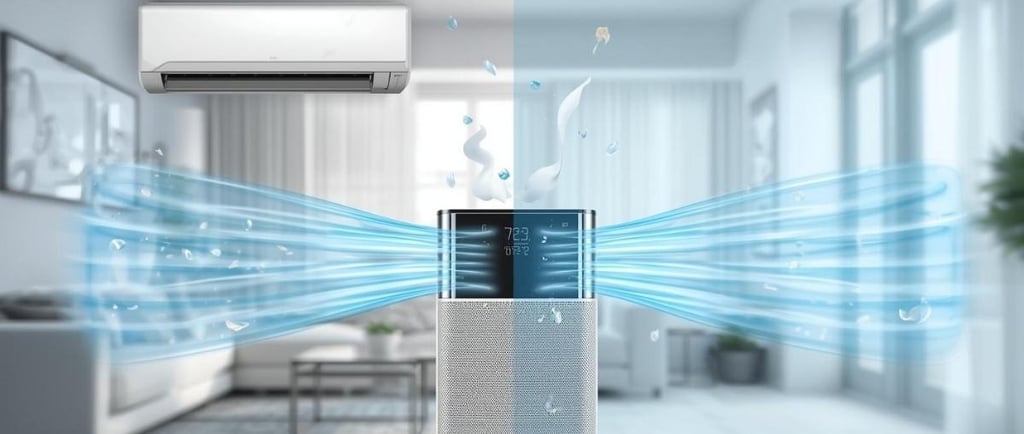
In today's fast-paced world, maintaining a comfortable and healthy indoor environment has become increasingly important. Two devices that play pivotal roles in achieving this are air conditioners and air purifiers. While both contribute to indoor air management, they serve distinct purposes and utilize different technologies. This article aims to elucidate the key differences between air conditioners and air purifiers, providing a clear understanding of their respective functionalities.
Air conditioners are primarily designed to regulate indoor temperature, providing both cooling and heating as needed. They achieve this by circulating refrigerant fluid and using indoor and outdoor units to transfer heat. This process not only creates a comfortable atmosphere but also can indirectly affect air quality by reducing humidity levels. However, air conditioners do not inherently filter pollutants from the air. Their main function revolves around temperature control rather than improving air purity.
On the other hand, air purifiers focus specifically on improving indoor air quality. By utilizing various filtration systems, including HEPA filters and activated carbon, these devices effectively remove allergens, dust, smoke, and other airborne contaminants. Unlike air conditioners, air purifiers work continuously to cleanse the air, ensuring a healthier living space. Many individuals often conflate the two devices, mistakenly believing that an air conditioner can also purify the air. In reality, while both devices can be crucial in enhancing comfort and health, they target different aspects of the indoor environment.
This article will delve deeper into the similarities and differences between air conditioners and air purifiers, helping consumers make informed decisions based on their specific needs. Understanding these devices' functions is essential for creating a safe and comfortable indoor atmosphere.
Functionality: Understanding How Air Conditioners and Air Purifiers Work
Air conditioners and air purifiers serve distinct but equally important functions in maintaining indoor comfort and air quality. Understanding these differences requires a closer look at how each system operates.
Air conditioners are designed primarily to cool indoor spaces. Their operation begins with the intake of warm air from the environment. This air passes over evaporator coils charged with refrigerant, which absorbs heat. As the refrigerant warms up, it evaporates and is then compressed, resulting in a temperature increase. This hot gas is transferred to condenser coils, where it releases its heat to the outside air, thus converting back into a liquid. This cycle continues, enabling the air conditioning unit to lower not only the ambient temperature but also to manage humidity levels effectively by removing excess moisture from the air.
On the other hand, air purifiers focus on enhancing indoor air quality by filtering airborne pollutants. They utilize a multi-stage filtration process, which may include HEPA filters, activated carbon, and ultraviolet light. HEPA filters are particularly effective at capturing allergens such as dust, pollen, pet dander, and other microscopic particles. Activated carbon filters further improve air quality by absorbing odors and volatile organic compounds (VOCs). Some advanced models employ technology like ionization or UV light to neutralize pathogens and enhance the cleaning process. Thus, while air purifiers do not regulate temperature or humidity, they play a crucial role in filtering out harmful substances from the air, creating a healthier environment.
In summary, while air conditioners and air purifiers may often be used together in the same space, their functionalities address different needs: one focuses on thermal comfort, while the other prioritizes air cleanliness. Understanding these distinctions helps consumers make informed decisions based on their specific requirements for climate control or air quality improvement.
Air Filtration Mechanisms: A Closer Look
Understanding the air filtration mechanisms employed by air purifiers and air conditioners is crucial for discerning their distinct functionalities. Air purifiers are equipped with advanced filtration systems designed to remove a wider range of contaminants from the air. One of the most effective types of filters used in these devices is the High-Efficiency Particulate Air (HEPA) filter. HEPA filters are capable of capturing at least 99.97% of particles that are 0.3 microns in diameter or larger. This includes a significant array of pollutants such as dust mites, pollen, pet dander, and even certain bacteria and viruses, thereby significantly improving indoor air quality.
In contrast, air conditioners utilize more basic air filters that primarily focus on trapping larger particles such as dust and debris. These filters aid in protecting the internal components of the unit, ensuring efficient operation. While the filters in air conditioners do provide some level of air purification, their primary function is not to eliminate health-affecting pollutants. Instead, they serve to maintain the overall efficiency and longevity of the system by preventing buildup that could hinder airflow.
Another dimension to consider is the filtration technology used by purifiers versus conditioners. Many modern air purifiers incorporate additional technologies such as Activated Carbon filters, which are effective at absorbing odors and volatile organic compounds (VOCs). Ultraviolet (UV) light and ionization may also be employed in purifiers to further reduce airborne pathogens. These features highlight the air purifier's role as a comprehensive solution for improving air quality.
Thus, while both devices serve important roles, the advanced filtration mechanisms of air purifiers are tailored to actively enhance indoor air quality by targeting harmful particulates, making them a critical choice for individuals concerned about pollutants in their environment.
Cooling Functions: The Role of Air Conditioners
Air conditioners are crucial appliances designed to regulate indoor temperatures, providing crucial relief during hot weather. They operate on the principles of the refrigeration cycle, a process that effectively removes heat from the indoor air, thereby ensuring a cooler environment. To understand their functionality, it is essential to explore the key components involved in air conditioning systems, including refrigerants, evaporators, and condensers.
The refrigeration cycle begins when the air conditioner pulls warm air from the indoor space into its system. This air passes over a unit containing refrigerant, a substance that changes from liquid to gas at low temperatures. As the warm air comes into contact with the evaporator coils, the refrigerant absorbs the heat, which causes it to evaporate and cool the air before it is circulated back into the room. This continuous cycle effectively reduces the indoor temperature and creates a comfortable living environment.
Moreover, modern air conditioning systems often feature adjustable thermostats, which allow users to tailor the cooling levels according to their preferences. The energy efficiency of air conditioners is also an important aspect to consider, as many contemporary units incorporate technology designed to minimize energy consumption while maximizing cooling effectiveness. This results in reduced energy bills and a lower environmental impact.
In addition to temperature control, air conditioners aid in maintaining humidity levels within the space, providing not only cooling but also enhanced comfort. The overall effectiveness of an air conditioning system can significantly improve indoor air quality by filtering out particulates and allergens, creating a healthier atmosphere for occupants. Understanding the principles behind air conditioners is essential for individuals seeking to make informed choices regarding their home cooling solutions.
Humidity Control: Impact on Indoor Environment
Understanding the role of humidity control in maintaining a comfortable indoor environment is essential, especially when considering the functionalities of air conditioners and air purifiers. Air conditioners, primarily designed to cool indoor spaces, also play a significant role in reducing humidity levels. As they operate, they effectively remove excess moisture from the air, resulting in a decrease in humidity, which can create a more comfortable atmosphere. High indoor humidity can lead to discomfort, mold growth, and other issues, making the humidity-reducing function of air conditioners pivotal in maintaining indoor air quality.
In contrast, air purifiers serve a different purpose. Their main function is to filter and eliminate airborne particles, allergens, and pollutants from the air, thereby enhancing air quality. However, traditional air purifiers generally do not influence humidity levels in the same manner as air conditioners. They are not equipped with the technology to reduce moisture content significantly, focusing instead on creating a cleaner breathing environment. There are some advanced air purifier models that incorporate features aimed at managing humidity, such as built-in humidifiers or dehumidifiers, but these functionalities vary widely across different products.
The choice between an air conditioner and an air purifier, therefore, can greatly depend on specific environmental needs. If high humidity is a prevalent issue, an air conditioner is likely the more effective solution for addressing both temperature and moisture concerns. Meanwhile, for individuals concerned primarily with dust, allergens, or pollutants, an air purifier will be advantageous, although it will not affect humidity levels. Ultimately, understanding these differences is crucial for optimal indoor environmental control.
Energy Consumption: Cost and Efficiency Considerations
When it comes to maintaining a comfortable and healthy indoor environment, both air conditioners and air purifiers play crucial roles. However, their energy consumption patterns differ significantly, influencing both operating costs and efficiency. Understanding these differences is essential for consumers looking to make informed decisions regarding their air management systems.
Air conditioners are designed primarily to cool down spaces by circulating refrigerant and removing heat from the air. According to the U.S. Department of Energy, a central air conditioning unit typically uses between 2,000 and 4,000 watts of electricity per hour during operation. In contrast, window units generally consume between 500 and 1,500 watts. Given the cooling capacity, the larger the area being cooled, the higher the energy consumption. Users should be aware that the efficiency ratings of air conditioners, denoted as SEER (Seasonal Energy Efficiency Ratio), can indicate how much cooling output is received for each watt of electricity consumed. Higher SEER ratings suggest better efficiency.
On the other hand, air purifiers focus on enhancing indoor air quality by removing particulates and pollutants. Most air purifiers consume significantly less energy than air conditioners, ranging from as little as 20 watts to around 200 watts per hour, depending on the model and features. Factors such as filter type and fan settings can impact power usage. Moreover, many modern air purifiers are equipped with energy-efficient designs, such as Energy Star certifications, ensuring that they provide both effective purification and lower operating costs.
To maximize energy efficiency, consumers should consider selecting devices with better ratings and features that reflect their needs. Regular maintenance, such as changing filters for air purifiers and servicing air conditioners, can also enhance performance and reduce energy usage. Making an informed choice can help mitigate electricity costs while ensuring optimal air management within the space.
Health Benefits: Which is Better for Indoor Air Quality?
Indoor air quality is of paramount importance for maintaining a healthy living environment. When comparing air conditioners and air purifiers, it is essential to recognize their differing roles in this domain. Air conditioners are primarily designed to regulate temperature and humidity levels, providing comfort during hot weather. While they do filter some particulates from the air, their main function is not to purify it. In contrast, air purifiers are specifically engineered to remove pollutants, allergens, and pathogens from indoor air. This fundamental difference in purpose significantly affects their impact on health.
Air purifiers often employ multiple filtration technologies, including HEPA filters and activated carbon, to trap dust, mold spores, pet dander, pollen, and even volatile organic compounds (VOCs). This capability is especially beneficial for individuals suffering from allergies or respiratory conditions, as it reduces exposure to airborne irritants. Furthermore, some air purifiers are equipped with UV light, which can eliminate harmful bacteria and viruses, thereby enhancing indoor air quality.
On the other hand, while air conditioners can improve comfort by reducing humidity, they may inadvertently contribute to air quality issues if not properly maintained. Dirty filters in air conditioning units can circulate dust and allergens back into the living space, undermining their effectiveness in promoting healthy air. Regular maintenance is crucial to ensure that air conditioners do not become a source of indoor pollutants.
Ultimately, the choice between air conditioners and air purifiers depends on individual needs. For individuals focused on temperature control, air conditioning is vital, yet it should not replace the necessity of an air purifier for optimal air quality. For those particularly concerned with allergens and pathogens, investing in a quality air purifier may provide significant health benefits. In conclusion, a combination of both solutions may offer the best outcome for achieving high indoor air quality while ensuring comfort in varying climates.
Address:
264/5, Kamal Soroni Road, Mirpur, Dhaka-1216
Contact
Your Quaries on pest control askings
pestexterminatorbd@gmail.com
+8801642008383 +8801988300003, 01723057746
© 2025. All rights reserved. to Urban Pest Control Pvt. Ltd. this site is powered by Our Own IT Team