
Ant Infestation in Malaysian Homes: Causes, Risks & Long-Term Pest Control
2/9/20268 min read
The Fascinating World of Ant Trails
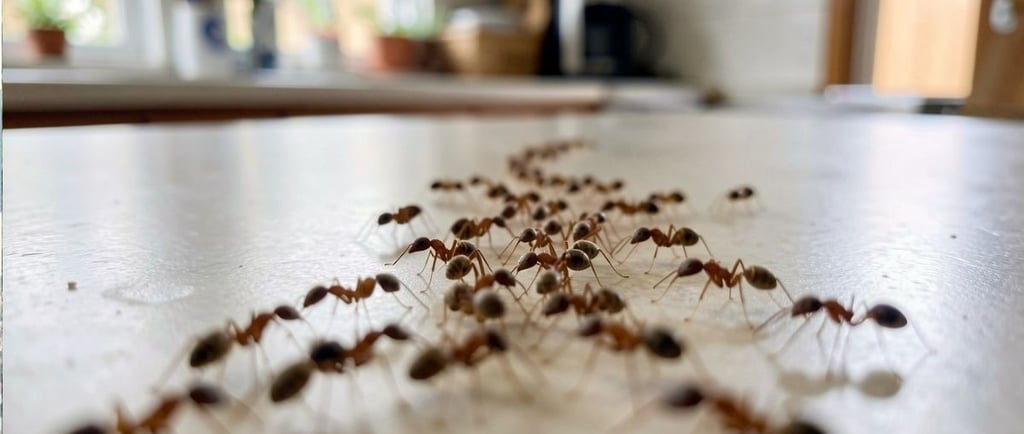
Ant trails represent one of the most remarkable examples of communication and organization within the insect kingdom. These trails, made visible through the presence of countless ants moving in a coordinated manner, serve as a vital network for navigation and resource sharing among ant colonies. Ants primarily utilize pheromones, chemical signals that they secrete, to communicate and establish these foraging paths. When an ant discovers a food source, it deposits pheromones on its way back to the colony, effectively marking the route for other workers.
As additional ants follow this trail, they contribute to its intensity by adding more pheromone deposits, reinforcing the path. This phenomenon not only facilitates efficient foraging but also enhances the colony's ability to exploit resources effectively. The more food found along a specific route, the stronger the pheromone trail becomes, leading to increased traffic along that path. It is intriguing to witness how different ant species adapt their trail formation strategies based on their ecological niches; for instance, some species like the leafcutter ants establish complex foraging trails that can be quite elaborate.
The significance of these trails extends beyond mere navigation; they are critical for the social structure of ant colonies. Ants are social insects, and their cooperative behavior is fundamental to their survival. Foraging trails allow ants to collaborate in gathering food, thereby ensuring the colony's sustenance and growth. Additionally, ant trails serve as a demonstration of their remarkable collective intelligence, where individuated actions lead to sophisticated communal outcomes. This complex behavior also reflects the evolutionary adaptations that ants have developed over millions of years, contributing significantly to their success as a species.
Sugar Ants vs. Fire Ants: Key Differences
In Malaysia, the battle against pests often pits sugar ants against fire ants, two species that differ significantly in their physical characteristics, behaviors, habitats, and their interactions with humans. Understanding these differences is vital for effective management and control measures.
Sugar ants, scientifically known as Camponotus consobrinus, are typically recognized by their small to medium size, with a shiny, black body and long legs. They are notorious for their sweet tooth, often attracted to sugary substances. In contrast, fire ants, belonging to the genus Solenopsis, are smaller and possess a reddish-brown color. Their nesting behavior tends to differ as well; fire ants build distinct mounds in open, sunny areas, while sugar ants can be found nesting in decaying wood, leaf litter, or even inside walls.
The behavior of these ants further demonstrates their differences. Sugar ants are generally considered more docile and usually retreat when disturbed, focusing primarily on foraging for food. Fire ants, on the other hand, exhibit aggressive behavior, especially when their nest is threatened. They can deliver painful stings, which often results in allergic reactions in some individuals, making them a significant concern for the public health sector in Malaysia.
In terms of habitat, sugar ants thrive in a variety of environments, including forests and urban areas, where they can find sufficient food sources, especially sugary substances. Fire ants prefer warmer climates and often infest agricultural lands, posing a threat to crops and livestock.
Both species have a notable impact on the environment and, at times, on human activities. While sugar ants contribute to soil aeration and the decomposition processes, fire ants can disrupt local ecosystems and harm native species. By understanding the differences between sugar ants and fire ants, we can apply more targeted and effective strategies for their management, ensuring a healthier environment for both humans and wildlife.
Identifying Kitchen Infestations
Identifying an ant infestation in the kitchen is crucial for maintaining a clean and safe environment. It is essential to be aware of the signs that indicate the presence of sugar ants or fire ants. One of the most common indicators is the sighting of ants themselves. Sugar ants typically appear small, brown to black in color, while fire ants can be identified by their reddish hue and aggressive behavior. Observing trails of ants consistently moving in a straight line can be a clear signal of an infestation.
Another significant sign of an ant intrusion is the presence of ant nests, which may be located outside near the foundation of the home or in hidden corners within the kitchen. These nests often contain larvae and are a breeding ground for the ant colonies. Additionally, the discovery of small holes or cracks in walls and near windows can indicate entry points that ants are utilizing to access your kitchen.
Kitchen environments often harbor certain conditions and food types that attract ants. Sweet substances like sugar, honey, and syrup can be significant attractants, with sugar ants being particularly drawn to these items. Fire ants, while also attracted to sugary foods, may be more enticed by proteins and fats. It is vital to inspect food storage areas, including cabinets and pantries, for any signs of ants or food particles left behind. Leaving food uncovered or not properly sealing containers can create an inviting environment for these pests.
When diagnosing an ant problem, keen observation is necessary. Look for ant trails leading to food sources, and be attentive to the time of day when ants are most active, which is often during warmer months or at times when food is being prepared. Maintaining cleanliness and minimizing attractants are essential steps in addressing an infestation effectively.
Common DIY Failures in Ant Control
Many homeowners facing ant infestations often resort to DIY methods, believing they can independently manage the problem. Various strategies are popular, including homemade traps, baiting approaches, and natural remedies. However, many of these methods tend to be ineffective, leading to persistent ant problems, especially when dealing with aggressive species such as sugar ants and fire ants.
One common DIY approach involves using household products such as vinegar, baking soda, or dish soap. While these ingredients may repel ants temporarily, they do not address the underlying issues. Ants operate through pheromone trails, and without proper baiting techniques, the ants may simply return, leading to a cycle that homeowners struggle to break. Furthermore, such remedies often do not account for the extensive colonies that can exist beneath the surface or in hidden areas, allowing the infestation to continue unabated.
Another frequently attempted method is setting up homemade traps, such as those using sugar mixed with poison or other attractants. Unfortunately, these traps often fail because they do not attract all types of ants effectively, or the poison may not be sufficient to eliminate the queen and the entire colony. The lack of a comprehensive approach can allow remaining worker ants to persist, undermining the initial efforts.
Additionally, some individuals find themselves using store-bought ant sprays without understanding their application. These sprays can kill ants on contact but do not eliminate the colony. Consequently, ants continue their foraging behavior, creating a potential for rebound infestations, which can be notably frustrating for homeowners. Ultimately, while DIY methods can provide short-term relief, their failure to target the root of the ant problem usually leads to a frustrating cycle of recurrent infestations.
The Importance of Professional Pest Control
Managing ant infestations, particularly from sugar ants and fire ants in Malaysia, can be a daunting task for homeowners. While DIY methods may seem convenient, they often fall short in effectiveness. This is where professional pest control services play a vital role. Hiring experts not only offers a more robust solution but also provides peace of mind when dealing with these relentless pests.
Professional pest control technicians are trained to identify different species of ants and understand their behaviors. This expertise is crucial since the control strategies for various ant types can differ significantly. For instance, the treatment methods for sugar ants may differ from those used for fire ants. This precise identification allows for tailored approaches that increase the likelihood of successful eradication. Without proper identification, homeowners risk using inappropriate methods that may only irritate the infestation, leading to further complications.
Moreover, pest control professionals possess advanced tools and products that are often unavailable to the general public. These targeted treatments are designed to disrupt ant colonies effectively and prevent re-infestation. In many cases, these professionals use eco-friendly and safety-conscious solutions that minimize potential risks to humans and pets, which DIY methods often overlook. The application of these professional-grade treatments typically results in a quicker resolution of the ant problem.
In summary, the advantages of engaging professional pest control services for managing ant infestations in Malaysia are clear. With their expertise, specialized tools, and effective treatments, they can tackle the issue more thoroughly than average recreational approaches. By opting for their services, homeowners can ensure not only a thorough elimination of sugar ants and fire ants but also a long-term solution that mitigates future occurrences.
How Professional Pest Control Eliminates Ants Permanently
Professional pest control services employ a variety of effective techniques to eliminate ant infestations, specifically targeting common invaders such as sugar ants and fire ants in Malaysia. One of the primary methods used is baiting systems. These systems utilize specialized baits that attract ants, which then carry the poison back to their colonies. This method ensures that not only the visible ants are eliminated but also those hidden within the nest. The slow-acting nature of the bait allows for higher efficacy as it provides time for the foraging ants to share the poison with other colony members, leading to widespread eradication.
Another critical approach in pest management is the implementation of exclusion methods. This involves identifying and sealing points of entry to the property. Common access points include cracks in walls, gaps around windows, and openings around pipes. By fortifying these entryways, pest control professionals effectively reduce the risk of reinfestation and create a long-term solution against sugar ants and fire ants.
Sanitation protocols are equally important in maintaining an ant-free environment. Professionals advise property owners on how to eliminate food sources that attract ants. This includes proper storage of food, regular cleaning of surfaces, and immediate cleanup of spills. Coupled with these strategies, ongoing monitoring and follow-up visits are essential. After initial treatment, pest control experts will return to evaluate the situation, ensuring that any remaining ant activity is addressed promptly.
Ultimately, the combination of baiting, exclusion tactics, sanitation, and consistent monitoring creates a robust defense against persistent ant infestations. By engaging professional pest control services, homeowners can ensure a comprehensive approach to eliminate these unwelcome pests permanently.
Preventing Future Ant Infestations
Preventing future ant infestations is crucial for maintaining a pest-free environment in your home. Ants, including sugar ants and fire ants, can find their way into residences through various entry points, making proactive measures essential. One of the primary steps in prevention is ensuring proper sanitation. This includes regularly cleaning kitchens, dining areas, and other susceptible spaces to eliminate food residues and spills that could attract ants. Using a mixture of vinegar and water can effectively clean surfaces and deter ants due to its strong smell.
Sealing entry points is another significant action to deter ants from entering your home. Inspect your property for cracks in walls, gaps around windows and doors, and openings in utility lines. Utilizing caulk, weather stripping, and expanding foam can help seal these potential entryways, restricting the pathways through which ants may invade. Being diligent in these efforts can significantly reduce the chances of an infestation.
Moreover, implementing best practices for food storage is essential. Store food items in airtight containers and promptly address any spills. Make it a habit to keep pantry areas clean and organized, as a cluttered space can harbor food remnants that attract ants. Additionally, be mindful of outdoor food areas, such as barbecues or patios, by cleaning up crumbs and residues after meals.
Maintaining a clean and tidy environment is perhaps the most effective way to discourage ant activity in and around your home. Garden maintenance is equally important; regular trimming of grass and plants can also help eliminate habitats for ants. By combining these preventive measures, you can significantly lower the likelihood of sugar ants or fire ants posing a nuisance in the future.
Address:
264/5, Kamal Soroni Road, Mirpur, Dhaka-1216
Contact
Your Quaries on pest control askings
pestexterminatorbd@gmail.com
+8801642008383 +8801988300003, 01723057746
© 2025. All rights reserved. to Urban Pest Control Pvt. Ltd. this site is powered by Our Own IT Team