
Australia’s Advanced Pest Control Tech Against the World’s Most Dangerous Pests
Australia’s Advanced Pest Control Tech Against the World’s Most Dangerous Pests
1/31/20267 min read
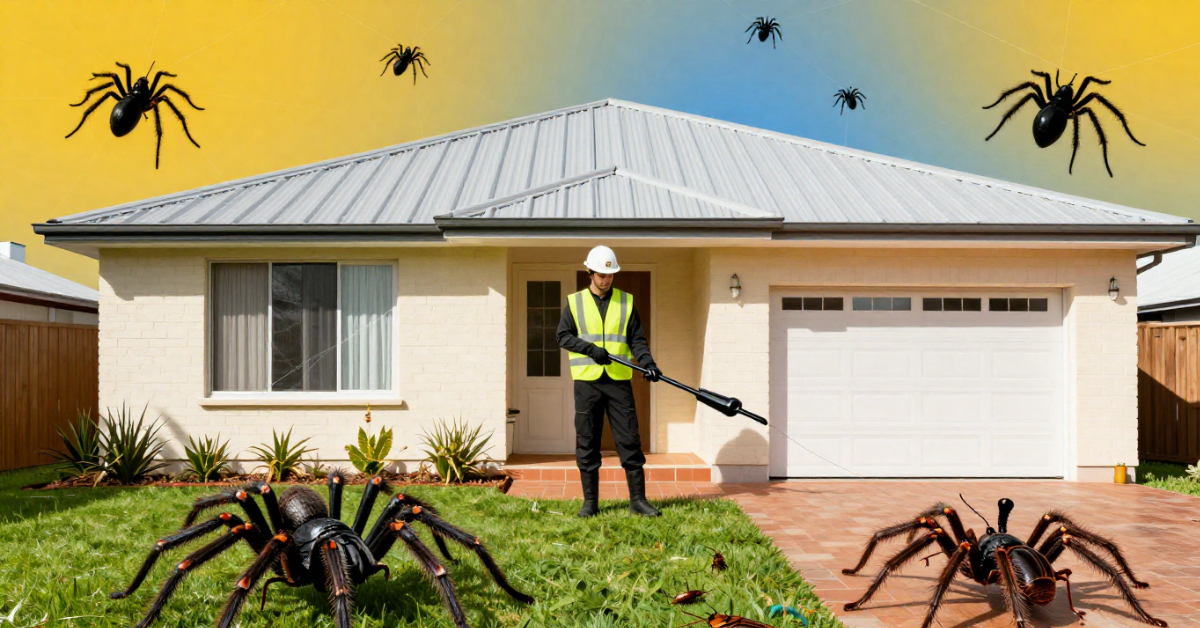
Introduction to Pest Control in Australia
Pest control in Australia presents a unique set of challenges due to the country’s diverse ecosystems and climatic conditions. Australia is home to a variety of flora and fauna, which creates a complex environmental tapestry that hosts numerous pests threatening agriculture, wildlife, and public health. The significance of effective pest control in safeguarding these ecosystems cannot be overstated. With the potential for significant economic losses in agriculture, ongoing risks to native wildlife, and possible health implications for humans, it is crucial for pest management strategies to be both effective and sustainable.
Among the most dangerous pests found in Australia are species such as the red imported fire ant, the brown marmorated stink bug, and various types of termites. The red imported fire ant, for example, poses a serious threat not only by inflicting painful bites but also through its potential impact on local ecosystems and agriculture. Similarly, the brown marmorated stink bug threatens crops and can severely reduce agricultural yields if not effectively managed.
Furthermore, termites represent a significant concern for residential buildings, causing billions of dollars in damage annually. Their capacity for destruction emphasizes the need for advanced pest control measures that are both proactive and reactive. In response to these various threats, Australia has developed an array of technological advancements in pest control, ranging from biological controls to innovative traps and monitoring systems.
In conclusion, pest control is integral to maintaining the balance of Australia’s ecosystems. Addressing the threats posed by invasive species and other pests requires collaborative efforts and advanced technology to ensure a sustainable approach to pest management. By prioritizing effective pest control, Australia can protect its agricultural integrity, preserve native wildlife, and enhance public health safety.
Understanding Australia’s Most Dangerous Pests
Australia is home to a unique array of wildlife, complemented by a range of invasive pest species that pose significant threats to its ecosystems, economies, and human health. Among these pests, the red imported fire ant, cane toad, and Asian honey bee stand out due to their considerable impacts.
The red imported fire ant is originally from South America and has spread into the southern United States and parts of Australia. These ants are notorious for their aggressive behavior and painful stings, which can result in severe allergic reactions in humans. Beyond their immediate health risks, red fire ants disrupt local ecosystems by preying on native species and outcompeting indigenous insects, leading to ecological imbalances.
In contrast, the cane toad, introduced as a biological control for agricultural pests, has become a significant ecological menace. Native to Central and South America, cane toads have proliferated rapidly in Australia, producing thousands of eggs in a single reproductive season. They pose a threat to native wildlife that attempts to prey on them, as their skin contains toxic substances. Consequently, many native species have faced population declines or extinction due to cane toad predation.
The Asian honey bee, another non-native species, also presents challenges to Australian habitats. Though pollinators are generally beneficial, the Asian honey bee's introduction has raised concerns among beekeepers and ecologists. These bees can carry diseases that affect local honey bee populations, detrimental to agriculture and the overall health of Australia's pollination networks.
Understanding these invasive pests is crucial for developing effective pest control technologies and conservation strategies, ensuring the protection of Australia's unique biodiversity and agricultural interests.
Innovative Technologies in Pest Control
Australia has increasingly turned to innovative technologies to address the challenge posed by some of the world's most dangerous pests. These advanced methods complement traditional pest control strategies, aiming to enhance effectiveness while minimizing environmental impact.
One prominent advancement is the use of biotechnology, which focuses on the manipulation of living organisms to control pest populations. This can involve the development of genetically modified organisms (GMOs) that are inherently resistant to pests or diseases, significantly reducing the need for chemical pesticides. For example, scientists are exploring GM crops that produce natural insecticides, effectively deterring pests without harming beneficial insects.
Pheromone traps represent another cutting-edge technology gaining traction in pest control. These traps emit specific pheromones that attract target pests, allowing for their capture and monitoring. This method is particularly beneficial for managing insect populations, as it reduces reliance on broad-spectrum insecticides and minimizes collateral damage to non-target species. By using these traps, pest managers can gather data on pest activity, enabling more timely and targeted interventions.
Advanced drone surveillance is also revolutionizing pest control in Australia. Drones equipped with high-resolution cameras and sensors can effectively map areas prone to pest infestations, allowing for efficient targeting of pest control measures. This aerial approach provides pest control professionals with real-time data on pest locations and populations, facilitating prompt responses that are critical for managing infestations before they escalate.
Collectively, these innovative technologies—biotechnology, pheromone traps, and drone surveillance—represent a significant shift in pest management strategies. Their integration into Australia's pest control framework not only enhances efficiency but also aligns with the growing emphasis on sustainable practices, ensuring that pest management can be both effective and environmentally friendly.
Case Studies: Successful Pest Control Initiatives in Australia
Australia has witnessed various successful pest control initiatives that effectively utilized advanced technologies to combat the world's most dangerous pests. One notable example is the initiative against the red imported fire ant, a species known for its aggressive behavior and painful sting. Launched in Queensland, this project incorporated a combination of chemical treatments, biological control measures, and community engagement to mitigate the spread of these pests. Through the use of targeted bait containing Amdro, the initiative demonstrated impressive results in reducing fire ant populations, thus minimizing their impact on local ecosystems and human activities.
Another significant project focused on managing the Asian honeybee, which poses a threat to Australian native bee populations. In 2020, researchers employed innovative hive monitoring technologies and genetic tracking methods to study bee populations in Queensland. By detecting the presence of Asian honeybees through surveillance and identifying their interbreeding patterns, scientists were able to implement precise control strategies. The initiative not only aimed to secure the future of native bees but also involved farmers and local communities, fostering awareness and cooperative efforts.
Furthermore, the use of drones in pest control has gained momentum. For instance, the Western Australia Department of Agriculture and Food employed drone technology to monitor and combat the spread of locusts. Equipped with high-resolution cameras, drones facilitated the rapid assessment of locust population densities across vast agricultural lands, enabling swift responses. Early treatments could be deployed via drone-operated aerial spraying, effectively reducing crop damage and economic losses.
These case studies exemplify Australia’s commitment to harnessing advanced pest control technologies to address urgently needed interventions. By combining innovative methods, community involvement, and scientific research, these initiatives not only highlight the challenges posed by dangerous pests but also showcase the potential for successful management strategies.
Collaboration and Research Efforts in Pest Management
Effective pest management necessitates a multifaceted approach, and collaboration among scientists, government agencies, and local communities plays an essential role in enhancing these efforts. In Australia, the rising threat of invasive pest species, which significantly jeopardizes both agricultural and ecological integrity, has spurred numerous initiatives aimed at fostering partnerships between various stakeholders. These collaborations focus on integrating innovative technologies and methodologies with traditional practices to develop comprehensive pest control strategies.
One notable initiative involves academic institutions working alongside government organizations to study pest behaviors and establish more effective control measures. This research often encompasses comprehensive field studies and laboratory experiments, focusing on the life cycles, reproduction rates, and ecological impacts of specific pest species. By understanding these dynamics, researchers can inform pest management practices that are not only effective but also environmentally sustainable.
Additionally, local communities play an invaluable part in this ecosystem of research and collaboration. Community-driven pest management programs provide a platform for residents to actively engage in pest monitoring and control efforts. These programs not only educate individuals about the risks associated with invasive species but also empower them to contribute to data collection and decision-making processes. Such grassroots involvement is critical, as it enhances the effectiveness of pest management strategies tailored to local contexts.
The establishment of public-private partnerships further enriches these cooperative efforts. By pooling resources and expertise, entities such as agricultural businesses can collaborate with scientists to pilot innovative pest control products, embarking on research projects that may lead to breakthroughs in pest management technology. Through these combined efforts, Australia is progressively advancing its capabilities in combating some of the world's most dangerous pests, demonstrating the power of collaboration in achieving a common goal.
Future Trends in Pest Control Technology
The field of pest control is on the brink of significant transformation driven by advancements in technology. Emerging trends such as artificial intelligence (AI), machine learning (ML), and genetic modification are reshaping the pest management strategy, particularly in Australia, where agriculture and biodiversity are paramount. AI applications are expected to revolutionize pest detection and control by utilizing data analytics to identify pest threats more precisely and in real time. For instance, AI-powered sensors can monitor crop health and pest populations, allowing pest control advisors to make informed decisions based on detailed analytics.
Machine learning algorithms enhance these capabilities further by enabling systems to learn from past pest infestations and environmental conditions, thereby improving predictive models. This predictive power not only allows for early intervention but also assists in resource allocation, ultimately leading to more sustainable pest management practices.
Moreover, genetic modification is emerging as a promising solution to provide long-term control of pest species. Technologies such as CRISPR-Cas9 are enabling researchers to engineer more resilient crops that can fend off pests effectively. The use of genetic engineering to create pest-resistant organisms has the potential to reduce reliance on chemical pesticides, aligning with global sustainability goals.
As the pest control landscape evolves, the integration of these innovative technologies promotes a more targeted, efficient, and environmentally friendly approach to managing pest populations. With ongoing research and development, Australia stands to benefit significantly from these advancements, not just in agriculture but also in urban pest management sectors. The future of pest control technology promises a paradigm shift in how we understand and tackle one of agriculture's most persistent challenges.
Conclusion and Call to Action
In examining Australia’s advanced pest control technology, it is evident that the nation is striving to combat some of the world's most dangerous pests effectively. Through innovations such as remote sensing, automated traps, and biological control methods, significant strides have been made in addressing the diverse challenges posed by invasive species. These developments not only enhance the efficacy of pest management but also promote sustainable practices that benefit the environment and agriculture.
The importance of continued innovation in pest control technology cannot be overstated, especially in a country like Australia, where unique ecosystems are constantly threatened by invasive pests. As pests evolve, so too must our strategies for managing them. The research being conducted today is paving the way for solutions that minimize environmental impacts while maximizing effectiveness. By leveraging technological advancements and adopting a proactive approach, stakeholders can work towards a more sustainable future.
Support for local initiatives aimed at sustainable pest management is crucial. Whether through community programs, educational platforms, or governmental policies, engaging with these efforts ensures that we are collectively addressing the pest control issues that affect both urban and rural areas. Additionally, staying informed about the evolving challenges posed by pests helps the public understand the seriousness of the situation. As individuals, we can play a role by advocating for responsible pest control practices and supporting organizations committed to these causes.
In conclusion, the fight against Australia’s most dangerous pests is a collective responsibility that requires innovation, education, and community involvement. Together, we can ensure that the nation remains resilient against these threats while promoting a healthy coexistence with its unique biodiversity.
Address:
264/5, Kamal Soroni Road, Mirpur, Dhaka-1216
Contact
Your Quaries on pest control askings
pestexterminatorbd@gmail.com
+8801642008383 +8801988300003, 01723057746
© 2025. All rights reserved. to Urban Pest Control Pvt. Ltd. this site is powered by Our Own IT Team