
Best Disinfection & Sanitization Service in Dhaka – Protect Your Home & Office Today
2/23/20267 min read
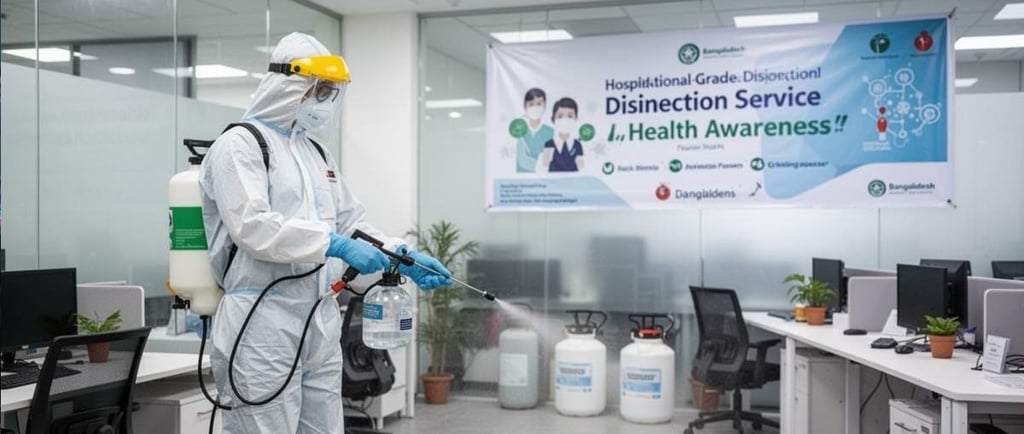
Why Disinfection is Essential After Viral Outbreaks
In the wake of viral outbreaks, the urgency for professional disinfection services becomes paramount. Viruses, particularly those that are highly contagious, can spread rapidly through direct contact with infected individuals, contaminated surfaces, and the air in enclosed spaces. As the virus proliferates, the risks associated with potential infections escalate, posing significant threats to public health.
The mechanisms by which viruses transmit are diverse and insidious. For example, respiratory viruses can be aerosolized, allowing them to linger in the air for extended periods. Touching surfaces that harbor the virus can lead to self-inoculation, with individuals unknowingly transferring pathogens to mucous membranes. In situations where individuals gather, such as workplaces or communal living spaces, the need for effective disinfection cannot be overstated.
Thorough disinfection serves as a critical preventive measure to curb the spread of infectious agents and safeguard health. By employing specialized protocols, professional disinfection services can eliminate pathogens from high-touch areas, such as door handles, light switches, and shared equipment. This not only reduces the viral load in an environment but also creates a safer space for both residents and employees.
Furthermore, the psychological aspect of disinfection plays a crucial role in maintaining public confidence. Knowing that spaces have been adequately treated can alleviate fears surrounding infection risk, encouraging individuals to engage in daily activities and return to work. Moreover, organizations that prioritize disinfection demonstrate a commitment to the well-being of their employees and clients, fostering a culture of health-consciousness.
In conclusion, the necessity for professional disinfection services in the aftermath of viral outbreaks is clear. The mechanisms of virus transmission highlight the potential dangers, and thorough disinfection is a pivotal strategy to mitigate these risks, thereby safeguarding both public health and the integrity of commercial environments.
Difference Between Cleaning, Sanitizing & Disinfecting
Understanding the distinctions between cleaning, sanitizing, and disinfecting is pivotal for maintaining a healthy environment in homes and offices. Each of these processes serves a specific purpose and varies significantly in effectiveness against pathogens.
Cleaning is the initial step in any cleaning regimen, involving the physical removal of dirt, dust, and debris from surfaces. The process typically utilizes soap or detergents to break down grime, followed by rinsing. While cleaning can aid in reducing the number of pathogens on surfaces, it does not eliminate them entirely. Therefore, it is crucial to view cleaning as a preparatory step prior to more intensive measures.
Sanitizing goes a step further. This process reduces the number of germs on surfaces to a safe level, as defined by public health standards. Sanitizers, often in the form of sprays or wipes, are designed to kill a significant percentage of bacteria and viruses, thereby making the environment safer. However, it is essential to note that sanitizing does not guarantee the complete eradication of all pathogens, especially in high-risk areas.
Disinfecting is the most thorough of the three processes. This method utilizes specialized chemicals to destroy pathogens on surfaces, including bacteria and viruses. Disinfectants must be left on surfaces for a specified period to be effective, and they target a broader spectrum of microorganisms compared to sanitizers. Professional disinfection services are integral in this context, as they utilize EPA-approved products and techniques to ensure thorough disinfection.
In summary, while cleaning, sanitizing, and disinfecting are often used interchangeably, they represent distinct processes with varying levels of pathogen control. The right combination of these methods, particularly professional disinfection services, is essential for safeguarding health in both residential and commercial spaces in Dhaka.
Residential vs Commercial Disinfection
Disinfection plays a crucial role in maintaining hygiene in both residential and commercial settings, yet the approaches to these services significantly diverge due to differing priorities and challenges. In residential environments, disinfection services primarily focus on the home’s inhabitants, which often includes vulnerable populations such as children and elderly family members. The emphasis here is on thorough cleaning of frequently touched surfaces, such as doorknobs, countertops, and bathroom fixtures, to mitigate the risk of infections. The choice of disinfection products is also crucial, with homeowners typically favoring eco-friendly solutions that are safe for children and pets.
Conversely, commercial disinfection services cater to a different set of requirements due to the presence of higher foot traffic. Businesses, such as offices and retail outlets, face greater challenges in maintaining cleanliness due to the constant movement of customers and employees. As a result, commercial disinfection must prioritize rapid and efficient procedures to accommodate the busy nature of these environments while ensuring comprehensive coverage. Common areas, such as reception desks, elevators, and restrooms, require frequent disinfection to minimize the transmission of pathogens.
Moreover, the types of surfaces found in commercial settings often vary widely, encompassing materials like metal, glass, and plastic, which may require specialized cleaning agents and techniques. Unlike homes, which may have a more uniform set of materials, commercial spaces necessitate adaptability in disinfection methods. Additionally, many businesses must comply with health regulations and standards, further influencing their disinfection protocols.
In summary, while both residential and commercial disinfection services aim to protect against pathogens, the differing priorities—such as the nature of foot traffic, types of surfaces, and demographic vulnerabilities—call for tailored disinfection strategies. By recognizing these distinctions, service providers can deliver more effective cleaning solutions appropriate for each specific environment.
WHO-Recommended Disinfectants
Disinfectants play a crucial role in maintaining hygiene and preventing the spread of infections, particularly in healthcare settings, households, and offices. The World Health Organization (WHO) provides guidelines on effective disinfectants in response to public health threats. These recommendations are rooted in comprehensive research focused on efficacy, safety, and practicality in real-world applications.
One of the primary criteria for an effective disinfectant as per WHO guidelines is its ability to eliminate a broad range of pathogens, including bacteria, viruses, and fungi. Disinfectants should also have a suitable contact time, meaning they need to remain on surfaces long enough to achieve maximum efficacy. Additionally, safety for users and compatibility with surfaces being treated are equally important factors.
Commonly recommended disinfectants include alcohol-based solutions containing at least 70% ethanol or isopropyl alcohol. These are effective against many types of bacteria and viruses, including the coronavirus. Chlorine-based disinfectants, such as sodium hypochlorite, are also recommended; they are particularly effective on hard surfaces and can eliminate pathogens swiftly when used in appropriate dilutions. Another notable disinfectant is hydrogen peroxide, which has demonstrated effectiveness against a wide spectrum of microorganisms and is favored for its minimal environmental impact.
For users to achieve optimal safety and efficacy during disinfection, it is paramount to utilize products that meet WHO standards. Employing certified disinfectants ensures that harmful microorganisms are adequately removed, contributing significantly to public health efforts. Utilizing these recommended agents not only enhances the cleanliness of homes and offices but also instills confidence in safety protocols among employees and residents alike.
24/7 Emergency Disinfection Service in Dhaka
In today’s unpredictable environment, the availability of 24/7 emergency disinfection services in Dhaka has become crucial for both residential and commercial spaces. These services cater to urgent needs arising from various situations, including outbreaks of infectious diseases, contamination incidents, or unexpected spills of hazardous materials. The swift response facilitated by round-the-clock service ensures that affected areas can be treated promptly, minimizing potential health risks.
One of the primary advantages of having access to emergency disinfection services is the peace of mind it provides. In cases where a communicable disease has been identified, engaging professional disinfectors immediately can significantly limit the spread of infection. High-traffic areas, such as offices, schools, and public facilities, are particularly susceptible to contamination during outbreaks, and an immediate response is essential to ensure the safety of all individuals involved.
Furthermore, businesses, especially, can suffer detrimental impacts from prolonged exposure to unclean environments. The fallout from a contamination incident not only poses health risks but also has the potential to disrupt operations and damage reputations. Emergency disinfection services help mitigate these risks by providing rapid and effective cleaning solutions, which can restore normalcy swiftly and efficiently.
In addition to health and operational benefits, these urgent disinfection measures also demonstrate a commitment to safety and well-being. Clients and employees are likely to appreciate and trust organizations that prioritize cleanliness, especially during times of crisis. The combination of expedient service and thorough disinfection techniques ensures that homes and workplaces in Dhaka can maintain a safe environment, fostering confidence in day-to-day activities.
Service Areas: Mirpur, Uttara, Banani, Gulshan, Dhanmondi
The professional disinfection services in Dhaka have become increasingly vital in safeguarding public health and ensuring sanitized environments in both homes and workplaces. Among the key service areas in Dhaka, Mirpur, Uttara, Banani, Gulshan, and Dhanmondi stand out as districts that benefit significantly from these localized services. Each area faces unique challenges when it comes to maintaining hygiene, especially with the increasing density of population and potential health risks associated with pathogens.
In Mirpur, for instance, the need for effective disinfection is particularly pronounced due to the area's bustling residential zones and commercial establishments. Trained professionals employ advanced techniques and environmentally safe cleaning solutions to ensure that places such as schools, offices, and residences are effectively disinfected, thus safeguarding the health of the community.
Uttara, known for its mix of residential and business spaces, also benefits from professional disinfection services. The timely intervention of these services can prevent the spread of illness, particularly during flu seasons or amid public health alerts. Residents and business owners can access regular disinfection programs tailored to their specific needs, ensuring that their environments remain safe and hygienic.
Similarly, in Banani and Gulshan, areas frequented by many expatriates and business professionals, the demand for thorough disinfection is increasingly recognized. High-traffic areas such as shopping malls, luxury apartments, and corporate offices are prioritized, ensuring that these spaces not only meet health standards but also provide comfort and safety to their occupants.
Dhanmondi, another key area with a significant mix of recreational, residential, and commercial sites, benefits from disinfection services that emphasize thoroughness and efficiency. Residents and businesses alike are encouraged to engage with these services, knowing that expert assistance is available nearby.
Frequently Asked Questions (FAQs)
Professional disinfection services have gained attention in recent years, particularly in urban settings such as Dhaka. Individuals and businesses alike often have several questions regarding these essential services, aiming for clarity on various aspects.
How often should disinfection services be conducted? The recommended frequency for disinfection largely depends on the type of space and its usage. For residential homes, it is generally suggested to have professional disinfection services performed at least once every three months. However, high-traffic areas or spaces heavily occupied, particularly during public health concerns, may require monthly or bi-weekly services to ensure optimal safety.
What is the typical duration of a disinfection service? The time required for a professional disinfection service can vary based on the size of the area being treated. Smaller residential spaces might take approximately one to two hours, while larger commercial premises could require several hours or even a full day to complete the process effectively. This duration allows for thorough cleaning, application of appropriate disinfectants, and sufficient drying time to maximize efficacy.
What are the cost considerations for these services? Costs for professional disinfection services can vary significantly based on factors such as the size of the area, type of disinfection needed, and specific service provider pricing structures. It is advisable for clients to obtain multiple quotes and consider the certifications and experience of the service providers, ensuring that they receive quality care alongside their inquiries.
What safety measures should be followed post-disinfection? After a professional disinfection service, it is generally recommended to allow the treated areas to air out and settle for ample time before resuming normal activities. This ensures that any residual disinfectant dissipates appropriately. Additionally, regularly cleaning and maintaining hygiene in between disinfection sessions can provide ongoing protection against germs and viruses.
Address:
264/5, Kamal Soroni Road, Mirpur, Dhaka-1216
Contact
Your Quaries on pest control askings
pestexterminatorbd@gmail.com
+8801642008383 +8801988300003, 01723057746
© 2025. All rights reserved. to Urban Pest Control Pvt. Ltd. this site is powered by Our Own IT Team