
Dengue Outbreak 2026: Risk Factors, Climate Impact & Prevention Strategies
2/20/20267 min read
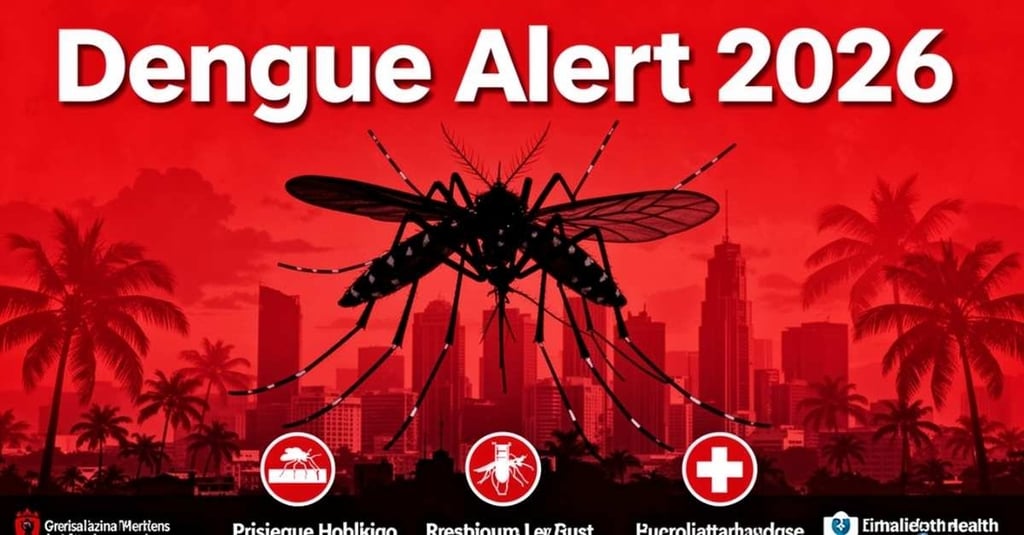
Introduction to Dengue Fever
Dengue fever, a viral illness transmitted primarily through the bites of infected Aedes mosquitoes, has increasingly become a significant public health concern worldwide. This mosquito-borne disease is prevalent in tropical and subtropical regions, affecting millions of individuals annually. The World Health Organization (WHO) estimates that approximately 3.9 billion people live in areas where dengue transmission occurs, underscoring its global significance.
The symptoms of dengue fever vary widely, ranging from mild to severe cases. Initially, individuals may experience high fever, severe headaches, joint and muscle pain, rash, and mild bleeding. In some instances, the infection can progress to dengue hemorrhagic fever or dengue shock syndrome, which pose serious health risks and may lead to hospitalization or death. These severe manifestations highlight the importance of monitoring and managing outbreaks effectively.
Transmission of the dengue virus occurs not only through mosquitoes but also via factors such as climate change, urbanization, and population density, which play pivotal roles in the spread of the disease. Historical outbreak patterns indicate cyclical trends in incidence rates, with peaks often corresponding to periods of increased rainfall and favorable conditions for mosquito breeding. Understanding these trends provides valuable insights for public health preparedness and response strategies.
As public health officials and scientists work to combat dengue fever, it becomes increasingly important to recognize the factors contributing to its prevalence and to implement effective control measures. Examination of historical data regarding dengue outbreaks can offer critical information in predicting future trends, ultimately assisting in the preservation of public health in the years to come.
Factors Contributing to Dengue Outbreaks
Dengue outbreaks are a significant concern for public health, largely due to a confluence of environmental and sociopolitical factors. One of the primary causes of dengue outbreaks is the proliferation of Aedes aegypti mosquitoes, which are the main vectors of the dengue virus. This proliferation is influenced by changing climate conditions, particularly fluctuations in temperature and rainfall patterns. As global temperatures rise, the breeding grounds for these mosquitoes expand, enabling them to thrive in previously unsuitable habitats.
Climate change has a dual effect on the mosquito population. Warmer temperatures accelerate the mosquito's life cycle, resulting in a higher reproduction rate. Moreover, increased rainfall contributes to the creation of standing water, which serves as ideal breeding sites. Urban areas, with their diverse architectural features and infrastructure, further complicate this picture. Rapid urbanization often leads to inadequate drainage systems and excessive water accumulation, creating perfect environments for Aedes aegypti mosquitoes to breed.
Additionally, urbanization itself results in overcrowded conditions and increased human exposure to mosquitoes. Higher population densities can facilitate the rapid transmission of the virus, making dengue outbreaks more likely. The development of informal settlements, often without proper sanitation and waste management, further increases the risk of outbreaks. Climate-induced migration to urban centers also compounds these challenges, as populations concentrate in areas with limited healthcare resources and infrastructure.
In summary, the interplay between climate change, urbanization, and the unique life cycle of the Aedes aegypti mosquito creates a complex landscape of risk factors that contribute to the potential for dengue outbreaks. Addressing these challenges requires a multifaceted approach, focusing on sustainable urban planning and effective public health strategies to mitigate the impact of these environmental factors.
Understanding Mosquito Breeding Patterns
Aedes aegypti mosquitoes, the primary vectors of dengue fever, exhibit specific breeding preferences that significantly influence their population dynamics. These mosquitoes thrive in urban and suburban environments where stagnant water accumulates, such as in discarded tires, flower pots, and water storage containers. Such locations provide optimal breeding habitats for Aedes aegypti due to their accessibility and the ability to maintain a warm microclimate conducive to larval development.
The breeding patterns of Aedes aegypti reveal notable seasonal variations; they tend to increase in population during warmer months when environmental conditions are favorable for reproduction. Rainfall plays a critical role in this regard, as it creates ideal conditions for mosquito larvae to flourish in temporary water bodies. Consequently, climate patterns are of paramount importance in understanding potential dengue outbreaks. For example, predictions indicate that as global temperatures rise due to climate change, regions previously considered less susceptible to Aedes aegypti incursions may experience increased risk due to the creation of new breeding sites.
Moreover, urbanization trends are likely to exacerbate the breeding of these mosquitoes. The proliferation of poorly managed water resources in rapidly urbanizing areas can serve as breeding grounds, leading to heightened mosquito presence. As global urbanization accelerates, it is crucial to implement stringent waste management and water safety measures to minimize breeding opportunities for Aedes aegypti. Environmental changes, including shifts in rainfall patterns and rising temperatures, emphasize the importance of monitoring and mitigating breeding conditions in the context of dengue's future epidemiology.
Early Symptoms and Diagnosis of Dengue Fever
Dengue fever, a viral infection transmitted primarily by Aedes mosquitoes, exhibits a range of early symptoms that play a crucial role in its diagnosis and subsequent management. The initial manifestation of dengue typically occurs four to ten days after being bitten by an infected mosquito and can easily be mistaken for other illnesses, which complicates prompt diagnosis.
The most common early symptoms include high fever, usually reaching up to 104 degrees Fahrenheit, accompanied by severe headaches, retro-orbital pain (pain behind the eyes), and generalized muscle and joint pains, often described as "breakbone fever" due to the intense discomfort it causes. Other manifestations may include a rash, nausea, vomiting, and mild bleeding tendencies, such as easy bruising or nosebleeds. It is important to note that these symptoms can vary significantly in severity among individuals, which may impact the approach to diagnosis.
Healthcare professionals typically begin the diagnostic process by conducting a thorough medical history and performing a physical examination. They also rely on various laboratory tests to confirm the presence of the dengue virus. Common diagnostic methods include serological tests, which can detect antibodies such as IgM and IgG, indicating recent or past infections, and PCR (polymerase chain reaction) tests, which identify the viral RNA itself during acute phases of the illness.
Early recognition of symptoms and timely diagnosis are paramount in managing dengue fever effectively. Failure to identify the infection can lead to severe complications, including dengue hemorrhagic fever and dengue shock syndrome, which are critical conditions requiring immediate medical intervention. Therefore, public awareness around these early symptoms is essential for expediting treatment and minimizing the burden of dengue fever on public health systems.
Effective Prevention Methods Against Dengue
Dengue fever remains a significant public health challenge across various regions of the world, necessitating robust prevention strategies to mitigate its spread. To reduce the risk of dengue transmission, individuals and communities can implement a combination of personal protective measures, environmental sanitation, and public awareness campaigns.
Personal protective measures are vital in safeguarding individuals from mosquito bites, which are the primary mode of dengue transmission. Wearing long-sleeved shirts, long pants, socks, and shoes can help minimize skin exposure during peak mosquito activity hours. Additionally, the application of repellents that contain DEET, picaridin, or oil of lemon eucalyptus can provide essential protection. Installing screens on windows and doors can further reduce indoor mosquito presence, enhancing safety within homes.
Community sanitation efforts play a crucial role in controlling mosquito populations. It is important for communities to regularly eliminate standing water in containers, such as buckets, flower pots, and discarded tires, where mosquitoes breed. Proper waste disposal and cleaning of gutters can also significantly reduce breeding sites. Community-wide initiatives, like organized clean-up events, can foster a collective responsibility, encouraging residents to maintain a dengue-free environment.
Lastly, raising public awareness is essential in preventing dengue outbreaks. Education campaigns can inform community members about the signs and symptoms of dengue, the importance of seeking medical attention, and preventive measures that should be taken. Engaging local leaders and health officials in these awareness efforts can amplify the message, ensuring that individuals understand their role in preventing dengue transmission.
In conclusion, effective prevention of dengue involves a multi-faceted approach that incorporates personal protective measures, community engagement in sanitation, and extensive public education. By adopting these strategies, individuals and communities can significantly reduce the risk of dengue fever transmission and protect public health.
Government Strategies for Dengue Control
As dengue fever continues to pose a significant public health challenge worldwide, governments are adopting various strategies aimed at mitigating its impact. These initiatives include public health policies, enhanced community engagement, and targeted mosquito control methods that collectively seek to reduce the incidence of dengue outbreaks.
Effective public health policies form the backbone of any successful dengue control strategy. Governments must ensure that appropriate resources are allocated towards disease surveillance, outbreak response, and vaccination efforts. Implementing robust surveillance systems allows for the timely detection of dengue cases, enabling health authorities to respond promptly and effectively. Furthermore, the development and distribution of vaccines, such as the Dengvaxia vaccine, represents a crucial approach in preventing severe illness among high-risk populations.
Community engagement plays a pivotal role in dengue control, as local populations are often the first line of defense against outbreaks. Educational campaigns are essential for raising awareness about dengue transmission, symptoms, and preventive measures. Governments are encouraged to collaborate with community organizations, schools, and local leaders to disseminate information and mobilize resources for vector control. Engaging communities helps foster a sense of ownership in combating dengue, ultimately leading to more effective preventive actions, such as eliminating mosquito breeding sites.
Moreover, targeted mosquito control methods have proven effective in reducing dengue transmission. Governments have adopted various strategies, including the use of insecticide-treated nets, larviciding, and the introduction of biological control agents that target mosquito populations. Innovations such as the Sterile Insect Technique (SIT) and genetically modified mosquitoes demonstrate the potential for clinical application in reducing vector populations significantly.
In conclusion, addressing dengue outbreaks necessitates a comprehensive approach that combines effective public health policies, active community engagement, and innovative mosquito control measures. By integrating these strategies, governments can work towards minimizing the impact of dengue and safeguarding public health.
Frequently Asked Questions about Dengue
What is dengue fever?
Dengue fever is a viral illness caused by the dengue virus, which is transmitted primarily by the Aedes aegypti mosquito. Commonly found in tropical and subtropical regions, this illness can lead to severe flu-like symptoms, and in severe cases, it may develop into dengue hemorrhagic fever, which can be life-threatening.
How is dengue transmitted?
The primary mode of transmission of the dengue virus is through the bite of infected Aedes mosquitoes. These mosquitoes are typically active during the day, most often early in the morning and before dusk. Additionally, dengue can also be transmitted through blood transfusions, organ transplants, and during pregnancy from mother to child, albeit these modes are less common.
What are the common symptoms of dengue?
Symptoms of dengue fever usually appear four to ten days after being bitten by an infected mosquito. Common symptoms include high fever, severe headache, pain behind the eyes, joint and muscle pain, rash, and mild bleeding. The illness can vary from mild to severe, and it is crucial to recognize severe symptoms that may indicate dengue hemorrhagic fever or dengue shock syndrome, such as persistent vomiting, abdominal pain, and difficulty breathing.
How can dengue be prevented?
Preventing dengue requires a multifaceted approach. Key strategies include eliminating mosquito breeding grounds by removing stagnant water in containers, proper waste disposal, and using repellents and mosquito nets. Public health initiatives, community awareness programs, and vaccination campaigns also play a significant role in controlling dengue outbreaks and empowering communities to protect themselves.
Why is public awareness important in fighting dengue?
Public awareness is vital in reducing the risk of dengue transmission. Increased knowledge about how dengue is spread, its symptoms, and prevention methods fosters proactive behavior in communities. Educated individuals are more likely to engage in mosquito control measures and seek timely medical attention, which can significantly decrease the incidence and severity of dengue fever.
Address:
264/5, Kamal Soroni Road, Mirpur, Dhaka-1216
Contact
Your Quaries on pest control askings
pestexterminatorbd@gmail.com
+8801642008383 +8801988300003, 01723057746
© 2025. All rights reserved. to Urban Pest Control Pvt. Ltd. this site is powered by Our Own IT Team