
DIY Air Purifier vs Commercial Air Purifier – Which Works Better?
3/7/20268 min read
Introduction to DIY Air Purifiers
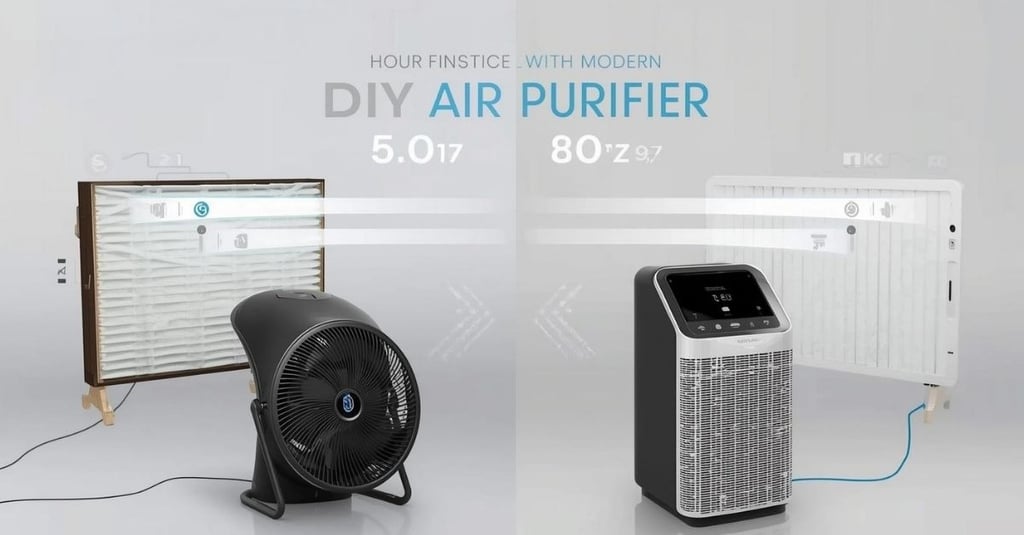
In recent years, the interest in DIY air purifiers has markedly increased, particularly among individuals seeking cost-effective solutions for improving indoor air quality. DIY air purifiers represent a creative answer to the rising concerns regarding air pollution, especially in urban environments where airborne contaminants can significantly impact health. By constructing their own air purifiers, consumers can often achieve similar, if not better, results compared to commercial HEPA purifiers at a fraction of the cost.
The benefits of utilizing DIY air purifiers extend beyond just financial savings. Many individuals appreciate the ability to customize their devices to suit specific needs, whether it be for removing allergens, pet dander, or volatile organic compounds (VOCs) that permeate household spaces. The flexibility in materials and designs allows users to tailor their air purification systems to effectively address local air quality issues, making them highly relevant for urban dwellers who are more susceptible to air pollution.
Moreover, DIY air purifiers foster a sense of empowerment and engagement. Engaging in the construction and maintenance of one’s own air quality improvement device can lead to a greater understanding of air pollution issues and the importance of maintaining healthy indoor environments. Individuals often report a sense of accomplishment in creating a functional device that enhances wellbeing and promotes cleaner air. This hands-on approach not only brings awareness to the air quality challenges faced in cities but also encourages proactive measures to combat these issues.
Ultimately, as air quality continues to be a pressing concern, the rise of DIY air purifiers serves as a testament to the ingenuity and resourcefulness of individuals striving to create healthier living spaces. The following sections will delve into the essential components and steps involved in building an effective DIY air purifier.
Materials Needed for Your DIY Air Purifier
Building a DIY air purifier can be a rewarding endeavor, providing cleaner air in your space while being cost-efficient. To successfully create your own air purifier, you'll need a selection of essential materials. The main component is a fan, preferably a box fan or a small desktop fan, which should ideally be around 20 inches in size for optimal airflow. Choosing a fan with multiple speed settings can enhance the effectiveness of your purifier.
Next, you'll require a HEPA filter, which is crucial for capturing fine particles such as dust, pollen, and pet dander. When selecting a filter, ensure it meets HEPA standards, meaning it captures at least 99.97% of particles that are 0.3 microns in size. If a HEPA filter is not available, consider alternative filters like activated carbon filters, which can aid in removing odors and volatile organic compounds (VOCs).
In addition to the fan and filter, gather some duct tape, which will be used to secure the filter in place and prevent air leaks. A power adapter that matches your fan’s voltage requirement is necessary to ensure it operates safely and efficiently. Additionally, tools such as scissors or a utility knife may be required to cut the filter material to size, ensuring a snug fit against the fan.
Lastly, consider the housing for your air purifier. While many choose to use cardboard boxes for prototype purifiers, investing in a sturdy wooden or plastic enclosure may provide longevity and aesthetics to your device. Selecting high-quality materials is essential for the effectiveness and durability of your air purifier, resulting in optimal performance in enhancing indoor air quality.
Step-by-Step Guide to Building the Air Purifier
Creating a DIY air purifier can be a straightforward and rewarding project, promoting both cleaner air and cost savings. Follow this step-by-step guide to construct your own air purifier efficiently. The primary components necessary for this assembly include a HEPA filter, a fan, duct tape, and a suitable housing material, such as a plastic container or cardboard box.
Begin by selecting an appropriate fan that is capable of pushing air through the HEPA filter. A box fan or an inline duct fan typically works well for this purpose. Ensure that the fan’s size aligns with the dimensions of the filter you have chosen, as this will enhance the air purifier's efficiency.
Next, prepare the housing for your air purifier. Cut a hole in one side of the container that matches the diameter of the fan. This is where the fan will be installed to draw air into the unit. Secure the fan in place using duct tape, ensuring that it fits snugly to avoid air leaks. Verify that the fan is positioned to pull air from the room and push it through the filter.
Once the fan is secured, it is time to install the HEPA filter. Cut another opening on the opposite side of the container that matches the size of the filter. Place the HEPA filter into this opening, ensuring it is oriented correctly to allow filtered air to exit the purifier. Again, use duct tape to secure the filter firmly; this step is crucial for maintaining the purifier's efficiency.
For added safety, consider sealing any gaps with additional duct tape to minimize air leaks. You may also want to create a pre-filter with an activated carbon layer to capture larger particles and odors before they reach the HEPA filter. Once everything is secured, your DIY air purifier is ready for use!
Comparing Filtration Quality: DIY vs. Commercial HEPA Purifiers
When evaluating the effectiveness of air purification systems, it is essential to compare the filtration quality of DIY air purifiers against that of commercial HEPA purifiers. HEPA, or High-Efficiency Particulate Air, purifiers are designed to capture a minimum of 99.97% of airborne particles larger than 0.3 microns, including common allergens such as dust mites, pollen, and pet dander. Conversely, a DIY air purifier, often constructed using a box fan and a HEPA filter, aims to replicate this efficiency.
In terms of particulate matter removal rates, commercial HEPA purifiers typically deliver more consistent results. They are subjected to rigorous testing under controlled conditions to obtain certification. This process ensures that a HEPA purifier will consistently perform close to the stated efficiency. On the other hand, a DIY system's effectiveness can vary based on the materials used, assembly quality, and operational conditions. Many DIY enthusiasts report satisfactory results, yet the lack of standardization means outcomes can differ significantly from one unit to another.
Another factor to consider is the lifespan of filters in both systems. Commercial HEPA filters usually come with recommendations on when to replace them, based on hours of operation and air quality. DIY filters, depending on the setup, may require more frequent checks and replacements, particularly if they are used heavily or are situated in environments with high pollution levels. Failure to maintain optimal performance in a DIY setup may lead to reduced air quality over time.
Ultimately, while DIY air purifiers can prove to be an effective and economical alternative for some users, understanding the filtration quality and maintenance requirements that come with them compared to commercial HEPA purifiers is vital. Engaging in thorough comparison helps ensure better air quality improvements in personal spaces.
Cost Analysis: DIY Air Purifiers vs. Commercial Options
When considering air purification options, it is important to evaluate both the initial setup costs and ongoing expenses associated with DIY air purifiers and commercial HEPA purifiers. The decision significantly hinges on budgetary constraints and individual preferences.
The cost of building a DIY air purifier can be notably lower than that of purchasing a commercial model. For instance, the basic components required for a DIY air purifier, such as a fan and a HEPA filter, can typically be acquired for $50 to $100. This initial investment can vary based on the materials selected and the design complexity. Additionally, many individuals opt for readily available tutorials that guide them through the assembly process, thus eliminating any consultation fees that might accrue from professional services.
On the other hand, commercial HEPA purifiers generally range from $100 to $1,000 depending on the brand, filtration capabilities, and extrinsic features such as air quality indicators and smart technology integrations. These purifiers are designed for convenience, as they come ready to use right out of the box. However, their higher price point reflects not just the quality of filtration but also the engineering and aesthetic design involved.
Ongoing costs are another critical aspect of this cost analysis. DIY air purifiers may incur lower maintenance costs as only the HEPA filter typically needs replacement every six months to a year, costing around $15 to $30. Conversely, commercial purifiers might require multiple filters or additional components that can raise maintenance costs significantly over time. Users may also purchase additional features which enhance performance but add to overall expenditure.
In this comparative assessment of DIY air purifiers against commercial HEPA options, it is evident that a DIY approach offers a more affordable initial investment and manageable ongoing costs, making it a viable alternative for those looking to save while improving their indoor air quality.
Safety Considerations When Building and Using Your Air Purifier
When constructing a DIY air purifier, safety should remain a primary concern throughout the process. Adhering to electrical safety standards is crucial, especially when working with components that require power, such as fans and lights. Ensure all electrical connections are secure and insulated adequately to prevent shorts and potential fires. Using low voltage components can also significantly reduce the risk associated with DIY projects.
Proper ventilation is another essential safety consideration. While the purpose of an air purifier is to improve indoor air quality, it is vital to ensure that any fumes from glue, paint, or other chemicals do not accumulate in the workspace. When assembling the device, always work in a well-ventilated area to mitigate inhalation hazards. This precaution helps safeguard your respiratory health during the build and ensures that your new purifier operates safely.
Moreover, be mindful of the materials you use in your DIY air purifier. Some filter materials, such as certain resins or adhesives, can release toxic fumes when heated. Therefore, verify the specifications and safety ratings of all components beforehand to ensure they are suitable for indoor use.
Regular maintenance of your DIY air purifier is equally important to ensure safety and optimal performance. Check components regularly for dust buildup or mechanical wear, which could impair functionality or create hazards. Clean or replace filters as needed, following manufacturer recommendations when possible. This maintenance can enhance not only the air purifier's efficiency but also the safety of its operation.
By keeping these safety considerations in mind, you can successfully build and operate a DIY air purifier that is both efficient and safe for you and your family, ensuring a healthier home environment.
Conclusion and Recommendations
Building your own DIY air purifier presents a range of benefits and challenges, especially when compared to purchasing a commercial HEPA filter model. One of the key advantages of creating a DIY air purifier is cost-effectiveness. Many individuals find that the materials needed for a homemade version are significantly cheaper than a commercial equivalent, which often comes at a premium price despite comparable filtration capabilities.
Furthermore, the process of assembling a DIY air purifier can be an educational experience. It allows individuals to appreciate the mechanics and technological principles behind air filtration systems. Additionally, custom-built purifiers can be tailored to specific needs, enabling users to prioritize certain features, such as airflow rate or filter type, that may be lacking in standard commercial models.
However, it is essential to consider that DIY air purifiers may not always achieve the same filtration efficiency as HEPA models. Commercial units are built to rigorous standards and extensively tested for performance, whereas homemade versions may vary based on craftsmanship and materials used. Moreover, there is a concern regarding the durability and maintenance of DIY purifiers. Regular filter replacement and device upkeep are crucial for ensuring optimal performance, which some users may find challenging.
In light of these considerations, it is recommended for individuals contemplating a DIY air purifier to weigh their personal needs against the potential limitations. For those seeking a budget-friendly option for improving indoor air quality and willing to engage in regular maintenance, building a DIY air purifier can be a fulfilling project. Conversely, if longevity, reliability, and guaranteed performance are priorities, investing in a reputable commercial HEPA purifier may be the preferable choice. Ultimately, understanding both options allows for informed decision-making tailored to one’s unique air quality needs.
Address:
264/5, Kamal Soroni Road, Mirpur, Dhaka-1216
Contact
Your Quaries on pest control askings
pestexterminatorbd@gmail.com
+8801642008383 +8801988300003, 01723057746
© 2025. All rights reserved. to Urban Pest Control Pvt. Ltd. this site is powered by Our Own IT Team