
Gel, Bait & Micro-Encapsulated Insecticide Technologies Explained
Gel, Bait & Micro-Encapsulated Insecticide Technologies Explained
1/31/20267 min read
Introduction to Insecticide Technologies
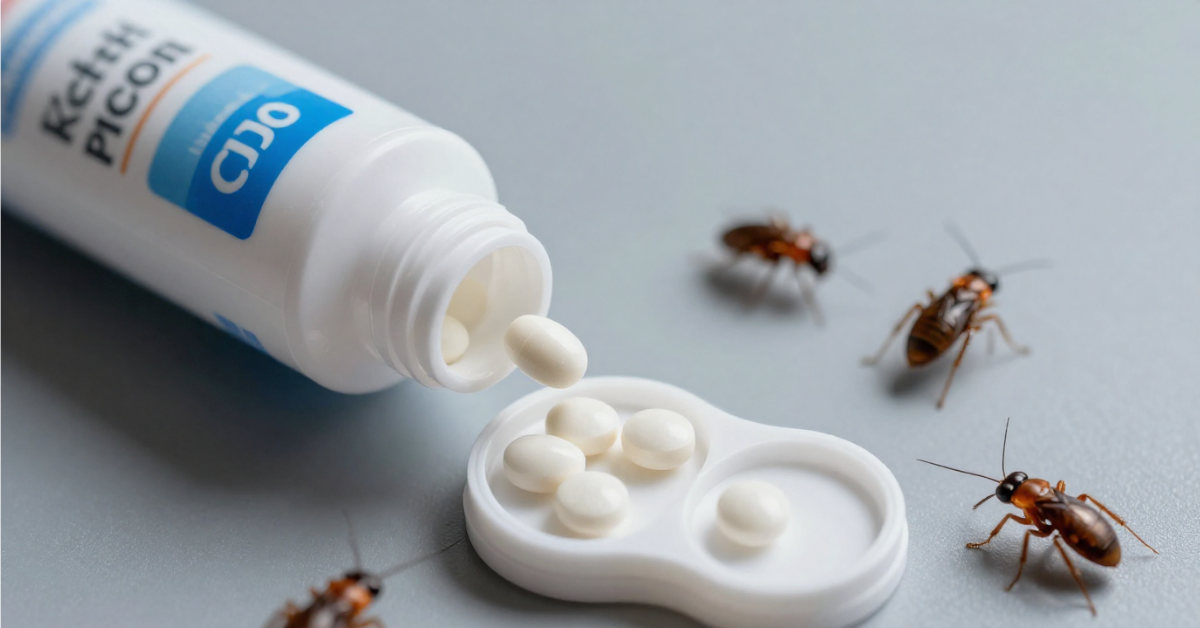
Insecticide technologies play a pivotal role in modern pest control strategies, addressing the challenges posed by a variety of insect pests in residential, agricultural, and commercial settings. Among the most prevalent and effective methods employed are gel, bait, and micro-encapsulated insecticides. These technologies not only enhance the effectiveness of pest management strategies but also align with the increasing demand for environmentally responsible practices.
Gel insecticides are formulated to deliver a highly palatable substance that attracts pests while providing a lethal dose of active ingredients. Their attractive formulation allows for the targeted elimination of specific insect populations, significantly improving control over pest outbreaks. Bait insecticides, on the other hand, utilize a similar principle but often involve a more complex formulation that can include a combination of food and toxicant, appealing to a wide range of insect species. Baits can be particularly advantageous in controlling pests such as ants and cockroaches, as these pests readily consume the bait and transfer it to their colonies, amplifying the effectiveness of the treatment.
Micro-encapsulation is a relatively newer technology that offers additional benefits in pest control. This method employs tiny capsules to encase the active ingredients, allowing for a gradual release over time. This slow release makes micro-encapsulated insecticides effective in providing long-lasting protection while reducing the risk of non-target exposure. By minimizing immediate environmental impact, this technology addresses concerns about the safety and sustainability of pest control methods.
As we delve deeper into each of these insecticide technologies, it becomes clear that understanding their distinct characteristics and applications is essential for effective pest management. Utilizing these advancements in insecticide formulations not only contributes to controlling pest populations more effectively but also promotes responsible practices that align with environmental health and safety standards.
What are Gel Insecticides?
Gel insecticides represent a unique category of pest control products, characterized by their thick, viscous consistency. Unlike traditional liquid insecticides, gels typically consist of an active ingredient suspended in a gel matrix. This formulation allows for targeted application, which is particularly advantageous in pest management, especially for hard-to-reach areas or where other treatments may fail.
The mechanism of action for gel insecticides often involves the ingestion of the gel by pests. Upon contact with the active ingredient, pests experience a lethal effect, gradually leading to their elimination. This delayed action ensures that not only the targeted individual insect is affected but also those that come into contact with it, as they traverse through treated surfaces or share feeding sites.
One of the primary advantages of gel insecticides is their specific targeting capabilities. They can be effectively employed against various pests, including ants, cockroaches, termites, and bed bugs. Their long-lasting formulation can remain effective for weeks, providing extended pest control without the need for frequent reapplication. Additionally, the discrete nature of gel applications means they can be used in household settings, including kitchens and living rooms, without causing significant disturbance.
However, there are important safety considerations when using gel insecticides. It is essential to follow manufacturer instructions regarding application methods and dosage to ensure safety for humans and pets. Moreover, while gel insecticides can significantly reduce pest populations, they should be used as part of an Integrated Pest Management (IPM) strategy to enhance overall effectiveness and minimize environmental impact.
Understanding Bait Insecticides
Bait insecticides serve as an effective method for controlling pest populations by incorporating attractants that entice insects to consume the poisonous components. These formulations are composed of a combination of food sources, active insecticidal ingredients, and sometimes additional attractants. The primary mechanism of action involves the consumption of the bait by target pests, which ultimately leads to their demise. Baits can be particularly advantageous because they allow for targeted pest control, minimizing harm to non-target organisms.
There are generally two main categories of bait insecticides: poison baits and edible baits. Poison baits contain toxic substances that are lethal to pests upon ingestion. Commonly, these include active ingredients such as hydramethylnon and fipronil, which disrupt essential biological processes within the insects. Edible baits, on the other hand, consist of non-toxic ingredients that attract pests and may be laced with a slow-acting insecticide, allowing for more thorough pest elimination, as affected insects can return to their colonies and spread the poison.
The benefits of using bait insecticides are numerous. Firstly, they are generally more efficient, as the baits can be strategically placed where pests are likely to feed, increasing the chance of contact. Secondly, baiting helps reduce chemical contamination risks in the environment, given that they target specific pests and minimize excess application. However, bait insecticides also have limitations; they can take longer to exhibit effects compared to contact insecticides, and there is a chance that non-target species may inadvertently consume the bait. Thus, careful consideration must be given to the selection and application of such products to ensure efficacy while minimizing potential drawbacks.
Introduction to Micro-Encapsulated Insecticides
Micro-encapsulated insecticides represent a significant advancement in pest control technology. This innovative approach involves encapsulating the active ingredients of insecticides within tiny polymeric shells, creating microspheres that can enhance effectiveness and safety. The encapsulation process generally employs techniques such as coacervation, solvent evaporation, or spray drying, allowing for a controlled release of the insecticide over time. This slow release mechanism not only prolongs the insecticidal effect but also minimizes the risk of environmental contamination, making micro-encapsulated formulations a preferred choice for many pest management applications.
One of the primary advantages of micro-encapsulation is its ability to provide controlled release. Traditional insecticides often disperse their active ingredients quickly, leading to a spike in effectiveness followed by rapid degradation. In contrast, micro-encapsulated insecticides gradually release their active compounds as the microspheres break down over time, offering sustained pest control. This characteristic ensures a more prolonged exposure to the active ingredients, potentially improving efficacy against target pests while minimizing the frequency of applications required.
Safety is another significant benefit of micro-encapsulated insecticides. The encapsulation process effectively isolates the active ingredients, reducing the potential for human exposure during application. Additionally, because the insecticide is released gradually, there is a lower likelihood of harmful peaks in concentration, which can adversely affect non-target organisms. These attributes make micro-encapsulated formulations not only safer for applicators but also more environmentally friendly.
Furthermore, the efficiency of micro-encapsulated insecticides can also lead to reduced costs over time. While the initial investment may be higher due to advanced manufacturing processes, their extended effectiveness and safety measures can result in fewer applications and less pesticide waste overall. Consequently, micro-encapsulation technology not only enhances the performance of traditional insecticides but also promotes a more sustainable approach to pest control.
Comparing Gel, Bait, and Micro-Encapsulated Insecticides
When evaluating the effectiveness of insecticides, three popular technologies emerge: gel, bait, and micro-encapsulation. Each method offers distinct advantages and is suited for specific pest control scenarios. Understanding these differences can assist both professionals and homeowners in making informed decisions.
Gel insecticides are typically favored for their ease of application and targeted delivery. These products often consist of a thick, viscous substance containing active ingredients that attract pests. Their effectiveness largely hinges on their application method, which allows precise placement in hard-to-reach areas. Such attributes make gels particularly effective for indoor use, where they can control ant, cockroach, and spider populations. Additionally, the persistence of gel formulations can provide long-lasting results, further enhancing their appeal.
Bait formulations, often presented as granules or liquids, are designed to attract target pests. They work on the principle of ingestion, where pests consume the bait and subsequently die. This method is especially effective for insects like termites and ants. Baits can be strategically placed around the perimeter of a property or in problem areas, offering flexibility in application. However, the speed of effectiveness may vary depending on the infestation level and bait consumption by pest populations.
Micro-encapsulated insecticides represent a more advanced technology, wherein the active ingredient is encapsulated in a protective coating. This allows for slow release over time, improving efficacy and extending residual activity. Micro-encapsulation is particularly beneficial for outdoor pest control applications, as the formulation is resistant to environmental factors such as sunlight and moisture. Cost-wise, while micro-encapsulated products may be more expensive upfront, their longevity and effectiveness may justify the investment, particularly in severe infestations.
In conclusion, the choice between gel, bait, and micro-encapsulated insecticides largely depends on the specific pest problem, application environment, and budget considerations. By carefully assessing these factors, consumers can select the most suitable insecticide technology for their needs.
Advantages and Disadvantages of Each Technology
When choosing an insecticide technology, understanding the advantages and disadvantages of gel, bait, and micro-encapsulation products is essential. Each method has unique characteristics that can cater to specific pest control needs.
Gel insecticides are known for their targeted application. Their efficacy lies in their ability to lure pests, providing a focused approach that minimizes the impact on non-target organisms. However, one significant disadvantage is the potential for a limited area of effect, as gels may not spread as widely as other methods. Additionally, their effectiveness can be compromised in environments with fluctuating moisture or temperature.
Baits are widely used because they often contain attractants that increase the likelihood of pest consumption. This technology can deliver long-lasting results as pests carry the bait back to their nests, reducing the population more efficiently. However, one drawback of bait systems is that they can pose a risk to non-target species, particularly in outdoor settings where animals might access them. Furthermore, baits may require monitoring and replenishment, which can be labor-intensive.
Micro-encapsulation technology offers a slow-release mechanism for insecticides, extending the longevity of effectiveness compared to traditional formulations. This can lead to fewer applications overall, reducing labor costs and environmental footprint. However, the initial formulation may be more complex and expensive to produce, which could affect pricing for consumers.
In summary, understanding the advantages and disadvantages of gel insecticides, baits, and micro-encapsulation helps consumers make informed decisions. Factors such as usability, impact on non-target organisms, longevity of effectiveness, and environmental considerations must be weighed carefully to select the most appropriate pest control solution for specific situations.
Conclusion and Recommendations
In summarizing the discussion on insecticide technologies, specifically gel, bait, and micro-encapsulation, it is essential to highlight the effectiveness and distinct advantages of each method. Gel insecticides, known for their targeted application and ease of use, are particularly beneficial in indoor environments. Bait formulations attract pests, making them an efficient option for managing infestations effectively over time. Micro-encapsulation offers prolonged efficacy by protecting the insecticide from environmental factors, thus extending its action and minimizing the frequency of application.
Readers are encouraged to approach insecticide use responsibly. Carefully reading labels and understanding the application guidelines is critical for both effective pest management and personal safety. Such adherence ensures that insecticides are applied appropriately, mitigating potential risks to human health and the environment. Moreover, ensuring that proper protective gear is worn during application can significantly reduce exposure.
It is also prudent to consider integrated pest management (IPM) approaches when dealing with pest issues. IPM combines various strategies, such as biological control, habitat modification, and the judicious use of insecticides, to manage pest populations sustainably. By employing a holistic perspective, individuals can foster effective pest control solutions while minimizing reliance on chemical treatments.
In conclusion, understanding the diverse insecticide technologies outlined in this blog can aid consumers in making informed decisions about pest control. Tailoring strategies based on specific situations and pest types enhances the efficiency of control measures while promoting sustainability in pest management practices.
Address:
264/5, Kamal Soroni Road, Mirpur, Dhaka-1216
Contact
Your Quaries on pest control askings
pestexterminatorbd@gmail.com
+8801642008383 +8801988300003, 01723057746
© 2025. All rights reserved. to Urban Pest Control Pvt. Ltd. this site is powered by Our Own IT Team