
Global Overview of the Most Dangerous Pests: Impact on Health, Food Security, and Infrastructure
2/6/20267 min read
Introduction to Dangerous Pests
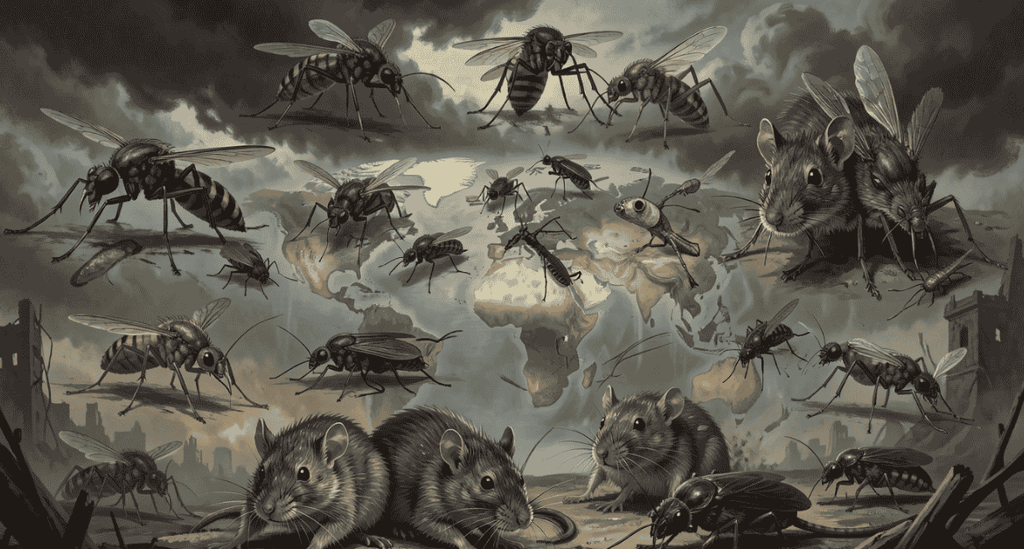
Dangerous pests are organisms that pose significant threats to human health, agriculture, and infrastructure. These pests can be classified into several categories, primarily including insects, rodents, and invasive species. Understanding these categories is crucial for preventing and managing their effects effectively. Insects, for instance, encompass a wide range of species—some are notorious for transmitting diseases like malaria and dengue fever, while others can cause substantial damage to crops, leading to food insecurity.
Rodents, another category of dangerous pests, are known carriers of various pathogens and can compromise food storage and infrastructure stability. Their ability to reproduce rapidly and adapt to various environments makes them particularly challenging to control. Invasive species, often introduced through human activity, can displace native species and disrupt ecosystems, further exacerbating the impact on food security and biodiversity.
Awareness of dangerous pests goes beyond mere identification; it necessitates a comprehensive understanding of their life cycles, behaviors, and interactions with human environments. As these pests thrive in conditions created by human actions, such as urbanization and climate change, their management becomes more critical. This includes implementing pest control measures, educating communities, and developing sustainable agricultural practices that minimize pest invasions.
The complexities of pest dynamics emphasize the need for cohesive global strategies to mitigate their impact. As we delve into the details of how various pests threaten health, food security, and infrastructure, it is imperative to recognize the interconnected nature of these challenges. This overview sets the stage for a detailed examination of specific pests and the broader implications of their presence in our ecosystems.
Health Risks Associated with Dangerous Pests
The prevalence of dangerous pests poses significant health risks globally, impacting millions of individuals each year. Notably, vectors such as mosquitoes and ticks have been identified as primary transmitters of various pathogens, leading to severe diseases including malaria, dengue fever, Lyme disease, and Zika virus. According to the World Health Organization (WHO), malaria alone resulted in approximately 229 million cases worldwide in 2019, particularly affecting individuals in sub-Saharan Africa. Vulnerable populations, including children under five and pregnant women, are disproportionately affected by such parasitic infections.
Ticks also play a critical role in the transmission of vector-borne diseases, with Lyme disease being one of the most concerning examples, especially in temperate regions. The Centers for Disease Control and Prevention (CDC) estimated that there are around 300,000 cases of Lyme disease in the United States each year, highlighting the need for awareness and preventive measures in communities at risk.
The impact of these pests is exacerbated in regions with limited healthcare access, where early diagnosis and treatment may be compromised. In rural areas, where infrastructure for healthcare is not well established, the consequences can be dire. Furthermore, climate change is expanding the geographical range of many of these pests, increasing the health risks in previously unaffected areas. For instance, as temperatures rise, mosquitoes are beginning to thrive in higher altitudes and latitudes, thereby posing new threats to public health.
In conclusion, understanding the health risks associated with dangerous pests is crucial for developing effective public health strategies. Implementing proactive measures, including vector control and health education, can greatly mitigate the impact of these pests on vulnerable populations, ultimately improving health outcomes globally.
Impacts on Food Security
The relationship between dangerous pests and food security is a critical issue that resonates globally. Pests, primarily insects and rodents, are responsible for significant crop damage, leading to alarming reductions in food availability. According to the Food and Agriculture Organization (FAO), pests contribute to global crop losses that reach approximately 20-40% each year, affecting both subsistence and commercial farming operations.
Insects such as locusts, aphids, and various beetles damage crops during their growth cycles, undermining the yields that farmers depend on. The economic ramifications are profound, as farmers are unable to meet market demands or sustain their livelihoods. For example, the desert locust outbreaks that swept across East Africa in 2020 destroyed substantial portions of crops, directly threatening the food security of millions.
Additionally, rodents pose a severe risk to food storage facilities where grains and other products are kept before distribution. Estimates suggest that rodents can consume or contaminate up to 20% of stored food, exacerbating the challenges of food security, particularly in regions already vulnerable to food scarcity. The economic implications of rodent infestations can be significant, leading to increased costs for pest control measures and reduced income for farmers and suppliers.
Statistics reveal that in certain regions, such as sub-Saharan Africa and Southeast Asia, high levels of food loss due to pest damage are alarmingly common. Case studies illustrate that comprehensive pest management strategies are critical not only for preserving agricultural investments but also for ensuring the overall food supply chain remains intact. The escalation of pest infestations necessitates immediate global attention and coordinated efforts among governments, organizations, and farmers to protect food security from these dangerous pests.
Economic Damage from Pest Infestations
Pest infestations pose a significant threat not only to public health but also to the economy, causing severe financial repercussions across various sectors. Estimates indicate that pests can cause billions of dollars in economic losses annually. The impact is multifaceted, leading to increased healthcare costs due to diseases spread by pests, diminished agricultural productivity, and damage to critical infrastructure.
Healthcare costs associated with pest-related diseases are substantial. For instance, vector-borne diseases such as malaria and dengue fever can lead to public health crises requiring significant expenditure on medical treatments and preventive measures. In developing countries, where healthcare resources are already limited, these additional costs can overwhelm local economies, diverting funds from other essential services and enhancing the burden on vulnerable populations.
Agricultural productivity suffers greatly from pest infestations as well. Crops and livestock can be severely affected, leading to lower yields and quality. The Food and Agriculture Organization (FAO) estimates that pests account for roughly 40% of global crop losses. This reduction not only impacts food security but also affects farmers' incomes, ultimately leading to increased prices for consumers. The ripple effect can decimate local economies reliant on agriculture, reducing both employment opportunities and food availability.
Infrastructure damages are another serious concern related to pest infestations. For example, termites can cause significant structural damage to buildings and homes, prompting costly repairs and maintenance. Urban areas may face higher expenses in pest control and management strategies, which adds further strain to municipal budgets.
In summary, the economic damage from pest infestations reaches far beyond immediate financial losses. It encompasses healthcare costs, agricultural setbacks, and infrastructure damages, which collectively hinder local and national economic stability. Addressing these challenges requires comprehensive strategies to mitigate pest impacts and protect both public health and economic interests.
Global Statistics on Pest Prevalence and Impact
Pests pose a significant challenge on a global scale, affecting public health, food security, and infrastructure. According to the World Health Organization (WHO), vector-borne diseases, largely attributed to pests such as mosquitoes and ticks, result in approximately 700,000 deaths annually. This staggering figure highlights the urgent need for effective pest control strategies to mitigate these health risks.
From an agricultural perspective, pests such as locusts, rodents, and certain insects can lead to extensive crop damage and losses. The Food and Agriculture Organization (FAO) estimates that pests account for about 20 to 40 percent of global crop yields. In terms of economic impact, the annual financial losses attributed to pest damage and the corresponding control measures are estimated at over $200 billion globally. This economic strain disproportionately affects developing countries, where food security is already threatened.
Furthermore, the prevalence of pests in urban settings is on the rise. Urban pest populations, including rats and termites, contribute to millions in structural damage each year. For instance, the National Pest Management Association (NPMA) reports that rodents are responsible for damaging approximately 25% of the world’s food supply, which could feed an additional 1.5 billion people. The demand for urban pest management services has surged by 50% in the last decade, as cities grapple with the challenges of pest proliferation in densely populated areas.
To visualize the scale of the pest problem, various infographics and charts have been created, illustrating pest distribution, economic losses, and the correlation between pest prevalence and disease outbreaks. Such data serves not only to underline the urgency of pest control measures but also emphasizes the need for coordinated action on a global scale to tackle these persistent threats to health and food systems.
Prevention and Control Measures
To combat the impact of dangerous pests on health, food security, and infrastructure, a multifaceted approach involving integrated pest management (IPM) strategies is essential. Integrated pest management emphasizes the use of a combination of biological, cultural, physical, and chemical practices to control pest populations effectively. This approach not only focuses on the immediate elimination of pests but also on preventing their resurgence through sustainable practices.
Public health initiatives play a critical role in pest management, particularly in urban settings where pests can thrive due to higher population densities and waste accumulation. Community awareness campaigns are crucial to educate the public about pest identification, the risks associated with infestations, and preventive measures. These initiatives often include workshops that demonstrate effective sanitation practices, such as proper waste disposal and habitat modification, aimed at reducing pest breeding sites.
Innovative technologies are also transforming pest control measures. Smart traps equipped with sensors and analytics can monitor pest populations in real-time, enabling timely and targeted interventions. Additionally, biocontrol methods, which utilize natural predators or pathogens to suppress pest numbers, are gaining traction as environmentally friendly alternatives to chemical pesticides. Utilizing these technologies in conjunction with traditional methods enhances the effectiveness of pest control efforts while minimizing ecological impact.
Best practices for pest prevention must also be rooted in community engagement. Collaboration between local governments, agricultural sectors, and the public fosters a unified approach towards pest control. Encouraging communities to participate in monitoring and reporting pest activities enhances the capacity to respond swiftly to infestations. Furthermore, collective community action enhances the resilience of local ecosystems against pest threats.
Conclusion and Call to Action
In conclusion, the global threat posed by dangerous pests cannot be underestimated. These organisms not only compromise public health by transmitting diseases but also significantly impact food security and infrastructure. The risks associated with pests such as rats, locusts, and mosquitoes underscore the need for urgent and sustained action. They disrupt food supply chains, cause economic losses, and can lead to health crises, necessitating a multifaceted approach to pest management.
As we have discussed throughout this blog post, the effects of pest infestations extend far beyond mere annoyance. They can lead to devastating consequences for crops, livestock, and human populations. Therefore, it is crucial for individuals, communities, and policymakers to recognize their roles in combating this challenge. Education on pest identification, prevention strategies, and sustainable pest control measures are essential. Individuals can begin by maintaining cleanliness in their surroundings to reduce breeding habitats, while communities can promote awareness campaigns to educate the public about the dangers posed by these pests.
Policymakers, on the other hand, must prioritize research and funding for pest control initiatives that are both effective and environmentally sound. Collaborative efforts at local, national, and global levels can lead to the development of innovative solutions that not only protect health but also safeguard food security and infrastructure. As we move forward, it is imperative that we take these issues seriously and work together towards a pest-free future. Only through collective action can we mitigate the impact of dangerous pests and ensure a healthier planet for generations to come.
Address:
264/5, Kamal Soroni Road, Mirpur, Dhaka-1216
Contact
Your Quaries on pest control askings
pestexterminatorbd@gmail.com
+8801642008383 +8801988300003, 01723057746
© 2025. All rights reserved. to Urban Pest Control Pvt. Ltd. this site is powered by Our Own IT Team