
How Agricultural Drones Are Revolutionizing Farming in Bangladesh
2/16/20267 min read
Introduction to Drone Spraying in Agriculture
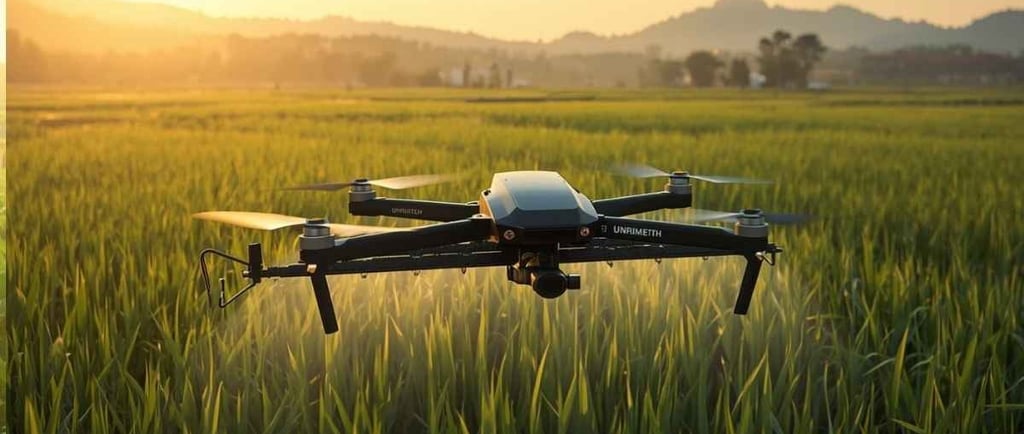
Drone spraying has emerged as a transformative technique within the agricultural sector, facilitating efficient and precise application of pesticides, fertilizers, and other essential nutrients. Traditionally, these tasks were labor-intensive, often requiring manual labor or large machinery, leading to inefficiencies and increased costs. In contrast, drone technology allows for a more modern approach, utilizing unmanned aerial vehicles (UAVs) equipped with advanced spraying systems to cover large areas swiftly and effectively.
The types of drones used in agriculture can broadly be categorized into fixed-wing drones and multirotors. Fixed-wing drones are generally used for larger fields, covering extensive areas with greater speed and efficiency, while multirotors provide flexibility and better maneuverability for targeted applications, particularly in smaller or more complex fields. Both types have integrated systems that facilitate precise control over the application rate, ensuring optimal use of agrochemicals and minimizing waste.
The technology behind drone spraying includes various features such as GPS navigation, real-time data collection, and automated flight planning. These advancements not only enhance operational efficiency but also contribute to data-driven agriculture, wherein farmers can make informed decisions based on extensive aerial analytics. Drones can collect data regarding crop health, moisture levels, and pest infestations, effectively transforming traditional farming practices into a more proactive and responsive model.
As the agricultural sector continues to embrace innovation, drone spraying is setting a precedent for the future of precision farming. By adopting this technology, farmers can significantly improve productivity while promoting sustainable farming practices through responsible chemical usage and environmental stewardship.
How Drone Spraying Works: A Detailed Overview
Drone spraying is an innovative method that employs unmanned aerial vehicles (UAVs) to execute precise applications of pesticides, herbicides, and fertilizers directly onto crops. This technique maximizes efficiency and minimizes labor costs while ensuring that agricultural inputs are distributed evenly and accurately. The process begins with the careful selection of crops that require treatment, on which the type of pesticide or fertilizer to be used is decided based on agronomic data.
To ensure the best results, farmers utilize a variety of agricultural drones equipped with advanced technologies. These drones can be fitted with GPS systems, sensors, and cameras to gather data and analyze the current condition of the crops. After the evaluation phase, a specific plan can be developed for the aerial application. The drones can be programmed to focus on designated sections of a field, ensuring that no area is overlooked and preventing over-spray, which could lead to chemical run-off and potential environmental damage.
When preparing for drone spraying, operators select optimal flight parameters, including altitude and speed. These settings allow for maximum coverage while reducing the risk of drifting substances. Often, the drones are equipped with precisely calibrated nozzles that create uniform spray patterns tailored to the type of treatment being applied. Monitoring during the flight can be continuously adjusted to improve accuracy.
Moreover, safety measures are of paramount importance during drone operation. Operators must adhere to regulations regarding restricted airspaces while also ensuring that no bystanders are in the vicinity during spraying. This not only protects human health but also reduces risks to non-target species and promotes responsible agricultural practices.
The Role of GPS in Precision Farming
Global Positioning System (GPS) technology has fundamentally transformed precision farming, providing farmers with the tools necessary to enhance crop management and optimize agricultural practices. By utilizing precise GPS coordinates, farmers can track exact locations for various agricultural activities, including spraying, planting, and monitoring crop health. This level of precision ensures that interventions are made at the right times and in the right amounts, which is critical for maximizing yield and minimizing waste.
In precision farming, farmers implement GPS-guided machinery and equipment to achieve high accuracy in field operations. For instance, drone technology, when integrated with GPS, allows for accurate mapping and assessment of fields, enabling targeted spraying of pesticides and fertilizers. This targeted approach helps in mitigating the environmental impact of chemicals by reducing excess application. Moreover, drone imagery, paired with GPS data, offers insights into crop health, enabling farmers to address issues early and effectively.
The integration of GPS not only streamlines operations but also enhances decision-making processes in agriculture. The data collected from GPS-enabled devices helps farmers analyze patterns and trends, leading to better forecasts and planning. For example, knowing specific areas of a field that require more attention allows for more efficient use of inputs. Furthermore, this information helps in crop rotation and selection by providing valuable insights into soil health and moisture levels.
Overall, the role of GPS in precision farming cannot be overstated. By revolutionizing the way farmers conduct their activities, GPS technology facilitates improved efficiency, productivity, and sustainability in agriculture. As farmers increasingly adopt GPS technology and drone integration, the landscape of modern farming will continue to evolve, aligning agricultural practices with the demands of the future.
Cost Analysis of Drone Spraying per Acre
Implementing drone spraying in agriculture represents both an opportunity and a financial commitment for farmers. The first aspect to consider is the equipment costs, which include the drone itself and necessary accessories. Prices for agricultural drones vary based on features, flight time, and payload capacity, generally ranging from $5,000 to $20,000. Additionally, farmers may invest in advanced software for data collection and analysis. This can add another $1,000 to $5,000 to the overall cost. Therefore, the initial investment for a complete drone spraying setup can vary considerably, potentially exceeding $25,000, particularly for larger operations.
Operational costs also play a significant role in the comprehensive cost analysis. This includes maintenance, repairs, insurance, and the cost of skilled operators who can effectively handle the technology. Maintenance costs can average about $1,000 annually, depending on usage frequency and drone specifications. Moreover, professional drone operators may charge anywhere from $50 to $150 per hour, significantly impacting overall costs, especially during peak agricultural seasons.
Furthermore, farmers must consider the other investments required for seamless integration of drone technology into their operations. Training sessions for staff can be an added expense, ranging from a few hundred to several thousand dollars, depending on the complexity of the technology. Moreover, the cost-effectiveness of drone spraying often hinges on its application and effectiveness in crop management. In many cases, the investment in drone technology can lead to savings on chemical inputs, labor costs, and improved crop yields. This transformative agricultural practice can bring about financial benefits over time but requires careful planning and detailed financial analysis to assess its viability on a per acre basis.
Labor Reduction Impact of Drone Spraying
The advent of drone spraying technology in agriculture has fundamentally altered labor requirements within the sector. Traditionally, crop spraying has relied heavily on manual labor, where workers are required to apply pesticides and fertilizers by hand or through conventional machinery. This manual process tends to be labor-intensive, requiring significant human resources and time. However, the implementation of drone technology allows for large areas to be covered quickly and efficiently, significantly reducing the demand for labor in this aspect of farming.
Drone spraying automates the application process, enabling farmers to manage their crops with minimal manual intervention. A single drone can cover hundreds of acres in a day, which drastically decreases the number of workers needed for tasks such as spraying chemicals or fertilizers. As a result, producers can streamline their operations, potentially reallocating their labor force to other critical agricultural functions that require human oversight, such as harvesting or monitoring crop health.
Furthermore, operating drones does necessitate a different skill set compared to traditional agricultural labor. Farmers and agricultural workers will need training in drone operation and data analysis, which may lead to a shift in the types of jobs available within this industry. While this shift may appear to threaten traditional jobs, it can also create opportunities in new areas such as drone maintenance, programming, and data-driven agricultural management practices.
Overall, the integration of drone technology in agriculture marks a significant transformation in labor dynamics. As farms embrace precision farming techniques facilitated by drones, the agricultural workforce will need to adapt. This transition underscores the importance of continuous education and training for current and future workers, ensuring they are equipped to meet the evolving demands of the industry.
Return on Investment (ROI) for Commercial Farmers Using Drones
The integration of drone technology into the agricultural sector represents a significant advancement in precision farming, particularly regarding aerial spraying. For commercial farmers, the return on investment (ROI) associated with adopting drone spraying solutions can be substantial, given the myriad of benefits that this technology offers.
One of the primary factors contributing to favorable ROI is the increase in crop yield. Drones enable precise application of fertilizers and pesticides, targeting specific areas that require treatment while minimizing waste. According to a recent study, farms utilizing drone services reported yield increases of up to 10-15% in comparison to traditional spraying methods. This increase translates directly to higher revenue for farmers, ultimately improving their overall financial performance.
Cost reduction is another critical component of ROI for commercial farmers. Traditional spraying often necessitates substantial labor and equipment costs. In contrast, drone spraying reduces the need for ground-based machinery and extensive labor, as drones can cover large areas in a fraction of the time. For instance, a farmer may save hundreds of dollars per acre by adopting drone technology, which simplifies the spraying process and lowers operational expenses.
Time savings further bolster the ROI of drone adoption. With the ability to complete tasks much faster than human-operated equipment, farmers can effectively manage their time and resources, allowing them to focus on other critical farming operations. This rapid turnaround not only leads to timely interventions for pest and weed management but also opens up opportunities for additional crop cycles throughout the year.
In conclusion, the financial benefits derived from integrating drone technology into commercial farming are substantial. By improving yield, reducing costs, and enhancing efficiency, drone spraying ultimately leads to significant returns on investment, positioning farmers for long-term success in an increasingly competitive agricultural landscape.
Conclusion: The Future of Agriculture with Drone Technology
The integration of drone technology into agriculture represents a transformative shift towards precision farming, ushering in unprecedented efficiency and sustainability. Drones have emerged as indispensable tools that facilitate precise monitoring and management of crops, thereby enhancing productivity while minimizing environmental impact. This evolution of agricultural methods promises not only to optimize resource use but also to address the pressing challenges of food security and climate change.
As outlined throughout this article, the applications of drone spraying extend beyond mere crop protection; they encompass comprehensive crop management strategies, including the assessment of soil health and monitoring of crop growth. This multifaceted approach enables farmers to make data-driven decisions, which contribute to more sustainable practices. The real-time data collected by drones aids in identifying potential issues before they escalate, allowing for timely interventions that ultimately improve yields.
Looking to the future, it is apparent that the role of drone technology in agriculture will continue to expand. Innovations such as artificial intelligence and machine learning are poised to further enhance the accuracy and usefulness of these aerial systems. By improving precision in spraying techniques, farmers can reduce chemical use, resulting in healthier ecosystems and ultimately benefiting consumers. Moreover, the accessibility of drone technology is rapidly increasing, making it available to a broader range of farmers, from small holders to large-scale operations.
In conclusion, the ongoing integration of drone technology within agriculture heralds a new era characterized by higher efficiency and sustainability. The potential for drones to revolutionize farming practices is significant, paving the way for an agricultural landscape that is more responsive to the needs of both producers and consumers. As these technologies evolve, they will be vital in shaping future agricultural practices and ensuring a secure, sustainable food supply for generations to come.
Address:
264/5, Kamal Soroni Road, Mirpur, Dhaka-1216
Contact
Your Quaries on pest control askings
pestexterminatorbd@gmail.com
+8801642008383 +8801988300003, 01723057746
© 2025. All rights reserved. to Urban Pest Control Pvt. Ltd. this site is powered by Our Own IT Team