
How Air Purifiers Remove Dust, Smoke and Bacteria – Scientific Guide
3/7/20267 min read
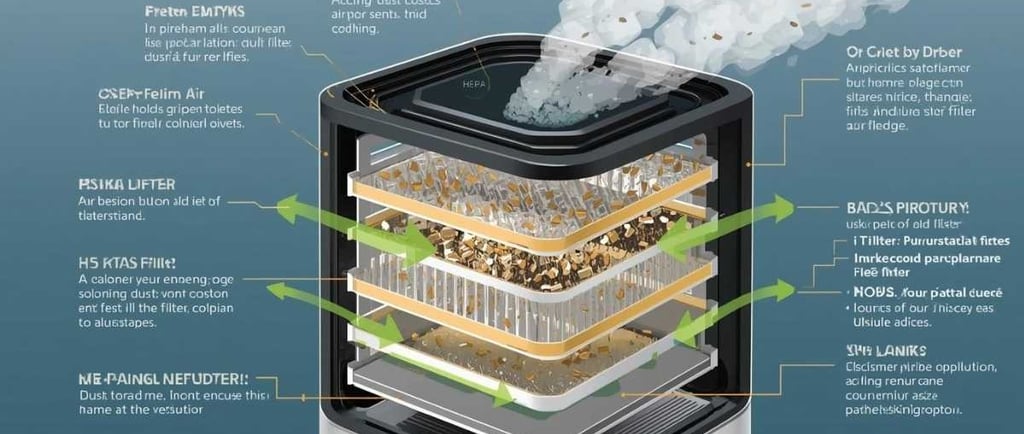
Introduction to Air Purifiers
In an era where indoor environments often harbor various pollutants, air purifiers have emerged as essential devices for ensuring healthier living spaces. These devices work by removing contaminants from the air, thereby improving indoor air quality, a critical aspect of overall health and well-being. Common sources of indoor air pollution include household chemicals, mold, pet dander, pollen, and dust mites. Prolonged exposure to these pollutants can lead to respiratory issues, allergies, and other health challenges.
The impact of poor indoor air quality can be particularly pronounced in closed environments, where ventilation is limited. For instance, in homes and offices, the accumulation of pollutants increases the risk of long-term health problems, making it vital to consider mitigation strategies. Air purifiers play a significant role in combating these issues by filtering out harmful particles and substances, thus creating a cleaner, more breathable atmosphere.
The mechanics of air purifiers vary depending on the type used. Some employ HEPA filters designed to trap microscopic particles, while others use activated carbon to absorb odors and gases. Additionally, ultraviolet (UV) light purifiers work by neutralizing pathogens, contributing to overall air security. Each of these methods has its advantages, catering to different needs and preferences.
With a variety of options available, selecting the right air purifier requires understanding specific indoor pollution sources and individual health concerns. This guide will delve deeper into the workings of various air purifier types and assist readers in making informed decisions regarding their air quality needs.
HEPA Filters: The Gold Standard in Air Filtration
High-Efficiency Particulate Air (HEPA) filters represent the benchmark for air filtration technology, renowned for their exceptional ability to capture a wide array of airborne particles. Constructed from a mat of randomly arranged fibers, these filters can be composed of fiberglass or polypropylene, with a typical diameter of 0.5 to 2.0 micrometers. The key feature that sets HEPA filters apart is their impressive efficiency rating, which is mandated to be at least 99.97% for particles as small as 0.3 microns. This efficiency rating ensures that these filters can effectively eliminate not only dust and pollen but also smaller contaminants such as mold spores and pet dander.
The operational principle behind HEPA filters hinges on three main mechanisms: interception, inertial impaction, and diffusion. As air passes through the filter, larger particles are trapped through interception and inertial impaction, while smaller particles, due to their motion behavior, are caught through diffusion. This multi-faceted approach allows HEPA filters to maintain their high removal efficiencies over a prolonged period, thereby making them an invaluable component in air purifiers.
For consumers looking to improve indoor air quality, understanding HEPA filter specifications is crucial. The designation of a filter as "HEPA" implies compliance with rigorous testing protocols, and the 99.97% efficiency rating guarantees very minimal leakage of larger particulate matter. It is worth noting, however, that while HEPA filters are excellent for particulate removal, they may not be effective against gaseous pollutants, which may necessitate additional filtration systems such as activated carbon filters in conjunction with HEPA technology.
In evaluating the efficacy of HEPA filters in air purifiers, one should consider factors such as filter life and replacement cycles. Regular maintenance and replacement of filters are essential to ensure optimal performance, as even HEPA technology can become saturated with trapped particles over time.
Activated Carbon Filters: Odor and Chemical Absorption
Activated carbon filters are widely recognized for their effectiveness in removing unwanted odors and harmful chemicals from indoor air. These filters operate through a process known as adsorption, which involves trapping pollutants on the surface of the activated carbon material. This process differs from absorption, where substances are taken in by a medium. Activated carbon has a vast surface area due to its porous structure, allowing it to adsorb a variety of gases and vapors.
The primary function of activated carbon filters is to target volatile organic compounds (VOCs), which are common household pollutants emitted from everyday items like paints, cleaning supplies, and furniture. For instance, compounds such as formaldehyde and benzene are prevalent in many environments and can significantly degrade indoor air quality. By integrating activated carbon filters into air purifiers, these harmful substances can be effectively reduced, creating a healthier living space.
In addition to VOCs, activated carbon is proficient at removing unpleasant odors caused by cooking, pets, and smoking. The ability of activated carbon to bind with various particles means that it can neutralize odors rather than just mask them. This function is particularly beneficial in kitchens, where cooking smells tend to linger, as well as in areas where pets are present. Not only do these filters enhance comfort by eliminating odors, but they also contribute to overall air quality by reducing toxic chemical concentrations.
In conclusion, activated carbon filters play an essential role in air purification. They not only target specific pollutants and odors but also improve the overall environment within homes and offices. By understanding the mechanisms behind these filters, individuals can make informed decisions about the best air purifiers for their specific needs.
Ionizers: The Controversial Air Cleaning Technology
Ionizers employ a unique method to purify the air, utilizing the process of ionization, which involves the emission of charged particles. These ionizers release negatively charged ions into the atmosphere, which then attach themselves to positively charged airborne particles such as dust, pollen, and smoke. This interaction causes the particles to clump together and ultimately fall to the ground or adhere to nearby surfaces, thus removing them from the breathing zone.
The benefits of using ionizers in air purification include their ability to effectively reduce particulate matter in the air without the need for filters, which can be a recurring cost. Furthermore, many users find that ionizers can help alleviate allergy symptoms and create a fresher indoor environment. With minimal maintenance, ionizers often prove to be an attractive option for those seeking cleaner air.
However, the use of ionizers is not without controversy. A significant downside is the potential generation of ozone, a substance that, in elevated levels, can pose health risks. The ozone produced may irritate the respiratory system and complicate pre-existing health conditions. This has led to a debate among health experts regarding the overall efficacy of ionizers in improving air quality. While proponents claim that the benefits of particle removal outweigh the ozone concerns, critics emphasize the importance of addressing ozone emissions.
To better understand how ionizers function and their impact on indoor air quality, visuals depicting the ionization process and the subsequent attraction of particles can be instrumental. These illustrations can provide an insightful perspective into the mechanism at play, helping individuals make informed choices when considering air purification technologies. In the quest for cleaner air, it is essential to weigh the benefits against the potential drawbacks of ionizing devices.
UV Sterilization: Killing Bacteria and Viruses
Ultraviolet (UV) sterilization technology is increasingly being incorporated into air purifiers to enhance indoor air quality. This method employs UV-C light, a specific wavelength of ultraviolet light, to disinfect air by targeting and deactivating microorganisms like bacteria, viruses, and mold spores. The process is grounded in the science of how UV-C light interacts at a molecular level with these pathogens.
When microorganisms are exposed to UV-C light, it penetrates their cellular structure, leading to damage of their DNA or RNA. This damage effectively prevents the microorganisms from reproducing, rendering them inactive and unable to cause infections. Research indicates that UV-C light is effective against a wide range of pathogens, including common allergens and respiratory viruses, making it a valuable addition to air purification systems.
Air purifiers equipped with UV sterilization technology typically feature a dedicated UV lamp within the unit. As air circulates through the device, it passes by the UV light, allowing for the sterilization process to occur. The effectiveness of this method depends on factors such as the intensity of the UV light, the duration of exposure, and the airflow rate through the purifier. For optimal results, potential users should consider air purifiers that offer a robust UV system combined with HEPA filtration.
Diagrams illustrating the UV sterilization process can provide further clarity on how the technology functions. The incorporation of UV-C light into air purifiers represents a significant stride in combating airborne pathogens, providing an additional layer of protection in the effort to maintain a safe and healthy indoor environment.
Understanding CADR Ratings: The Measure of Purifier Effectiveness
The Clean Air Delivery Rate (CADR) is a critical metric used to evaluate the effectiveness of air purifiers. It specifies the volume of air that an air purifier can clean per minute, providing a clear picture of its performance. Each CADR rating typically focuses on three specific categories of pollutants: smoke, dust, and pollen. By understanding these ratings, consumers can make informed decisions when selecting an air purifier suitable for their needs.
CADR values are measured in cubic feet per minute (CFM), indicating how quickly the device can deliver clean air in a particular environment. For instance, if an air purifier has a CADR of 300 for dust, it can purify up to 300 cubic feet of dust particles from the air every minute. This particular rating emphasizes the importance of assessing the CADR for each pollutant when browsing for air purifiers.
When evaluating these ratings, it is essential to choose an air purifier with CADR values that match the size of the intended room. A higher CADR rating indicates a more efficient purifier, meaning that the device can better and faster eliminate specific contaminants. The Environmental Protection Agency (EPA) suggests that consumers select an air purifier with a CADR rating at least two-thirds of the room size in square feet to ensure optimal air quality.
In addition to CADR values, it is beneficial to consider other factors such as filter type, design, and additional features offered by air purifiers. Combining these considerations with CADR ratings helps enhance the overall efficacy of indoor air quality improvement. Thus, a comprehensive understanding of CADR ratings will empower individuals to select the most effective air purifier tailored to their specific needs.
Conclusion: Choosing the Right Air Purifier for Your Needs
In today's world, where indoor air quality is increasingly compromised by pollutants, allergens, and various airborne particles, selecting an appropriate air purifier is crucial for maintaining a healthy living environment. Understanding various factors such as filter types, Clean Air Delivery Rate (CADR) ratings, and additional features greatly assists in making an informed decision.
Filter types play a significant role in the efficiency of air purifiers. HEPA filters, for instance, are designed to capture small particles, including allergens, while activated carbon filters help eliminate odors and volatile organic compounds (VOCs). Depending on your specific needs, you may opt for a unit that combines various filter types to enhance overall performance.
The Clean Air Delivery Rate is another vital factor to consider when choosing an air purifier. It measures the volume of clean air delivered and can help you understand the effectiveness of the unit in a particular space. Selecting an air purifier with a suitable CADR for your room size ensures that contaminants are removed efficiently, creating a healthier indoor atmosphere.
Furthermore, additional features such as air quality sensors, noise levels, and smart technology integration can significantly enhance user experience. It is essential to assess your lifestyle and budget to choose an air purifier that meets your requirements without overspending.
Ultimately, investing in an air purifier can lead to significant improvements in indoor air quality. We encourage readers to evaluate their current indoor air conditions and consider the potential benefits of using an effective air purifier tailored to their specific needs. A cleaner, healthier environment awaits those who take the step to enhance their air quality.
Address:
264/5, Kamal Soroni Road, Mirpur, Dhaka-1216
Contact
Your Quaries on pest control askings
pestexterminatorbd@gmail.com
+8801642008383 +8801988300003, 01723057746
© 2025. All rights reserved. to Urban Pest Control Pvt. Ltd. this site is powered by Our Own IT Team