
How Climate Change Is Driving New Pest Control Technologies
How Climate Change Is Driving New Pest Control Technologies
1/31/20267 min read
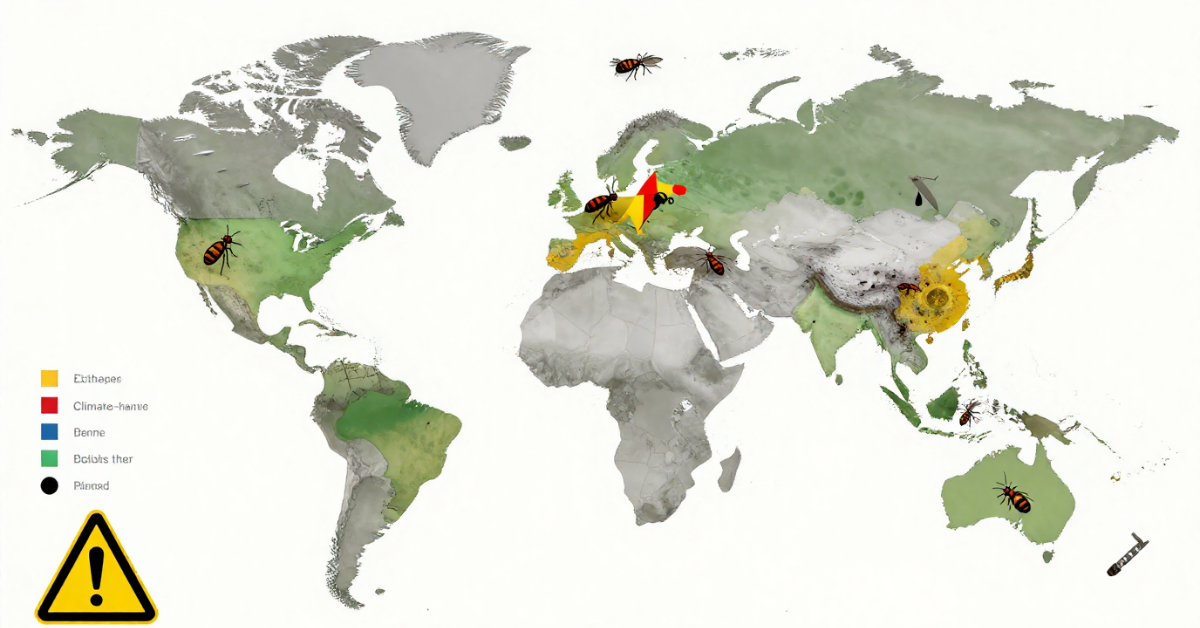
Introduction to Climate Change and Pest Control
The relationship between climate change and pest control has become increasingly significant in recent years, as unpredictable weather patterns and shifting temperatures create new challenges for agriculture and pest management. Climate change is altering the habitats and lifecycles of various pests, leading to increased pest populations and emergence of species in traditionally unaffected areas. This transformation necessitates the adoption of innovative pest control technologies designed to address these evolving threats effectively.
As temperatures rise and precipitation patterns shift, we are witnessing a surge in pest activity. Warmer climates facilitate faster reproduction rates and longer growing seasons for pests, which is further exacerbated by the destruction of their natural predators through habitat loss and increased pesticide use. Consequently, farmers and agriculturalists face an unpredictable battle against new and more resilient pest populations. Such challenges underscore the urgency for developing novel pest control strategies that can keep pace with the rapid environmental changes.
Moreover, climate change's impact extends beyond just the agricultural sector; it also affects public health and urban pest management. This necessitates a multi-faceted approach to pest control that incorporates both ecological principles and cutting-edge technologies. Integrated pest management strategies must evolve to encompass a thorough understanding of climatic conditions, pest lifecycles, and environmental health to effectively respond to the burgeoning pest pressures. As we embrace a changing climate, it is imperative that we invest in research and development of new pest control technologies that are sustainable, effective, and adaptable to the shifting landscape of pest populations.
The Impact of Climate Change on Pest Behavior
Climate change has significantly influenced the behavior and ecology of various pest species around the globe. Increasing temperatures and shifting precipitation patterns are altering breeding cycles, migration patterns, and seasonal activities of pests.
One of the most notable changes is the acceleration of reproductive cycles in many species. Warmer temperatures allow pests such as aphids and mosquitoes to reproduce at a faster rate, leading to population explosions that can overwhelm current pest management strategies. For instance, studies have shown that under elevated temperatures, some mosquito species can increase their generation time, resulting in more numerous, overlapping generations each season. This rapid reproduction can have dire consequences, including the greater transmission of diseases, such as dengue fever and Zika virus, which are transmitted by mosquitoes.
Additionally, climate change is prompting shifts in migration patterns for various pests. The common gypsy moth, for example, has expanded its range northward as temperatures rise, allowing it to invade new territories where it was previously unable to survive. As these pests move into new areas, they can disrupt local ecosystems, outcompete native species, and cause significant agricultural damage. The movement of pests such as the brown marmorated stink bug has been directly associated with warming temperatures, raising concerns among farmers regarding potential crop damage.
Moreover, seasonal activity of pests is also changing. Many insect species now emerge earlier in the spring and remain active later into the fall. This extended activity period can lead to prolonged pest problems, making it more difficult for farmers and households to manage infestations effectively. The changing climate has allowed certain pests to break the previously observed seasonal cycles, leading to unexpected cohort overlaps and challenges in pest control applications.
Emerging Pest Control Technologies
As climate change reshapes ecosystems, pest management faces unprecedented challenges. To address these issues, emerging technologies are being developed that offer innovative solutions to pest control. One significant advancement lies in biological controls, which utilize natural predators or pathogens to target pest populations. This approach not only minimizes the reliance on synthetic chemicals but also supports ecological balances within agricultural settings. For instance, the release of beneficial insects like ladybugs or parasitoids can effectively manage aphid populations without harming the surrounding environment.
Refined chemical pest control methods have also evolved, focusing on substances that are more targeted and less harmful to non-target species. These new formulations are designed to break down more rapidly in the environment, reducing long-term ecological impacts while maintaining effectiveness against pests. Techniques such as microencapsulation and improved application technologies further enhance the precision of chemical usage, allowing for lower doses and diminishing potential residues in food systems.
Digital pest management tools are transforming the landscape of pest control. Utilizing data analytics, artificial intelligence, and remote sensing technologies, these tools allow for real-time monitoring of pest populations and environmental conditions. Decision-making is becoming increasingly data-driven, enabling more efficient and timely interventions that consider various factors such as weather patterns and pest life cycles. Consequently, agricultural practices can shift towards a more proactive rather than reactive stance when it comes to pest management.
Additionally, biotechnology is paving the way for the development of pest-resistant crops. By employing genetic modification or gene editing techniques, scientists can create crops that possess inherent defenses against specific pests, which can significantly reduce the need for external pest control measures. This not only contributes to agricultural resilience in the face of climate change but also promotes sustainable farming practices.
Case Studies: Successful Implementation of New Technologies
The agricultural sector constantly faces the challenges posed by climate change, necessitating the adoption of innovative pest control technologies. Various case studies illustrate how different farming environments successfully integrated these advancements, improving pest management while promoting sustainability and efficiency.
One notable example can be found in vineyards in California, where the introduction of pheromone traps has transformed pest management strategies. These traps utilize pheromones to attract and capture male pests, thus disrupting their reproductive cycles. Vineyards that adopted this technology reported a significant decrease in pesticide use, with studies showing up to a 70% reduction in traditional chemical applications. Not only did this lead to healthier crops, but also improved biodiversity by minimizing the impact on beneficial insect populations.
Another successful case is observed in the rice production industry in Southeast Asia, where farmers integrated drones equipped with pest detection systems into their pest control practices. By utilizing advanced imaging technology, these drones can identify pest hotspots with high accuracy. As a result, rice farmers were able to target interventions more effectively, applying treatments only where necessary. Farmers noted a 30% increase in yield quality and a reduction in overall pest damage, highlighting the economic benefits of adopting cutting-edge technologies.
In addition, a greenhouse in the Netherlands successfully implemented biocontrol agents as part of an integrated pest management system. By introducing natural predators, such as ladybugs and parasitic wasps, the greenhouse was able to maintain pest populations at manageable levels without the use of chemicals. This method not only maintained crop health but also appealed to environmentally conscious consumers, leading to increased sales and market reach.
These case studies demonstrate that adapting to climate change through new pest control technologies not only addresses environmental concerns but also enhances agricultural productivity and sustainability.
Challenges and Limitations of New Pest Control Technologies
As new pest control technologies emerge in response to the challenges posed by climate change, several obstacles hinder their effective implementation. One major concern is regulatory hurdles. Governments often implement stringent regulations to ensure safety and efficacy, but these processes can be lengthy and complicated. Regulatory agencies must assess new materials and methods comprehensively, which can delay the deployment of innovative solutions, ultimately impacting farmers and other stakeholders who rely on timely interventions to protect crops and livestock.
Public acceptance also presents a significant challenge for the adoption of new pest control technologies. Many individuals hold preconceived notions or biases against certain technologies, particularly those involving genetic modification or chemical treatments. Efforts to communicate the benefits and safety of these technologies to the general public are crucial in fostering acceptance. Moreover, misinformation can lead to resistance, which further complicates the introduction of new pest management strategies.
Economic factors play a critical role in the feasibility of implementing new technologies. For instance, the initial costs associated with advanced pest control methods can be prohibitive for smallholder farmers. Although these technologies may offer long-term benefits, the financial burden of transitioning to new systems can deter widespread adoption. In addition, the market dynamics, including pricing competition and the availability of alternatives, can affect the economic viability of new pest control options.
Lastly, potential ecological impacts must be carefully considered. While new pest control technologies may address immediate pest issues effectively, they can also inadvertently disrupt existing ecosystems. For example, the use of certain biocontrol agents could lead to unintended consequences if they outcompete native species. Thus, a thorough risk assessment is essential to ensure that new strategies align with sustainable agriculture practices and do not compromise ecological integrity.
The Future of Pest Management in a Changing Climate
The management of pests is rapidly evolving due to the impacts of climate change, necessitating innovative strategies and technologies. As temperatures rise and precipitation patterns become more unpredictable, pest populations are likely to shift, potentially leading to increased infestations in previously unaffected areas. This emergence of new pest dynamics underscores the critical need for adaptive pest management solutions that can keep pace with ongoing environmental changes.
Research in pest control is becoming increasingly important in light of these shifts. Scientists across various disciplines are exploring the effects of climate variables on pest behavior, reproductive cycles, and migration patterns. This collaboration between entomologists, agronomists, and climate scientists is essential for developing comprehensive pest management strategies. By understanding the interactions between climate change and pest populations, researchers can provide farmers with actionable insights, which may help them proactively address pest-related challenges.
Furthermore, technology is playing a pivotal role in shaping the future of pest management. The integration of precision agriculture techniques allows farmers to monitor pest populations and environmental conditions in real time. Through the implementation of smart sensors and predictive analytics, farmers can make informed decisions tailored to the specific needs of their crops. Additionally, biotechnological advancements, such as the development of pest-resistant crop varieties and the use of biopesticides, offer promising alternatives to traditional chemical control methods.
In conclusion, the future of pest management must be dynamic and responsive to the challenges presented by climate change. Ongoing research, interdisciplinary collaboration, and technological advancements will be vital in equipping farmers with the necessary tools and strategies to effectively manage pests in an ever-changing environment. This proactive approach will not only safeguard agricultural productivity but also promote environmental sustainability.
Conclusion: The Role of Innovation in Sustainable Agriculture
In addressing the pressing challenges posed by climate change, the agricultural sector must adapt through continuous innovation. The impact of climate change on pest behaviors necessitates the development of advanced pest control technologies that are effective, environmentally friendly, and sustainable. As we have explored, the traditional methods of pest control are increasingly being supplemented and, in some cases, replaced by innovative solutions such as biological pest control, integrated pest management, and precision agriculture.
The importance of these innovations cannot be overstated, as they represent a crucial component in the broader strategy to ensure food security in the face of changing climatic conditions. As climate change alters ecosystems, creating new challenges for crops, these pest control technologies must evolve accordingly. Continued research and investment in these technologies not only enhances their efficacy but also contributes to sustainable agricultural practices that reduce reliance on harmful chemicals and protect beneficial insects.
Moreover, the role of innovation extends beyond mere technical solutions; it encompasses a comprehensive approach that includes farmer education and community engagement. By equipping farmers with the knowledge and tools necessary to implement these advanced pest control methods, the agricultural community can foster resilience against climate change-related disruptions.
Ultimately, as we strive towards more sustainable agricultural practices, we must sustain our commitment to research and development in pest control technologies. Through collaborative efforts among scientists, policymakers, and agricultural stakeholders, we can cultivate a future where food security is secured, new pest challenges are met effectively, and our agricultural ecosystems are preserved for generations to come.
Address:
264/5, Kamal Soroni Road, Mirpur, Dhaka-1216
Contact
Your Quaries on pest control askings
pestexterminatorbd@gmail.com
+8801642008383 +8801988300003, 01723057746
© 2025. All rights reserved. to Urban Pest Control Pvt. Ltd. this site is powered by Our Own IT Team