
How Pests Adapt When You Use the Wrong Chemicals
2/2/20267 min read
Understanding Pest Adaptation
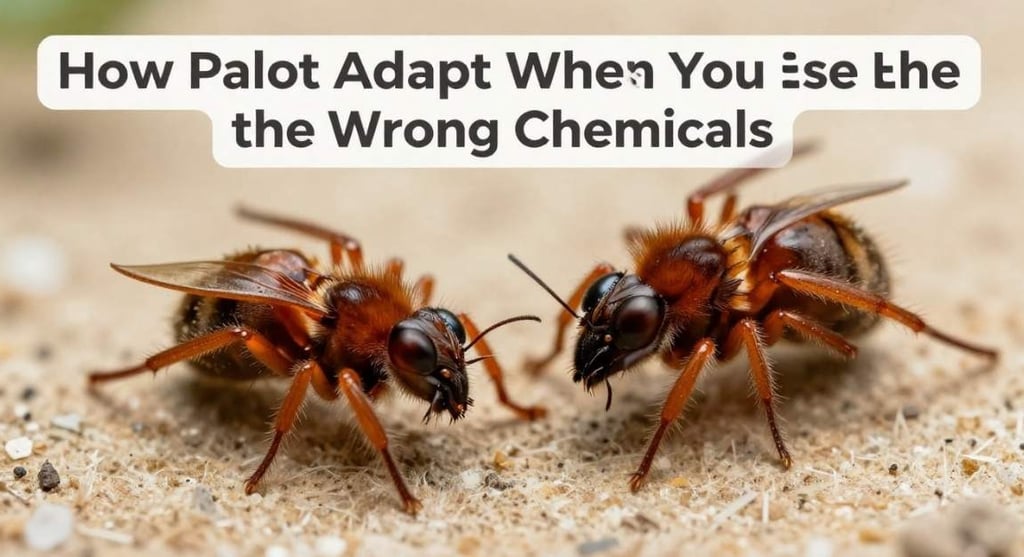
Pest adaptation refers to the ability of pest species to adjust and evolve in response to their environment, particularly in regards to the ecological pressures they face, such as chemical exposure. In this context, adaptation can be defined as the process through which pests develop traits that enhance their survival in the presence of certain chemical agents. This phenomenon is significant and increasingly relevant to pest management strategies, as improper chemical usage can inadvertently facilitate the adaptation process.
There are two primary types of adaptation observed in pests: genetic evolution and behavioral shifts. Genetic adaptation occurs over multiple generations, wherein pests develop heritable traits that allow them to resist or tolerate chemicals used against them. This evolutionary process often involves natural selection, whereby individuals with advantageous traits are more likely to survive and reproduce, passing these traits on to future generations.
Conversely, behavioral adaptation can occur much more rapidly and is characterized by immediate changes in pest behavior in response to chemical treatments. Pests may alter their feeding habits, habitat preferences, or reproductive strategies to avoid certain chemicals or make them less effective. For instance, if a specific pesticide starts affecting a population, individuals may choose to feed on non-treated plants or migrate to unexposed areas, thereby enhancing their chances of survival.
Moreover, the rate at which pests adapt can be influenced by various factors, including their life cycle, reproductive rate, and the chemical's mode of action. When pest populations are subjected to repeated applications of a particular chemical, they can quickly evolve resistance, leading to the so-called "pest resurgence." This resilience poses significant challenges for pest control efforts and underscores the importance of employing integrated pest management practices that minimize reliance on chemical solutions alone.
The Impact of Chemical Pesticides on Pest Populations
Chemical pesticides are widely utilized in agriculture and pest control to manage pest populations. These substances are designed to target specific pests, ultimately reducing their numbers and safeguarding crops and other resources. However, the application of these chemicals often results in several unintended consequences that can undermine their intended effectiveness. One significant outcome is the concept of selective pressure, which refers to the environmental pressures that influence which individuals in a population are more likely to survive and reproduce.
When chemical pesticides are applied, they kill a substantial portion of the pest population. However, not all pests are equally susceptible; some possess genetic traits that confer resistance to the chemicals. These resilient individuals are more likely to survive the pesticide application, allowing them to reproduce and pass on their resistant traits to subsequent generations. Over time, this leads to the emergence of a pest population with a higher prevalence of resistant individuals, effectively diminishing the effectiveness of the chemical pesticide.
This cycle of resistance can result in a feedback loop, where increasing amounts of chemicals are used to combat the now stronger, resistant pests. Consequently, this can create an escalatory situation that not only harms native beneficial organisms and the environment but also leads to greater economic costs for farmers and pest management professionals.
Moreover, reliance on chemical pesticides may also disrupt the ecological balance, leading to the decline of natural pest predators that control pest populations. This scenario amplifies the issue, as it can lead to an even heavier reliance on chemicals, further complicating the pest management landscape.
Examples of Pesticide Resistance in Common Pests
Pesticide resistance has become a significant concern in the field of pest management, particularly among common household pests. One notable example is the cockroach, specifically the German cockroach (Blattella germanica). Studies have shown that various populations have developed resistance to commonly used chemicals such as fipronil and propoxur. This resistance is largely due to metabolic changes within the cockroaches, which allow them to break down the toxins more effectively than their non-resistant counterparts.
Similarly, bed bugs (Cimex lectularius) have emerged as a particularly resilient pest, demonstrating resistance to multiple classes of insecticides, including pyrethroids. Research indicates that some bed bug populations possess enhanced detoxification enzymes that facilitate the rapid breakdown of these chemicals. Additionally, behavioral adaptations such as reluctance to traverse treated surfaces have also been observed, further complicating control efforts.
The case of mosquitoes, especially the Aedes aegypti species, highlights another dimension of pesticide resistance. With the widespread use of larvicides and adulticides, certain populations have developed resistance to chemicals such as permethrin and malathion. Genetic studies reveal alterations in the mosquitoes’ ion channels, which affect the efficacy of neurotoxic insecticides. Furthermore, the mosquitoes have exhibited behavioral modifications, including feeding more during the day—thereby avoiding peak application times—demonstrating both physiological and behavioral resistance strategies.
Overall, these examples underscore the importance of understanding pest resistance mechanisms. Adopting an integrated approach to pest management, which includes rotating different classes of pesticides and incorporating non-chemical control measures, can help mitigate the impact of resistance. Such strategies are essential for maintaining effective pest control while minimizing the risks associated with the over-reliance on specific chemical treatments.
How Misuse of Chemicals Contributes to Resistance
The misuse or overuse of pesticides has become a significant contributor to the development of resistance among pest populations. It is crucial to understand that when pesticides are not applied correctly, they can lead to unintended consequences, including the emergence of resistant strains of pests. Incorrect application methods, such as applying pesticides at the wrong time or inappropriately targeting specific pest life stages, can result in insufficient control and promote survival among the most resilient individuals.
Inadequate dosage is another factor that fosters resistance. When pests are exposed to sublethal doses of chemicals, they may not be eliminated entirely, allowing them to survive and reproduce. Over time, these surviving individuals can pass on their genetic traits to subsequent generations, creating a population that is increasingly resistant to the active ingredients used in pesticides. This phenomenon underscores the importance of adhering to recommended dosage guidelines and consulting with pest management professionals when necessary.
Furthermore, the necessity for rotating different types of pesticides cannot be overstated. Using the same chemical repeatedly can create selective pressure, enabling pests to adapt and thrive in the presence of that chemical. This is why integrated pest management (IPM) strategies are often recommended. IPM encourages users to diversify their pesticide applications by alternating between different classes of chemicals, thereby reducing the chances of resistance developing in pest populations. By utilizing various modes of action, the likelihood that pests will adapt and become resistant diminishes significantly.
The Role of Integrated Pest Management (IPM)
Integrated Pest Management (IPM) is a holistic approach to managing pest populations that significantly minimizes reliance on chemical pesticides. This strategy incorporates a variety of management practices tailored to effectively control pest infestations while concurrently ensuring environmental sustainability. The core principle of IPM is to utilize a wide array of methods, including biological controls, cultural practices, and mechanical interventions, before resorting to chemical applications.
One of the foundational elements of IPM is the diligent monitoring of pest populations. By regularly assessing for the presence and numbers of pests, stakeholders can make informed decisions about which management tactics to implement. This proactive monitoring enables the identification of pest thresholds—the point at which intervention is necessary to prevent unacceptable levels of damage to crops or public health. Through such vigilant management, farmers and land managers can focus their resources and actions on the most impactful interventions.
Moreover, IPM emphasizes the importance of employing chemical controls judiciously. Chemical pesticides should be considered a last resort, used only when other strategies have proved ineffective in curbing pest populations. Additionally, when chemical methods are deemed essential, IPM encourages the selection of targeted products that minimize potential harm to non-target organisms, including beneficial insects and the surrounding ecosystem. This responsible use of pesticides contributes to a more sustainable pest management framework.
In summary, Integrated Pest Management serves as a comprehensive strategy that not only addresses pest issues but also fosters ecological balance. By integrating various management techniques and prioritizing monitoring and responsible chemical use, IPM enhances the efficacy of pest control while safeguarding environmental integrity.
Consequences of Pest Resilience for Agriculture and Public Health
The adaptation of pests to chemical treatments represents a significant challenge for both agriculture and public health. When pesticides are misapplied or overused, they can inadvertently select for resistant pest populations. As these resilient pests thrive, the consequences ripple through agricultural practices, often resulting in decreased crop yields. Farmers may find themselves needing to apply more frequent or higher doses of chemicals to achieve the same level of pest control, leading to increased operational costs and economic strain. Over time, this cycle of applying ineffective chemicals culminates in a challenging environment where traditional pest management strategies lose efficacy.
This diminished control over pest populations does not solely affect agricultural economics; it also poses health risks to communities. The prevalence of resilient pests can lead to an expansion of their geographic range, bringing them into closer contact with human populations. This geographic and ecological shift increases the likelihood of human pest interactions, elevating the risk of pest-borne diseases. For instance, as pests expand their habitats, they might introduce pathogens into new areas, potentially leading to outbreaks of diseases that were previously contained.
Furthermore, reliance on a narrow spectrum of chemical solutions can diminish biodiversity, paving the way for a more homogenous ecosystem where only resistant pests flourish. This lack of natural pest control dynamics can further exacerbate health risks while destabilizing agricultural productivity. Farmers and public health officials must, therefore, collaborate to address the consequences of pest resilience, implementing integrated pest management strategies that consider both efficacy and safety. By doing so, it is possible to maintain agricultural productivity while safeguarding community health against the looming threat of adaptable pests.
Best Practices to Prevent Pest Resistance
To effectively manage pests and prevent resistance, adopting best practices in pest management is essential. One of the foremost strategies is to ensure the responsible use of chemicals. This involves adhering to the label instructions meticulously, applying the recommended dosage only when necessary, and employing the chemicals at the right time to maximize effectiveness. When chemical applications are made thoughtfully, it mitigates the risk of pests developing resistance prematurely.
Another vital aspect of preventing pest resistance is the regular monitoring of pest populations. By conducting routine inspections and utilizing traps, pest managers can detect changes in pest numbers and behavior early. This proactive approach allows for timely interventions and adjustments to treatment plans, thus reducing reliance on chemical solutions. Moreover, tracking pest activities can inform decisions about whether to use chemicals or shift to alternative methods.
Integrating alternative pest management strategies is equally important in maintaining control over pest species. Methods such as biological control, habitat manipulation, and cultural practices can significantly reduce pest pressures without solely relying on chemicals. For instance, introducing natural predators can help manage pest populations while promoting ecosystem health. Additionally, employing crop rotation and diversifying plant species can disrupt pest life cycles, reducing their potential to develop resistance.
By combining these practices—responsible chemical use, vigilant monitoring, and alternative pest management strategies—pest control professionals can enhance their effectiveness while minimizing the risks associated with pest resistance. These integrated approaches not only ensure immediate pest management success but also contribute to sustainable pest management systems in the long run.
Address:
264/5, Kamal Soroni Road, Mirpur, Dhaka-1216
Contact
Your Quaries on pest control askings
pestexterminatorbd@gmail.com
+8801642008383 +8801988300003, 01723057746
© 2025. All rights reserved. to Urban Pest Control Pvt. Ltd. this site is powered by Our Own IT Team