
How RO Water Purifiers Work – Complete Scientific Explanation
3/7/20267 min read
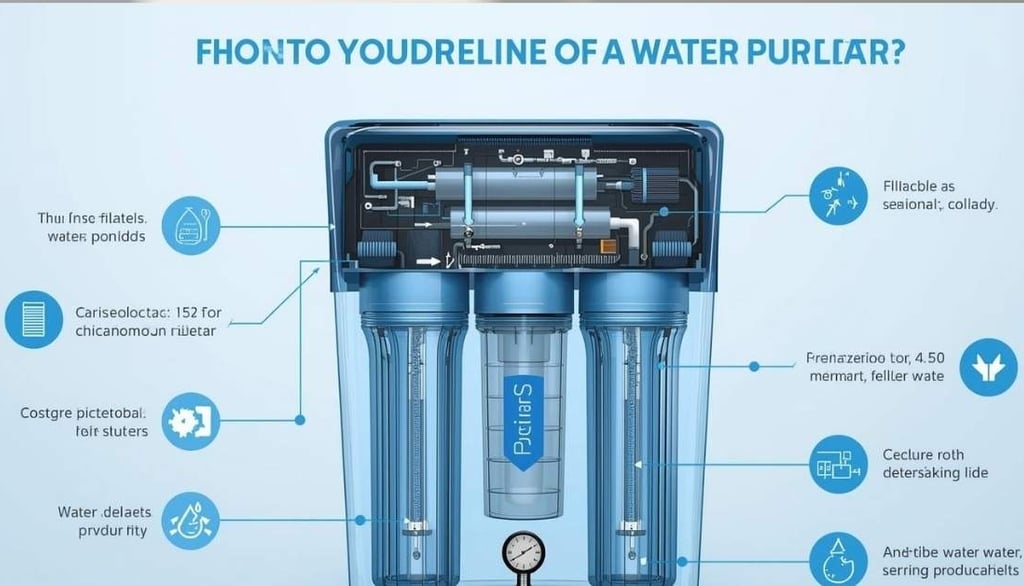
Introduction to Reverse Osmosis
Reverse osmosis (RO) is a water purification technology that uses a semipermeable membrane to eliminate ions, molecules, and larger particles from drinking water. The principle of osmosis involves the natural movement of water through a membrane from an area of lower solute concentration to an area of higher concentration, seeking to achieve equilibrium. However, in reverse osmosis, pressure is applied to the side with higher solute concentration, effectively reversing the natural osmotic flow. This process results in the production of purified water, while contaminants are left behind and subsequently flushed away.
The significance of reverse osmosis in water purification lies in its ability to provide high-quality drinking water by removing a broad range of impurities. This includes dissolved solids, harmful microorganisms, and chemicals that are commonly found in water sources. Unlike traditional filtration methods, which may only capture larger particles, RO systems are capable of filtering out much smaller contaminants, making them ideal for addressing a variety of water quality issues.
Households and industries alike benefit from reverse osmosis water purifiers. For homes, they offer a reliable solution for obtaining clean drinking water, which is vital for health and well-being. Moreover, RO systems can enhance the taste and odor of water, making it more palatable. In industrial settings, reverse osmosis is widely employed to ensure the quality of process water, which is crucial for production efficiency and product integrity. Overall, the versatility and effectiveness of reverse osmosis technology render it an essential component in modern water purification systems.
Stage 1: Sediment Filtration
The first stage of the reverse osmosis water purification process is critical for ensuring the overall effectiveness and longevity of the system. This stage employs sediment filters designed to remove larger particles from the water supply. Sediment filters typically target a range of contaminants, including sand, silt, dirt, and rust. By eliminating these particles, sediment filtration plays an essential role in preventing damage to subsequent filters in the purification process.
These larger particles can negatively impact membrane filters, which function at a much finer scale. If sediment bypasses the sediment filter, it can lead to premature fouling or clogging of the reverse osmosis membranes, thereby reducing their performance and lifespan. The importance of sediment filtration thus lies not only in immediate water quality improvement but also in protecting the more sensitive components of the water purification system.
There are various types of sediment filters available, each designed with specific materials and pore sizes to effectively capture sediment. Common examples include polypropylene filters and activated carbon filters. Polypropylene filters are particularly effective at capturing small to medium-sized particles, while activated carbon filters help reduce chlorine and other organic materials along with sediment. The proactive removal of these larger particulates enhances the system’s efficiency, allowing finer filters to operate optimally.
In conclusion, sediment filtration serves as the vital first step in reverse osmosis water purification, ensuring that larger contaminants are removed effectively. This not only protects subsequent filtration stages but also significantly improves the overall life expectancy and functionality of the water purification system.
Stage 2: Activated Carbon Filtration
Activated carbon filtration is a pivotal stage in the reverse osmosis (RO) water purification process. This stage primarily focuses on enhancing water quality by removing various harmful contaminants, including chlorine, volatile organic compounds (VOCs), and other chemical impurities. Activated carbon possesses a large surface area with numerous porous structures, allowing it to effectively adsorb these unwanted substances from water, resulting in an improved taste and odor.
In the realm of carbon filtration, there are two main types: granular activated carbon (GAC) and carbon block filters. Granular activated carbon consists of small particles of carbon, allowing for a high degree of water flow. It is particularly effective at removing chlorine and some larger organic compounds. However, due to the larger spaces between the granules, GAC filters may not effectively capture smaller contaminants, leading to a reduced overall purification efficiency as time progresses.
On the other hand, carbon block filters are produced by compressing activated carbon into a solid block, enhancing the contact time of the water with the carbon and providing a more uniform distribution of pore sizes. This design minimizes the allowed flow rate, thereby maximizing contact time, which results in a more thorough removal of contaminants, including smaller VOCs. Carbon block filters are often praised for their superior capacity to enhance water quality, making them a popular choice among consumers seeking optimal filtration performance.
In assessment, the activated carbon filtration stage plays a crucial role in the reverse osmosis system. Both GAC and carbon block filters serve their purposes effectively; however, understanding their differences and applications enables consumers to make informed choices in selecting the appropriate filter for their needs. This stage significantly contributes to the overall performance of water purification systems, ensuring that the user receives water that is not only safe but also pleasant to consume.
Stage 3: Reverse Osmosis Membrane
The reverse osmosis membrane serves as the core component within a reverse osmosis (RO) water purification system. This semi-permeable membrane is designed to selectively permit water molecules to pass through while simultaneously rejecting a wide range of contaminants. These contaminants include dissolved salts, heavy metals, and harmful microorganisms. The membrane achieves this separation through a well-defined mechanism governed by osmosis and diffusion principles.
The key to the membrane's effectiveness lies in its pore size, typically measuring between 0.0001 to 0.001 microns. Such a small pore size enables the membrane to block impurities that are significantly larger than water molecules. As water is forced through the membrane via pressure, contaminants that are too large to pass through are held back, concentrating them in a separate waste stream. This efficient filtration ensures that the water that emerges on the other side is not only cleaner but also safe for consumption.
It is crucial to perform regular maintenance on the RO membrane to maintain its optimal performance. Over time, the membrane can accumulate sediment, scale, or even biological growth, hindering its function. Consequently, routine cleaning and replacement—typically every 2 to 3 years depending on usage and water quality—are vital to safeguard the membrane’s integrity and efficiency. Regular monitoring can help in identifying any deterioration in performance, allowing for timely maintenance actions.
In summary, the reverse osmosis membrane is indispensable to the functionality of RO systems. Its ability to selectively filter contaminants while allowing pure water to flow through is largely responsible for the high-quality water produced by these purification systems. Understanding its operation, alongside regular upkeep, will ensure the longevity and effectiveness of reverse osmosis water purifiers.
Stage 4: Post-Filtration
The final stage of reverse osmosis (RO) water purification is known as post-filtration. This essential step occurs after the primary filtration process and plays a critical role in ensuring that the water produced is not just pure, but also pleasant to drink. One of the primary roles of post-filters is to remove any remaining trace contaminants that may not have been captured by the previous filtration stages. This ensures that the taste and odor of the purified water are optimized, providing a refreshing drinking experience.
Post-filters often rely on activated carbon, which is particularly effective at adsorbing impurities that can contribute to undesirable flavors or smells in water. The activated carbon post-filter targets VOCs (volatile organic compounds), chlorine, and other chemical residues that can linger after the water has undergone reverse osmosis. By integrating a carbon filter, the quality of the final product is enhanced, ensuring that drinking water not only meets safety standards but also tastes satisfactory.
There are various types of post-filters utilized in RO systems, including granular activated carbon (GAC) and carbon block filters. GAC filters consist of loose granules of activated carbon, allowing for increased surface area for adsorption, while carbon block filters embody compressed activated carbon, enhancing filtration performance. Both types contribute to effective removal of residual contaminants, but their integration may depend on specific RO system designs and user preferences.
In summary, the post-filtration stage is vital for maintaining the overall quality of the purified water. By utilizing effective post-filters, reverse osmosis water purifiers can guarantee that the water is free from impurities, ensuring both safety and palatability for consumers.
The Benefits of Reverse Osmosis Water Purification
Reverse osmosis (RO) water purification offers numerous advantages for consumers seeking clean and safe drinking water. One of the primary benefits is the improved health that comes from drinking purified water. By effectively removing a wide range of contaminants, including chlorine, lead, fluoride, and other harmful substances, RO systems significantly reduce the risk of exposure to toxins. This enhancement in water quality contributes to better hydration and overall health, making it an ideal choice for families and individuals concerned about their well-being.
In addition to health improvements, reverse osmosis water purifiers also provide significant environmental benefits. The increased reliance on RO systems helps to reduce the need for bottled water, which is responsible for considerable plastic waste. Traditional bottled water often contributes to environmental pollution, and by utilizing a reverse osmosis system at home, consumers can eliminate their dependence on plastic containers. The reduction in plastic waste not only benefits the environment but also cultivates a more sustainable lifestyle.
When considering cost-effectiveness, reverse osmosis systems also stand out. While the initial investment in an RO unit may seem higher compared to other water purification methods, such as activated carbon filters, the long-term savings are significant. With an RO system, users benefit from lower operational costs over time, as they are not continually purchasing bottled water. Furthermore, the durability of RO units typically ensures they will last for several years with minimal maintenance. This long-lasting effectiveness contributes to both economic and environmental sustainability.
Overall, the advantages of reverse osmosis water purification methods encompass health benefits, environmental preservation, and cost savings, making them a prudent choice for health-conscious and eco-friendly consumers.
Conclusion and Frequently Asked Questions
In concluding this comprehensive guide on the science behind reverse osmosis (RO) water purifiers, it becomes evident that each stage of the filtration process plays a critical role in ensuring access to clean and safe drinking water. Reverse osmosis is an effective method for removing contaminants such as heavy metals, bacteria, and chlorine from tap water, thus making it significantly safer for consumption. Understanding the distinct phases of this filtration method—from pre-filtration to post-filtration—highlights not only its importance in the purification process but also its ability to enhance the overall taste and quality of water.
As with any appliance, maintenance of RO systems is a common concern among users. Regular changing of filters is essential to ensure optimal performance, preventing the buildup of contaminants that could compromise water quality. Most manufacturers recommend changing pre-filters approximately every six months, while membrane filters might need a change every two to three years, depending on water usage and quality. It is also advisable to consult the user manual for specific maintenance instructions related to your model.
Water waste is another prevalent issue associated with reverse osmosis systems. It is worth noting that for every gallon of purified water produced, approximately three gallons may be rejected as waste. However, many modern systems are designed with improved efficiency, significantly reducing the water waste ratio. In terms of essential minerals, some individuals have concerns regarding RO systems stripping water of beneficial nutrients. While it is true that RO does remove some minerals, many households supplement their diets with minerals from food sources, and the pure water produced can aid in optimal hydration.
Ultimately, understanding the benefits and limitations of reverse osmosis water purifiers can empower consumers to make informed decisions, ensuring they have access to high-quality drinking water that meets their specific needs.
Address:
264/5, Kamal Soroni Road, Mirpur, Dhaka-1216
Contact
Your Quaries on pest control askings
pestexterminatorbd@gmail.com
+8801642008383 +8801988300003, 01723057746
© 2025. All rights reserved. to Urban Pest Control Pvt. Ltd. this site is powered by Our Own IT Team