
Industrial Air Pollution: Major Sources, Risks, and Control Technologies
2/24/20267 min read
Types of Industrial Emissions
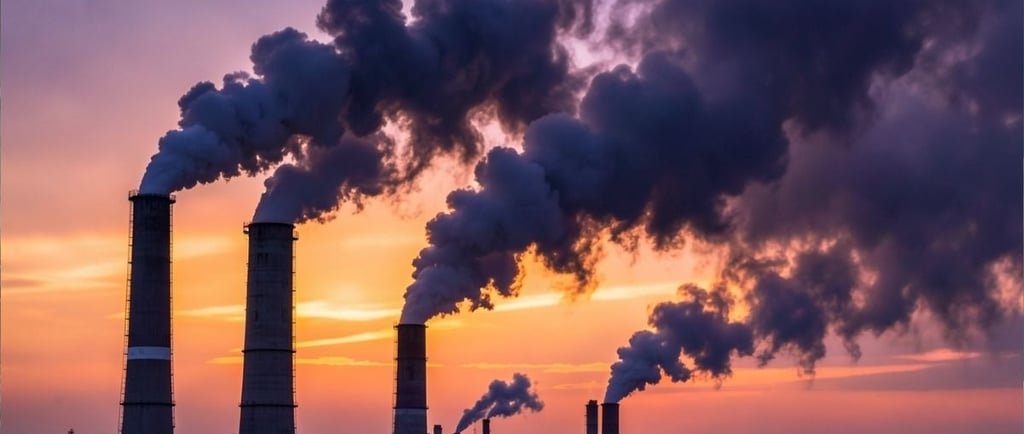
Industrial emissions represent a significant environmental concern, encompassing various substances released into the atmosphere during production processes. Understanding the categories of these pollutants is crucial for effective pollution management strategies. Emissions can be broadly classified into two categories: primary pollutants and secondary pollutants.
Primary pollutants are directly emitted from industrial activities. Among these, particulate matter (PM) is one of the most concerning, as it consists of tiny airborne particles that can penetrate deep into the respiratory system, posing severe health risks. Another prevalent primary pollutant is volatile organic compounds (VOCs), which are organic chemicals that can evaporate at room temperature. They are often released from processes such as painting, coating, and chemical manufacturing, contributing to air quality degradation and smog formation. Additionally, nitrogen oxides (NOx) are generated from combustion processes in various industries, leading to the formation of harmful ground-level ozone upon interaction with sunlight.
On the other hand, secondary pollutants are not directly emitted but are formed through complex chemical reactions in the atmosphere. For instance, ground-level ozone is generated when primary pollutants like VOCs and NOx react under sunlight. This type of pollution can exacerbate respiratory problems and other health issues and is thoroughly regulated in many jurisdictions to protect public health. Understanding the types of industrial emissions, including the distinctions between primary and secondary pollutants, is essential for developing effective air quality regulations and ensuring compliance with environmental standards.
In summary, a comprehensive grasp of the various types of industrial emissions is vital for both industries and regulatory bodies. This knowledge facilitates the implementation of more effective pollution control technologies and helps maintain a cleaner atmosphere, which is critical for human health and environmental sustainability.
Brick Kiln Pollution
Brick kilns are significant sources of industrial air pollution, particularly in developing regions where brick-making is a primary construction material. The brick-making process involves the combustion of raw materials, leading to the emission of several harmful pollutants. Key emissions from brick kilns include carbon monoxide (CO), sulfur dioxide (SO2), and particulate matter (PM), each contributing to severe environmental and public health challenges.
Carbon monoxide is a colorless, odorless gas produced during inadequate combustion. It can interfere with the body's ability to transport oxygen, leading to serious health conditions, particularly in vulnerable populations such as children and the elderly. Similarly, sulfur dioxide, primarily released during the burning of sulfur-containing materials, can have detrimental effects on respiratory health, exacerbating asthma and other lung diseases. Furthermore, sulfur dioxide can lead to environmental issues such as acid rain, harming ecosystems.
Particulate matter, made up of tiny particles suspended in the air, poses significant health risks. PM can penetrate deep into the lungs and even enter the bloodstream, leading to cardiovascular diseases and other serious health problems. Brick kilns often operate in densely populated areas, increasing the exposure of communities to these pollutants.
Case studies from regions with high concentrations of brick kilns, such as parts of India and Bangladesh, emphasize the widespread impact of these emissions on air quality and public health. These areas often report increased incidence of respiratory illnesses and other health issues attributed to the high levels of CO, SO2, and PM generated by brick production activities. Consequently, it is imperative for stakeholders to prioritize the regulation and upcoming implementation of cleaner technologies to mitigate the adverse effects of brick kiln pollution.
Power Plant Emissions
Power plants are critical components of modern infrastructure and energy generation; however, they significantly contribute to air pollution. Emissions from coal, natural gas, and renewable energy facilities vary in type and intensity, affecting air quality and climate change in different ways.
Coal-fired power plants are notorious for their substantial emissions, primarily releasing carbon dioxide (CO2), sulfur dioxide (SO2), and mercury (Hg). CO2, a major greenhouse gas, plays a pivotal role in global warming. SO2 can lead to the formation of acid rain, adversely impacting ecosystems and human health. Mercury, though present in smaller quantities, is highly toxic and can accumulate in the food chain, posing risks to wildlife and humans alike.
In contrast, natural gas plants produce fewer emissions compared to their coal counterparts, primarily releasing CO2 and nitrogen oxides (NOx). While natural gas is often considered a cleaner alternative, it is not without its environmental effects. Nitrogen oxides contribute to ground-level ozone formation, which can lead to respiratory issues and other health problems. As such, transitioning to natural gas does not eliminate the need for stringent emissions controls.
Renewable energy facilities, such as wind and solar plants, produce little to no direct emissions during their operation. However, they are not entirely devoid of environmental impacts, especially during the manufacturing and installation phases. Understanding the full lifecycle emissions of renewable technologies is crucial in evaluating their overall contributions to air quality.
In summary, power plants play a significant role in industrial air pollution, with varying degrees of emissions depending on the fuel source. Addressing these emissions is essential in the collective effort to combat climate change and protect public health through innovative technologies and compliance with environmental regulations.
Scrubbers and Filters
Industrial air pollution control is a critical component of maintaining environmental health and ensuring compliance with regulations. Two prominent technologies used in this endeavor are scrubbers and filters, which are designed to effectively eliminate harmful pollutants from industrial exhaust gases.
Scrubbers are devices that use either a liquid or a solid medium to remove pollutants from gases. The first type, wet scrubbers, operate by passing exhaust gases through a liquid solution, which captures and neutralizes harmful substances. This method is particularly effective for controlling acid gases, volatile organic compounds, and particulate matter. Wet scrubbers can also have the added benefit of minimizing odorous emissions.
In contrast, dry scrubbers utilize dry reagents to react with and absorb pollutants. These devices are often more compact than their wet counterparts, making them suitable for facilities with space constraints. Dry scrubbers are highly effective in reducing sulfur dioxide and other acid gas emissions, thereby playing a vital role in air quality management.
On the other hand, filters act as barriers to trap particulate matter and other solid pollutants from the air. Bag houses are one common type of filter system, consisting of large fabric bags through which gases are drawn. The fabric captures dust and particulate contaminants while allowing clean air to pass through. This technology is particularly advantageous for industries that generate significant airborne particles, as it can greatly reduce the particulate matter released into the atmosphere.
Similarly, HEPA filters (High-Efficiency Particulate Air filters) are used to capture smaller particles, including smoke, pollen, and dust. With their ability to filter out 99.97% of particles that are 0.3 microns in diameter or larger, HEPA filters are essential in many industrial applications where air quality is paramount.
Both scrubbers and filters play a pivotal role in enhancing air quality and compliance with environmental regulations. As industries continue to evolve, these technologies are being improved and adapted to meet stricter emission standards, ultimately contributing to better health outcomes and a cleaner environment.
Electrostatic Precipitators
Electrostatic precipitators (ESPs) are advanced air pollution control devices that harness electrical forces to remove particulate matter from gaseous emissions. They play a significant role in various industrial sectors, effectively capturing dust and other airborne pollutants from exhaust gas streams. The operation of an ESP involves charging the particles passing through a high-voltage electric field, which causes them to become positively or negatively charged. Once charged, the particles are attracted to oppositely charged plates or collection electrodes, where they accumulate and can be removed.
The efficiency of electrostatic precipitators in particulate matter removal is notable, often exceeding 99% under optimal conditions. This high efficiency is crucial as it helps industries comply with stringent air quality regulations and reduces the overall environmental impact of their operations. Additionally, ESPs can operate over a wide range of temperatures and are effective in removing various types of particulate matter, including fine particles that are often challenging to capture by traditional filtration methods.
Industries that commonly utilize electrostatic precipitators include power generation plants, cement manufacturing facilities, steel mills, and chemical processing operations. In these sectors, ESPs offer substantial advantages not just in terms of air quality management but also in operational efficiency. Given their ability to minimize emissions and lower health risks associated with air pollution, the continued adoption of electrostatic precipitators is anticipated to grow, highlighting their significance in contemporary pollution control strategies. Overall, these devices exemplify how technology can assist industries in mitigating their environmental footprint while maintaining productivity.
Environmental Compliance
Environmental compliance is an essential aspect of industrial operations, ensuring that companies adhere to the regulations established to protect air quality. A key piece of legislation affecting industrial emissions in the United States is the Clean Air Act, which aims to control air pollution and safeguard public health by regulating the emissions of hazardous pollutants. This Act provides the framework for setting national air quality standards and is crucial in guiding industries in their environmental responsibilities.
Industries are obligated to monitor their emissions and report them to appropriate regulatory bodies. This involves implementing air quality management systems that regularly assess pollutant levels emitted into the atmosphere. Compliance with these regulations not only helps in maintaining air quality but also supports public health initiatives aimed at reducing respiratory ailments linked to air pollution. Companies are required to submit compliance reports that detail their emissions and the steps taken to mitigate pollutants, fostering transparency and accountability.
Failure to comply with environmental regulations can lead to significant consequences, including hefty fines, legal action, and damage to a company's reputation. Furthermore, non-compliance can result in stricter regulations being imposed, as well as increased scrutiny from regulatory agencies and the public. To avoid such repercussions, industries must prioritize compliance and invest in technologies and practices that enhance their ability to monitor and control emissions effectively.
As industries navigate the complexities of environmental compliance, it is crucial that they stay informed about evolving regulations and implement best practices in emissions management. By doing so, they not only fulfill their legal obligations but also contribute to a healthier environment for communities and future generations.
Sustainable Industrial Practices
In recent years, the industrial sector has increasingly recognized the necessity of integrating sustainable practices to mitigate air pollution and promote environmental stewardship. One of the key trends involves the implementation of waste heat recovery systems. These systems capture excess heat generated during industrial processes and convert it into usable energy, significantly reducing the reliance on fossil fuels and lowering overall emissions. By harnessing this energy, companies not only improve efficiency but also contribute to a reduction in air contaminants emitted into the atmosphere.
Additionally, cleaner production techniques have emerged as essential strategies for minimizing negative environmental impacts. These methods emphasize the reduction of waste and consumption of resources, ensuring that industries operate in a more eco-friendly manner. For instance, many organizations are adopting practices such as resource optimization, which involves rethinking processes to limit raw material usage and enhance product lifecycle management. By minimizing the environmental footprint, these practices contribute directly to improving air quality.
The role of renewable energy sources cannot be overstated in the quest for sustainable industrial practices. Companies worldwide are increasingly investing in solar, wind, and bioenergy to power their operations. By transitioning to these cleaner energy alternatives, industries can significantly reduce their greenhouse gas emissions and help alleviate the adverse effects of air pollution. Moreover, public funding and incentives for adopting renewable technologies further facilitate this transition, demonstrating that sustainability and profitability can go hand in hand.
Ultimately, the responsibility of adopting sustainable industrial practices lies with the companies themselves. By embracing these innovative approaches, industries not only comply with regulatory requirements but also garner a competitive advantage in the market. As consumers become more environmentally conscious, businesses that prioritize sustainability will likely see enhanced brand loyalty and long-term success while contributing to a healthier planet.
Address:
264/5, Kamal Soroni Road, Mirpur, Dhaka-1216
Contact
Your Quaries on pest control askings
pestexterminatorbd@gmail.com
+8801642008383 +8801988300003, 01723057746
© 2025. All rights reserved. to Urban Pest Control Pvt. Ltd. this site is powered by Our Own IT Team