
Industrial Dust Removal Innovations for Commercial Buildings
2/23/20268 min read
Understanding the Importance of Dust Control in Industrial Settings
In industrial environments such as factories, shopping malls, and warehouses, managing dust is crucial for maintaining a safe and efficient workplace. Dust accumulation can pose several risks including compromised worker health, diminished operational efficiency, and challenges in complying with regulatory standards. Understanding the significance of dust control is essential for employers and employees alike.
Dust particles, whether generated from manufacturing processes or general activities, can significantly affect air quality. Poor air quality often leads to respiratory problems among workers, resulting in increased health-related absences and decreased productivity. Furthermore, various studies suggest that long-term exposure to airborne dust may lead to chronic illnesses, making effective dust management a necessity rather than an option.
In addition to health-related concerns, dust accumulation can impair equipment functionality and disrupt operational efficiency. Machinery that is frequently exposed to dust may suffer from wear and tear, leading to costly repairs and maintenance downtime. In warehouses, dust can make products less visible, creating obstacles in the efficient sorting and inventory processes.
Compliance with industry regulations is another critical factor influenced by dust control measures. Many regulatory bodies have established specific guidelines to ensure safe dust levels are maintained in the workplace. Failure to adhere to these regulations can result in significant fines and legal consequences, further emphasizing the importance of effective dust management strategies.
In conclusion, understanding the importance of dust control encompasses various aspects of operational health and efficiency. From protecting worker safety to ensuring machinery operates optimally and adhering to legal requirements, implementing robust dust control technologies will cultivate a safer and more productive industrial environment.
Overview of Industrial Dust Control Technologies
Effective dust control in industrial settings is essential for maintaining air quality and ensuring compliance with health regulations. Various technologies have been developed to mitigate dust emissions, each with its own specific applications and advantages. Three prominent types of dust control technologies are cyclone separators, electrostatic precipitators, and centralized vacuum systems.
Cyclone separators function by utilizing centrifugal force to remove larger particles from the air stream. As air laden with dust enters the cyclone, it is directed into a vortex that forces heavier particles to the outer wall, where they fall into a collection hopper. This technology is particularly effective in applications involving bulk material handling, such as mining and agriculture, where large volumes of dust are generated.
Electrostatic precipitators (ESPs) are another effective solution for reducing airborne particulates. These devices work by charging dust particles as they pass through the electrostatic field, causing them to adhere to collection plates. The collected dust can then be removed periodically. ESPs are commonly used in industries such as power generation and cement production, where fine particles are prevalent and stricter emission standards must be met.
Centralized vacuum systems offer a versatile approach to dust control by providing a network of extraction points throughout a facility. These systems use powerful vacuum units to capture dust at its source, preventing it from becoming airborne. Centralized vacuum systems are highly effective in environments with diverse dust generation points, such as woodworking shops and food processing plants. They enhance both worker safety and overall cleanliness by reducing the risk of respiratory exposure to hazardous dust.
In conclusion, selecting the appropriate dust control technology is critical to achieving a clean and safe industrial environment. Cyclone separators, electrostatic precipitators, and centralized vacuum systems each play vital roles in reducing dust emissions and protecting the health of workers and the surrounding community.
Cyclone Separators: Mechanisms and Applications
Cyclone separators are crucial elements in industrial dust control systems, primarily designed to remove particulate matter from air streams with high efficiency. The operational principle of a cyclone separator is based on centrifugal force. When an air stream enters the device, it is forced to swirl around a cylindrical or conical chamber. The centrifugal force generated by this swirling motion separates heavier particulates from the lighter air stream and directs them towards the walls of the separator. Ultimately, the heavier particles are collected at the bottom of the unit while the cleaner air exits through an outlet at the top.
Various industries can significantly benefit from the use of cyclone separators. For instance, the woodworking and plastics industries utilize these systems to control dust emissions that could pose health hazards and compliance challenges. A notable case study involves a furniture manufacturing facility that implemented a cyclone separator, leading to a marked decrease in airborne wood dust levels, drastically reducing health risk for workers and ensuring adherence to environmental regulations.
Despite their numerous benefits, cyclone separators do have some limitations. They tend to be less effective at capturing very fine particles, which may necessitate additional filtration systems for complete dust control. Moreover, the efficiency of separation can vary based on factors such as the design of the cyclone, the inlet velocity of the air stream, and the size and density of the particles being removed. Nevertheless, for many applications, cyclone separators offer a cost-effective and robust solution for managing industrial dust, often serving as a primary step in comprehensive dust control strategies.
Electrostatic Precipitators: Efficiency and Effectiveness
Electrostatic precipitators (ESPs) are pivotal in industrial dust control, utilizing electric charge to effectively capture particulate matter from exhaust gases. These systems work on the principle of ionization, whereby particles are charged as they pass through a high-voltage field and are subsequently attracted to oppositely charged plates. This method of particle collection is highly efficient, achieving removal rates often exceeding 99%, making ESPs a preferred choice for industries requiring stringent air quality standards.
The benefits of electrostatic precipitators extend beyond their remarkable efficiency. One notable advantage is their relatively low operational costs. Unlike conventional mechanical filtration systems, which require frequent filter replacements and maintenance, ESPs primarily rely on electrical components that do not demand replacement as frequently. With a well-designed ESP system, organizations can significantly reduce their consumables and maintenance expenses over the equipment's lifespan.
Electrostatic precipitators find applications in various industrial settings, including power generation, cement production, steel manufacturing, and chemical processing. Their versatility allows them to handle a diverse range of particulate types, including dust, smoke, and soot, adhering to environmental regulations and enhancing workplace safety and comfort.
However, despite their advantages, some challenges accompany the operation of electrostatic precipitators. One common issue is the accumulation of dust on the collection plates, which can hinder efficiency if not monitored and addressed regularly. Furthermore, the initial investment for ESP installation can be substantial, although many find that the long-term savings and environmental benefits justify the expense. Regular maintenance and performance monitoring are essential to ensure optimal operation, which may involve cleaning the plates and checking electrical components.
Centralized Vacuum Systems: A Comprehensive Solution
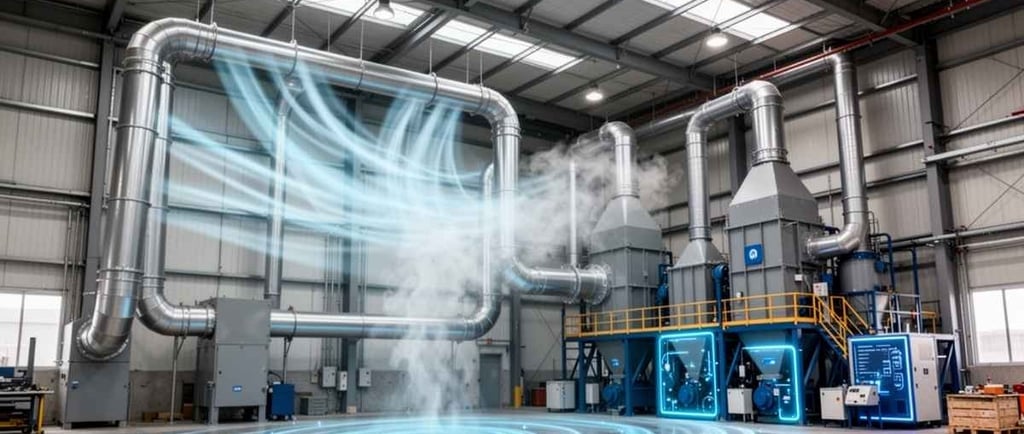
Centralized vacuum systems represent a sophisticated approach to managing dust and debris in expansive facilities such as shopping malls and warehouses. These systems consist of a series of interconnected pipes, strategically placed vacuum inlets, and a powerful central vacuum unit designed to efficiently collect and remove particulate matter from the air. One of the key benefits of centralized vacuum systems is their ability to cover large areas without the need for multiple, portable vacuum units. This not only enhances cleaning efficiency but also significantly reduces noise pollution and improves the overall working environment.
The design and installation of these systems require careful consideration of the facility layout, anticipated dust loads, and specific cleaning requirements. It is crucial to conduct a thorough assessment to determine the optimal placement of vacuum ports and the necessary pipe diameter, ensuring that air flow remains unobstructed. Generally, larger facilities will benefit from a larger central unit to accommodate higher dust levels and longer piping runs. Best practice suggests not only selecting the right system size but also optimizing the number of inlets to maximize dust collection efficiency.
Operational benefits of centralized vacuum systems extend beyond immediate dust removal. By incorporating high-efficiency filters, these systems can effectively capture fine particulates that contribute to health hazards. Regular maintenance of both the central unit and the filtration system is essential for sustained performance. Additionally, facilities should ensure that workers are trained to use the system correctly, emphasizing the importance of allowing sufficient time for dust collection to prevent any buildup. In summary, centralized vacuum systems offer an efficient, effective solution for dust control in large commercial spaces, improving both air quality and workplace safety.
Comparative Analysis of Dust Control Technologies
In the realm of industrial operations, the efficient management of dust is pivotal for ensuring safety, compliance, and operational effectiveness. This analysis undertakes a comprehensive comparison of three prevalent dust control technologies: wet suppression, dust collectors, and chemical dust control methods. Each technology serves distinct purposes and is suited to different environments, and understanding their benefits and drawbacks will aid facilities in making informed decisions.
Efficiency: Wet suppression is widely recognized for its rapid effectiveness in suppressing airborne dust particles by utilizing water or chemical additives to minimize the dust generated during processes. Dust collectors, on the other hand, are adept at capturing dust after it has been generated, allowing for a cleaner work environment. Chemical dust control methods employ binding agents that agglomerate dust particles, thereby preventing them from becoming airborne. The selection of the most efficient technology largely relies on the specific type of dust produced; for instance, wet suppression may be more effective for fine particulate silica dust, while dust collectors might be preferable for larger particulate matter.
Cost-effectiveness: Budget constraints are a critical consideration when evaluating dust control technologies. Wet suppression systems generally have lower upfront costs but may incur higher operational costs due to water usage and maintenance. Dust collectors, while requiring a more substantial initial investment, can minimize long-term costs through reduced waste and improved air quality, which can lead to fewer health-related expenses. Meanwhile, chemical dust control requires ongoing purchase of chemicals, which can add to overall costs but may reduce maintenance needs and operation interruptions.
Ease of Maintenance: Maintenance requirements vary significantly among these technologies. Wet suppression systems require routine inspections and management of water supply, dust collectors may necessitate periodic filter replacements, and chemical dust control systems must monitor chemical efficacy. Understanding how these factors influence operational reliability is crucial for facilities.
Overall, the ideal dust control technology is contingent on an array of factors, including the nature of the dust particles, site layout, and financial limitations. A thorough evaluation of these aspects will ensure that industries adopt a practical and efficient dust control solution.
Future Trends in Dust Control Technology
The landscape of dust control technology is poised for significant transformation as emerging innovations continue to reshape industry practices. One of the most promising trends is the development of smart dust control solutions. These systems leverage advanced sensors and IoT technologies to monitor dust levels in real-time, allowing for instantaneous responses to fluctuating conditions. By integrating smart technologies, industries can optimize their dust management strategies, ensuring compliance with stringent regulations while enhancing operational efficiency.
Artificial Intelligence (AI) plays a crucial role in this evolution, particularly in monitoring and maintenance applications. AI-driven algorithms can analyze vast amounts of data collected from dust control systems to identify patterns, predict maintenance needs, and streamline troubleshooting processes. The proactive approach powered by AI not only mitigates dust-related risks but also extends the lifespan of filtration and control equipment, resulting in cost savings for businesses.
Advancements in filtration materials are also set to redefine dust control solutions. Innovations such as nanofiber technology and electrostatic filters are being developed to enhance the efficiency of particulate capture. These new materials can significantly reduce energy consumption and increase the longevity of dust control systems. As industries strive to improve their environmental impact, the shift towards sustainable and efficient filtration technologies will become increasingly critical.
Furthermore, the incorporation of data analytics into dust management practices will provide companies with deeper insights into their operational environments. This data-driven approach enables organizations to tailor dust control solutions precisely to their specific needs, ultimately creating safer work environments and ensuring compliance with health and safety regulations.
As industries look ahead, the convergence of smart dust control technologies, AI integration, and advanced filtration materials promises a future where dust management is more effective, sustainable, and aligned with regulatory standards.
Address:
264/5, Kamal Soroni Road, Mirpur, Dhaka-1216
Contact
Your Quaries on pest control askings
pestexterminatorbd@gmail.com
+8801642008383 +8801988300003, 01723057746
© 2025. All rights reserved. to Urban Pest Control Pvt. Ltd. this site is powered by Our Own IT Team