
Integrated Pest Management (IPM) for Commercial Properties – Sustainable & Eco-Friendly Pest Solutions
2/21/20268 min read

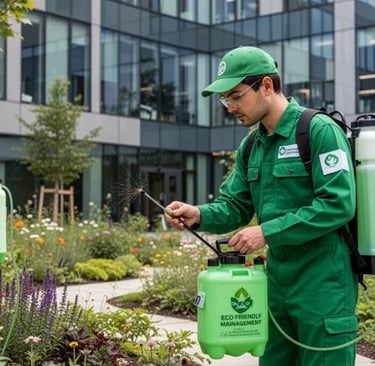
Understanding Integrated Pest Management (IPM)
Integrated Pest Management (IPM) is a comprehensive approach to pest control that emphasizes the use of sustainable practices to manage pest populations effectively while minimizing harm to the environment and public health. At its core, IPM integrates various biological, cultural, physical, and chemical tools to create an effective pest management system. This adaptive strategy not only focuses on eradicating pests but also on preventing their occurrence through careful planning and monitoring.
One of the distinguishing features of IPM is its reliance on understanding pest life cycles, routines, and their interactions with the environment. This knowledge allows practitioners to make informed decisions regarding the timing and methods of pest management interventions. Unlike traditional pest control methods that often depend heavily on chemical pesticides, IPM prioritizes the least hazardous options first—such as biological control using natural predators or utilizing pest-resistant crops.
As societal awareness of environmental sustainability and public health issues rises globally, the demand for effective and responsible pest management solutions like IPM is becoming increasingly prevalent. The trend towards IPM is driven by stakeholders—ranging from agricultural producers to urban planners—who recognize the importance of long-term environmental health and sustainability. Moreover, regulatory bodies across various regions are beginning to endorse IPM practices, tying them closely to initiatives aimed at reducing pesticide usage and promoting safer alternatives.
Real-world examples show the effectiveness of IPM in various industries. For instance, agricultural sectors in several countries have successfully implemented IPM strategies resulting in increased crop yields while simultaneously reducing pesticide reliance. In urban environments, municipalities have adopted IPM practices to mitigate pest populations effectively without compromising public health or the environment. These case studies not only highlight the functionality of IPM but also emphasize its relevance as a sophisticated approach to modern pest management.
IPM 5-Step Procedure
The Integrated Pest Management (IPM) procedure consists of five essential steps that form a systematic approach to effective pest control. This method prioritizes eco-friendly practices and focuses on sustainable solutions. Each step plays a crucial role in addressing pest problems while minimizing potential harm to the environment and human health.
The first step in the IPM process is assessing pest problems. This involves observing the extent of the infestation and determining the nature of the pest issues present. By conducting a thorough evaluation, pest management professionals can identify the severity of the problem and outline the key aspects that need addressing. Accurate assessment ensures that subsequent actions are based on solid data, allowing for a targeted strategy.
Next, the identification of pests becomes pivotal. Understanding which specific pests are present influences the choice of control methods. Accurate identification helps in recognizing the behavior, life cycle, and habits of the pests, which in turn aids in developing more effective management strategies. This step is critical, as different pests require different treatments, and misidentification can lead to ineffective solutions.
Following identification, setting action thresholds is the third step in the IPM methodology. Action thresholds are predetermined levels that determine when pest populations reach a point that necessitates intervention. By establishing these thresholds, pest management strategies can avoid unnecessary applications of control agents, focusing only on instances where intervention is genuinely required.
The fourth step involves implementing control methods. This stage encompasses a range of strategies including biological controls, physical traps, cultural practices, and the judicious use of pesticides when necessary. The choice of control method should align with the previous steps, ensuring an environmentally aware approach while effectively managing pest populations.
Finally, evaluating results concludes the IPM procedure. After executing the control methods, monitoring and assessing the outcomes determine the success of the strategy implemented. This evaluation phase is crucial for informing future pest management decisions and ensuring the continual refinement of techniques employed.
Monitoring & Documentation
Effective integrated pest management (IPM) relies heavily on the systematic monitoring and documentation of pest activity. This process serves as the foundation for developing, implementing, and adjusting pest control strategies that align with the principles of sustainability and environmental responsibility. Various monitoring techniques, such as bait traps, visual inspections, and pheromone traps, play a crucial role in identifying pest populations and their behaviors within a given environment.
Bait traps are particularly useful in not only detecting the presence of pests but also gauging their population levels. By strategically placing these traps in areas prone to infestations, pest management professionals can gather essential data regarding the types and numbers of pests invading a space. Visual inspections complement bait traps by allowing for a thorough examination of the premises, identifying potential entry points, and assessing damage caused by pests. Together, these methods provide a comprehensive overview of the pest situation, informing subsequent decisions and actions.
Documentation of pest activity and monitoring results is equally important in the IPM framework. Keeping thorough and organized records creates a historical reference that enhances the understanding of pest trends over time. Such documentation includes details about pest sightings, environmental factors, the success of applied control measures, and changes in pest populations. Analyzing this data allows for the evaluation of the effectiveness of the selected IPM strategies and facilitates informed adjustments to the pest management plan as needed.
In summary, monitoring and documentation are integral components of integrated pest management services that enable practitioners to devise effective, eco-friendly pest control solutions. Through diligent tracking of pest activity, pest managers can ensure that their approaches remain responsive and effective, ultimately achieving long-term pest control success while minimizing environmental impact.
Eco-Friendly Chemical Use
The usage of eco-friendly chemicals plays a pivotal role in Integrated Pest Management (IPM) practices, aiming to balance effective pest control with ecological sustainability. Eco-friendly pesticides, which are derived from natural sources or are formulated to minimize their environmental impact, are designed to be less toxic to non-target organisms and humans compared to their conventional counterparts. These formulations often include substances such as botanical extracts, microbial agents, or naturally occurring minerals that exhibit pest-repelling or pest-targeting properties.
One of the main advantages of eco-friendly chemicals is their lower toxicity levels. For instance, neonicotinoids, commonly used in traditional pest control, have been shown to negatively impact pollinator populations, including bees. On the other hand, eco-friendly alternatives, such as diatomaceous earth or neem oil, offer effective pest management solutions with considerably less risk to essential ecosystem contributors. Furthermore, these alternatives often break down more quickly in the environment, thus reducing the likelihood of persistent residues that can harm soil health or aquatic systems.
While conventional pesticides are often associated with immediate and broad-spectrum effects, eco-friendly chemicals provide targeted solutions through selective action, which is beneficial for maintaining biodiversity. This contrast highlights the shift towards adopting safer alternatives that align with sustainable pest control objectives. By prioritizing eco-friendly chemical use, pest management practices can be both effective and responsible. As the industry moves forward, continued innovation in eco-friendly pesticide formulations will be critical in changing the landscape of pest control, emphasizing long-term environmental health while addressing immediate pest-related challenges.
Corporate Sustainability Compliance
Integrated Pest Management (IPM) services play a crucial role in helping businesses meet and exceed corporate sustainability objectives. As the global focus shifts towards environmental responsibility, companies are increasingly required to adopt practices that minimize their ecological footprint while ensuring effective pest control. IPM strategies align closely with sustainability goals, as they promote the use of eco-friendly methods such as biological control, habitat manipulation, and the judicious use of pesticides, thereby reducing negative impacts on the environment.
Implementation of IPM services is often guided by various regulations and compliance standards that dictate how companies manage pest populations. For instance, the Environmental Protection Agency (EPA) in the United States sets forth guidelines that necessitate the judicious use of chemicals in pest management. Similarly, organizations in different jurisdictions are required to comply with specific laws regarding pesticide application, waste management, and transportation of pest control materials. By adhering to these regulations through IPM practices, businesses not only mitigate risks associated with pest infestations but also ensure compliance with sustainable practices.
Several corporations have successfully integrated IPM into their sustainability plans, experiencing significant benefits. A notable case is that of a large food manufacturer that adopted IPM strategies to reduce pesticide usage in its production facilities. By implementing monitoring and evaluation techniques, the company achieved a substantial decrease in pest populations without resorting to harmful chemicals, resulting in a safer working environment and improved product quality. Similarly, a hotel chain implemented IPM to manage pests in their properties; in addition to reducing pesticide use, this approach enhanced their public image and satisfied environmentally-conscious consumers.
Ultimately, adopting Integrated Pest Management not only aligns with corporate sustainability compliance standards but also reinforces a company's commitment to environmental stewardship, thereby contributing positively to their overall corporate responsibility initiatives.
IPM Packages for Hotels, Hospitals & Factories
The implementation of Integrated Pest Management (IPM) strategies is vital in various sectors, particularly in hospitality, healthcare, and manufacturing. Each of these industries faces unique pest challenges that necessitate specialized IPM service packages designed to address their specific needs. In the hospitality sector, hotels must maintain high standards of cleanliness and comfort for guests, making them susceptible to a range of pests such as bed bugs, cockroaches, and ants. These pests can not only tarnish the reputation of an establishment but also impact guest satisfaction and retention.
In healthcare settings, such as hospitals and clinics, the presence of pests can pose significant health risks, compromising patient safety and hindering infection control protocols. Pests such as rodents and flies can carry diseases, making it crucial for healthcare facilities to adopt stringent pest management practices that align with their health and safety regulations. Tailored IPM solutions for healthcare can encompass regular inspections, monitoring systems, and preventive measures to ensure a pest-free environment.
Similarly, the manufacturing industry faces challenges with pests that can disrupt operations and affect product quality. Factories, often housing agricultural products or food items, require specialized IPM solutions to mitigate risks associated with pests like grain weevils and moths. By adopting sector-specific pest management strategies, manufacturers can safeguard their operations, reduce inventory loss, and comply with stringent food safety regulations.
In summary, the benefits of adopting tailored IPM service packages for hotels, hospitals, and factories are manifold. Not only do these packages help in effectively managing pest issues, but they also promote sustainability and maintain a commitment to environmentally-friendly practices. By integrating IPM strategies specific to their industry, these sectors can enhance their facilities' overall safety and cleanliness while fostering a more sustainable approach to pest control.
Benefits Over Traditional Spraying
Integrated Pest Management (IPM) is increasingly recognized as a more effective and sustainable approach to pest control compared to traditional spraying methods. One of the primary advantages of IPM is its emphasis on numerous strategies working together to manage pest populations while minimizing the reliance on chemical pesticides. This multifaceted methodology results in a reduced environmental footprint, promoting ecological balance and health.
In terms of efficacy, IPM techniques are tailored to target specific pests while preserving beneficial organisms. Unlike conventional spraying, which can indiscriminately affect all insects, IPM incorporates biological controls, such as introducing natural predators or using pheromone traps. These measures not only effectively control pest populations but also help sustain the local ecosystem, leading to healthier agricultural and residential environments.
Cost-effectiveness is another essential benefit of IPM. While initial implementation costs may be higher due to the thorough assessment and monitoring involved, the long-term savings are significant. IPM reduces the frequency of pesticide applications and the associated costs of chemical products and labor. Furthermore, businesses and local government entities benefit from fewer regulatory and liability concerns linked to pesticide applications, ultimately leading to cost savings.
Another critical aspect of IPM is its focus on environmental health. By reducing pesticide reliance, IPM minimizes soil and water pollution, thus safeguarding human health and biodiversity. Implementing IPM practices also contributes to compliance with increasingly strict regulations regarding pesticide use, making it a more responsible choice for businesses committed to sustainability.
Lastly, IPM emphasizes long-term pest prevention rather than merely addressing immediate infestations. Through continuous monitoring and assessment, IPM identifies potential issues before they escalate, resulting in a more stable and less pest-prone environment compared to reactive traditional pest control methods. By fostering a safer space for communities and businesses, Integrated Pest Management ultimately enhances public health while promoting sustainable practices.
Address:
264/5, Kamal Soroni Road, Mirpur, Dhaka-1216
Contact
Your Quaries on pest control askings
pestexterminatorbd@gmail.com
+8801642008383 +8801988300003, 01723057746
© 2025. All rights reserved. to Urban Pest Control Pvt. Ltd. this site is powered by Our Own IT Team