
Is Malaria Making a Comeback? Climate Change and Global Resurgence in 2026
2/20/20267 min read
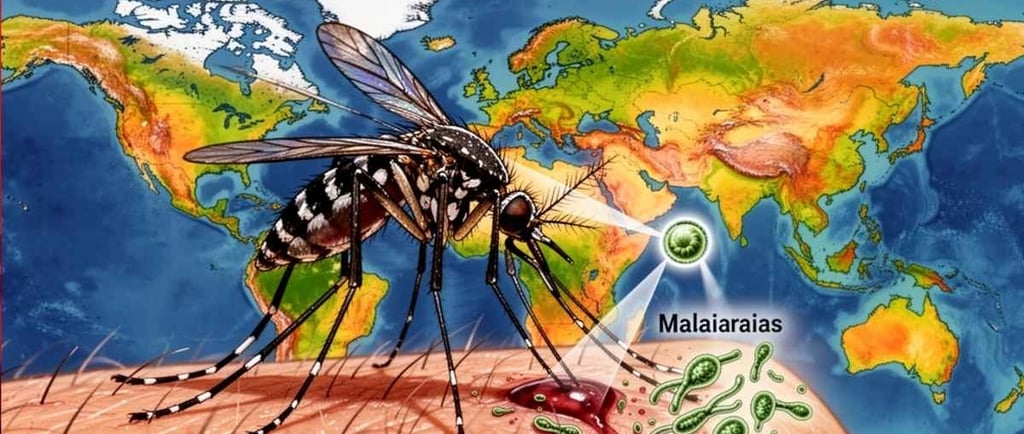
Introduction to Malaria Resurgence
Malaria, caused by Plasmodium parasites and transmitted through Anopheles mosquitoes, has plagued humanity for centuries. Historically, malaria has seen fluctuations in prevalence, with periods of significant decline followed by resurgences. The significant efforts towards malaria control, particularly during the latter half of the 20th century, led to substantial reductions in morbidity and mortality rates in numerous regions worldwide. However, recent trends indicate a resurgence of malaria, raising pressing concerns regarding global health.
This resurgence is not merely a resurgence of case numbers but reflects complex dynamics intertwined with environmental, socio-political, and health system factors. Various regions, particularly sub-Saharan Africa, have witnessed an alarming increase in malaria incidences, posing challenges to previous gains made in combatting this disease. Reports from the World Health Organization (WHO) suggest a stagnation in declines of malaria cases despite ongoing interventions, indicating an urgent need to comprehend the root causes of this troubling trend.
The significance of understanding malaria resurgence extends beyond historical patterns; it serves as a crucial element in shaping future global health strategies. An interdisciplinary approach that includes entomology, epidemiology, and public health policy is vital to addressing both the resurgence and the enabling conditions that have allowed malaria to re-establish itself in previously controlled regions. The complexities surrounding this phenomenon underscore the necessity for robust engagement and collaboration among health organizations, governments, and communities to design effective solutions. This blog post aims to delve deeper into these underlying factors contributing to malaria resurgence, thereby fostering informed discussions and actionable strategies for combating this resilient public health challenge.
Climate Change and Its Influence on Malaria Expansion
Climate change represents a significant threat to public health, particularly through its impact on vector-borne diseases such as malaria. The phenomenon contributes to the resurgence of malaria by altering environmental conditions that favor mosquito proliferation and survival. Rising global temperatures due to climate warming create optimal environments for the Anopheles mosquitoes that transmit the malaria parasite, significantly increasing their populations in certain regions.
Temperature is a critical factor influencing mosquito behavior, affecting their reproduction, longevity, and feeding patterns. Higher temperatures can accelerate the life cycle of these vectors, allowing a greater number of infectious mosquitoes to thrive in a shorter period. Additionally, warmer conditions facilitate the development of the malaria parasite within mosquitoes, thereby increasing transmission rates to humans. Consequently, regions that were previously less hospitable to malaria vectors are now experiencing altered epidemiological patterns, with a notable geographical expansion of malaria.
Moreover, changes in humidity and rainfall patterns due to climate change also play crucial roles. An increase in rainfall can create more breeding sites for mosquitoes, while humidity helps maintain their survival rates. Conversely, prolonged droughts can reduce water sources, subsequently impacting mosquito populations but potentially leading to spikes in transmission when conditions improve again. Such fluctuations can lead to the re-establishment of malaria in areas that had previously seen successful control measures.
The interplay of these climatic variables necessitates a comprehensive understanding among health officials and policymakers to address the increasing challenges associated with malaria resurgence. Targeted interventions that take into account the seasonal and geographical shifts brought about by climate change are crucial to effectively combat the growing threat of malaria.
Vector Expansion and Its Implications
The resurgence of malaria in various regions can be partly attributed to the changing dynamics of mosquito vectors, particularly the Anopheles species responsible for transmitting the Plasmodium parasite. Environmental alterations, such as climate change, urbanization, and deforestation, have significantly influenced vector habitats and behaviors, escalating the risks of malaria transmission. Understanding these shifts is crucial for the development of effective control measures.
Climate change has led to increased temperatures and altered rainfall patterns, both of which are favorable for mosquito breeding and survival. Research indicates that warmer temperatures can accelerate the life cycle of Anopheles mosquitoes, resulting in higher populations capable of transmitting malaria. Additionally, increased precipitation creates ideal breeding sites, further expanding vector habitats. This ecological shift is not only observed in rural areas but also poses a growing threat in urban settings where human-mosquito interactions are becoming more common.
Urbanization itself plays a significant role in malaria transmission dynamics. The construction of new housing, roads, and other infrastructure can create stagnant water bodies, prime locations for mosquito breeding. As cities expand and populations grow, the challenge of controlling mosquito vectors intensifies. Urban settings often lack adequate pest control measures and may also face increased migration from rural areas, thereby unintentionally increasing the local malaria risk.
Moreover, globalization and human mobility enhance the spread of malaria. With travel and trade becoming more accessible, mosquito species that are vectors for malaria are also more likely to be introduced into new areas. This phenomenon can result in malaria resurgence in regions that were previously under control. Consequently, addressing the challenges posed by mosquito vectors requires an integrated approach, combining environmental management, urban planning, and vector control strategies tailored to local contexts.
The Challenge of Drug Resistance
Drug resistance represents one of the most significant hurdles in the fight against malaria, undermining treatment efficacy and complicating elimination strategies. The mechanisms behind this resistance are multifaceted, with genetic mutations in the Plasmodium parasites allowing them to survive even in the presence of antimalarial drugs. As the parasites evolve, they often develop resistance to the most commonly used treatments, including artemisinin-based combination therapies (ACTs). This adaptation not only hampers retention of treatment effectiveness but also endangers the broader public health efforts against malaria.
The rising prevalence of drug-resistant malaria is particularly alarming, as it signifies a step backward in decades of progress toward malaria eradication in high-burden regions. Treatment failures increase, leading to prolonged illness and increased mortality rates among affected populations. Additionally, the spread of these resistant strains exacerbates healthcare costs and strains already limited resources in endemic countries, creating a cycle that is difficult to break.
As public health organizations strive to combat the emergence of drug resistance, they face numerous challenges, including limited surveillance and monitoring in many regions. Moreover, the distribution and availability of effective medications may vary significantly, complicating treatment protocols. Addressing this crisis requires a multi-faceted approach, including the development of new antimalarial agents, implementation of improved diagnostic tools, and the promotion of preventive measures such as insecticide-treated bed nets.
Ultimately, tackling drug resistance is essential for sustaining and advancing global malaria elimination efforts. Understanding the mechanisms of resistance and its implications on treatment regimens will be crucial in shaping future strategies aimed at maintaining the efficacy of antimalarial treatments, thus ensuring that progress against malaria is not just maintained but also strengthened.
Global Statistics on Malaria Trends
Malaria continues to pose a significant threat to global health, particularly in regions where climatic, socio-economic, and infrastructural conditions are conducive to its transmission. According to the World Health Organization (WHO), there were an estimated 241 million cases of malaria worldwide in 2020, which marked a decrease from previous years. However, recent data indicate that some regions, particularly in Africa, have experienced increases in malaria incidence. This resurgence has raised concerns about the effectiveness of current malaria control strategies.
The mortality rate associated with malaria remains critically high, with approximately 627,000 fatalities recorded in 2020, predominantly affecting children under the age of five. Sub-Saharan Africa remains the most affected region, accounting for about 95% of global malaria deaths. Comparatively, other regions, such as Southeast Asia and the Eastern Mediterranean, exhibit fluctuating trends; these areas have seen decreases in both incidence and mortality due to the implementation of effective public health interventions.
When examining trends in malaria transmission, it is essential to highlight that despite significant progress in certain areas, challenges remain. Regions such as the Sahel and parts of West Africa have reported sharp upturns in malaria cases due to factors such as climatic changes and displacement of populations affected by conflict. Meanwhile, countries like India and Vietnam have demonstrated notable success in controlling malaria rates, leading to reductions in both morbidity and mortality.
Data also suggests a concerning stagnation in funding for malaria prevention and treatment, which threatens to unravel the advancements made in previous decades. As such, sustained commitment from international donors and national governments is crucial to address the persistent challenges in malaria control and to ensure that regions experiencing resurgence may effectively curb the disease's impact.
WHO Recommendations for Malaria Prevention and Treatment
The World Health Organization (WHO) has established a comprehensive set of recommendations aimed at combating malaria, particularly in regions where resurgence is a persistent threat. Key strategies focus on preventive measures, treatment protocols, and community involvement, all designed to enhance the effectiveness of malaria control initiatives.
A primary recommendation is the implementation of vector control strategies. This includes the use of insecticide-treated nets (ITNs) and indoor residual spraying (IRS) to reduce mosquito populations and minimize the risk of malaria transmission. Ensuring widespread accessibility and distribution of ITNs has proven vital, particularly in high-transmission areas. These interventions not only protect individuals but also reduce overall vector density in communities, thus contributing to regional malaria reduction.
Another crucial aspect of WHO’s recommendations is the administration of preventive therapies. This approach involves offering chemoprevention to vulnerable populations, such as pregnant women and young children, during high-risk seasons. Intermittent preventive treatment during pregnancy (IPTp) and seasonal malaria chemoprevention (SMC) are significant strategies aimed at lowering the incidence of malaria and its severe complications. By systematically applying these preventive measures, it is possible to significantly reduce the burden of malaria in high-risk demographics.
Community engagement is equally essential in the fight against malaria. The WHO emphasizes the need for public awareness campaigns that inform communities about malaria transmission, treatment options, and prevention strategies. Leveraging local stakeholders, including health workers, non-governmental organizations, and schools, can foster a collective effort towards malaria control. Awareness programs, combined with active participation in vector control activities, enhance the community’s resilience against malaria resurgence.
These WHO-recommended strategies collectively aim to create a holistic approach to territorial malaria control, significantly impacting transmission dynamics and ultimately improving health outcomes across affected populations.
Predictive Modeling and Future Directions
Predictive modeling has emerged as an invaluable tool in the fight against malaria, aiding in the understanding of infection dynamics and guiding public health interventions. This approach utilizes mathematical algorithms and statistical techniques to analyze various data inputs, including incidence rates, environmental factors, and socio-economic variables, thereby providing insights into potential future outbreaks. By forecasting trends in malaria transmission, public health officials can implement targeted strategies that are both timely and efficient.
Different modeling techniques have been employed in malaria research, ranging from traditional compartmental models to more sophisticated machine learning algorithms. Compartmental models, such as the SIR (Susceptible, Infected, Recovered) model, allow researchers to simulate disease spread under various scenarios. These models can be enhanced by integrating geographic and demographic data, which add layers of complexity and accuracy to the predictions. On the other hand, machine learning approaches enable the processing of vast datasets, capturing intricate patterns that may not be evident through standard methods.
The integration of predictive modeling into public health planning not only facilitates proactive measures but also optimizes resource allocation. For instance, by identifying regions at higher risk of resurgence, health authorities can deploy interventions, such as vector control programs or vaccination campaigns, more effectively. Additionally, stakeholder engagement is crucial; collaboration among researchers, policymakers, and community leaders ensures that model outputs are translated into relevant public health strategies.
In summary, predictive modeling plays a pivotal role in understanding and reacting to malaria trends, offering a clearer trajectory for future interventions. As technological advancements continue to facilitate the collection and analysis of data, the refinement of these models will likely lead to even more effective strategies for malaria control, ultimately contributing to a decrease in malaria burden worldwide.
Address:
264/5, Kamal Soroni Road, Mirpur, Dhaka-1216
Contact
Your Quaries on pest control askings
pestexterminatorbd@gmail.com
+8801642008383 +8801988300003, 01723057746
© 2025. All rights reserved. to Urban Pest Control Pvt. Ltd. this site is powered by Our Own IT Team