
Modern Pest Control Is About Science, Not Spray
2/2/20268 min read
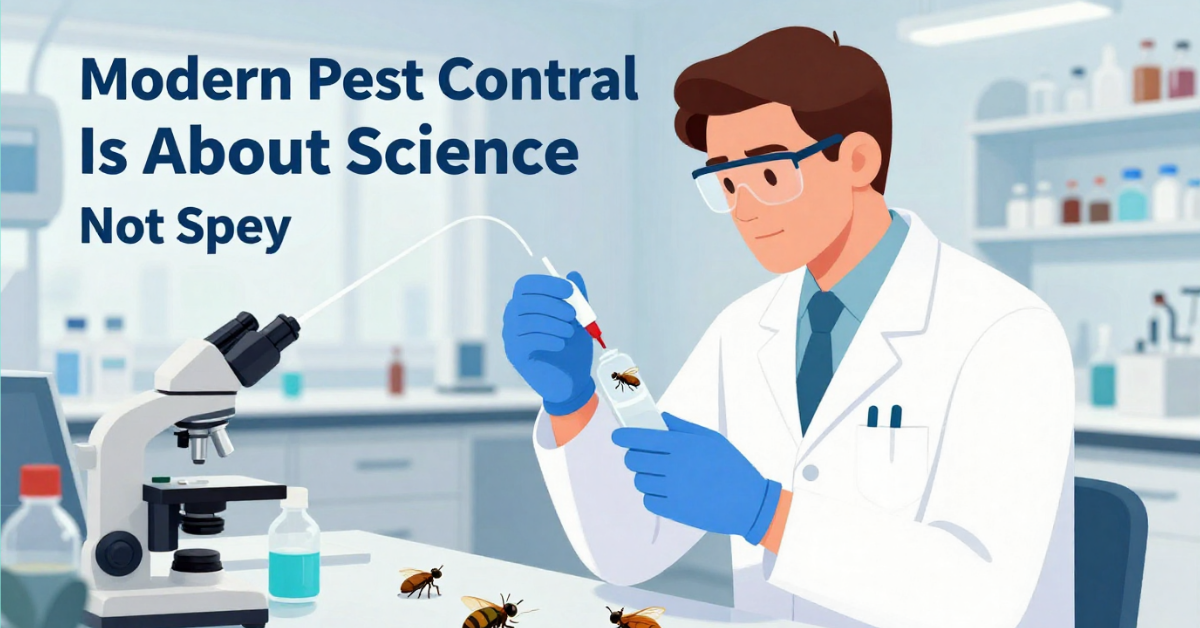
Introduction to Modern Pest Control
Modern pest control has undergone a significant transformation in recent years, moving away from traditional methods that relied heavily on chemical treatments. This evolution reflects a deeper understanding of pest behavior, biology, and ecology, which are crucial components of effective pest management. Rather than merely applying pesticides, today's pest control strategies are rooted in scientific principles, promoting sustainability and minimizing potential harm to humans and the environment.
One of the fundamental shifts in the approach to pest management is the recognition that pests do not simply invade spaces arbitrarily; rather, they are influenced by specific environmental factors and biological triggers. Modern pest control emphasizes the importance of identifying these factors, enabling professionals to devise tailored strategies that address the root causes of pest infestations. This holistic perspective not only improves effectiveness but also fosters long-term solutions that prevent future outbreaks.
Furthermore, the integration of technology into pest control practices has enhanced monitoring and assessment capabilities. Innovative tools such as pheromone traps, electronic monitoring systems, and data analytics provide valuable insights into pest populations and behaviors. These advancements allow pest control specialists to make informed decisions based on real-time data, leading to more precise and targeted interventions.
As consumer awareness of health and environmental concerns increases, the demand for eco-friendly pest control solutions has risen accordingly. The modern pest control paradigm incorporates Integrated Pest Management (IPM) principles, prioritizing preventive measures and non-chemical options whenever possible. This not only reduces reliance on chemical pesticides but also promotes biodiversity and ecological balance, contributing positively to both human health and the ecosystem.
Understanding Pest Biology and Behavior
The effectiveness of modern pest control strategies hinges significantly on a comprehensive understanding of the biology and behavior of common household pests. Different types of pests, such as rodents, insects, and termites, exhibit unique life cycles, breeding habits, feeding preferences, and habitat requirements. This knowledge is critical in developing targeted management techniques that not only eliminate existing infestations but also prevent future occurrences.
To begin with, the life cycles of pests vary widely. For instance, insects such as cockroaches undergo a development process that includes several stages: egg, nymph, and adult. During the nymph stage, they are often less susceptible to many control methods, making it crucial to disrupt their life cycle at multiple points to ensure successful eradication. Similarly, understanding breeding habits allows pest control experts to ascertain peak reproduction periods, helping to time interventions for maximum effect. In the case of rodents, their short gestation period and high reproductive rate necessitate early detection and intervention to prevent explosive population growth.
Feeding preferences also play a vital role in the biology of pests. Many common pests are highly selective in their diets, which directly influences their habitat choices. For example, termites are attracted to cellulose materials found in wood and paper, while ants may seek out sugary substances. By identifying the food sources that attract these pests, pest management professionals can implement strategies that eliminate these attractants, making the environment less hospitable to potential infestations.
Finally, understanding the habitat requirements of various pests helps in implementing preventative measures effectively. For instance, cluttered areas can provide shelter for rodents and insects, while moisture-laden environments are ideal for mold and termites. By assessing and modifying these environmental conditions, homeowners can significantly reduce the risk of pest infestations. Overall, a thorough understanding of pest biology and behavior is indispensable in the realm of pest management, allowing for more informed and effective control strategies.
Integrated Pest Management (IPM): A Scientific Approach
Integrated Pest Management (IPM) is a holistic and science-based strategy designed to manage pest populations while minimizing risks to human health and the environment. This sophisticated approach integrates various management practices and methodologies, creating a balanced system that addresses pest control effectively and sustainably.
At the core of IPM is the monitoring of pest populations. This entails regular assessments of pest levels in order to determine the need for intervention. By observing pest behavior and population dynamics, professionals can make informed decisions regarding control measures, thereby preventing unnecessary chemical applications. Monitoring not only aids in effective timing of interventions but also helps in understanding pest life cycles and identifying vulnerable stages.
Biological control is another vital component within the framework of IPM. This method leverages natural predators, parasites, or pathogens to control pest populations. By harnessing these biological agents, IPM practitioners can reduce reliance on chemical pesticides, fostering a healthier ecosystem. For instance, introducing ladybugs in a garden can help manage aphid populations naturally, demonstrating a practical application of this principle.
Additionally, implementing preventive measures is crucial in an IPM strategy. This includes practices such as crop rotation, habitat modification, and sanitation efforts to reduce pest infestation opportunities. By addressing the conditions that allow pests to thrive, IPM promotes long-term sustainability and resilience against pest outbreaks.
Ultimately, the integrated approach employed by IPM emphasizes sustainable practices that protect biodiversity while controlling pest populations. It is a commitment to scientific research and practical applications, reflecting a profound understanding of ecological interactions. Consequently, IPM stands as a robust model in modern pest control paradigms, ensuring an effective balance between maintaining human health and preserving the environment.
The Role of Technology in Modern Pest Control
The evolution of pest control technologies has fundamentally transformed the approach to managing pest populations. Modern pest control now leverages a variety of technological innovations that increase both efficiency and effectiveness while minimizing environmental impact. Among these advancements, the integration of smart devices plays a pivotal role in monitoring and managing pest activity.
Smart sensors and monitoring devices are increasingly being used to detect pests in real-time. These devices can track temperature, humidity, and other environmental factors that can influence pest behavior. By analyzing this data, pest control professionals can tailor their strategies to address specific issues, leading to better outcomes. Furthermore, mobile applications allow clients and pest control teams to maintain ongoing communication, facilitating immediate reporting and response to pest sightings.
The use of drones for inspection purposes is another notable technology impacting modern pest control. Drones are employed to survey large areas quickly and efficiently, especially in difficult-to-access locations. They can provide real-time visuals of properties, identifying infestations or structural vulnerabilities that may harbor pests. This aerial perspective enhances the situational awareness of pest control professionals, enabling more informed decision-making.
Data analytics also plays a crucial role in formulating effective pest management strategies. By analyzing historical data and current trends, pest control companies can predict potential infestations, assess risk levels, and allocate resources more effectively. Environmental assessments, combined with data-driven insights, ensure that pest management plans are customized to the needs of each unique environment.
In summary, the intersection of technology and pest control is creating a more precise and strategic approach to managing pests. By utilizing smart devices, drones, and data analytics, pest control professionals can enhance their understanding and management of pest populations, leading to improved outcomes for both clients and the environment.
Environmental Considerations in Pest Control
Modern pest control emphasizes the necessity of incorporating environmental considerations into pest management strategies. One primary goal is to minimize the use of chemical pesticides, which can have detrimental impacts on ecosystems. By advocating for integrated pest management (IPM), practitioners aim to balance effective pest eradication with ecological stewardship. This approach utilizes a combination of biological, cultural, and mechanical controls before resorting to chemical methods, reducing the overall chemical footprint on the environment.
Additionally, protecting beneficial insects is paramount in contemporary pest management. Pollinators, such as bees, and predatory insects, like ladybugs, are vital for maintaining the ecological balance and ensuring plant health. Modern pest control strategies often include methods to attract and conserve these beneficial species, allowing natural predation to suppress pest populations effectively. Techniques such as planting native flora can create habitats that support these essential insects, thus fostering a healthier environment.
Another area of focus is the development and use of targeted pest control products that are less harmful to non-target species, including humans, pets, and the environment. The evolution of biopesticides, derived from natural materials, showcases a commitment to reducing chemical residuals and enhancing safety outside conventional alternatives. This shift is indicative of a broader recognition of the environmental impacts of pest control, aligning with global trends towards sustainability and eco-friendliness.
The importance of maintaining ecological balance cannot be overstated. Unchecked pest populations can lead to significant agricultural losses, affecting food security and biodiversity. Therefore, sustainable pest management solutions are imperative. By leveraging environmentally friendly practices, we not only mitigate potential adverse effects on ecosystems but also promote a harmonious coexistence of all species within their habitats.
Case Studies: Successful Implementation of Scientific Methods
In recent years, the application of scientific methods in pest control has demonstrated substantial effectiveness across various residential and commercial settings. One notable example can be found in a large urban hospital that faced chronic bed bug infestations. The facility implemented an Integrated Pest Management (IPM) approach, combining physical removal, education, monitoring, and judicious use of pesticides. Staff training sessions were conducted to ensure proper identification and reporting of potential infestations. As a result, the hospital reported a 75% decrease in bed bug cases within the first six months, showcasing the power of addressing the issue comprehensively.
Another case study worth noting involves a retail grocery chain struggling with fruit fly infestations. Utilizing scientific methodologies, the chain conducted thorough inspections and data collection to identify breeding sites. They installed traps to monitor fruit fly populations and employed sanitation measures to eliminate food sources. Additionally, they engaged customers and employees by educating them on best practices for food storage. Through these combined efforts, the grocery chain successfully reduced fruit fly populations by over 80%, significantly improving their shopping environment.
Furthermore, a multi-family residential complex implemented scientific pest control techniques to manage rodent populations effectively. The property management team worked with entomologists to conduct a comprehensive assessment of the building, identifying entry points and nesting areas. They then made physical modifications, such as sealing gaps and enhancing waste management protocols. Ongoing monitoring and community awareness campaigns were also launched, resulting in complete rodent control and increased tenant satisfaction.
These case studies exemplify that the successful implementation of scientific pest control methods leads to significant outcomes in managing infestations. The integration of data-driven strategies not only addresses pest issues efficiently but also fosters a culture of prevention within communities and organizations.
Conclusion: The Future of Pest Control
As we reflect on the evolution of pest control, it becomes increasingly evident that the reliance on scientific methods has transformed the field significantly. Modern pest control goes beyond traditional chemical sprays, as the integration of research, technology, and sustainable practices drives the industry forward. The impact of these advancements not only aims to control pest populations effectively but also emphasizes the importance of environmental stewardship.
Research continues to unveil innovative solutions that address pest problems while minimizing ecological impact. For instance, the development of biopesticides—natural organisms or substances that target specific pest species—illustrates the shift toward more eco-friendly pest control methods. Furthermore, precision pest management, which utilizes data analytics and technology for targeted treatment strategies, is gaining traction. This practice not only improves efficiency but also reduces the likelihood of pests developing resistance to control measures.
As ongoing research in pest biology and habitat modification continues, pest control strategies are expected to become more precise and adaptive. Innovations such as gene editing and advances in microbial pest control may provide even more effective solutions for managing pest populations humanely and sustainably. Additionally, increasing collaborative efforts among scientists, pest control professionals, and regulatory bodies will ensure that these methodologies adhere to safety and ecological guidelines.
Ultimately, the future of pest control appears promising, characterized by a commitment to scientific rigor and environmental integrity. Stakeholders in the industry will likely experience a paradigm shift that prioritizes integrated pest management approaches, balancing efficacy with an ecological perspective. As we advance, this intersection of science and practice will define how society addresses the ongoing challenges posed by pests, benefiting both human health and the environment.
Address:
264/5, Kamal Soroni Road, Mirpur, Dhaka-1216
Contact
Your Quaries on pest control askings
pestexterminatorbd@gmail.com
+8801642008383 +8801988300003, 01723057746
© 2025. All rights reserved. to Urban Pest Control Pvt. Ltd. this site is powered by Our Own IT Team