
Pest Control Technologies Used in Hospitals, Airports & Food Industries
Pest Control Technologies Used in Hospitals, Airports & Food Industries
1/31/20268 min read
Introduction to Pest Control in Sensitive Environments
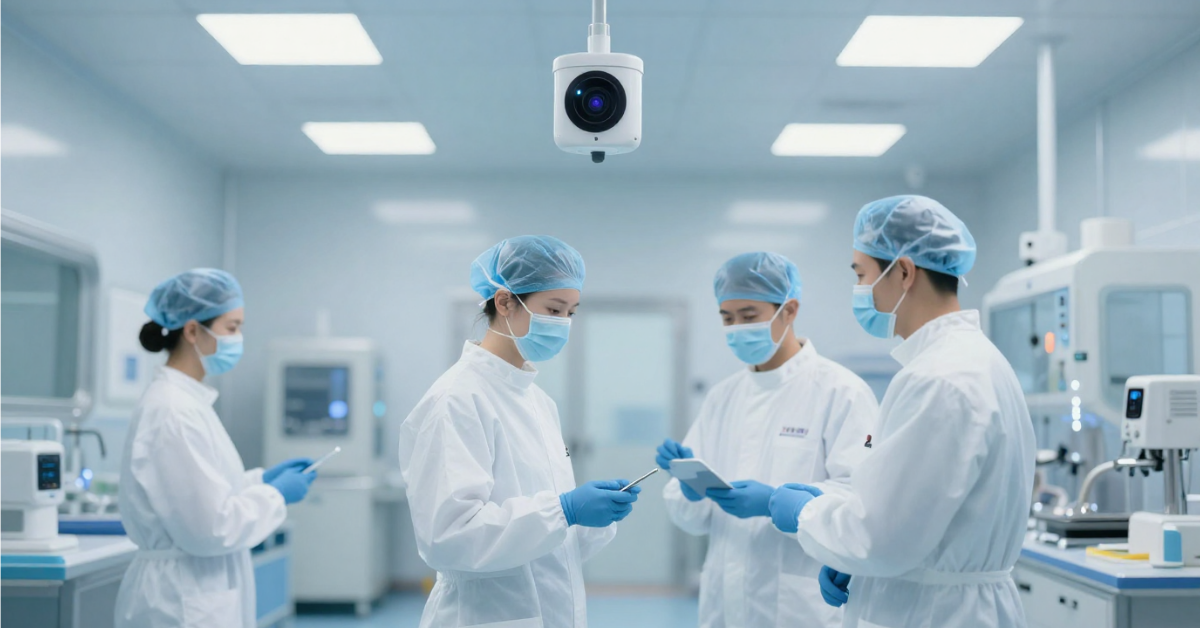
Pest control is an essential aspect of maintaining safety and health in sensitive environments, particularly in hospitals, airports, and food industries. Each of these sectors presents unique challenges regarding pest management due to their specific operational requirements and the vulnerabilities of their occupants. Effective pest control in these environments not only protects public health but also safeguards the integrity of services and products offered.
In hospitals, the presence of pests poses a serious health risk, as they can carry diseases that jeopardize patients with weakened immune systems. Rodents and insects, such as cockroaches and flies, can contaminate sterile areas and spread pathogens. Therefore, pest control measures must be proactive and comprehensive, ensuring that infestations are quickly addressed and effectively managed.
Airports also face distinct challenges regarding pest management. Given the high volume of both domestic and international travelers, the potential for the introduction and spread of pests is significant. Pests can hitch rides on baggage, cargo, and even aircraft, leading to widespread infestations. Airports must employ cutting-edge pest control technologies to mitigate these risks while ensuring compliance with strict regulatory standards.
In the food industry, pest control is critical not only for quality assurance but also for legal compliance. Food handling and processing environments must adhere to stringent health regulations, making the prevention of pest infestations paramount. Pests such as rodents and insects can contaminate food supplies, leading to serious economic repercussions and health risks for consumers.
In conclusion, effective pest control strategies tailored to the unique needs of hospitals, airports, and food industries are essential. By understanding the specific challenges these environments face, stakeholders can implement advanced technologies and practices that prioritize health and safety while promoting efficient operations.
Types of Pests Commonly Found in Hospitals, Airports, and Food Facilities
In various environments such as hospitals, airports, and food industries, the presence of pests is a significant concern that can affect hygiene, safety, and overall health. Understanding the types of pests typically found in these settings is crucial for implementing effective pest control technologies.
Rodents, particularly mice and rats, are among the most common pests found in hospitals. Their presence poses serious health risks due to their potential to spread diseases such as Hantavirus and leptospirosis. Rodents are often attracted to hospitals due to easily accessible food sources and nesting areas. Similarly, airports can provide ample shelter and food, making them a breeding ground for these vermin, especially in maintenance areas and storage rooms.
Another prevalent pest in these environments is the cockroach. Cockroaches thrive in moist areas and are notorious carriers of allergens and pathogens that pose significant health risks. In hospitals, their presence can jeopardize the sanitation standards vital for patient recovery. In food facilities, the risk is equally serious, as cockroaches can contaminate food supplies and preparation areas, leading to widespread health issues.
Flies, particularly house flies and fruit flies, are also frequently encountered in food facilities and hospitals. They are attracted to decaying organic matter and can efficiently carry bacteria from contaminated surfaces to food products or medical equipment. This can result in foodborne illnesses and infections that compromise health standards. Airports are also not exempt, as flies can thrive in areas with food waste, which can quickly become a potential risk for disease transmission.
In conclusion, the types of pests commonly found in hospitals, airports, and food facilities include rodents, cockroaches, and flies. Their attraction to these environments typically revolves around the accessibility of food sources and suitable habitats, highlighting the need for robust pest control strategies to mitigate health risks and maintain sanitary conditions.
Traditional vs. Modern Pest Control Methods
Pest control has evolved significantly over the years, transitioning from traditional methods to more innovative and targeted approaches. Traditional pest control methods often include the use of chemical pesticides, traps, and physical barriers, which, while effective, may not adequately address the complexities of pest management in sensitive environments such as hospitals, airports, and food industries. These environments require a more specialized approach due to the potential health risks associated with pesticide exposure and the necessity for stringent hygiene standards.
One major limitation of conventional methods is their reactive nature. Traditional pest control often addresses infestations after they occur, which can be particularly problematic in settings where immediate eradication of pests is essential. Furthermore, the use of broad-spectrum pesticides can lead to unintended consequences, such as harming beneficial organisms and contributing to pest resistance.
In contrast, modern pest control methods, such as Integrated Pest Management (IPM), emphasize prevention, monitoring, and sustainable practices. IPM incorporates a range of control strategies, including biological, cultural, mechanical, and chemical controls, tailored to the specific context and pest species involved. By focusing on prevention and utilizing data-driven approaches, IPM not only reduces the reliance on chemical pesticides but also minimizes their impact on non-target organisms and the environment.
Moreover, modern technologies, such as pheromone traps, electronic monitoring systems, and data analytics, enhance the ability to detect and manage pest populations more effectively. These innovations provide real-time insights, enabling quicker responses to potential infestations. As such, they are invaluable in environments where the health and safety of individuals are paramount, highlighting a crucial shift in pest management approaches.
Emerging Technologies in Pest Control
The pest control landscape is undergoing a transformative phase, particularly in sensitive environments like hospitals, airports, and the food industry. Emerging technologies are reshaping these practices, enhancing efficiency, and ensuring safety. One notable advancement is the development of smart traps. These traps utilize sensors and connectivity to monitor pest activity in real time. Unlike traditional traps, smart traps can send alerts to pest management teams when pests are detected, allowing for immediate response and reducing the need for frequent physical inspections.
Another significant advancement is the deployment of drones for pest monitoring. Drones equipped with high-resolution cameras can cover large areas quickly, providing an aerial perspective that is invaluable in identifying pest hotspots. This technology is particularly beneficial in expansive facilities such as airports and large food processing plants, where conventional monitoring methods may be inadequate. Drones can navigate difficult terrain and access hard-to-reach areas, significantly improving pest surveillance without disrupting operations.
Artificial Intelligence (AI) is also making waves in pest control, particularly in predicting and assessing pest outbreaks. AI algorithms analyze data from various sources, such as historical pest patterns, weather conditions, and environmental factors. By identifying potential risks and patterns, AI can forecast pest surges, enabling proactive measures to be implemented before infestations occur. This predictive capability reduces reliance on chemical treatments and minimizes the potential for resistance among pest populations.
In summary, the integration of smart traps, drones, and artificial intelligence is revolutionizing pest control practices across critical industries. These technologies not only enhance the efficiency of pest management strategies but also prioritize health safety and sustainability in environments where cleanliness and safety are paramount.
Case Studies: Successful Implementation of Pest Control Technologies
The effective management of pests in sensitive environments such as hospitals, airports, and food industries has increasingly relied on innovative technologies. One notable example is a hospital in Chicago that implemented an integrated pest management (IPM) system. This system utilized smart sensors to monitor pest activity in real-time. By analyzing data collected from these sensors, staff could promptly identify and address pest infestations, significantly reducing the usage of chemicals and improving patient safety. Following the implementation, there was a reported 50% decrease in pest-related complaints within the first six months, showcasing a successful case of technology-driven pest management.
In the hospitality sector, a major airport underwent a revolutionary pest control overhaul by incorporating drone technology. The airport utilized drones equipped with thermal imaging cameras to survey hard-to-reach areas, effectively identifying nests of pests such as wasps or rodents. This proactive approach allowed maintenance teams to provide targeted treatments rather than resorting to generalized insecticide applications. Results showed a remarkable 75% reduction in pest sightings in areas previously known for infestations, illustrating how aerial technology can enhance pest control efficiency.
Another informative case involves a food processing plant that adopted a combination of pheromone traps and biopesticides as part of its pest management strategy. This plant was previously experiencing issues with fruit flies, which posed a threat to food safety and product integrity. By strategically placing pheromone traps, the facility could attract and capture adult flies before they could reproduce. Concurrently, the introduction of biopesticides allowed for environmentally friendly pest management. The outcome was a complete elimination of the fruit fly problem over a year, highlighting the effectiveness of innovative pest control solutions in maintaining compliance with food safety standards. Each of these case studies exemplifies the pivotal role of advanced technologies in the successful implementation of pest management strategies, improving safety and operational efficiency across diverse fields.
Sustainability and Eco-friendly Practices in Pest Control
In recent years, the significance of sustainability in pest control practices has become increasingly recognized, particularly within sensitive environments such as hospitals, airports, and food industries. These sectors require the implementation of pest management solutions that not only effectively eliminate pests but also safeguard health and environmental integrity. Eco-friendly pest control methods are now being adopted as integral components of integrated pest management (IPM) plans.
A notable aspect of eco-friendly pest management is the use of natural or organic products that reduce reliance on synthetic chemicals. Biopesticides, which are derived from natural materials, present one such alternative, offering a less harmful solution for pest control. Materials like essential oils or naturally occurring microorganisms are employed to limit pest infestations. The reduced toxicity of these products contributes to a safer environment for both personnel and patrons in sensitive areas.
Moreover, applying eco-friendly practices enhances the overall sustainability efforts made by organizations. In hospitals, for example, sustainable pest control minimizes the risk of chemical exposure to patients with compromised immune systems. In food industries, green pest management preserves the integrity and safety of the food supply, aligning with consumer preferences for natural and organic products.
Additionally, the implementation of practices such as habitat modification and exclusion techniques constitutes a vital part of sustainable pest management. These methods focus on reducing pest attraction to premises through environmental adjustments, which ultimately lowers the need for chemical interventions. The use of pest monitoring technology allows for timely detection and response, further reducing potential infestations with minimal ecological impact.
By prioritizing sustainability in pest control practices, organizations can create healthier environments while demonstrating their commitment to ecological responsibility. This proactive approach not only mitigates risks associated with pests but also promotes a positive public perception and ultimately leads to enhanced operational efficiency.
Future Trends in Pest Control for Critical Sectors
The future of pest control in critical sectors such as hospitals, airports, and the food industry is set to evolve significantly due to advancements in technology and regulatory influences. As these sectors continue to face challenges posed by pests, innovations are expected to lead to more effective and sustainable pest management strategies.
One of the most prominent trends is the increasing integration of automation in pest control processes. With the rise of smart technology, automated systems equipped with sensors and data analytics will be able to detect pest activity in real-time. This shift towards automation will enable facilities to respond more quickly and efficiently, minimizing the impact of pests on health and safety. Besides, drones could also play a role in monitoring and treatment applications, delivering targeted pest control solutions and reducing the use of chemicals.
Regulatory developments will also shape the future landscape of pest control strategies. As health and safety regulations become more stringent, industries will be compelled to adopt integrated pest management approaches that are not only effective but also environmentally responsible. This will likely lead to greater cooperation among government agencies, environmental organizations, and the pest control industry, fostering a collaborative environment aimed at ensuring compliance and safeguarding public health.
Moreover, ongoing research focused on innovative pest control methodologies will pave the way for novel solutions. These may include biopesticides and pheromone traps that utilize natural compounds to disrupt pest behavior, reducing reliance on conventional chemicals. Universities and research institutions will be key players in uncovering new insights that can redefine pest management systems. Overall, the future appears promising for advancing pest control technologies, particularly in critical sectors where the stakes are high.
Address:
264/5, Kamal Soroni Road, Mirpur, Dhaka-1216
Contact
Your Quaries on pest control askings
pestexterminatorbd@gmail.com
+8801642008383 +8801988300003, 01723057746
© 2025. All rights reserved. to Urban Pest Control Pvt. Ltd. this site is powered by Our Own IT Team