
Poultry Manure Compost: High Nitrogen Organic Booster
2/16/20268 min read
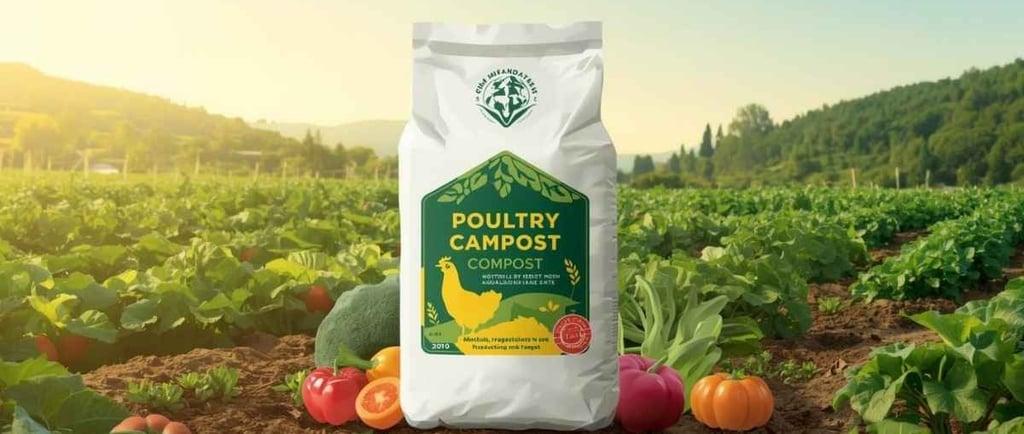
Understanding the Nutrient Profile of Chicken Manure Fertilizer
Chicken manure fertilizer is renowned for its impressive nutrient profile, which significantly contributes to soil health and promotes vigorous plant growth. The primary nutrients present in chicken manure include nitrogen (N), phosphorus (P), and potassium (K), often referred to as NPK. These essential macronutrients are vital for various physiological functions in plants, making chicken manure an excellent organic fertilizer.
Nitrogen, the most abundant nutrient in chicken manure, plays a crucial role in promoting leafy growth and enhancing the overall vitality of plants. It is especially beneficial for leafy vegetables and crops that require a high nitrogen intake. On average, chicken manure contains about 1.5 to 2.5% nitrogen, which is higher than many other common organic fertilizers. This elevated nitrogen content is pivotal for accelerating plant growth and maximizing yield potential.
Phosphorus is another key nutrient found in chicken manure, supporting root development, flowering, and fruiting in plants. It is present in chicken manure at a concentration of around 0.5 to 1.0%, helping to enhance the overall productivity of crops. The role of phosphorus in energy transfer within plants ensures that they have the necessary resources for optimal development.
Potassium, also found in substantial amounts in chicken manure, aids in improving disease resistance and overall plant vigor. It is crucial for regulating various physiological processes, including water retention and enzyme activation. Typically, chicken manure has a potassium concentration of about 0.5 to 1.0%.Additionally, chicken manure provides secondary and micronutrients, such as calcium, magnesium, and sulfur, which further enrich the soil and support plant health.
In comparison to other organic fertilizers, chicken manure has a more balanced and comprehensive nutrient profile. This combination of nutrients not only facilitates improved soil structure but also enhances the microbial activity within the soil, leading to better nutrient uptake by plants. Overall, chicken manure fertilizer presents a productive option for gardeners and farmers seeking to cultivate healthy plants organically.
Composting Process Safety: Ensuring Quality Chicken Manure Fertilizer
When it comes to creating high-quality chicken manure fertilizer, maintaining safety throughout the composting process is paramount. Proper composting not only enables the effective breakdown of organic matter but also plays a crucial role in eliminating potentially harmful pathogens and parasites that can be present in fresh manure. The composting process entails controlling specific environmental factors to create optimal conditions conducive to microbial activity, thereby enhancing the safety and quality of the final product.
Firstly, temperature management is a critical aspect of composting safety. Maintaining high temperatures, ideally within the range of 130°F to 160°F (54°C to 71°C), is essential for pathogen reduction. At these elevated temperatures, the microbial populations effectively break down organic material, significantly reducing the risk of harmful microorganisms. It is recommended to monitor temperatures regularly and adequately aerate the compost pile to prevent it from becoming overly compacted, which can hinder airflow and reduce temperature stability.
In addition to temperature, the composting duration is another critical factor. The compost should be allowed to mature for at least three months, although extending this period can further ensure the breakdown of pathogens. However, maturity is not solely dictated by time but also by achieving a stable temperature and a carbon-to-nitrogen (C:N) ratio between 25:1 and 30:1. A well-aerated compost pile that is adequately monitored will enable the decomposition of chicken manure while preventing the revival of pathogens.
Furthermore, the site of composting must be strategically chosen—ideally positioned away from water sources to prevent nutrient leaching and potential contamination. By attentively managing these conditions during the composting process, producers can ensure the production of safe, quality chicken manure fertilizer that provides effective organic nutrition while minimizing health risks to both plants and humans.
Pathogen Reduction Methods in Chicken Manure Composting
Composting chicken manure is a highly effective method for reducing pathogens, thus ensuring its safety as an organic fertilizer. One of the principal techniques employed in pathogen reduction is thermophilic composting. This process involves maintaining high temperatures, typically between 130°F and 160°F (54°C to 71°C), for an extended period. The elevated temperatures created during thermophilic composting are lethal to most pathogenic organisms, including bacteria and parasites, resulting in a more stable and sanitary final product.
Another critical aspect of pathogen control in chicken manure composting is the monitoring of compost maturity. Mature compost indicates that the microbial activity has stabilized, and pathogens have been effectively reduced. Regular assessments of the compost, through temperature measurements and consistency evaluations, can help ensure the composting process is progressing as intended. Maturity testing helps farmers and gardeners confirm that the compost can be safely applied to soils without posing health risks.
Additives also play a significant role in enhancing pathogen reduction during the composting of chicken manure. For instance, adding materials such as wood chips or sawdust can improve aeration, promoting aerobic conditions that are unfavorable for pathogen survival. Additionally, the inclusion of specific microbial inoculants can accelerate the breakdown of organic matter while simultaneously reducing pathogenic bacteria, leading to a healthier compost environment.
Incorporating these methods effectively improves the safety and viability of chicken manure as an organic nitrogen fertilizer. Managers of composting facilities and individual gardeners alike can thus create a product that not only provides essential nutrients for plants but also safeguards human and environmental health from potential pathogen threats.
Best Crops for Utilizing Chicken Manure Fertilizer
Chicken manure fertilizer is renowned for its high nitrogen content, making it an excellent choice for a variety of crops. Some of the best crops that benefit from chicken manure include leafy greens, root vegetables, and flowering plants. Leafy greens such as lettuce, spinach, and kale thrive on the nutrients provided by chicken manure, especially during the early stages of growth when nitrogen is critical for robust foliage development.
Root vegetables, including carrots, beets, and radishes, also significantly benefit from this type of organic fertilizer. They require nutrient-rich soil to ensure proper growth and development, and chicken manure can help in achieving this. The application should be tailored to the specific requirements of these crops, with manure being well-composed and aged to prevent potential burning of roots due to high phosphorus and potassium levels.
For flowering plants, particularly fruits like tomatoes, peppers, and cucumbers, chicken manure fertilizer works wonders in enhancing flower and fruit development. Applying the fertilizer a few weeks before planting is optimal, allowing the nutrients to be adequately absorbed into the soil. This approach not only improves plant health but also encourages a more abundant yield.
In terms of application methods, incorporating chicken manure into the soil during the fall or early spring is beneficial. This timing allows the nutrients to break down and become available for plants as they begin to grow. For established plants, side-dressing with chicken manure in mid-season can provide a nutrient boost. It is recommended to avoid direct contact with the plant stems to prevent any potential plant damage.
Considerations should be taken concerning soil pH and texture, as chicken manure works best in well-draining soil that is neutral to slightly acidic. In conclusion, understanding which crops are most compatible with chicken manure fertilizer and the ideal application timing can greatly enhance agricultural productivity, ensuring a bountiful harvest for growers and gardeners alike.
Environmental Sustainability and Chicken Manure Fertilizer
In recent years, there has been a growing emphasis on the need for sustainable agriculture, particularly as it relates to fertilizer use. Chicken manure fertilizer stands out as an organic option that not only provides essential nutrients but also fosters environmental sustainability in farming practices. By utilizing poultry compost, farmers can significantly reduce the reliance on chemical fertilizers, which are often associated with detrimental environmental effects such as water pollution and soil degradation.
One of the primary advantages of using chicken manure is its role in minimizing chemical runoff that typically plagues conventional agriculture. When chemical fertilizers are applied, excess nutrients can leach into waterways, leading to problems such as algal blooms and depleted oxygen levels in aquatic ecosystems. In contrast, chicken manure fertilizer improves the soil's structure and increases its ability to retain moisture and nutrients, thereby reducing the risk of runoff.
Furthermore, the organic matter present in poultry compost enhances soil health by promoting microbial diversity and activity. This increased biological activity can lead to improved nutrient cycling and a more resilient soil ecosystem. Healthier soils are crucial for sustaining plant growth and ensuring higher crop yields over time, contributing to long-term agricultural productivity.
In addition to improving soil and water quality, chicken manure fertilizer plays a pivotal role in promoting biodiversity within agricultural systems. Utilizing organic fertilizers, such as chicken manure, creates a favorable environment for a broad spectrum of organisms, including beneficial insects and earthworms. These organisms are vital for pollination, pest control, and soil aeration, all of which enhance the overall health of the agricultural ecosystem.
By integrating chicken manure into their fertilization practices, farmers can support not only their crop production needs but also contribute to broader environmental sustainability goals. This illustrates the importance of adopting sustainable methods that promote ecological balance while meeting the demands of modern agriculture.
Cost Comparison: Chicken Manure Fertilizer vs. Chemical Fertilizers
When assessing the financial implications of using chicken manure fertilizer compared to chemical fertilizers, several factors warrant consideration, including initial investment, ongoing costs, and long-term benefits. Initially, chicken manure may be perceived as more labor-intensive and costly to source, particularly for farmers who do not have direct access to poultry operations. However, the acquisition costs can often be counterbalanced by the inherent nutrient richness and organic matter it introduces to the soil.
In contrast, chemical fertilizers generally require large-scale production and distribution processes, leading to higher prices and continuous dependency on purchasing these substances. While the immediate availability of chemical fertilizers might seem like a more convenient choice, the overarching expenses associated with their application and soil health repercussions can lead to greater financial burdens over time.
Long-term benefits of chicken manure fertilizer come into focus when evaluating soil health and sustainability. As it enriches the soil microbiome, enhances nutrient retention, and improves soil structure, over time, chicken manure can reduce the necessity for additional fertilizers, chemical or organic. This results in lower overall spending on amendments and cultivates a more resilient ecosystem that may mitigate the need for costly pest and weed management strategies.
Moreover, sustainable farming practices are increasingly recognized not only for their ecological advantages but also for their potential economic benefits. By improving soil health through the application of chicken manure, farmers can cultivate more robust crops, thereby increasing yields and profitability in the long haul. The conservation of resources and reduction of pollution associated with the use of chemical fertilizers add layers of financial sense to using chicken manure as a primary source of nitrogen fertilizer.
In summary, while chicken manure fertilizer may demand a considerable initial investment, its long-term financial and ecological benefits underscore its potential as a more sustainable and cost-effective alternative to chemical fertilizers.
Conclusion: Embracing Organic Nitrogen Fertilizers for a Greener Future
In recent years, the conversation surrounding sustainable agriculture has gained significant momentum. Among the key components contributing to this shift is the adoption of organic nitrogen fertilizers, with chicken manure fertilizer emerging as a leader in the field. Chicken manure is not only an effective source of nutrients but also plays a pivotal role in promoting soil health and fostering biodiversity in agricultural systems.
The benefits of utilizing chicken manure fertilizer are manifold. Primarily, it provides a rich source of nitrogen, vital for plant growth, while also supplying phosphorus and potassium, essential nutrients that enhance crop productivity. Furthermore, its organic nature enriches soil structure, improves moisture retention, and encourages the proliferation of beneficial microorganisms. This contributes to healthier plants and ultimately leads to higher yield over time, negating the immediate need for chemically synthetic fertilizers.
As we strive for a more sustainable future, transitioning from conventional fertilizers to organic alternatives like chicken manure must be a consideration for farmers and gardeners alike. Not only does this practice safeguard the environment against the detrimental impacts of chemical runoff, but it also aligns with a health-conscious approach to food production by reducing harmful residues in our crops.
In summary, embracing organic nitrogen fertilizers, particularly chicken manure, represents a progressive step toward sustainable agricultural practices. It fosters a healthier ecosystem, supporting both environmental and human health. By making this switch, we contribute to a greener planet, ensuring that future generations can enjoy the benefits of a more balanced agricultural system. The movement towards organic fertilizers is not just a trend; it is a necessary advancement for sustainable farming and a commitment to preserving our natural resources for years to come.
Address:
264/5, Kamal Soroni Road, Mirpur, Dhaka-1216
Contact
Your Quaries on pest control askings
pestexterminatorbd@gmail.com
+8801642008383 +8801988300003, 01723057746
© 2025. All rights reserved. to Urban Pest Control Pvt. Ltd. this site is powered by Our Own IT Team