
Rising Temperatures are Creating Super Pests: Are We Ready to Fight Them?
2/1/20267 min read
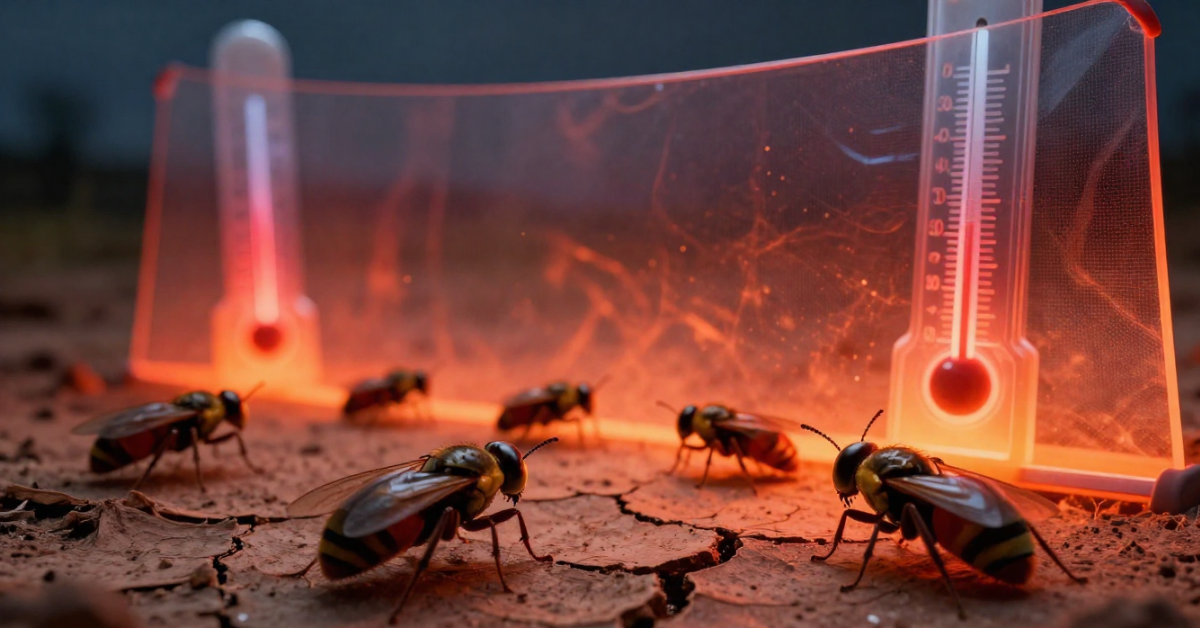
Introduction to Climate Change and Pest Dynamics
As global temperatures steadily rise due to climate change, a significant influence is observed on pest populations across diverse ecosystems. The intricate relationship between climate conditions and pest dynamics has garnered increasing attention from researchers and agricultural experts. One of the most alarming outcomes of this interaction is the emergence of what are now termed 'super pests,' which are pests that have adapted or evolved to withstand traditional control measures.
Climate change impacts pest behavior through alterations in their life cycles. The warmth of higher temperatures accelerates metabolic rates in many insects, leading to a more rapid growth and reproduction cycle. Resultantly, pests that thrive in warmer climates can reproduce at unprecedented rates, effectively increasing their populations. Moreover, fluctuating weather patterns and shifts in seasonal cycles can disturb predator-prey relationships, further permitting pest populations to thrive unchecked.
Geographical distribution is another area that illustrates the effect of climate change on insect pests. With increasing temperatures, pest species typically confined to specific regions are now being found in previously inhospitable areas. For instance, an increase in average temperatures has enabled certain insect species to migrate northwards, penetrating areas with cooler climates that once limited their presence. This shift can lead to unexpected challenges in pest management for local farmers, enhancing the risk to crops and public health.
Overall, understanding the evolving dynamics between climate change and pest populations is crucial. The increasing prevalence of these resilient pests poses significant risks to agriculture and ecosystems globally. Addressing the emerging threat of super pests will require not only innovative pest management solutions but also a comprehensive understanding of the multidimensional effects of warming temperatures on pest dynamics.
What are Super Pests?
Super pests, a term gaining prominence in agricultural and ecological discourse, refer to pest species that have developed enhanced resilience to traditional control methods, primarily due to changing environmental conditions and climate change. These pests exhibit an array of characteristics that set them apart from conventional pests, including heightened reproductive rates, increased resistance to pesticides, and broader dietary adaptability. As a result, they pose significant challenges to both agriculture and local ecosystems.
One key distinction of super pests is their ability to adapt quickly to their environment. For instance, the Western corn rootworm has evolved resistance to specific genetically modified crops designed to deter it. This capability enables these pests to thrive even in conditions where they would typically face threats. Another example is the fall armyworm, which has shown the ability to rapidly develop resistance to insecticides, making conventional pest management strategies less effective. Climate change, characterized by rising temperatures and shifting precipitation patterns, has facilitated the spread of these resilient species into new territories, often leading to rampant infestations.
The impact of super pests on agriculture is profound. Beyond causing direct crop damage, they disrupt harvests and can lead to increased economic burdens for farmers as they seek more intensive control measures. Furthermore, these pests can alter predator-prey relationships within ecosystems, creating a ripple effect that can destabilize local biodiversity. As super pests continue to proliferate, it is clear that the traditional pest management practices need to be adapted to address the unique challenges they present, fostering a re-evaluation of current agricultural techniques.
The Science Behind Super Pest Proliferation
The phenomenon of super pest proliferation is intricately linked to rising global temperatures, which influence various biological and ecological mechanisms. One primary driver is the acceleration of reproduction rates in pest species, which are often ectothermic organisms. Warmer temperatures lead to shorter developmental times, allowing pests to complete more life cycles in a given period. For example, certain insect populations may double their numbers in only a few weeks under optimal temperature conditions, leading to an exponential increase in their populations.
Additionally, rising temperatures are facilitating the expansion of habitats that were previously unsuitable for many pest species. Many invasive pests thrive in warmer climates, and as temperatures rise, they are able to colonize new areas, often leading to severe ecological and agricultural impacts. For instance, pests such as the fall armyworm have migrated to regions previously thought to be secure, causing significant damage to crops and ecosystems. This spatial shift underscores how climate change is reshaping the environments where these pests can thrive.
Furthermore, milder winters, which are a byproduct of climate change, contribute to decreased mortality rates among pest populations. Many pests experience high mortality during harsh winter months, which regulates their populations. As winters become milder, fewer pests die off, allowing for larger populations to survive through seasons that once posed a threat to their survival. Consequently, this results in not only a greater number of pests but also the resilience of populations that are resistant to commonly used pest control methods.
Understanding these scientific mechanisms is crucial for developing effective strategies to combat super pests in the context of changing climate conditions. Without addressing the climatic factors that facilitate super pest proliferation, efforts in pest management may prove insufficient.
Economic and Ecological Impacts of Super Pests
The emergence of super pests due to rising temperatures presents significant economic challenges for agriculture, forestry, and human health. These pests often exhibit heightened resistance to traditional pesticides, leading to increased production costs as farmers must invest in more advanced pest management strategies. The agricultural sector, which relies heavily on crops vulnerable to pest infestations, faces potentially devastating yield losses. For instance, the increased prevalence of pests like the crop-damaging fall armyworm has led to reports of substantial reductions in maize and other key crops, threatening food security in various regions.
Moreover, the forestry industry is not immune to the effects of super pests. Infestations can lead to massive tree die-offs, altering forest composition and consequently impacting local economies that depend on timber production. These ecological changes can have cascading effects, as forests play a critical role in carbon sequestration and biodiversity preservation. The loss of tree species not only disrupts habitats but can also affect other organisms, including pollinators, leading to further declines in agricultural productivity.
Beyond direct economic impacts, super pests introduce broader ecological ramifications, particularly concerning biodiversity loss and food chain disruptions. Ecosystems that rely on a delicate balance can be significantly altered by the introduction of aggressive, non-native pest species, leading to the decline or extinction of native species. This loss of biodiversity diminishes ecosystems’ resilience, making them more vulnerable to further environmental changes and resulting in less productive natural systems.
As we move forward, understanding and addressing the economic and ecological impacts of super pests will be crucial in developing effective strategies to mitigate their effects on our environment and economy. Collaborative efforts between governments, scientists, and agricultural stakeholders are essential to foster resilience against these emerging threats.
Current Strategies for Managing Pest Populations
In the face of rising temperatures that contribute to the proliferation of super pests, agriculture relies on a multitude of strategies to manage pest populations effectively. The primary approaches include chemical controls, biological controls, and integrated pest management (IPM) practices, each with its distinct advantages and limitations.
Chemical controls, which involve the application of pesticides, have been a staple in pest management for decades. These products can be highly effective in eliminating pests quickly; however, their reliance poses significant risks of environmental contamination and the development of pesticide-resistant pest strains. Over time, the excessive use of chemicals can disrupt local ecosystems and harm non-target species, including beneficial insects. Thus, while chemical controls may offer immediate results, their long-term effectiveness is increasingly being questioned.
Biological controls offer a more sustainable alternative by leveraging natural enemies of pests, such as predators, parasitoids, and pathogens. This approach aims to reduce pest populations through ecological interactions. For instance, the introduction of ladybugs in aphid-infested crops can successfully reduce their numbers without heavy reliance on chemicals. However, biological controls require careful monitoring and a deep understanding of the ecosystem, as introducing non-native species can sometimes lead to unforeseen consequences on local biodiversity.
Integrated Pest Management (IPM) combines both chemical and biological strategies along with cultural practices to create a holistic approach to pest control. This method emphasizes the importance of preventive measures, including crop rotation, habitat manipulation, and pest-resistant plant varieties. While IPM has demonstrated effectiveness in various agricultural settings, its implementation can be more labor-intensive and requires ongoing education and commitment from farmers.
In summary, while current strategies for managing pest populations reveal a range of tools available to farmers, each approach carries its strengths and challenges. A combination of these methods, adapted to specific contexts, will be essential for successfully combating the threats posed by rising temperatures and evolving pest species.
Innovations and Future Solutions to Combat Super Pests
The emergence of super pests, driven by rising temperatures and environmental changes, necessitates a robust response from the scientific community. Innovations in pest management are rapidly evolving, with a strong emphasis on utilizing genetically modified organisms (GMOs) to enhance agricultural resilience. GMOs can be engineered to express traits that make crops more resistant to pests. This biotechnological approach has shown promise in reducing reliance on traditional pesticides, thus minimizing environmental impacts and promoting sustainable agriculture.
Another area of innovation in pest control involves the development of novel pesticides that are both effective and environmentally friendly. These pesticides aim to target specific pest species while causing minimal harm to non-target organisms and ecosystems. Research is actively focused on creating biopesticides derived from natural sources, such as plants and microorganisms, which may exacerbate the challenge that super pests present. By utilizing botanical insecticides and microbial agents, the agricultural industry can combat pests in a manner that fosters ecological balance.
In addition to technological advancements, policy frameworks and global cooperation are critical for addressing the super pest crisis. Governments must prioritize funding for research in pest management solutions and implement regulations that promote the responsible use of pest control methods. International collaboration is essential for the exchange of knowledge, strategies, and resources, particularly as pests evolve in response to climate change. Engaging stakeholders from various sectors, including farmers, agronomists, and policymakers, can help shape effective pest management policies and practices that are vital for food security and environmental sustainability.
Conclusion and Call to Action
The rise in global temperatures has led to the emergence of super pests, representing a significant challenge to agriculture, ecosystems, and public health. Throughout this blog post, we have explored how climate change facilitates the spread and adaptation of these resilient pests, which thrive in warming climates and exhibit increased resistance to conventional pest control methods. It is imperative that we acknowledge the urgency of this situation and recognize that the effects of rising temperatures extend beyond immediate environmental consequences.
As populations grow and urban areas expand, the interaction between humans and these super pests is likely to intensify, prompting more significant impacts on agricultural yields and food security. Integrated pest management practices, awareness of horticultural biodiversity, and the promotion of biological control methods all represent essential steps towards mitigating the influence of these pests. Furthermore, fostering an understanding of sustainable agricultural practices is crucial for reducing reliance on harmful chemicals, which can exacerbate the problem by harming non-target species and disrupting ecological balance.
Individual actions also play a pivotal role in combatting the threat posed by super pests. By making informed choices about the products we use and supporting sustainable agricultural practices, each person can contribute to a collective effort against these pests. Engaging with community initiatives focused on pest management, advocating for policy changes, and supporting research are all vital components of a comprehensive response to this crisis.
As we face the looming challenges presented by climate-driven super pests, it is essential to approach this issue with both urgency and collaboration. Together, we can work towards finding innovative solutions that not only address the immediate threats from super pests but also promote a sustainable future for agriculture and our ecosystems.
Address:
264/5, Kamal Soroni Road, Mirpur, Dhaka-1216
Contact
Your Quaries on pest control askings
pestexterminatorbd@gmail.com
+8801642008383 +8801988300003, 01723057746
© 2025. All rights reserved. to Urban Pest Control Pvt. Ltd. this site is powered by Our Own IT Team