
The Future of Pest Control: Embracing AI, Drones, and Zero-Chemical Solutions
The Future of Pest Control: Embracing AI, Drones, and Zero-Chemical Solutions
2/2/20268 min read
Introduction to Modern Pest Control
Pest control has been an essential aspect of maintaining agricultural productivity, ensuring public health, and preserving urban living conditions for centuries. Traditionally, pest management has relied on a combination of chemical pesticides, traps, and cultural practices. While these methods have yielded significant results in the short term, they often face scrutiny due to their environmental impacts and potential health risks to humans and wildlife. The indiscriminate use of chemicals can lead to the development of resistance among pests, thereby exacerbating the very problems these methods aim to resolve.
The limitations of traditional pest control methods have prompted a shift towards innovative solutions that prioritize sustainability, efficacy, and safety. As urban populations grow and agricultural demands increase, there is a pressing need for pest management strategies that adapt to changing environments and minimize ecological footprints. The evolution of technology, particularly artificial intelligence (AI) and drone usage, offers promising pathways for more effective and environmentally friendly pest control.
Modern pest control seeks not only to eliminate pests but also to integrate practices that promote sustainable ecosystems. Approaches such as integrated pest management (IPM) emphasize the importance of monitoring pest populations, understanding their life cycles, and utilizing biological control methods alongside chemical interventions judiciously. Public health initiatives also play a critical role in shaping pest control practices, especially in urban areas where infestations can impact community wellbeing.
Furthermore, the demand for zero-chemical solutions is becoming increasingly significant as public awareness of environmental issues grows. This paradigm shift is driving innovation in pest management practices — a trend that emphasizes the need for solutions that are safe for both humans and the environment. As we explore the future of pest control, understanding the current landscape, including its challenges and opportunities, will be pivotal in shaping effective strategies for a sustainable tomorrow.
The Role of Artificial Intelligence in Pest Management
Artificial Intelligence (AI) plays a transformative role in the modern landscape of pest management, utilizing advanced technologies to revolutionize traditional practices. One of the key applications of AI in this field is predictive analytics, which harnesses vast amounts of data to forecast pest infestations before they occur. By analyzing environmental conditions, historical data, and pest behavior patterns, AI systems can provide timely alerts to farmers and pest control professionals, enabling them to take preemptive measures.
Moreover, real-time monitoring capabilities supported by AI significantly enhance the effectiveness of pest management strategies. With the integration of AI into surveillance systems, pest populations can be tracked and analyzed in real-time using smart sensors and cameras. These systems utilize machine learning algorithms to identify various pest species quickly, thus allowing for a more targeted response. Implementing such technology not only saves time but also minimizes the potential economic impact on agriculture and other sectors.
AI is also instrumental in decision-making support, offering insights that aid pest control professionals in developing effective management strategies. By assessing the efficacy of different control measures based on historical outcomes, AI tools can suggest the most appropriate interventions for specific pest problems. This data-driven approach empowers professionals to optimize their resources while simultaneously reducing reliance on chemical treatments, aligning with the growing demand for zero-chemical solutions.
In summary, the incorporation of Artificial Intelligence in pest management signifies a paradigm shift towards more efficient, sustainable practices. With its ability to predict, monitor, and inform decision-making processes, AI not only enhances operational efficiency but also supports the broader goal of environmentally friendly pest control.
Drones: A Revolutionary Tool in Pest Control
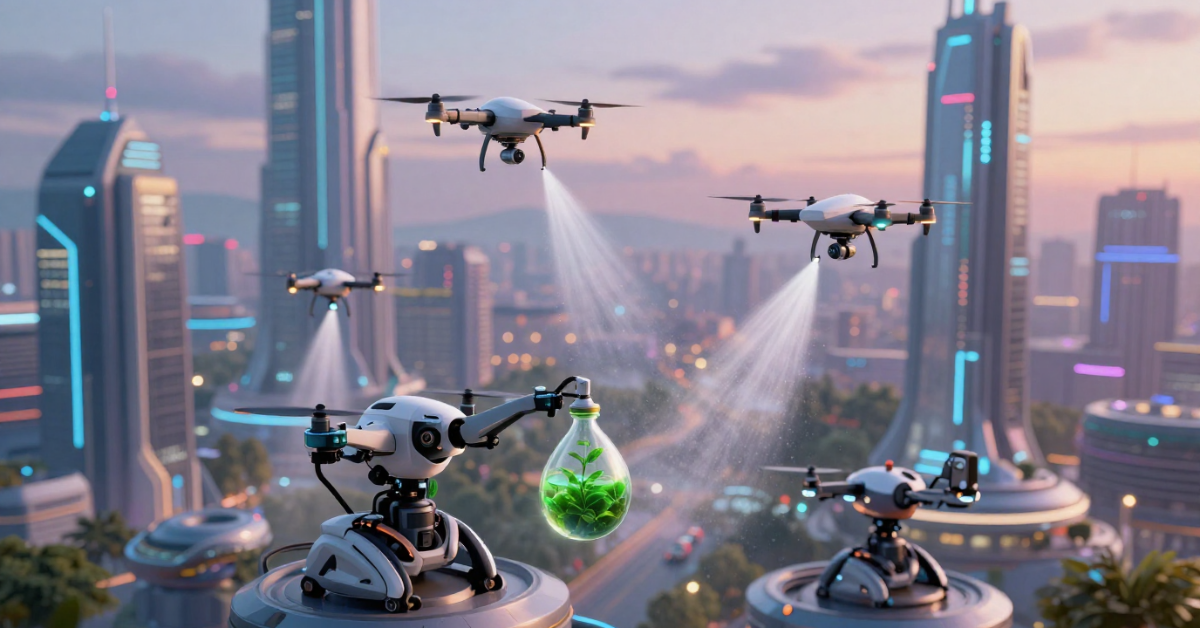
The integration of drones in pest control represents a significant advancement in agricultural practices and pest management strategies. Drones offer a multitude of advantages over traditional pest control methods, particularly in terms of efficiency, precision, and cost-effectiveness. By utilizing aerial technology, pest control operators can monitor large areas of farmland quickly, identifying pest populations with real-time data. This capability allows for targeted intervention, minimizing the need for widespread chemical applications and reducing environmental impact.
Drones equipped with high-resolution cameras and advanced sensors facilitate the surveillance of crops, enabling pest control professionals to detect infestations at an early stage. For instance, in vineyards, drones can fly over the fields, capturing images that reveal pest activity, such as grape-eating larvae, which may go unnoticed until significant damage has occurred. The early detection using drones directly translates to timely and more effective pest management.
Moreover, drones can deliver targeted treatments, such as biopesticides, directly to areas where pests are detected. This method not only enhances the effectiveness of pest control but also conserves resources by applying treatments only where necessary. In coffee plantations, for example, drones have been used to spray a mixture of natural pest repellants, reducing the reliance on chemical pesticides while maintaining high crop yields.
The financial benefits of employing drones in pest management are noteworthy as well. By reducing labor costs and chemical costs, drones provide a more sustainable and economically viable solution. Industries ranging from agriculture to urban landscaping are increasingly adopting drone technology, reaping the benefits of tailored pest control methods. As technology advances, the implementation of drones in pest management promises to revolutionize how we approach pest control, making it more efficient and environmentally friendly.
Exploring Zero-Chemical Pest Control Solutions
Zero-chemical pest control solutions are rapidly gaining traction as more individuals and organizations seek sustainable alternatives to traditional pesticide applications. These innovative strategies not only address pest issues but also promote a healthier environment. Among the prominent methods of zero-chemical pest control are biological pest control, integrated pest management (IPM), and various cultural practices.
Biological pest control employs natural predators or parasites to manage pest populations. This method supports the ecosystem by utilizing organisms such as ladybugs to target aphids or nematodes to control soil-dwelling pests. By harnessing nature's resources, biological pest control diminishes reliance on synthetic chemicals, thereby reducing chemical exposure to humans and wildlife.
Integrated Pest Management (IPM) is another holistic approach that combines multiple strategies for effective pest control. IPM emphasizes monitoring pest populations, identifying species accurately, and employing a range of control measures that may include biological agents, physical barriers, and cultural practices, like crop rotation. By fostering knowledge of pest behavior and biology, IPM allows for targeted interventions, minimizing the need for harmful chemicals and contributing to long-term pest management solutions.
Cultural practices also play a critical role in zero-chemical pest control. Adjusting agricultural techniques—such as planting pest-resistant varieties, optimizing planting times, and ensuring proper soil health—can significantly reduce pest infestation levels. These practices not only benefit pest management efforts but also enhance agricultural sustainability by fostering healthier ecosystems.
Ultimately, the shift towards zero-chemical pest control solutions highlights the importance of innovation in pest management. By prioritizing health, environmental impact, and sustainability, these approaches provide a safer alternative for both consumers and the planet.
Case Studies: Innovations in Pest Control
As we navigate the complexities of modern pest control, several pioneering case studies illustrate the successful implementation of artificial intelligence (AI), drones, and zero-chemical solutions. These examples showcase not only the effectiveness of these advanced technologies but also their potential to transform the industry.
One notable case comes from a vineyard in California, where AI-driven pest monitoring systems have been employed to detect and predict pest activity. By utilizing machine learning algorithms, the vineyard analyzed historical data and real-time sensor inputs to identify patterns in pest behaviors. The result was a 30% reduction in pest damage, leading to significant cost savings and increased yield. This successful integration of AI demonstrates how data-driven insights can lead to more precise and effective pest management strategies.
Another compelling example is found in precision agriculture in Australia, where drones equipped with thermal imaging cameras were deployed to monitor crop health and pest presence. These drones can cover vast areas quickly, providing farmers with aerial views to spot infestations early before they spread. By adopting this drone technology, farmers reported a 25% decrease in pesticide usage while improving overall crop resilience. This case highlights how drones not only enhance monitoring capabilities but also support more sustainable practices in agriculture.
Lastly, an innovative zero-chemical solution was implemented in urban settings in Pakistan, where natural predators of common pests were introduced into residential areas. This approach, known as biological control, effectively managed populations of pests like mosquitoes without the use of harmful chemicals. Residents noticed a significant decrease in pest-related illnesses, clearly demonstrating the potential for zero-chemical strategies in urban pest control.
These case studies illustrate the growing reliance on advanced tools and practices in pest management. The successful integration of AI, drones, and zero-chemical solutions showcases a clear path forward for sustainable pest control, promising enhanced efficiency and environmental safety.
Challenges and Considerations in Adopting New Technologies
The integration of artificial intelligence (AI), drones, and zero-chemical solutions into pest control practices presents a landscape of opportunity but also a series of challenges that industries must navigate. One of the foremost barriers is regulatory compliance, as new technologies often outpace current legislation. Different regions have distinct regulations governing pest control methods, and companies may find it difficult to adhere to these laws while incorporating innovative solutions. This can create a hesitancy among businesses to invest in new systems due to fears of non-compliance.
Additionally, there are significant costs associated with the adoption of advanced technologies. Investing in AI systems requires not just the initial purchase of software and hardware, but also ongoing expenses for maintenance and updates. Drones, while offering enhanced surveillance and application capabilities, require proper equipment, piloting skills, and maintenance costs, compounding the financial commitment. On top of these initial costs, companies may also face budgetary constraints, making it difficult to allocate funds to procure these technologies when short-term pest control methods may seem more financially viable.
Education and training present another hurdle in this transition. For new technologies to be effectively utilized, staff must be adequately trained, both in the technical aspects of the devices themselves and in understanding how to interpret the data generated by AI systems. Training programs that equip employees with necessary skills to operate drones and AI software can take time and resources to develop. This need for a skilled workforce can delay the implementation process as companies seek to ensure their teams are adequately prepared. The potential for disruption in operations during the adoption phase can also lead to apprehension about making such a significant change.
Looking Ahead: The Future of Pest Control
The future of pest control is poised for significant transformation, primarily driven by advancements in technology, changing consumer preferences, and evolving regulatory frameworks. As society becomes increasingly aware of environmental sustainability, pest management strategies are shifting towards more innovative and eco-friendly solutions, including artificial intelligence, drones, and zero-chemical approaches.
One of the most promising innovations is the integration of artificial intelligence in pest control. AI can significantly enhance the effectiveness of pest monitoring and management systems. Through data analysis and machine learning algorithms, pest control professionals can predict pest behavior, identify infestations early, and develop preventative strategies tailored to specific environments. Such intelligent systems not only improve the efficiency of pest management but also encourage sustainable practices by minimizing unnecessary pesticide use.
Additionally, drones are set to revolutionize pest control in agricultural settings. Equipped with advanced imaging technologies and sensors, drones can survey large areas quickly, detecting pest infestations or crop diseases before they escalate. The ability to gather real-time data from hard-to-reach locations provides farmers with actionable insights, enabling precise interventions that conserve resources and promote healthier ecosystems.
Moreover, as consumers increasingly demand sustainable practices, pest control policies that emphasize zero-chemical solutions are likely to gain traction. Regulatory bodies may implement stricter guidelines on chemical pesticide usage, steering the industry toward these safer alternatives. Consequently, pest control companies will need to adopt innovative methodologies that align with both public interest and environmental safety.
In conclusion, the landscape of pest control is on the cusp of significant change. By embracing advancements in technology and responding to consumer demands for sustainability, the future of pest management can pave the way for more effective and environmentally responsible solutions to pest challenges.
Address:
264/5, Kamal Soroni Road, Mirpur, Dhaka-1216
Contact
Your Quaries on pest control askings
pestexterminatorbd@gmail.com
+8801642008383 +8801988300003, 01723057746
© 2025. All rights reserved. to Urban Pest Control Pvt. Ltd. this site is powered by Our Own IT Team