
The Global Pest Threat: How Insects, Rodents & Vectors are Reshaping Our World
2/1/20267 min read
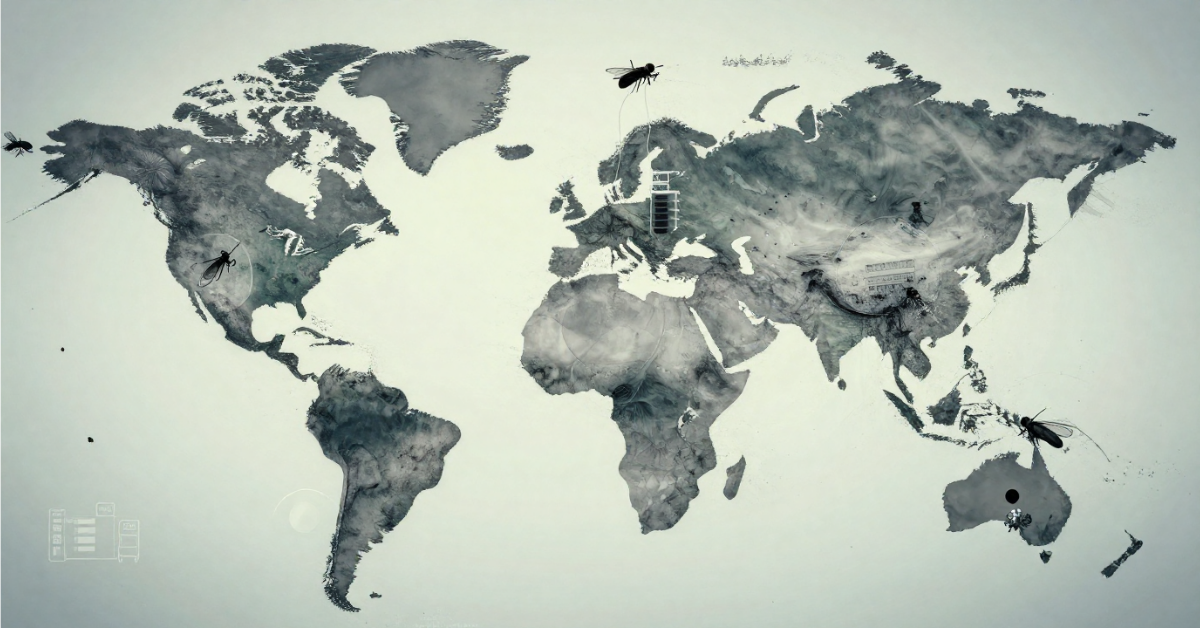
Understanding the Pest Phenomenon
Pests are organisms that can cause harm to humans, plants, and animals. They are broadly classified into three main categories: insects, rodents, and vectors. Insects include species such as mosquitoes, cockroaches, and termites, while rodents encompass rats and mice. Vectors are organisms that transmit pathogens, such as ticks and fleas. This classification is crucial, as it affects how pest management strategies are developed and implemented across various ecosystems.
The roles pests play in our world are multifaceted and can be both ecological and economic. Ecologically, pests are integral to food webs, serving as prey for various predators and contributing to nutrient cycling. For instance, many insects are pollinators, playing a vital role in the reproduction of flowering plants and the production of fruits and seeds that sustain other wildlife and humans alike. Conversely, pests can become invasive species that disrupt local ecosystems, outcompeting native species and altering habitats.
From an economic perspective, pests can have devastating effects on agriculture, food storage, and public health. Crop infestations can lead to significant yield losses, affecting food supply and prices globally. Rodents, known for their rapid reproduction rates, can destroy stored grain and other food products, contributing to economic losses in the food industry. Additionally, pests such as mosquitoes and ticks serve as vectors for various diseases, impacting human health and leading to increased healthcare costs. Therefore, understanding the pest phenomenon is critical, as it highlights the interconnectedness of biodiversity, public health, and economic stability.
The Rising Threat of Invasive Species
Invasive species pose a significant threat to ecosystems around the globe. These organisms, which are introduced into new environments either accidentally or deliberately, often disrupt the balance of local flora and fauna, leading to adverse effects on biodiversity. Invasive insects and rodents can outcompete native species for resources such as food and habitat, ultimately leading to their decline or extinction.
For instance, the brown tree snake (Boiga irregularis), native to the Solomon Islands, was accidentally introduced to Guam, resulting in the extinction of several bird species. Similarly, the emerald ash borer (Agrilus planipennis), an invasive beetle from Asia, has caused the death of millions of ash trees in North America, drastically altering local ecosystems and affecting various wildlife that depend on these trees for survival.
The economic implications of invasive species are also significant. According to the U.S. Fish and Wildlife Service, damages caused by invasive species in the United States alone are estimated to exceed $120 billion annually. These costs arise from management efforts, loss of agricultural productivity, and damage to fisheries and tourism. For developing countries, the situation can be even more dire, as they often lack the resources to combat invasive infestation effectively.
In addition to their ecological and economic impacts, the spread of invasive species is facilitated by global trade and climate change. Warmer temperatures can expand the habitats suitable for certain invasive species, making it even more critical to monitor and manage their spread. This urgent issue necessitates coordinated efforts at local, national, and international levels to preserve native biodiversity and mitigate economic losses.
Vectors and the Spread of Disease
Vectors play a pivotal role in the transmission of infectious diseases, positioning them as significant global health threats. Mosquitoes, ticks, and other arthropods act as carriers for pathogens, ushering in diseases that affect millions worldwide. For instance, mosquitoes are known vectors for malaria, a disease that continues to impose a heavy toll in tropical regions, affecting stability and health systems. The World Health Organization estimates that malaria resulted in approximately 241 million cases globally in 2020 alone.
Besides malaria, mosquitoes are instrumental in the spread of the Zika virus, a disease linked to severe birth defects. The rise in Zika cases highlights the evolving nature of vector-borne diseases, as outbreaks have been triggered by changing environmental conditions, particularly climate change and urbanization. Warmer temperatures create more conducive environments for mosquito breeding, while urban areas can facilitate the rapid spread of these pests, leading to higher transmission rates.
Ticks represent another crucial vector impacting public health, particularly in temperate regions. Diseases such as Lyme disease have seen a significant rise in cases, primarily due to changing climate patterns that have expanded the habitats of ticks. The increased interaction between humans and wildlife, driven by urbanization, allows for greater encounters with these disease carriers, further exacerbating the risk of transmission.
In summary, the dynamics of disease transmission via vectors are influenced by ecological changes driven by human activity. Climate change and urban expansion not only alter the distribution of vectors but also enhance the conditions for disease spread, presenting robust challenges for global health security. Addressing these risks necessitates a multi-faceted approach that includes vector control strategies, public awareness campaigns, and ongoing research to stay ahead of the evolving threats posed by these biological agents.
Impact on Agriculture and Food Security
The impact of pests on agriculture and food security is a pressing concern worldwide. A variety of insects, rodents, and vectors pose significant threats to crop production, resulting in decreased agricultural productivity. Key pests such as aphids, locusts, and rodents have been known to cause severe damage, leading to substantial economic losses for farmers and potentially threatening food security for communities that rely on these crops.
A study by the Food and Agriculture Organization (FAO) estimates that pest-related damage to crops can lead to losses that amount to billions of dollars annually across the globe. For instance, the fall armyworm, an invasive species, has ravaged corn crops in several countries and has been linked to reduced yield, thereby contributing to food scarcity in affected regions. The effects are particularly pronounced in developing nations where populations may already be vulnerable due to economic constraints.
Efforts to manage these pest threats in agriculture are ongoing and multifaceted. Integrated Pest Management (IPM) represents a comprehensive approach that combines biological control, habitat management, and the prudent use of pesticides to minimize pest populations while reducing the negative impact on the environment. Additionally, advancements in biotechnology are paving the way for genetically engineered crops that possess inherent resistance to specific pests, further safeguarding agricultural yield.
Farmers are also increasingly adopting practices such as crop rotation, polyculture, and organic farming, which can enhance resilience against pest infestations. These strategies not only combat the immediate threats posed by pests but also contribute to sustainable agricultural practices, ensuring the long-term success of food production systems.
The Environmental Consequences of Pest Management
Pest management is essential for maintaining the balance of ecosystems and ensuring agricultural productivity; however, the methods employed for pest control can have significant environmental consequences. Traditional pest control methods often rely heavily on chemical pesticides, which can lead to detrimental effects on non-target species and overall ecosystem health. The application of these chemicals often results in water contamination, impacts on soil organisms, and disruption of beneficial insect populations that are integral to our environment.
Conversely, alternative pest management strategies, such as Integrated Pest Management (IPM) and organic practices, focus on reducing reliance on chemical inputs. IPM emphasizes a holistic approach that combines biological control, habitat manipulation, and the use of resistant plant varieties. By fostering natural enemies of pests and applying targeted interventions, IPM aims to minimize environmental impact while effectively managing pest populations.
Organic practices, too, promote sustainable pest control through the use of natural pesticides and methods such as crop rotation and companion planting. These practices are designed to work in harmony with the environment, reducing reliance on synthetic chemicals and enhancing biodiversity. However, it is important to note that organic approaches may also pose challenges, as they can sometimes result in lower crop yields and may not effectively manage all pests, necessitating a nuanced balance of methods.
Ultimately, there exists a critical need for a balanced approach to pest management that prioritizes both effective pest control and environmental sustainability. By carefully evaluating the consequences of various pest management strategies, stakeholders can promote practices that safeguard both agricultural interests and ecological integrity. This dynamic interplay between pest control and environmental considerations will be crucial in shaping the future of pest management.
Technological Innovations in Pest Control
Pest control has undergone significant transformations due to groundbreaking technological innovations. As global pest threats evolve, so too must our methods of managing them. Modern approaches now embrace a variety of advanced techniques including biotechnology, genetic engineering, and artificial intelligence, which collectively reshape the landscape of pest management.
One of the most promising advancements is in biotechnology, which utilizes living organisms to manage pest populations more sustainably. For instance, the development of biopesticides derived from natural sources provides alternatives to traditional chemical pesticides. This not only minimizes environmental impact but also leads to lower toxicity for non-target species, which is crucial for maintaining ecosystem balance.
Genetic engineering has also emerged as a powerful tool in pest control. This involves the modification of pest genomes to reduce their populations or render them incapable of transmitting diseases. A notable example is the release of genetically modified mosquitoes that are designed to reduce the spread of malaria and dengue fever. By altering reproductive capabilities, these interventions can significantly decrease pest populations over time, effectively mitigating the burden of these diseases.
Moreover, artificial intelligence is revolutionizing pest management through its capability to analyze vast amounts of data quickly. Machine learning algorithms can predict pest infestations and assess crop health, providing pest control professionals with tools to implement more targeted and efficient control strategies. This capacity for data-driven decision making not only optimizes resources but also promotes a proactive rather than reactive approach to pest management.
In conclusion, the fusion of biotechnology, genetic engineering, and artificial intelligence heralds a new era for pest control. These technological innovations promise to enhance the effectiveness and sustainability of pest management practices while addressing the growing global pest threat in a responsible manner.
Future Challenges and Solutions for Pest Management
The threat posed by pests, including insects, rodents, and vectors, is increasingly influenced by significant global factors such as climate change, urbanization, and globalization. Climate change is altering ecosystems, causing some pest species to thrive while endangering local biodiversity. Warmer temperatures expand the geographical range of pest populations, making areas previously considered safe susceptible to infestations. Moreover, extreme weather events result in agricultural disruption, creating opportunities for pests to flourish.
Urbanization is another substantial challenge. As cities expand, natural habitats are destroyed, often leading to a higher concentration of pests in smaller areas. The rise in human population density facilitates the spread of pests beyond urban boundaries, impacting surrounding rural communities as well. Urban pest management requires innovative approaches to ensure that public health is not compromised while maintaining a balance with the ecosystem.
Globalization further complicates pest management. Increased trade and travel can lead to biosecurity risks, as pests cross borders unnoticed and establish new populations in non-native territories. This globalization phenomenon necessitates international cooperation and stringent policies to manage pest spread effectively.
Addressing these pressing challenges demands collaborative efforts among governments, researchers, and communities. Integrated Pest Management (IPM) strategies that promote sustainable practices are essential. These include the use of biological control methods, habitat manipulation, and the adoption of pest-resistant crop varieties. Public awareness campaigns and education on pest identification and management can empower communities to participate actively in mitigation efforts.
In conclusion, the battle against the global pest threat will require a multifaceted approach that embraces innovation, cooperation, and sustainability. Only through collective action can we effectively manage pests and protect our environment and health for future generations.
Address:
264/5, Kamal Soroni Road, Mirpur, Dhaka-1216
Contact
Your Quaries on pest control askings
pestexterminatorbd@gmail.com
+8801642008383 +8801988300003, 01723057746
© 2025. All rights reserved. to Urban Pest Control Pvt. Ltd. this site is powered by Our Own IT Team