
The Impact of Climate Change on Global Pest Distribution
2/6/20267 min read
Introduction to Climate Change and Pest Dynamics
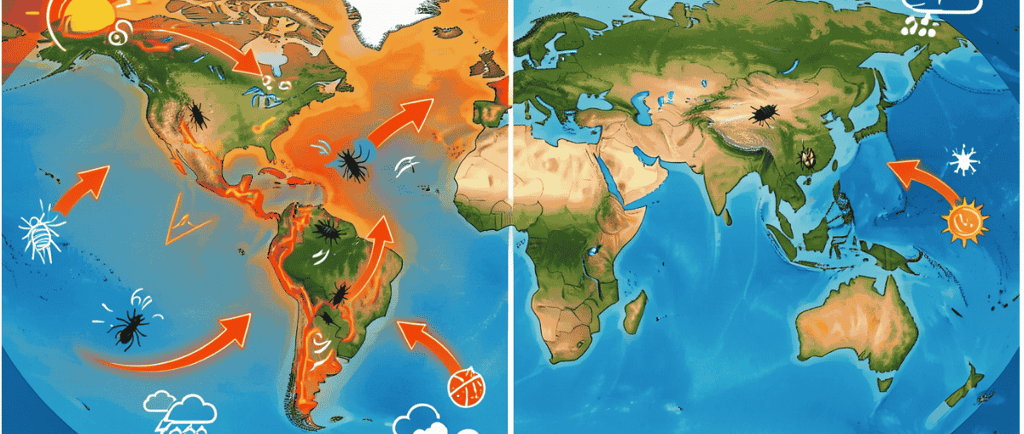
Climate change represents a significant challenge to global ecosystems, primarily by altering environmental conditions that affect various species. One of the critical aspects of this phenomenon is its impact on pest dynamics. Rising temperatures, changing precipitation patterns, and shifts in seasonal cycles are driving changes in pest populations worldwide. These factors create a more hospitable environment for many pests that can thrive under warmer conditions, leading to an increase in their distribution and abundance.
As average global temperatures continue to rise due to human-induced greenhouse gas emissions, many pests that were previously constrained by climate limitations are beginning to establish themselves in new regions. For instance, warmer winters can reduce mortality rates among pest populations, contributing to their rapid expansion into higher latitudes and altitudes that were previously unsuitable for them. Additionally, some pests may undergo altered life cycles, increasing their reproductive rates and extending their active periods, further amplifying their potential threat to agricultural systems and natural ecosystems.
Changes in precipitation patterns, such as more intense rainfall and prolonged droughts, also play a significant role in pest dynamics. Some pests are particularly sensitive to moisture levels; thus, fluctuations can impact their populations dramatically. Increased rainfall can create breeding conditions for pests, such as mosquitoes and certain agricultural insects, while drought conditions can stress crops, making them more vulnerable to infestation.
These interconnected aspects of climate change underscore the need for comprehensive pest management strategies that can adapt to evolving circumstances. As pests increasingly shift in their distribution due to altering climate conditions, understanding these dynamics becomes crucial for mitigating their impact on food security and public health. This overview sets the stage for a deeper examination of specific pest species and the complex relationships they maintain with climate change.
Understanding Pest Distribution and Its Importance
Pest distribution refers to the geographical spread and abundance of pest species within an ecosystem. Understanding pest distribution is crucial for several reasons, particularly within the realms of agriculture and public health. The spatial dynamics of pest populations significantly influence agricultural productivity, as pests can directly impact crop yield, quality, and sustainability. Farmers and agronomists must recognize the areas where pests are prevalent to implement effective control measures that minimize economic losses and ensure food security.
In addition to agriculture, pest distribution plays a vital role in public health. Many pests, such as mosquitoes and rodents, are vectors for diseases that can affect human populations. By tracking and understanding the distribution of these pests, public health officials can more effectively allocate resources, implement preventive measures, and reduce the incidence of vector-borne diseases. As climate change continues to alter weather patterns and habitats, the distribution of pests is expected to shift, leading to potential increases in pest populations in regions previously considered safe.
Moreover, the consequences of pest distribution extend beyond agriculture and health, affecting entire ecosystems. An imbalance in pest populations can disrupt food webs and lead to declines in biodiversity. For instance, agricultural pests can compete with native species for resources, causing shifts in the natural ecosystem. Thus, understanding pest distribution is not only critical for managing immediate agricultural practices and safeguarding public health but also imperative for preserving ecological integrity.
With the ongoing impact of climate change leading to alterations in temperature and precipitation patterns, it becomes essential for researchers and practitioners to monitor pest distribution closely. This information will guide adaptive strategies to mitigate threats associated with climate-induced changes in pest dynamics, thus supporting both environmental sustainability and human wellbeing.
Rising Temperatures: A Catalyst for Pest Spread
Rising global temperatures, a direct consequence of climate change, are playing a critical role in the distribution of pests. As the Earth's average temperature increases, various species of insects and pests are adapting to survive and thrive in environments that were previously unsuitable for them. The warming climate expands the viable habitats for many pests, permitting their spread into new geographical regions, particularly temperate zones that once experienced harsher winters.
One prominent example of this phenomenon is the mosquito. Traditionally associated with warm tropical climates, certain mosquito species are now extending their range into temperate regions, facilitated by increased temperatures. Research shows that elevated temperatures can enhance their reproductive rates, leading to larger populations. This not only poses a risk to human health through the transmission of vector-borne diseases, such as malaria, dengue fever, and Zika virus but also impacts local ecosystems by disrupting interspecies interactions.
Temperature also influences the survival rates of these pests. Warmer temperatures can lead to a higher survival rate of mosquito larvae, enabling them to thrive where previously they could not. In addition to the direct effects on their lifecycle, temperature impacts the availability of hosts and resources essential for their growth, further contributing to their expansion. Consequently, as average global temperatures continue to rise, the ecological consequences of pest distribution will also intensify, leading to increased competition for resources, changes in local biodiversity, and broader implications for agriculture and public health.
Floods and Their Role in Pest Distribution
Flooding events are increasingly recognized as critical factors influencing the distribution of pest populations. Natural disasters, specifically heavy rainfall, can lead to the inundation of terrestrial ecosystems, creating favorable conditions for the proliferation of various pests. Among these, aquatic pests such as mosquitoes and waterborne pathogens showcase significant population spikes following such climatic events. The standing water left by floods serves as a breeding ground, allowing these organisms to thrive in environments where they might not have been previously prevalent.
In regions experiencing frequent flooding, the lifecycle of pests can be dramatically altered. For instance, many mosquito species require stagnant water for their larvae to develop. Thus, even a brief period of excess rainfall can generate numerous temporary breeding sites, leading to a rapid increase in adult mosquito populations. This spike can extend the transmission seasons for diseases such as malaria, dengue, and West Nile virus, thereby enhancing the risk of outbreaks in affected communities.
Furthermore, the role of flooding goes beyond just physical breeding sites. The disruption of ecosystems can cause shifts in pest-host dynamics. For example, when natural habitats are flooded, pests may migrate to urbanized areas, where human activities create additional opportunities for their survival. Increased pest populations in close proximity to humans can lead to higher instances of vector-borne diseases, ultimately stressing public health systems.
Thus, understanding the interplay between flooding and pest distribution is crucial for developing effective management strategies. As climate change continues to exacerbate weather variability, the frequency and intensity of floods are likely to increase, heightening concerns about pest populations and the associated health risks. Comprehensive studies are required to predict these trends and mitigate their potential impacts effectively.
Droughts and Agricultural Pests: A Complex Relationship
As climate change continues to shape weather patterns across the globe, the relationship between drought conditions and agricultural pests has become increasingly significant. Droughts can lead to a decrease in soil moisture, affecting plant health and increasing the susceptibility of crops to infestations. When crops are stressed due to insufficient water, their natural defenses are weakened, making them more vulnerable to pest attacks. This phenomenon can lead to reduced crop yields and financial losses for farmers, highlighting the complex interplay between environmental conditions and agricultural productivity.
Moreover, many pests have adapted to thrive in arid conditions, utilizing drought as an opportunity to expand their populations. For instance, certain species of insects and mites can reproduce more rapidly in dry environments, leading to an increase in their numbers, which can devastate crops. In addition, drought-stressed plants often produce increased levels of sugars, resulting in a food-rich environment for these pests. This adaptation results in agricultural challenges that require focused management strategies.
Farmers must therefore adopt integrated pest management practices, particularly in areas prone to drought. These strategies may include establishing greater biodiversity within crop systems, employing drought-resistant plant varieties, and enhancing soil health through organic amendments and moisture-retaining techniques. Understanding the dynamics of pests in drought conditions is essential for ensuring sustainable agricultural practices amidst the shifting climate. As the interplay between drought and pest populations continues to evolve, ongoing research will be crucial to providing effective solutions and mitigating the risks associated with the changing landscape of agriculture.
Seasonal Shifts and their Effects on Pest Life Cycles
Climate change has been increasingly associated with alterations in seasonal weather patterns, which in turn have significant implications for the life cycles of various pest species. A primary concern is that as temperatures rise and seasonal transitions occur earlier or later than in the past, the natural synchronization between pests and their respective environments becomes disrupted. This misalignment can severely impact both pest populations and agricultural ecosystems.
Pests typically have established life cycles that are synchronized with the natural rhythms of their habitats. This includes the timing of reproduction, hatching, and foraging behaviors. As climate change progresses, researchers have noted that many pests are now emerging earlier in the spring or invading new territories, leading to a mismatch with their natural predators. For example, the timing of the emergence of certain pest species may not align with the peak activity periods of their predators or parasitic insects that control their populations. This phenomenon allows pest populations to grow unchecked, potentially resulting in increased damage to crops.
Furthermore, the agricultural sector is not insulated from the resulting inconsistencies. Farmers depend on predictable seasonal patterns for planting and harvest cycles. With changing climate conditions, mismatch may occur between the optimal growing season of crops and the life cycles of various pests. Instances of crops being vulnerable to pest infestations at critical growth stages can lead to substantial yield losses and increased reliance on chemical pesticides. Consequently, understanding the relationship between climate-induced seasonal shifts and pest life cycles is essential for developing effective pest management strategies, which can mitigate the adverse effects of these changes on agricultural productivity.
Case Studies: Global Examples of Pest Expansion
Climate change has become a significant driver in altering pest distribution patterns across the globe. One notable case involves the expansion of mosquito populations into northern latitudes, particularly the Aedes aegypti and Aedes albopictus species. Warmer temperatures have facilitated their migration into regions such as northern Europe and the Canadian provinces. Studies indicate that as temperatures rise, these mosquitoes have extended their breeding seasons and increased survival rates, thereby posing greater risks for mosquito-borne diseases such as dengue and Zika virus in areas previously considered too cold for their habitation.
Another prominent example can be found in the swarming behavior of locusts. The dynamics of locust populations are heavily influenced by weather patterns, particularly the occurrence of heavy rainfall and increased vegetation growth. Reports have demonstrated that exceptional rainfall events in regions like East Africa, accentuated by changing climate conditions, have led to unprecedented locust plagues. The rapid increase in vegetation serves as the perfect breeding ground for locusts, allowing them to breed en masse and move into new territories, creating challenges for agricultural sectors and food security.
Additionally, the spread of the fall armyworm (Spodoptera frugiperda) is another significant case that underscores the impact of climate change on pest dynamics. Originally native to the Americas, this pest has made its way to parts of Africa and Asia due to climate-driven changes in wind patterns and agricultural practices. The fall armyworm poses a severe threat to maize crops, necessitating immediate adaptations in pest management strategies as its distribution expands. These case studies illustrate the profound impact of climate change on global pest distribution, highlighting the importance of developing adaptive management strategies to mitigate risks and protect ecosystems and food supplies.
Address:
264/5, Kamal Soroni Road, Mirpur, Dhaka-1216
Contact
Your Quaries on pest control askings
pestexterminatorbd@gmail.com
+8801642008383 +8801988300003, 01723057746
© 2025. All rights reserved. to Urban Pest Control Pvt. Ltd. this site is powered by Our Own IT Team