
The Next Pest Pandemic: How Insects Are Adapting Faster Than Humans
2/1/20268 min read
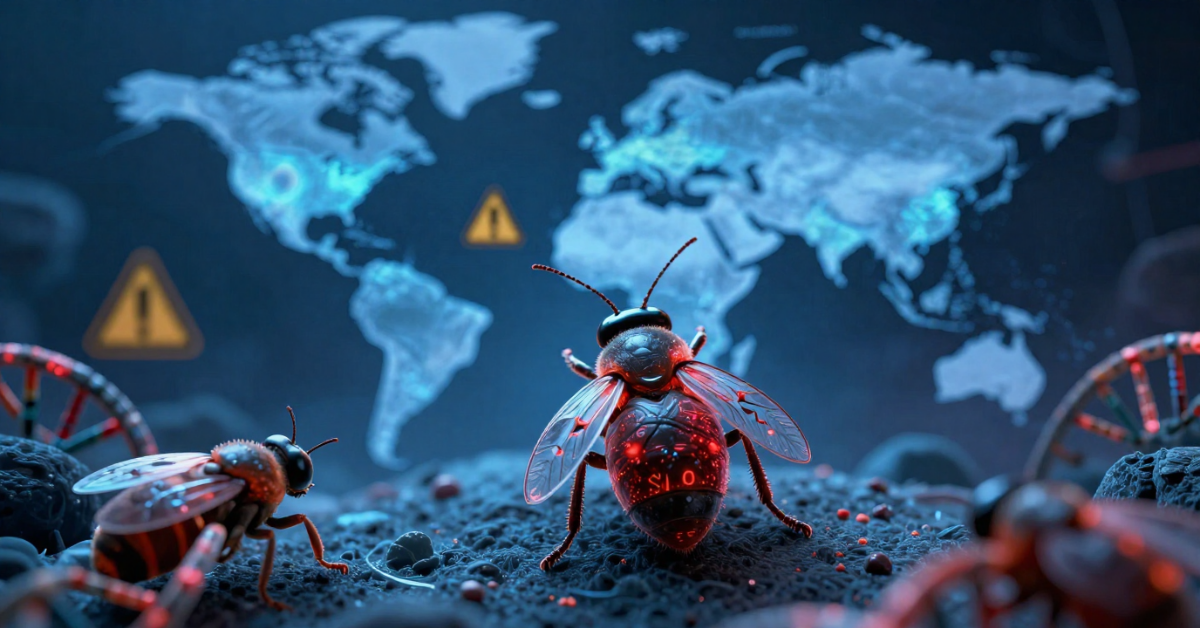
The Looming Threat of Insect Adaptation
The rapid evolution of insects presents an urgent challenge that humanity must confront. As environmental pressures increase due to climate change and shifting agricultural practices, insects are adapting at an alarming rate. This adaptation raises the specter of a potential pest pandemic, threatening not only food security but also human health and ecological balance. Insects, by their nature, have always been resilient; however, contemporary changes are drastically accelerating this process.
In agricultural contexts, the emergence of resistant insect populations could lead to severe crop losses. Farmers increasingly rely on pesticides to manage pest populations, yet many insects are developing resistance to these chemicals. Data indicates that over 500 pest species have shown some level of resistance, resulting in higher application rates or the adoption of less effective methods. This cycle not only impacts yield but also has economic repercussions for farmers and food prices on a global scale.
Moreover, the need for effective pest control correlates deeply with human health. Insects can act as vectors for diseases, with mosquitoes and ticks being prominent examples. As these pests evolve, their geographical range and populations might expand, potentially leading to outbreaks in regions previously considered low-risk. The shifting patterns of insect-borne diseases pose a significant risk to public health systems that might not be prepared for the impending threats.
In summary, the adaptation of insects is a multifaceted problem that influences agriculture, human health, and overall ecological dynamics. The pressing issue of a pest pandemic underscores the importance of research and innovation to mitigate future consequences. It serves as a call to action for scientists, policymakers, and the agricultural sector to address these challenges proactively.
Insect Resilience: Evolutionary Highlights
In recent years, the remarkable resilience and adaptability of insects have come to the forefront of scientific inquiry, specifically in the context of evolutionary biology. Insects, as the most diverse group of animals on the planet, have continually shown an astonishing ability to adapt to changing environments, which is critical in light of current challenges such as climate change and urbanization.
For instance, the adaptation of Tribolium castaneum, also known as the red flour beetle, exemplifies how insects respond to human agricultural practices. This species has developed resistance to various pesticides, allowing populations to survive and thrive despite human intervention. Their genetic adaptability highlights a broader trend among insects, where rapid evolutionary changes occur in response to selection pressures. This evolutionary success is not limited to pest species; many ecological roles are played by insects that exhibit similar adaptability.
Moreover, climate change acts as another significant driver of insect evolution. The ability of certain mosquito species, such as Aedes aegypti, to expand their range is an alarming development linked to rising temperatures. These mosquitoes have shown a capacity for altered behaviors and life cycles, adapting quickly to new environments while posing increased risks such as the spread of vector-borne diseases. Furthermore, elevated temperatures have disrupted ecological balances, favoring the proliferation of pest species that were once limited by harsher environmental conditions.
Urbanization further influences insect evolution by creating unique microhabitats. Species like the common cockroach have thrived in urban areas, demonstrating resilience to environmental stresses and human exposure. This adaptability underscores the complexity of insect evolution in anthropogenic environments, showcasing how they exploit resources and withstand challenges to their survival.
Overall, the resilience of insects highlights the intricate interplay between evolutionary processes and environmental change, necessitating a comprehensive understanding of their impact on ecosystems and human activities.
Fast Track Adaptation: The Science Behind Insect Evolution
Insects are remarkable organisms that have developed an extraordinary capacity for rapid adaptation, primarily due to their unique biological mechanisms. At the core of this adaptability lies their genetic composition, which enables them to respond effectively to environmental pressures. Notably, insects reproduce at significantly high rates, with some species capable of producing hundreds of offspring in a single reproductive cycle. This high fecundity results in a vast population size where beneficial mutations can spread quickly through generations.
Genetic diversity plays a critical role in this process. Insect populations often exhibit a wide range of genetic variations, which can introduce advantageous traits that enhance survival. For instance, studies have shown that certain mosquitoes have developed resistance to pesticides, a direct result of selective pressure acting upon their genetic variations. As these resistant individuals reproduce, they pass on this survival trait to their descendants, allowing the population to thrive despite chemical interventions.
Additionally, behavioral adaptations contribute significantly to their rapid evolution. Insects often engage in behavioral plasticity, altering their feeding or mating habits in response to changing environmental conditions. A notable case is that of the pea aphid, which has demonstrated the ability to switch between sexual and asexual reproduction depending on environmental cues. Such flexibility allows them to exploit resources more effectively and evade potential threats.
Moreover, how insects interact with their surroundings may also influence their adaptive strategies. The emergence of new pests often highlights the interaction of insects with human interventions, such as changes in agricultural practices. For instance, the fall armyworm has adapted its feeding behavior to target various crops, highlighting how environmental factors can propel rapid pest evolution.
In summary, the convergence of genetic variation, reproductive efficiency, and behavioral flexibility are critical factors that enable insects to adapt swiftly to their surroundings. These mechanisms not only exemplify the incredible resilience of insects but also pose significant challenges to pest management efforts worldwide.
Human Response: Analyzing Our Challenges
The rise of resistant insect populations is posing significant challenges to human pest management strategies. For decades, traditional pest control measures, such as the use of chemical pesticides, have formed the backbone of our approach to managing pest invasions. However, these methods are facing increasing limitations as insect species evolve and adapt at an unprecedented pace. The effectiveness of commonly employed insecticides is declining due to the rapid development of resistance among various pest species, resulting in a critical need for reevaluation of our current methodologies.
Moreover, the reliance on chemical treatments often inadvertently exacerbates the problem. The selective pressure exerted by widespread pesticide use encourages pests to develop resistance, creating a cycle that can be difficult to break. This resistance leads to more severe infestations, prompting an escalating response from pest management professionals and raising concerns about environmental sustainability.
Additionally, elements such as climate change are influencing insect behavior, altering the geographic distribution of pest species and extending their active seasons. This phenomenon presents further complications for pest control strategies, as regional pest populations that were once manageable are now emerging in new areas, creating an urgent need for adaptive responses.
In efforts to tackle these growing challenges, an integrated pest management (IPM) approach is becoming increasingly emphasized within the agricultural sector. By combining biological, cultural, physical, and chemical tools, IPM seeks to create sustainable pest control solutions that rather than relying solely on chemical applications. However, even IPM has limitations, particularly in its implementation across diverse agricultural systems, as well as the need for extensive education and training among practitioners.
In summary, while there are multiple strategies to combat pest invasions, the adaptive nature of insects presents ongoing challenges. A multifaceted approach that includes advancements in pest control methodologies, alongside adaptive strategies, is essential to address this evolving threat effectively.
Technological Innovations in Pest Management
In the ongoing battle against pests, technological innovations have emerged as crucial tools in pest management strategies. As pests evolve and adapt to environmental changes more rapidly than ever, the development of novel approaches is essential. Among the most promising are advancements in biological control, the use of genetically modified organisms (GMOs), and the implementation of precision agriculture.
Biological control revolves around utilizing natural predators or parasites to regulate pest populations. This eco-friendly method reduces reliance on synthetic pesticides and encourages biodiversity. The rise of innovative techniques, like breeding more effective biological control agents, is enhancing the efficacy of this approach. These developments create a balanced ecosystem where natural predators can thrive while simultaneously managing pest threats.
Genetically modified organisms have gained considerable attention in recent years for their potential to address various agricultural challenges. By inserting specific genes that confer resistance to pests, crops can exhibit enhanced durability and productivity. This approach not only addresses the immediate challenge posed by adaptive pest populations but also diminishes the need for chemical interventions. Researchers are also focusing on creating GMOs that can disrupt pest reproduction, further curbing their numbers and minimizing crop damage.
Precision agriculture, which employs advanced technologies like artificial intelligence, satellite imagery, and IoT devices, represents a significant leap forward in the efficient management of agricultural resources. By analyzing extensive data, farmers can optimize pesticide application, targeting problem areas with precision. This method not only reduces the overall amount of chemicals used but also mitigates environmental impact. Such innovations are especially vital as pests adapt quickly to traditional management techniques.
Ultimately, these technological advancements are shaping the future of pest management. The integration of biological controls, GMOs, and precision agriculture is vital for developing sustainable solutions that can keep pace with the rapid adaptation of pests in our changing environment.
Policy and Environmental Impact: A Call for Action
The accelerating adaptation of insects poses a significant threat to global agricultural productivity and public health. Therefore, it is crucial for policymakers to engage in robust policy reforms aimed at addressing the implications of this impending pest pandemic. Developing comprehensive strategies that emphasize sustainable pest management can mitigate the adverse effects of insect resistance on crops and ecosystem balance.
One critical approach is the integration of environmentally friendly pest control measures. This includes the promotion of biological control methods, the use of local natural enemies, and the development of pest-resistant plant varieties through the application of modern breeding techniques. As resistance to chemical pesticides increases among insect populations, fostering sustainable agricultural practices becomes paramount.
Furthermore, international cooperation is essential in managing the impending pest pandemic. Pest adaptation knows no borders, thus necessitating a coordinated response across nations. Regions must work together to share data and innovative solutions for pest management. For example, international forums can be established to facilitate knowledge transfer and collaborative research aimed at understanding insect behaviors and resistance patterns.
In addition to joint initiatives, governments should mandate environmental assessments for all pest management practices. By evaluating the potential ecological impacts prior to the implementation of control strategies, we can ensure that these actions do not inadvertently exacerbate the crisis. It is also vital to invest in public awareness campaigns, educating stakeholders about sustainable practices and the importance of biodiversity in pest management.
In conclusion, the rising threat of insect adaptation requires immediate and strategic responses from policymakers worldwide. By embracing sustainable practices and fostering international collaboration, we can create resilient agricultural systems capable of withstanding the challenges posed by the next pest pandemic.
Conclusion: Preparing for the Future
In light of the escalating concerns surrounding insect adaptation, it is imperative to acknowledge the urgency of the situation. As evidence mounts regarding the speed at which various insect species are evolving, the potential for a pest pandemic becomes increasingly palpable. This adaptation poses significant risks not only to agriculture but also to human health and ecological balance.
Throughout this discussion, we have highlighted numerous factors that contribute to the rapid evolutionary changes observed in insects. Climate change, urbanization, and changes in land use have created environments that favor some insect populations, enhancing their resilience and adaptability. The implications of these changes are profound, affecting food production, disease vector dynamics, and biodiversity.
To mitigate the risks associated with this impending crisis, proactive measures are essential. Individuals can play a crucial role by participating in sustainable practices that promote biodiversity and reduce the reliance on harmful pesticides. Communities need to develop integrated pest management strategies that focus on ecological approaches to pest control. Furthermore, policymakers and government agencies must prioritize research and funding for innovative solutions that address insect adaptation comprehensively.
In essence, a multi-faceted approach is necessary to confront the challenges posed by rapidly adapting insect populations. By fostering collaboration between scientists, farmers, environmentalists, and the public, we can create effective frameworks to combat this threat. We must act promptly to develop strategies that not only address current issues but also prepare for future challenges. Through collective efforts, we can hope to avert the onset of a pest pandemic and safeguard our ecosystems and health for generations to come.
Address:
264/5, Kamal Soroni Road, Mirpur, Dhaka-1216
Contact
Your Quaries on pest control askings
pestexterminatorbd@gmail.com
+8801642008383 +8801988300003, 01723057746
© 2025. All rights reserved. to Urban Pest Control Pvt. Ltd. this site is powered by Our Own IT Team