
The Silent Invasion: Pests Are Spreading Globally Without Borders
2/1/20267 min read
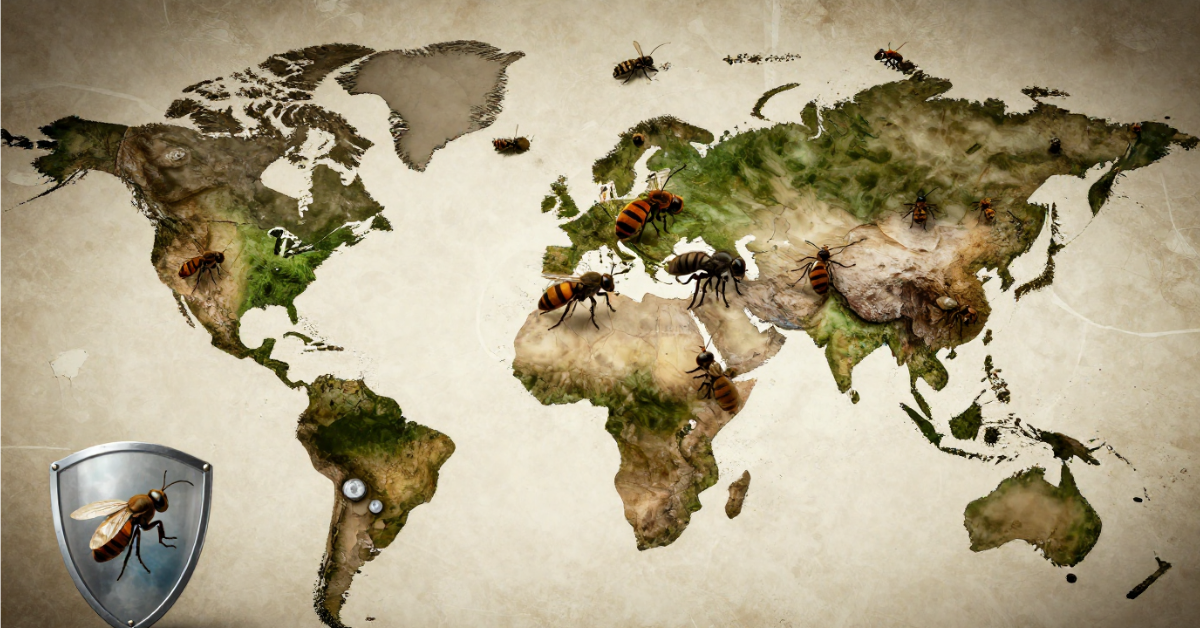
Introduction to the Silent Invasion
The phenomenon known as the 'silent invasion' refers to the global spread of invasive pest species that cross borders and ecosystems with little notice or control. This term encapsulates the subtle yet pervasive nature of how these pests infiltrate new regions, often caused by human activities such as trade, travel, and agricultural practices. Invasive species are defined as organisms that are not native to a specific location and that cause harm to the environment, economy, or human health. Their increasing prevalence across various landscapes poses significant challenges worldwide.
One of the most concerning aspects of this silent invasion is its impact on agriculture. As invasive pests multiply and spread, they can devastate crops, leading to reduced yields and increased costs for farmers. The economic ramifications can, therefore, extend beyond individual farms, affecting supply chains and global markets. In addition to economic impacts, these pests can threaten biodiversity; they often outcompete native species for resources, disrupt ecological relationships, and lead to a decline in local flora and fauna.
The consequences of an unchecked silent invasion also extend to human health. Many invasive species can act as vectors for diseases, affecting livestock and posing risks to humans, particularly those in close proximity to agricultural activities. The rapid global movement of people and goods simplifies the pathways through which these pests can establish themselves in new territories, making it essential for governments and scientists to monitor and manage these entrances effectively.
In light of these challenges, understanding the silent invasion of pests is crucial for developing strategies to combat their spread. Addressing this issue requires a concerted effort involving research, policy-making, and public awareness to mitigate their impact on our ecosystems and economies.
Factors Contributing to the Spread of Pests
The global spread of pests can be attributed to several interrelated factors, each playing a significant role in their ability to thrive in new environments. One of the most prominent factors driving this phenomenon is climate change. As global temperatures rise, the habitats of pests expand, allowing them to survive and reproduce in regions that were previously inhospitable. Warmer temperatures can accelerate the life cycles of pests, leading to increased populations that can infiltrate new areas more rapidly.
Globalization of trade is another crucial factor that facilitates the movement of pests across borders. With the expansion of international trade, goods and commodities are transported worldwide, often without stringent health inspections. This creates a scenario where pests can inadvertently hitch a ride on cargo ships, containers, and even in shipments of plants and livestock. Once introduced to a new geographic region, these pests can establish themselves and disrupt local ecosystems.
Additionally, travel patterns have drastically changed in the modern era, leading to increased mobility of people. International tourism, business travel, and migration create opportunities for pests to spread. Individuals often carry infested items, such as clothing or luggage, across borders, further amplifying the risk of pest dissemination. Furthermore, changes in urbanization patterns contribute to the spread as cities expand, providing new habitats and food sources for pests.
Urban environments can often become breeding grounds for pests, due to human activities that create favorable conditions for their survival. The combination of climate change, globalization, travel patterns, and urbanization contributes collectively to the silent invasion of pests, creating challenges for biodiversity, agriculture, and public health.
Case Studies of Invasive Pests
Invasive pests pose a serious threat to local ecosystems and economies, with several notable species exemplifying this phenomenon. One such pest is the Asian tiger mosquito (Aedes albopictus), which is originally native to Southeast Asia. This mosquito species has increased its distribution globally, primarily through the international trade of tires and other water-holding containers. As an effective vector for several diseases such as dengue fever and chikungunya, the Asian tiger mosquito represents not only a public health concern but also a significant economic impact on healthcare systems.
Another invasive species that warrants attention is the brown marmorated stink bug (). This pest, native to East Asia, made its way to the United States in the late 1990s. The brown marmorated stink bug has since spread across North America, largely through shipping containers and vehicles. Its feeding habits are detrimental to various crops, affecting agricultural productivity. Farmers have reported substantial losses, leading to increased pest control costs and impacting food supply chains.
Equally concerning is the emerald ash borer (Agrilus planipennis), a wood-boring beetle originating from Asia. First identified in the U.S. around 2002, it has rapidly spread across the country, primarily through the movement of infested firewood and timber. This pest targets ash trees, leading to widespread tree mortality and significant environmental changes. Its presence compromises urban and rural forests, affecting biodiversity and resulting in extensive economic costs related to tree removal and forest management.
These case studies exemplify the profound impacts of invasive pests on ecological systems and economic stability. Understanding their origins and modes of introduction is essential for developing effective management strategies to mitigate their spread and protect native species.
The Impact on Agriculture and Ecosystems
Pest invasions pose significant challenges to agriculture and natural ecosystems, leading to substantial economic consequences and jeopardizing food security. The introduction and spread of foreign pest species can drastically affect agricultural productivity by targeting key crops and livestock, which results in decreased yields and quality. Functional losses in farming can arise from direct damage by pests, such as insects and pathogens, leading to financial strain on farmers who must cope with the rising costs of pest control and reduced income from lower crop sales.
Additionally, the disruption of local ecosystems follows closely behind pest invasion. Pests can alter food webs and nutrient cycles, directly impacting not just the agricultural landscape but also the surrounding natural habitats. The invasion often leads to a decline in native flora and fauna as non-native pests outcompete them for resources. This decline in biodiversity poses a long-term threat to ecosystem stability, as interconnected species rely on one another for survival.
Moreover, pests can introduce diseases that may affect native species, causing population declines and even extinctions. These changes pave the way for a cascade of ecological shifts, ultimately impacting human communities that rely on these ecosystems for resources such as clean water and pollination of crops.
With the ever-growing global population, the demand for food production intensifies, making the challenge of pest invasions even more pressing. The potential for crop failures increases not just the risk of economic losses but also threatens food security on a larger scale, especially in regions that are already food insecure. The need for effective management strategies and increased awareness regarding pest spread and its consequences is crucial in maintaining sustainable agricultural practices and conserving biodiversity.
Management and Control Strategies
Addressing the spread of invasive pests requires a multifaceted approach, leveraging both traditional and innovative control strategies. One of the most commonly employed methods in pest management is the application of chemical pesticides. These substances are effective in quickly reducing pest populations; however, their use raises concerns regarding potential environmental impacts and the development of pesticide resistance among pest species. Therefore, a more comprehensive strategy is essential.
Integrated Pest Management (IPM) has emerged as a widely accepted framework that combines various control methods to minimize the reliance on chemical pesticides. IPM emphasizes the use of biological control agents, such as natural predators or parasites that can effectively suppress pest populations without harming the environment. This approach not only enhances pest control efficiency but also promotes biodiversity and ecological balance.
In addition to biological control, technology plays a critical role in modern pest management. The utilization of data analytics, remote sensing, and IoT devices helps monitor pest populations and predict outbreaks with greater accuracy. For instance, predictive modeling can guide resource allocation and timing of interventions, thereby increasing the effectiveness of control measures.
Innovative strategies such as genetic engineering are also gaining traction, with researchers developing pest-resistant crops that can withstand invasion. These genetically modified organisms (GMOs) can dramatically reduce the impact of invasive pests on agriculture and minimize the need for chemical interventions.
Despite these advancements, challenges remain in the implementation of these strategies. Public perception of genetic modifications and the potential for unintended ecological consequences can hinder acceptance. Moreover, the effective execution of integrated pest management demands collaboration among farmers, researchers, and policymakers. Ultimately, adopting a combination of traditional and innovative pest control methods will be essential in managing the ongoing threat of invasive species effectively.
The Role of Policy and Regulation
In the complex landscape of pest management, international policies and regulations play a crucial role in shaping responses to the growing challenge of pest invasions. The influence of organizations such as the World Trade Organization (WTO) extends far beyond trade; it encompasses the establishment of guidelines and standards that help protect agricultural integrity and biodiversity. These policies serve as frameworks that facilitate cooperative efforts among nations to effectively manage and mitigate the threats posed by invasive pests.
The Convention on Biological Diversity is another pivotal organization that underscores the need for effective management practices to preserve ecosystems from the detrimental impacts of pests. By promoting sustainable practices and encouraging biological control methods, this convention encourages member countries to adopt a unified approach towards pest management, fostering international collaboration and information exchange.
National policies designed to prevent pest dissemination across borders are also essential components of effective pest management strategies. Countries may implement biosecurity measures that include stringent import regulations, monitoring of agricultural products, and rapid response mechanisms to contain pest outbreaks. Such policies not only safeguard local ecosystems but also contribute to global efforts against the spread of pests. Moreover, government agencies often collaborate with agricultural stakeholders, researchers, and NGOs to develop best practices that align with international standards while addressing local needs.
Collaboration among countries is not merely beneficial; it is imperative. The silent invasion of pests knows no borders, making it essential for nations to work collectively to develop comprehensive strategies. By sharing knowledge, resources, and technologies, countries can enhance their capacity to identify and manage pest threats more effectively. With the global mobility of goods and people, fostering an environment where collaborative international efforts thrive becomes essential for securing agricultural health and biodiversity on a global scale.
Conclusion: A Call to Action
Invasive pests pose a significant threat to global ecosystems, agriculture, and human health, as discussed throughout this blog post. These pests are not constrained by borders, and their unchecked spread can result in devastating economic and environmental consequences. The urgency of this situation cannot be overstated, as the rapid proliferation of invasive species threatens biodiversity and disrupts natural habitats essential for ecological balance.
To effectively combat this silent invasion, it is imperative that individuals, policymakers, and industries rally together to implement comprehensive and proactive measures. Education plays a critical role in this effort; by raising public awareness about the identification and impact of invasive pests, we can empower communities to take action. Engaging local populations in monitoring and reporting sightings of these species can significantly contribute to early detection and management efforts.
Furthermore, policymakers must prioritize the establishment of robust frameworks aimed at managing invasive species. This includes advocating for research to understand their behavior and control strategies, as well as investing in sustainable practices that can prevent their introduction and spread. Industries, particularly in agriculture and international trade, must enhance their vigilance regarding pest control and compliance with biosecurity protocols to mitigate risks associated with the movement of goods.
In summary, addressing the challenge of invasive pests requires a concerted effort across various sectors of society. It is crucial for each of us to recognize the role we play in this issue and to take intentional steps towards prevention and management. By fostering a culture of vigilance and stewardship, we can protect our ecosystems from the pervasive threat of invasive species. Together, we must act decisively to safeguard our planet for future generations.
Address:
264/5, Kamal Soroni Road, Mirpur, Dhaka-1216
Contact
Your Quaries on pest control askings
pestexterminatorbd@gmail.com
+8801642008383 +8801988300003, 01723057746
© 2025. All rights reserved. to Urban Pest Control Pvt. Ltd. this site is powered by Our Own IT Team