
The Unseen Consequences: How Global Warming is Accelerating Pest Behavior Changes
2/1/20267 min read
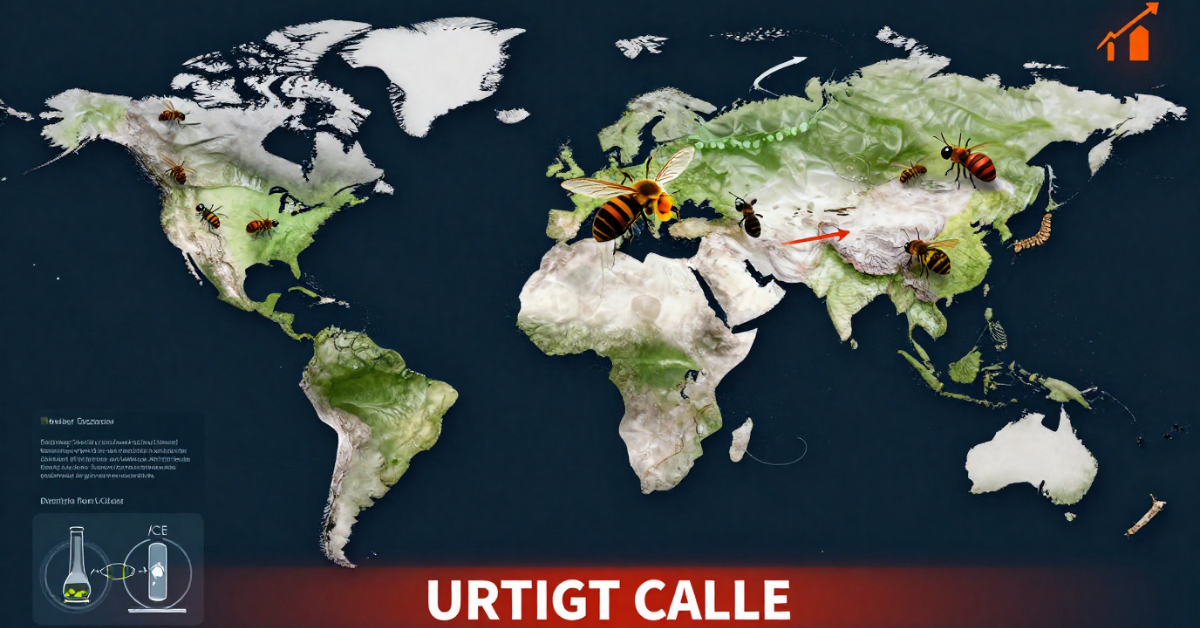
Understanding the Connection Between Global Warming and Pest Behavior
Global warming, often referred to as climate change, encompasses the long-term increase in Earth's average temperature due to human activities. This phenomenon has far-reaching implications, particularly regarding the behavior of pests. As temperatures continue to rise, there is a pronounced shift in ecosystems, which directly influences pest populations and their activities.
The fundamental effects of climate change manifest through alterations in temperature and precipitation patterns. Warmer temperatures can lead to longer growing seasons and milder winters, thus providing favorable conditions for various pest species. In many cases, these organisms thrive in regions previously deemed unsuitable for their survival. Consequently, the geographic range of many pests is expanding, leading to an increased prevalence of infestations in agricultural and urban areas.
Moreover, climate change modifies the timing of biological events known as phenological changes. For instance, earlier springs may cause certain pests to emerge sooner than usual, ultimately resulting in mismatches with their natural predators and prey. This temporal uncoupling can lead to population booms in pest numbers, as their control mechanisms may not be adequately aligned with their life cycles.
The interaction between global warming and pest dynamics further emphasizes changes in pest behavior, including increased reproductive rates and altered migration patterns. These shifts significantly threaten crop yields and human health, all due to the cascading effects of a warming climate. Understanding this intricate relationship is vital for developing effective management strategies to mitigate the adverse impacts of pests exacerbated by climate change.
Understanding Pest Dynamics
Pest dynamics refer to the behavioral and biological processes that govern the populations of various pest species within ecosystems. These processes include their life cycles, reproduction rates, and the ecological roles pests play in their environments. Understanding these elements is crucial, especially as climate change continues to exert pressure on pest populations worldwide.
The life cycles of pests typically consist of multiple stages: egg, larva, pupa, and adult. Depending on species and environmental conditions, the duration of each stage varies significantly. This lifecycle adaptation allows pests to thrive in various habitats. For instance, warmer temperatures often lead to accelerated development, resulting in more generations produced in a single season. Consequently, pest populations can experience exponential growth under favorable climatic conditions.
Reproduction rates of pests are closely linked to environmental variables, particularly temperature and moisture. Many pest species rely on specific temperature thresholds to initiate their reproductive cycles. As global temperatures continue to rise, an array of pests may begin reproducing earlier in the season, leading to extended periods of pest presence and increased likelihood of agricultural damage. Moreover, fluctuations in moisture can directly affect pest survival rates and distribution, as certain pests require moist environments to thrive.
Ecologically, pests serve various integral roles, such as pollinators, decomposers, or even prey for other organisms. However, with the shifting climate, these roles are undergoing changes that can disrupt established ecosystems. Invasive pest species, often more adaptable to changing conditions, may outcompete native species, resulting in ecological imbalances.
In conclusion, global warming fundamentally alters pest dynamics by influencing their life cycles, reproductive capabilities, and ecological interactions. Understanding these changes is essential for effective pest management strategies in a warming world.
Specific Examples of Pest Behavior Changes
Global warming has been shown to significantly impact pest populations and their behaviors. One notable example is the mosquito, which has exhibited a noticeable shift in geographical distribution in response to rising temperatures. Traditionally restricted to warmer climates, certain species have started to migrate to areas previously deemed unsuitable, such as higher altitudes and latitudes. This alteration not only raises concerns about the spread of diseases, like malaria and dengue fever, but also creates challenges in managing these populations in new environments.
Additionally, the life cycle of the European corn borer, a prevalent agricultural pest, has been altered due to temperature changes. Research indicates that warmer winters lead to increased survival rates of larvae. Consequently, these insects emerge earlier in the growing season, which can result in more generations being produced per year. The early pest population peaks can severely disrupt crop yields, as farmers may not be prepared for the infestation at such premature stages.
Feeding patterns are also subject to transformation under the influence of climate change. The red imported fire ant has manifested changes in foraging behavior, becoming more aggressive and active at higher temperatures. This shift not only impacts local ecosystems but can also result in increased competition for resources with native species, fundamentally altering the dynamics of pest interactions within those environments. Such behavioral changes highlight broader ecological repercussions that transcend mere pest management.
These examples demonstrate that global warming does not merely threaten pest populations; it alters their biology, behavior, and interactions with humans and agricultural practices. Understanding these shifts is critical for developing effective pest control strategies and mitigating potential risks to health and food security.
The Impact on Agriculture and Ecosystems
The changing climate has led to significant shifts in pest behavior, which in turn has profound implications for agriculture and natural ecosystems. As global temperatures rise, pests are not only becoming more numerous but also exhibiting changes in their lifecycle and feeding habits. This can result in increased crop damage as these pests adapt to new environments and exploit crops that were previously less susceptible.
Farmers are facing an uphill battle as pest pressures intensify, leading to potential yield losses. For instance, pests such as aphids and beetles are known to flourish in warmer conditions, resulting in higher infestations that threaten the viability of various crops. This not only results in immediate agricultural losses but also leads to increased costs associated with pest control measures and the application of pesticides. Economic repercussions for farmers can be substantial, leading to reduced profit margins and increased food prices for consumers.
In addition to the direct effects on crops, the modifications in pest behavior can disrupt existing predator-prey relationships. Natural predators that help control pest populations may not thrive under changing climate conditions or may find it challenging to adapt to the new dynamics. As a result, there can be a cascading effect on ecosystems, as the balance between various species is upset. The loss of key predator species can lead to a rise in pest populations, further threatening agricultural systems and native flora and fauna.
Understanding these complex interactions is crucial for developing effective strategies to mitigate the impacts of global warming on pest behavior. As agriculture plays a pivotal role in global food security, addressing these challenges will require a concerted effort from farmers, scientists, and policymakers alike.
Scientific Research and Observations
Recent scientific studies have underscored the relationship between global warming and the adaptive behaviors of various pest populations. One of the most compelling findings indicates that as average temperatures rise, many pests are experiencing accelerated life cycles. For instance, research published in the journal "Ecological Applications" has shown that warmer temperatures can lead to increased reproduction rates in several insect species, including aphids and caterpillars. These findings suggest that pests are not just surviving in higher temperatures but thriving, leading to potential infestations during typically colder months.
Moreover, field observations have documented significant range expansions for many pest species. A notable example is the southern pine beetle, which has been migrating north into regions previously deemed inhospitable due to cooler climates. This migration has become more frequent as winter temperatures have risen, allowing these pests to exploit new habitats. Studies employing predictive models indicate that this trend is likely to continue, with various cessation thresholds being surpassed in the years ahead.
Ongoing research is dedicated to understanding the mechanisms driving these adaptations. Scientists are investigating related genetic changes that may be enabling pests to adjust more rapidly to their shifting environments. Notably, studies utilizing genomic sequencing and molecular biology techniques are shedding light on how certain species possess adaptive traits, such as drought tolerance and cold resistance, crucial for survival in changing climates.
Additionally, pest management strategies are continually evolving in response to these behaviors. Integrated Pest Management (IPM) practices are now incorporating climate forecasting models to predict pest outbreaks more effectively. This proactive approach emphasizes the importance of interdisciplinary cooperation between entomologists, ecologists, and climate scientists to mitigate the economic and ecological impacts of rising pest populations attributed to global warming.
Mitigating Pest Issues in a Warming World
The implications of global warming extend far beyond rising temperatures; it also plays a significant role in altering pest behavior, resulting in challenges for agriculture and human health. To counteract these changes, it is imperative that farmers and policymakers adopt effective strategies for pest management tailored to a warming world. One widely recognized approach is Integrated Pest Management (IPM). This holistic strategy combines biological, cultural, physical, and chemical tools to manage pest populations in an environmentally sensitive manner.
IPM emphasizes prevention and monitoring, enabling stakeholders to assess pest populations and make informed decisions based on ecological conditions. The application of pest-resistant crop varieties, coupled with crop rotation and diversification, can further mitigate pest outbreaks. By reducing monoculture practices, farmers can disrupt the life cycles of pests, making it more difficult for them to establish themselves.
Another critical aspect in the effort to manage pest populations is the implementation of sustainable farming techniques. The adoption of agroecological practices can significantly enhance ecosystem resilience, thus naturally limiting pest infestations. Techniques such as cover cropping and organic amendments enrich the soil and improve plant health, which can help crops withstand pest pressures. Additionally, promoting beneficial insects through habitat manipulation can create a natural balance, enhancing pest control and reducing the need for chemical interventions.
Policymakers also have a vital role to play in creating supportive frameworks for pest management strategies. By funding pest monitoring programs and research initiatives, they can support the development of innovative and sustainable agricultural practices. Education and outreach programs can further empower farmers to utilize adaptive measures effectively, ensuring that pest management is not only reactive but also preemptive. The integration of these various approaches will be essential in addressing the evolving challenge of pest behavior in a warmer climate.
Conclusion and Future Directions
As global warming continues to reshape ecosystems, the consequences on pest behavior are becoming increasingly apparent. These changes can lead to heightened pest populations, altered life cycles, and expanded ranges, posing significant challenges to agriculture and public health. The urgency to address the impact of global warming on pests should not be underestimated, as the repercussions may extend far beyond mere annoyance, affecting food security and disease transmission.
Future research must focus on understanding the intricate relationships between climate variables and pest dynamics. This includes exploring how temperature increases, changing rainfall patterns, and extreme weather events influence pest life cycles and reproductive rates. Such knowledge is vital for predicting future pest behaviors and can help develop targeted pest management strategies that minimize their impact while promoting ecological balance.
In terms of action, it is essential to foster collaboration among scientists, policymakers, and agricultural stakeholders to implement robust pest management practices. Proactive measures, including integrated pest management (IPM) approaches, must be adapted to recognize and respond to the evolving nature of pest populations in the face of climate change. Additionally, investing in innovative technologies that enhance pest monitoring and control can provide valuable tools in combating these challenges.
Ultimately, addressing the impact of global warming on pests requires a multifaceted strategy that combines scientific research with practical applications. As we look to the future, it is crucial to prioritize initiatives that enhance our understanding and management of pest behaviors, ensuring that the ecological balance is preserved while also securing food production and public health against the mounting threats posed by climate change. By acting decisively now, we can mitigate the unseen consequences of global warming and minimize its impact on pest dynamics.
Address:
264/5, Kamal Soroni Road, Mirpur, Dhaka-1216
Contact
Your Quaries on pest control askings
pestexterminatorbd@gmail.com
+8801642008383 +8801988300003, 01723057746
© 2025. All rights reserved. to Urban Pest Control Pvt. Ltd. this site is powered by Our Own IT Team