
Understanding Pesticide Resistance: Causes and Solutions
2/6/20267 min read

What is Pesticide Resistance?
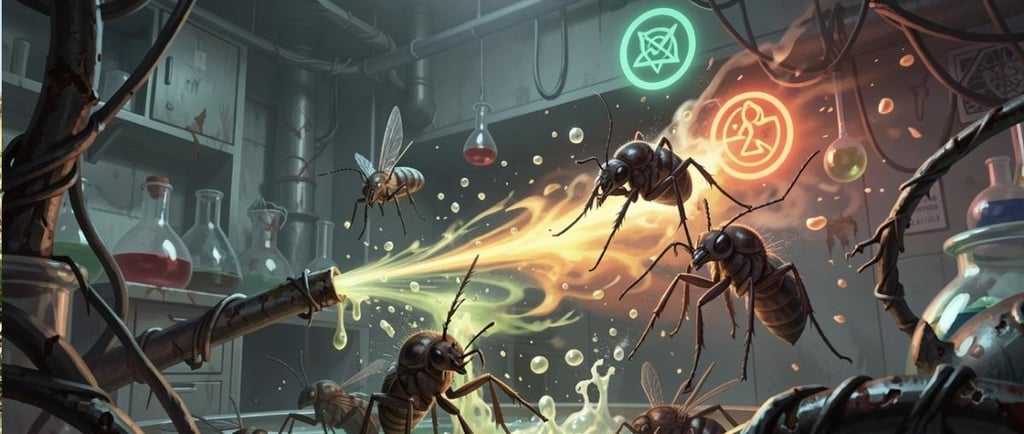
Pesticide resistance is defined as the ability of a pest population to withstand exposure to a pesticide that would typically be effective in controlling it. Over time, some pests show an increased tolerance to these chemical agents, rendering them less effective or even ineffective in managing pest populations. This resistance occurs as a result of evolutionary processes that are driven by the selective pressure imposed by the repeated use of pesticide applications.
The biological basis of pesticide resistance primarily revolves around genetic variation within pest populations. When a pesticide is applied, most susceptible individuals are eliminated, while those with pre-existing resistant traits survive and reproduce. Consequently, the offspring of these resistant individuals inherit genetic adaptations that confer survival advantages when exposed to the same chemical. This mechanism highlights the importance of genetic diversity among pests, as variations can occur naturally through mutations or genetic recombination.
Resistance can manifest in various pests, including insects, weeds, and fungi, each demonstrating unique responses to different classes of pesticides. For instance, certain insects may develop resistance to insecticides by altering their metabolic pathways, enabling them to detoxify the chemicals more efficiently. Similarly, weeds may evolve mechanisms to outgrow herbicides, while fungi may adapt their cell structures to negate the effects of fungicides. The emergence of resistant strains is not just a localized issue; it can spread rapidly across agricultural landscapes, complicating pest management strategies and threatening food security.
Understanding pesticide resistance is crucial for developing sustainable agricultural practices that mitigate its impact. By acknowledging the biological processes that lead to resistance, researchers and farmers can implement integrated pest management strategies that combine the judicious application of pesticides with alternative control measures, thereby preserving the efficacy of these valuable tools in pest control.
The Science Behind Pesticide Resistance
Pesticide resistance represents a complex biological phenomenon driven by the evolutionary capabilities of pests. At its core, pesticide resistance arises when a specific pest population undergoes genetic changes that allow individuals to survive exposure to a pesticide that would normally be lethal. This process involves several critical mechanisms, including mutation and natural selection.
The role of mutation is fundamental to understanding pesticide resistance. This genetic alteration can occur spontaneously within a population, where a small number of pests develop traits that confer resistance. Once these resistant individuals are exposed to a pesticide, and since they possess genes that allow them to survive, they can reproduce and pass these advantageous traits onto their offspring.
Furthermore, selection pressure plays a crucial role in the evolution of resistance. When a pesticide is applied, it eliminates susceptible pests, but the resistant individuals remain unharmed and continue to reproduce. Over time, as this cycle is repeated, the proportion of resistant pests within the population steadily increases, leading to a situation where the pesticide becomes less effective. The intensity and frequency of pesticide applications can exacerbate this selection pressure, accelerating the development of resistance.
An additional factor affecting the speed at which resistance develops is the reproductive rate of the pests. Species with high reproductive rates can evolve more quickly as each generation provides new opportunities for mutations to occur. For example, insects such as aphids can produce numerous offspring within a short span, greatly facilitating the propagation of resistant traits.
In summary, the development of pesticide resistance involves complex interactions between genetic mutations, selection pressure, and reproductive rates. Understanding these scientific foundations is essential for developing effective management strategies to combat pest populations that have developed resistance to chemical controls.
Causes of Pesticide Resistance: Overuse and Misuse
Pesticide resistance is a critical issue affecting agricultural productivity worldwide. Among the primary causes of this phenomenon are the overuse and misuse of pesticides in various agricultural practices. Continuous and excessive application of chemical pesticides plays a significant role in the development of resistance among pest populations. When pesticides are applied too frequently or in excessively high doses, they create a selection pressure on pests, allowing only the resistant individuals to survive and reproduce. As a result, these pests can develop a resistance to the active ingredients within these pesticides, rendering them less effective over time.
Moreover, the misuse of pesticides also contributes to the growing problem of resistance. This can occur when the wrong type of pesticide is utilized for specific pest control needs. For example, applying a herbicide designed for one type of weed to target a different species may result in ineffective pest control. Consequently, the improper application can lead to the survival and reproduction of pests that are not adequately controlled, further exacerbating the issue of resistance.
Furthermore, factors such as incomplete application due to improper techniques or equipment malfunction can lead to sub-lethal doses of pesticides being delivered to target pests. This unintended exposure can bolster resistance development as pests that may have been eliminated by a correctly applied dose are able to survive and breed. Therefore, it becomes crucial for farmers and agricultural stakeholders to adopt integrated pest management strategies that include proper pesticide usage guidelines, paying close attention to the types and amounts of pesticides used. By understanding the causes of pesticide resistance stemming from overuse and misuse, it is possible to develop more effective pest control strategies that mitigate this escalating issue.
Lack of Integrated Pest Management (IPM)
Integrated Pest Management (IPM) is a comprehensive approach utilized in pest control that combines various methods to minimize the use of chemical pesticides while maximizing pest management effectiveness. By integrating cultural, physical, biological, and chemical controls, IPM aims to manage pest populations in a sustainable manner. It recognizes that no single method can address all pest issues, and therefore, a multi-faceted strategy enhances the likelihood of successful pest management.
The absence of an Integrated Pest Management strategy often leads to an increased reliance on pesticides, consequently elevating the risks of pesticide resistance. When chemical controls are the primary method of pest management, they can create selection pressures that favor resistant pest populations. This situation can result in a vicious cycle where farmers and agricultural producers find themselves compelled to increase pesticide use to combat these resistant strains, thereby worsening the resistance problem.
An effective IPM program encourages the use of alternative methods, such as biological pest control—employing natural predators or parasites to manage pest populations—and cultural practices, which involve modifying growing techniques to reduce pest establishment and survival. Physical controls, such as traps and barriers, can also play a crucial role in sustaining pest populations at manageable levels while minimizing environmental harm.
By adopting a holistic IPM approach, farmers and pest control professionals can effectively disrupt the cycle of resistance. Furthermore, integrating education and awareness programs about the significance of IPM can foster a shift in perspective among agricultural practitioners about the importance of reducing reliance on pesticides. Ultimately, promoting sustainable pest management strategies is crucial to mitigating the rise of pesticide resistance.
Global Impact of Pesticide Resistance
Pesticide resistance is a growing concern that poses significant global ramifications, affecting agricultural productivity, food security, and environmental health. As pests evolve to withstand the effects of chemical applications, the efficacy of once-relied upon pesticides diminishes, forcing farmers to seek alternative, often more potent solutions. This relentless cycle can lead to escalating economic losses, with some studies estimating that the financial impact of pesticide resistance globally could reach billions of dollars annually. According to a report by the Food and Agriculture Organization (FAO), approximately 30% of crop losses are attributable to pests, and pesticide resistance could exacerbate this issue.
The implications for food security are profound. A decrease in the effectiveness of pesticides leads to increased pest populations, which can reduce crop yields and threaten the stability of food supplies. In regions heavily dependent on monocultures, such as certain parts of Sub-Saharan Africa and Southeast Asia, farmers find themselves fighting an uphill battle against resistant pests, often resulting in food shortages and increased prices. For instance, a case study in India highlighted a significant decline in cotton production due to resistance in the bollworm, leading to severe economic consequences for local farmers.
In response to rising resistance, some farmers are resorting to higher quantities of pesticides, which can create further health hazards for both agricultural workers and the surrounding communities. Increased pesticide application not only elevates the risk of chemical exposure but also contributes to environmental degradation, adversely affecting biodiversity and ecosystems. Furthermore, research links excessive pesticide use to long-term health issues, raising concerns about human health in agricultural regions. Thus, the global impact of pesticide resistance extends beyond agriculture, highlighting the urgent need for sustainable strategies to manage pest populations effectively.
Strategies to Combat Pesticide Resistance
Addressing pesticide resistance requires a multifaceted approach that integrates various management strategies to ensure effective pest control while promoting environmental sustainability. One effective method is the rotation of chemical classes. By alternating the use of different classes of pesticides, we can interrupt the selection pressure on pest populations that may lead to resistance development. This practice not only delays the onset of resistance but also allows for a broader spectrum of pest control.
Incorporating biological controls offers another promising strategy. Biological control involves using natural predators, parasites, or pathogens to manage pest populations. By enhancing the presence of these biological agents, such as ladybugs or parasitic wasps, farmers can reduce their reliance on chemical pesticides. This can be particularly effective for managing pests that have demonstrated resistance to specific chemicals, thus promoting a more balanced ecosystem.
Furthermore, promoting biological diversity within agricultural systems is crucial. Diverse crop rotations and intercropping can disrupt pest life cycles and enhance ecosystem resilience. A diverse agricultural system reduces the likelihood of widespread pest outbreaks while supporting beneficial organisms that contribute to pest management. Additionally, policies that encourage sustainable practices, such as organic farming or integrated pest management (IPM), should be advocated. Implementing IPM incorporates multiple strategies, including monitoring pest populations, utilizing resistant crop varieties, and applying pesticides only when necessary, thereby minimizing the likelihood of resistance.
Ultimately, the combined use of these strategies—chemical rotation, biological controls, and promoting diversity—provides a robust framework for combating pesticide resistance. Engaging stakeholders, including farmers, policymakers, and researchers, is essential in establishing practices that balance effective pest management with ecological health, ensuring long-term agricultural sustainability.
The Future of Pest Management
The future of pest management is poised to undergo significant transformations, addressing the challenges posed by pesticide resistance. Emerging trends suggest that innovation driven by biotechnology is crucial for sustainable pest management practices. Genetically modified organisms (GMOs) and biopesticides are set to revolutionize the methods used to control pest populations while minimizing the adverse effects of traditional chemical pesticides. By harnessing nature's own mechanisms, these advancements aim to enhance the efficacy of pest control without contributing to resistance.
Moreover, precision agriculture is becoming an increasingly important tool in pest management strategies. Utilizing advanced technologies such as drones, sensors, and data analytics, farmers can optimize the application of pesticides and other inputs. This targeted approach not only helps in reducing the volume of chemicals used but also minimizes the risk of pest resistance by ensuring that pesticides are applied only when necessary and in the correct amounts. The integration of big data into farming practices also allows for better forecasting of pest outbreaks, enabling proactive measures rather than reactive ones.
Education plays a pivotal role in adapting to changes in pest management. By training farmers and agricultural professionals on the latest practices, including the identification of resistant pests and the implementation of integrated pest management (IPM) strategies, the agricultural sector can better manage pest populations. These educational initiatives will empower stakeholders to make informed decisions, embracing a holistic approach that combines various control techniques while ensuring sustainability.
In conclusion, as the landscape of pest management evolves, continuous research and adaptation will be essential in staying ahead of pesticide resistance. This multi-faceted approach, incorporating biotechnology, precision agriculture, and education, is crucial for fostering resilience in pest management practices for the future.
Address:
264/5, Kamal Soroni Road, Mirpur, Dhaka-1216
Contact
Your Quaries on pest control askings
pestexterminatorbd@gmail.com
+8801642008383 +8801988300003, 01723057746
© 2025. All rights reserved. to Urban Pest Control Pvt. Ltd. this site is powered by Our Own IT Team