
Urban Pest Control Technologies Powering India’s Smart Cities
Urban Pest Control Technologies Powering India’s Smart Cities
1/31/20268 min read
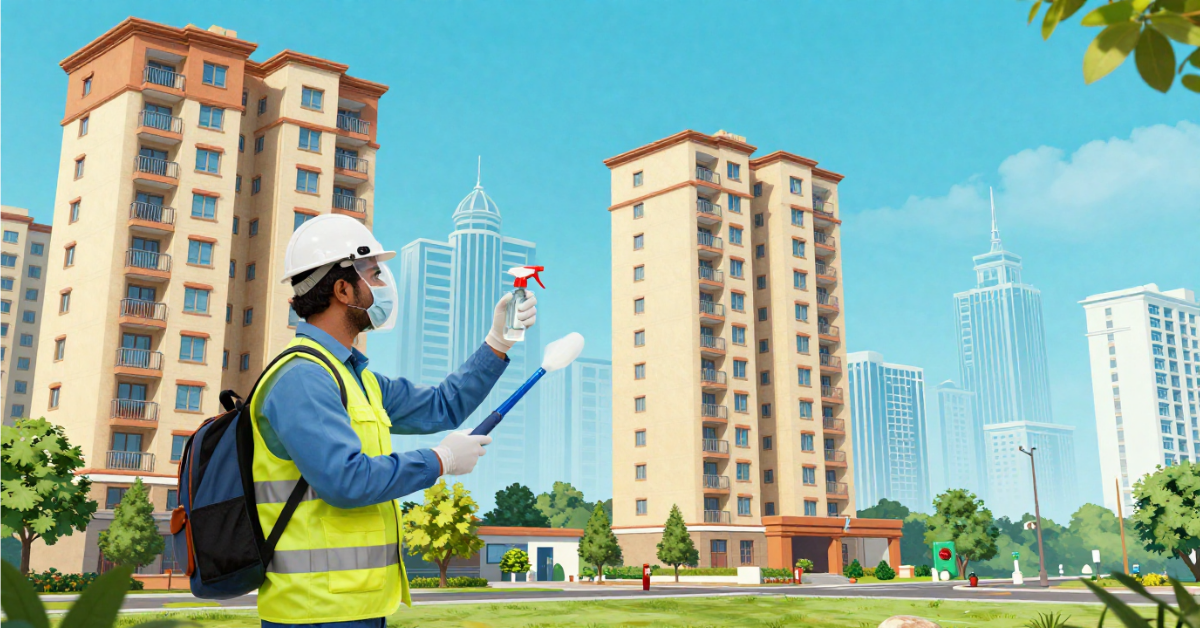
Introduction to Urban Pest Control in Smart Cities
The rapid urbanization sweeping across India has led to the emergence of numerous challenges, including a significant increase in pest-related issues. With more than 600 million people now living in urban centers, the necessity for effective urban pest control strategies becomes paramount. Urban ecosystems, characterized by high population density and significant infrastructural development, create ideal conditions for various pests, ranging from rodents to insects. This has escalated the demand for innovative pest control solutions that are not only effective but also sustainable.
The integration of urban pest control technologies within the framework of India's smart cities is proving to be essential. Smart cities aim to leverage technology to enhance the quality of life for residents, optimize resources, and promote environmental sustainability. Consequently, pest management strategies must evolve in tandem with these goals. By utilizing smart technologies, urban pest control can become more efficient, targeted, and responsive to the dynamic urban environment.
Emerging technologies—such as IoT (Internet of Things), machine learning, and data analytics—are revolutionizing the way pest control is approached in urban settings. For instance, sensors can monitor pest activity in real-time, allowing for targeted interventions rather than broad-spectrum treatments. This not only minimizes chemical usage but also reduces risks to public health and the environment. Additionally, mobile applications can facilitate immediate reporting and response mechanisms, ensuring that pest control measures are implemented swiftly and effectively.
As India continues to develop its smart cities, the integration of advanced pest control technologies is critical. The collaboration between urban planners, pest management professionals, and technology developers will be instrumental in creating long-term solutions that uphold both urban health and ecological balance. In addressing the pest control challenges posed by urbanization, these innovative technologies hold the key to enhancing urban living in a sustainable manner.
The Impact of Urbanization on Pests in India
Urbanization in India has significantly altered landscapes, creating conditions that are conducive to pest proliferation. As cities expand, they attract an increasing population, which also leads to a rise in waste production and environmental degradation. This change provides an ideal habitat for various pests, including rodents, cockroaches, and mosquitoes, which thrive in densely populated urban settings.
Statistics indicate a worrying trend; urban areas experience pest infestations at rates up to 30% higher compared to rural regions. For instance, over 80% of Indian cities report constant challenges with rodents, which have adapted well to urban environments, exploiting food sources and shelter provided by human infrastructure. Mosquito populations, responsible for serious diseases such as dengue and malaria, flourish in stagnant water sources often found in urban areas. With climate change exacerbating these issues, it is projected that pest populations will continue to rise if not adequately managed.
The relationship between urban infrastructure and pest infestations is particularly evident in slum areas where inadequate sanitation facilities and poor waste management are prevalent. These conditions create breeding grounds for pests, not only causing nuisances but also posing severe health risks to the urban population. Furthermore, increased residential and commercial developments often disturb ecosystems, leading to disrupted predator-prey relationships that can lead to a sudden surge in pest populations.
Moreover, urbanization tends to increase human-pest interactions as people encroach on once-undisturbed natural habitats. This interaction can escalate to public health crises that strain municipal resources and healthcare systems. Thus, addressing urban pest issues is not only crucial for maintaining aesthetics but also for ensuring public health and safety in India's rapidly urbanizing cities.
Smart Technologies Transforming Pest Management
In the rapidly evolving landscape of urban pest control, smart technologies have become pivotal for enhancing efficiency and effectiveness in managing pest infestations within India’s smart cities. The integration of the Internet of Things (IoT) into pest management systems is notably revolutionizing traditional practices. IoT devices deployed throughout urban areas collect real-time data on pest activities, environmental conditions, and population dynamics. This data allows pest control professionals to monitor infestations consistently, significantly reducing the reliance on reactive measures and promoting proactive pest management.
Artificial Intelligence (AI) algorithms analyze the vast amounts of data generated by IoT sensors, providing valuable insights into patterns and trends in pest behavior. This capability enables city planners and pest control experts to forecast potential outbreaks and implement targeted interventions. For instance, AI-driven models can predict which areas are at risk based on historical trends, weather patterns, and urban infrastructure, thus allowing for timely and effective responses.
Drones have also emerged as transformative tools in urban pest management. Equipped with advanced imaging technology, drones can survey large urban areas with ease, identifying infestations that may be undetectable from the ground. Their ability to access hard-to-reach locations plays a crucial role in inspections, ensuring comprehensive coverage for pest control services. Furthermore, some drones can even deliver treatments in targeted zones, minimizing chemical usage and reducing environmental impact.
Data analytics serves as the backbone for decision-making in smart pest control strategies. By analyzing data collected from various sources, including social media and historical records, pest control agencies can identify hotspots and allocate resources more effectively. As demonstrated in successful case studies across different Indian cities, embracing these smart technologies enhances urban pest management, making it more adaptive and responsive to the challenges posed by urbanization.
Sustainable Pest Control Solutions
A significant advancement in urban pest management is the growing adoption of sustainable pest control solutions. These eco-friendly practices not only target pest populations but also align with the principles of smart cities by minimizing environmental impact and promoting public health. One key approach to sustainable pest control is the implementation of organic pest control measures. These methods utilize naturally derived substances to repel or eliminate pests, thereby reducing the reliance on synthetic chemicals that can be harmful to both human health and the environment.
In addition to organic methods, the use of biopesticides is gaining traction in urban pest management strategies. Biopesticides are derived from natural materials such as plants, bacteria, and minerals. These products are effective in managing pest populations while being less toxic to non-target organisms, including humans and beneficial insects. This aligns well with the objectives of smart cities, which seek to create healthier living environments by integrating advanced pest control technologies with ecological sustainability.
Another vital aspect of sustainable pest control is habitat management. This strategy involves modifying the environment to discourage pests from establishing themselves. By altering environmental conditions such as moisture levels, food availability, and breeding sites, urban areas can naturally limit pest infestations. Such proactive measures not only aid in pest control but also contribute to the overall health of urban ecosystems.
Ultimately, the integration of these sustainable solutions reflects a shift toward more responsible urban planning. As Indian cities evolve into smart cities, embracing eco-friendly pest control measures will be essential for maintaining a balance between urban growth and environmental stewardship. This transition highlights the potential for innovative pest management strategies to enhance urban living while protecting the ecosystem.
Collaboration Between Stakeholders
Effective urban pest control technologies play a critical role in the management of public health and the maintenance of a clean urban environment, particularly in India's rapidly evolving smart cities. To achieve successful implementation of these technologies, collaboration is imperative among a range of stakeholders, including government agencies, municipal corporations, technology providers, and local communities.
Government agencies are essential in establishing regulatory frameworks that facilitate the integration of innovative pest control solutions into urban planning. They are responsible for drafting and enforcing policies that align with environmental protection and public health standards. Additionally, these agencies can allocate funding and resources to support the adoption of advanced pest management strategies, ensuring that cities are equipped to address pest-related challenges effectively.
Municipal corporations play a vital role in executing pest control initiatives at the local level. They are tasked with the on-ground implementation of pest management programs and must collaborate closely with technology providers to integrate smart solutions such as IoT (Internet of Things) based monitoring systems and data analytics into their operations. This collaboration aids in the timely identification of pest infestations and enables the deployment of targeted containment measures, minimizing the use of harmful chemicals.
Moreover, technology providers contribute significantly to this ecosystem. Their innovation in pest control technologies not only enhances efficiency but also promotes sustainable practices. By working alongside government entities and municipal corporations, these providers can tailor their solutions to meet specific urban challenges, fostering an environment that favors proactive pest management.
Lastly, local communities must be involved in the decision-making process to create awareness and encourage participation in pest control initiatives. Engaging residents in educational campaigns about the importance of pest management and involving them in monitoring efforts can lead to better outcomes. Ultimately, a cohesive approach that brings together these stakeholders is essential for effective urban pest control, aiding in the realization of smart cities where technology enhances quality of life.
Challenges and Limitations of Technology in Pest Control
As urban centers in India increasingly adopt innovative technologies for pest control, several challenges and limitations have emerged, presenting hurdles in their effective implementation. One of the primary concerns involves the high cost associated with advanced pest control technologies. The initial investment required for sophisticated equipment and ongoing operational expenses can often deter local municipalities, particularly in resource-constrained environments, from fully embracing modern solutions.
Additionally, the integration of these technologies necessitates a pool of skilled personnel qualified to operate and maintain the systems effectively. Unfortunately, there is often a lack of training programs tailored to equip workers with the necessary expertise in utilizing contemporary pest management tools, thereby limiting the adoption of new practices. Without proper training, the effectiveness of these innovative solutions could be compromised, undermining potential benefits.
Public resistance to change also poses a significant barrier in the widespread uptake of urban pest control technologies. Many residents may be wary of the unfamiliar protocols and systems in place, leading to skepticism about their safety and effectiveness. This resistance can hinder collaboration between technology providers and community members, which is vital for successful implementation and sustainable pest management strategies.
Moreover, regulatory hurdles present additional complications in the integration of pest control technologies. Local governments often face stringent regulations and bureaucratic processes that can delay the adoption of these innovations. Navigating the complex landscape of policies related to pest management can impede the swift deployment of effective solutions.
Facing these challenges requires concerted efforts from government authorities, technology developers, and community stakeholders to better understand the current limitations and develop strategies that address the concerns associated with adopting new pest control technologies.
The Future of Pest Control in Smart Cities
The evolution of pest control technologies within India's smart cities is poised for transformative advancements. As urban areas continue to expand and evolve, the challenges posed by pests necessitate a shift towards more technologically adept solutions. The future of pest management will likely integrate artificial intelligence (AI), the Internet of Things (IoT), and big data analytics, allowing for more precise, efficient, and proactive measures against pest infestations.
One pertinent trend is the use of smart traps embedded with IoT sensors. These traps can collect real-time data on pest populations and activity levels, empowering pest control professionals with actionable insights that facilitate timely interventions. Additionally, advancements in drone technology may enable aerial surveillance and localized pest management, reducing the dependency on chemical treatments and promoting environmentally friendly practices.
Emerging innovations also foresee the integration of machine learning algorithms that analyze patterns of pest behavior. By assessing historical and real-time data, these technologies will allow for predictive analysis, enabling cities to address potential pest issues before they escalate. Furthermore, research into biocontrol agents and eco-friendly solutions could lead to the development of targeted pest management strategies that minimize ecological disruption.
As we look towards the future, it is imperative for stakeholders, including urban planners, government authorities, and pest control professionals, to prioritize investments in these smart pest control technologies. The commitment to adopting innovative and sustainable practices will not only enhance the quality of life for urban residents but also ensure a healthier urban ecosystem. A collaborative effort in embracing cutting-edge pest control solutions will be crucial in making India’s smart cities thrive amidst the challenges posed by urban pests.
Address:
264/5, Kamal Soroni Road, Mirpur, Dhaka-1216
Contact
Your Quaries on pest control askings
pestexterminatorbd@gmail.com
+8801642008383 +8801988300003, 01723057746
© 2025. All rights reserved. to Urban Pest Control Pvt. Ltd. this site is powered by Our Own IT Team