
Vector-Borne Diseases & the Global Pest Control Crisis
2/2/20268 min read
Understanding Vector-Borne Diseases
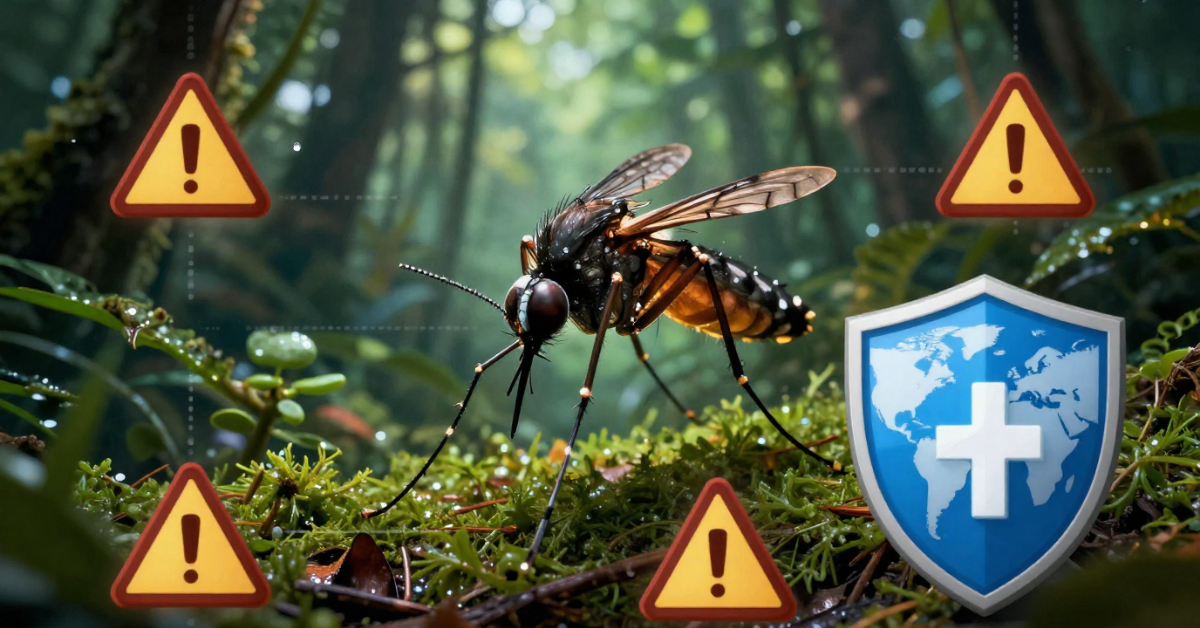
Vector-borne diseases are illnesses caused by pathogens and parasites that are transmitted to humans and other animals by vectors. The most common vectors include mosquitoes, ticks, fleas, and sandflies, each of which plays a crucial role in the lifecycle of the diseases they carry. These vectors are not merely passive carriers; they facilitate the transmission of various pathogens, thereby significantly impacting public health globally.
One of the most notorious vector-borne diseases is malaria, primarily spread by Anopheles mosquitoes. This disease affects millions of individuals worldwide, leading to severe illness and often fatal outcomes, particularly in sub-Saharan Africa. Similarly, dengue fever, transmitted by Aedes mosquitoes, has emerged as a major health concern, causing epidemics in tropical and subtropical regions. The Zika virus, which gained attention in recent years for its association with birth defects, is also transmitted by Aedes mosquitoes.
Ticks are responsible for diseases such as Lyme disease, which is prevalent in regions of North America and Europe. Lyme disease can lead to serious long-term health issues if not treated promptly. Fleas, though often associated with domestic pets, can transmit diseases like the plague and typhus, emphasizing the need for effective pest control strategies.
The implications of vector-borne diseases extend beyond individual health; they pose significant challenges to public health systems worldwide. Populations at greatest risk include children, the elderly, and individuals with compromised immune systems. Climate change, urbanization, and increased travel have also contributed to the spread of these diseases, making it essential for communities to implement robust measures to control vector populations and educate the public about prevention and treatment options.
The Rise of Vector-Borne Diseases
In recent years, we have witnessed a significant rise in the incidence of vector-borne diseases across the globe. These diseases, which are transmitted by vectors such as mosquitoes, ticks, and fleas, are influenced by various interlinked factors that contribute to their increasing prevalence. One notable factor is climate change; rising temperatures and changing rainfall patterns create favorable conditions for vectors to thrive, expanding their geographical range into areas previously considered inhospitable.
Urbanization also plays a pivotal role in the rise of vector-borne diseases. As cities expand, they often provide ideal breeding habitats for disease-carrying vectors. Poor sanitation, inadequate waste management, and infrastructure challenges in rapidly growing urban areas can exacerbate the risk of outbreaks. Moreover, increased human populations in densely populated areas lead to higher levels of interaction between humans and vectors, further enhancing transmission rates.
Globalization has intensified the spread of vector-borne diseases, allowing for faster movement of people and goods. This interconnectedness facilitates the introduction and spread of diseases in new regions, especially those with less robust public health measures. For instance, travelers may carry pathogens from endemic areas to non-endemic regions, leading to outbreaks that local health systems may struggle to contain.
Changes in land use, such as deforestation and agricultural expansion, significantly impact the transmission dynamics of vector-borne diseases. These activities disrupt local ecosystems, pushing wildlife closer to human habitats and increasing the likelihood of zoonotic disease transmission. As biodiversity declines, the natural checks on vector populations may lessen, leading to an increase in disease incidence.
Overall, the rise of vector-borne diseases is a multifaceted issue influenced by environmental, social, and economic factors, particularly affecting tropical and subtropical regions. Addressing these challenges requires a coordinated global response, integrating public health initiatives with environmental stewardship to mitigate the growing threat posed by these diseases.
The Importance of Pest Control in Managing Diseases
Pest control plays a vital role in mitigating the impact of vector-borne diseases, which are transmitted by organisms such as mosquitoes, ticks, and fleas. These pests are responsible for the spread of serious illnesses including malaria, dengue fever, and Lyme disease, which pose significant public health challenges globally. To effectively manage these threats, pest control strategies must be robust and multifaceted.
One of the most common methods used in pest control is the application of chemical pesticides. These chemicals can significantly reduce pest populations and subsequently lower the incidence of disease transmission. However, their use must be managed carefully to avoid the development of resistance among pest populations and to minimize potential harm to non-target species, including pollinators and other beneficial insects.
Another approach is biological control, which involves using natural predators or pathogens to suppress pest populations. This method can be particularly effective as it reduces reliance on chemicals, promoting a more eco-friendly solution to pest management. For example, introducing certain species of fish that feed on mosquito larvae can effectively control mosquito populations in water bodies, thereby reducing the risk of diseases transmitted by adult mosquitoes.
Integrated Pest Management (IPM) combines various control methods to create a sustainable approach to pest management. This strategy involves monitoring pest populations, using physical barriers, cultural practices, and selectively applying chemical controls when necessary. By focusing on prevention and understanding the life cycles of pests, IPM can lead to long-term reductions in pest populations and a corresponding decline in vector-borne disease cases.
In conclusion, the significance of effective pest control cannot be overstated. By employing diverse strategies such as chemical pesticides, biological control, and integrated pest management, we can significantly reduce the transmission of vector-borne diseases. As global challenges persist, the need for innovative pest control solutions remains imperative for protecting public health and enhancing community well-being.
Challenges in Pest Control
The landscape of pest control has evolved significantly in recent years, revealing a multitude of challenges that hinder efficient management of vector-borne diseases. One major hurdle is the development of pesticide resistance among pests. Many vectors, such as mosquitoes and ticks, have shown increasing resistance to commonly used insecticides, necessitating the need for ongoing research and development of new chemistries and control methods. This resistance creates a vicious cycle that prompts the overuse of existing pesticides, which in turn exacerbates the problem.
In addition to resistance, regulatory challenges further complicate pest control efforts. Governments worldwide impose stringent regulations on pesticide usage to protect public health and the environment. While these regulations are essential for safeguarding communities, they can also delay the approval of new pest control products, thereby limiting the available options for pest management. The administrative processes involved in obtaining permits and licenses for pesticide application can be daunting and resource-intensive, especially for smaller pest control operators.
Environmental sustainability concerns play a significant role in the current pest control crisis. The increasing awareness of the potential ecological impacts of pesticide use is pushing for integrated pest management (IPM) practices that emphasize ecological balance over chemical reliance. While such practices are beneficial, they require significant investment and commitment from pest control operators, which can be challenging amid budget constraints and economic factors.
Moreover, economic constraints hinder the implementation of effective pest control strategies. Many local governments and pest control companies struggle with limited funding, which restricts their ability to invest in innovative solutions or comprehensive pest management programs. As vector-borne diseases continue to pose threats to public health globally, addressing these diverse challenges in pest control becomes imperative for ensuring more effective and sustainable management solutions.
Global Case Studies
Exploring global case studies provides valuable insights into the diverse strategies utilized in the fight against vector-borne diseases. One notable example is the successful eradication of malaria transmission in the island of Zanzibar, Tanzania. Through a combination of widespread insecticide-treated net distribution and indoor residual spraying, the region reported a dramatic reduction in malaria cases, showcasing the effectiveness of integrated pest management approaches tailored to local needs.
Conversely, the experience in Vietnam highlights the complexities of vector control efforts. Despite substantial investments in larviciding and community engagement campaigns, the resurgence of dengue fever rates illustrated that not all methods yield consistent results. The fluctuating epidemic patterns of dengue posed challenges for health authorities, prompting a reassessment of integrated strategies involving environmental management and public education in vector control practices.
In Brazil, the implementation of the Aedes aegypti Control Program, aimed at curtailing the spread of Zika and dengue viruses, utilized a multifaceted approach. This program involved community participation in eliminating breeding sites and emphasized the significance of surveillance systems to monitor mosquito populations. By empowering local communities, Brazil's initiative fostered a sense of ownership and responsibility that proved crucial in effectively managing vector populations and reducing disease transmission.
These case studies from Zanzibar, Vietnam, and Brazil underline the necessity for adaptable control methods that consider socio-economic factors, environmental contexts, and public involvement in order to effectively combat vector-borne diseases. Each example illustrates the importance of continuous evaluation and the need for dynamic strategies that address both vector populations and resultant public health challenges comprehensively.
Emerging Technologies in Pest Control
The future of pest control and disease management hinges on innovative technologies that aim to tackle the complex challenges posed by vectors of diseases. Genetic engineering, particularly, has emerged as a promising approach. By manipulating the genes of vector organisms such as mosquitoes, researchers have made significant strides in reducing populations or altering their ability to transmit pathogens. This could lead to a more sustainable and targeted method of controlling vector-borne diseases, significantly relieving the burden of diseases like malaria and dengue fever.
The Role of Drones
In recent years, the utilization of drones has revolutionized the landscape of pest surveillance and monitoring. Equipped with advanced sensors and imaging technologies, drones can efficiently map and identify problem areas, enabling pest control professionals to take timely action. They facilitate precise spraying of pesticides, thus minimizing contact with non-target organisms and reducing chemical runoff. This precision agriculture not only improves the efficacy of pest control interventions but also supports the sustainability goals of various agricultural and public health programs.
Biological Control Methods
Innovative biological control methods are gaining traction as viable solutions for pest management. These approaches, which involve the use of natural predators or pathogens to curtail pest populations, can significantly decrease the reliance on chemical pesticides. Enhancing biodiversity through the promotion of beneficial insects and using biopesticides derived from natural sources is integral in developing sustainable pest control strategies. These methods are particularly advantageous as they lower environmental risks while effectively managing vector populations.
The Importance of Research and Funding
To effectively combat vector-borne diseases, increased investment in research and development is critical. Funding directed towards the exploration of these emerging technologies will facilitate the discovery and implementation of sustainable pest control methods. Collaborative efforts among governments, academic institutions, and private entities can foster innovation and provide the necessary resources to expedite advancements in this field. By prioritizing research, we can not only enhance our current pest management strategies but also lay the groundwork for future breakthroughs that can drastically reduce the threat posed by vector-borne diseases globally.
Conclusion: A Call for Action
The challenges posed by vector-borne diseases are multifaceted and require our collective attention. Throughout this discussion, we have examined how these diseases threaten global health, food security, and economic stability. The emergence and re-emergence of pathogens such as malaria, dengue fever, and Zika virus demonstrate the critical need for improved pest control strategies. With increasing globalization and climate change, vectors and the diseases they carry are spreading to areas previously unaffected, further complicating public health endeavors.
A coordinated global response is essential to effectively address this ongoing crisis. Countries must collaborate to share information, research, and resources—creating a unified front against the rise of these deadly diseases. Public health initiatives focused on integrated pest management practices, education, and community engagement should be prioritized. Additionally, investments in biotechnology and disease surveillance can lead to innovative solutions that improve vector control outcomes.
Moreover, advocacy plays a pivotal role in shaping policies that can enhance our collective response to vector-borne diseases. Individuals can contribute by raising awareness within their communities about the importance of preventive measures, such as proper sanitation and habitat management. Support for local and national health campaigns can also bolster efforts to control vector populations and reduce transmission rates.
In conclusion, the urgency of this crisis calls for immediate action from all sectors of society. By fostering a culture of awareness, collaboration, and responsibility, we can work together to mitigate the impact of vector-borne diseases. Each individual’s contribution is significant in the broader fight for public health, and through our combined efforts, we can create a healthier and safer world.
Address:
264/5, Kamal Soroni Road, Mirpur, Dhaka-1216
Contact
Your Quaries on pest control askings
pestexterminatorbd@gmail.com
+8801642008383 +8801988300003, 01723057746
© 2025. All rights reserved. to Urban Pest Control Pvt. Ltd. this site is powered by Our Own IT Team