
Vector Control Technologies Preventing the Next Global Pandemic
1/31/20267 min read
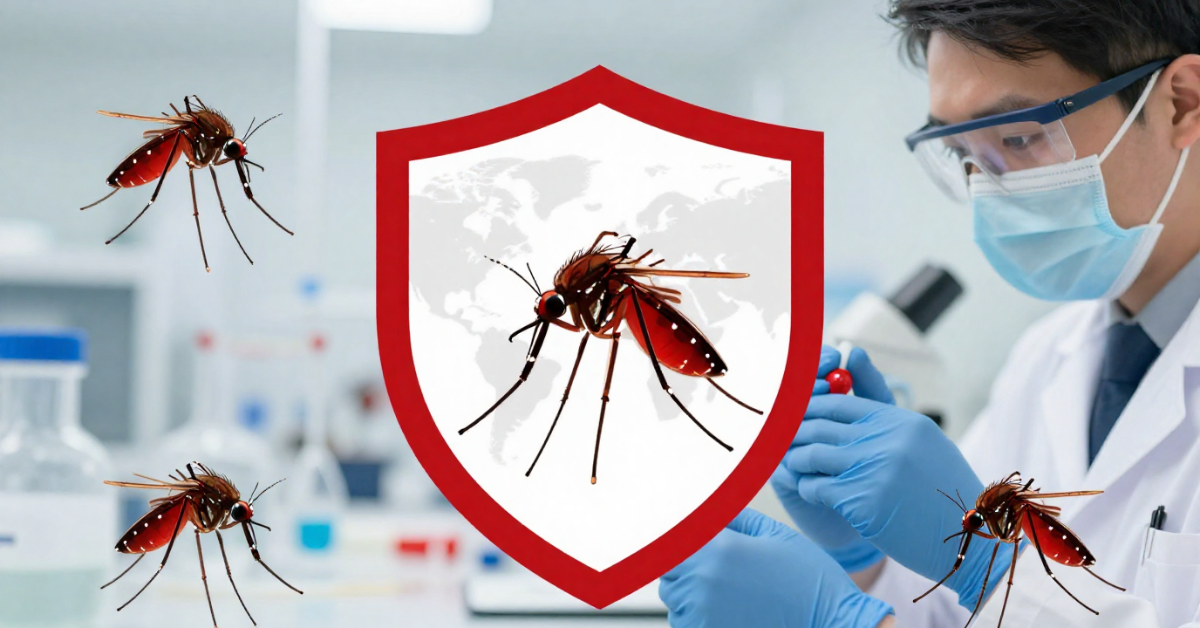
Introduction to Vector-Borne Pandemics
Vector-borne diseases represent a significant public health challenge globally, as they are transmitted by vectors such as mosquitoes, ticks, and fleas. These vectors act as intermediaries, facilitating the spread of pathogens responsible for debilitating illnesses, including malaria, dengue fever, and Zika virus. Understanding the dynamics of vector-borne pandemics is crucial, as these diseases can cross geographic boundaries and result in widespread outbreaks, affecting millions.
The historical context of vector-borne pandemics provides valuable insights into their impact. Notable pandemics include the Yellow Fever epidemic in the late 19th century and the emergence of West Nile Virus in North America at the close of the 20th century. Such events underline the capability of vectors to adapt to changing environments and evolve, leading to heightened transmission risks. Consequently, the global community witnesses a recurring cycle where these diseases emerge, spread, and recede, often fueled by factors such as climate change, urbanization, and increased human mobility.
Recent years have further solidified the understanding that anticipatory measures are essential. The rise in vector-borne diseases underscores the necessity for innovative vector control technologies, which aim to reduce the populations of these carriers effectively. By employing methods such as gene editing, insecticides, and biologic control agents, public health initiatives can mitigate outbreaks' severity and likelihood. The need for preparedness against the next pandemic is urgent; as globalization and ecological shifts continue to facilitate the movement and adaptation of disease vectors, implementing forward-thinking strategies is paramount in safeguarding global health.
Understanding Vector Control Technologies
Vector control technologies encompass a range of strategies aimed at managing and mitigating populations of vector organisms that transmit diseases. These technologies are vital for safeguarding public health, particularly in combatting diseases like malaria, dengue fever, and Zika virus. Vector control can be categorized into two primary methods: traditional and innovative. Traditional methods include insecticides and environmental management strategies. Insecticides have been widely employed for decades to reduce populations of disease-carrying vectors, and they can be administered through spraying or treated surfaces. Environmental management involves modifying or eliminating breeding sites by improving sanitation, proper waste disposal, and water management, thereby disrupting the life cycle of these vectors.
On the other hand, innovative methods have emerged with advances in technology and genetics. Genetic modification techniques, such as gene drive technology, allow scientists to introduce changes in vector populations that impede their ability to reproduce or transmit pathogens. This approach has shown promise in targeting specific vector species without impacting non-target organisms. Additionally, biocontrol agents utilize natural predators or pathogens to reduce vector populations instead of relying solely on chemical interventions. For instance, the introduction of larvae-eating fish in stagnant water bodies serves to control mosquito populations biologically.
Over the years, vector control technologies have evolved significantly, driven by the need for more effective and sustainable solutions to manage vector populations. With the increasing incidence of vector-borne diseases and the potential for global pandemics, the role of these technologies in public health has become even more critical. Understanding and employing both traditional and innovative vector control methods are essential for effectively averting future health crises.
Current Challenges in Vector Control
Vector control remains a critical component in preventing the spread of vector-borne diseases, yet several challenges hinder effective implementation. One of the predominant issues is the rising incidence of pesticide resistance among vectors, particularly mosquitoes. The overuse and misuse of chemical insecticides have led to resistant populations evolving, complicating control strategies and necessitating the development of new effective interventions.
Moreover, climate change is transforming environments in ways that favor the proliferation of disease vectors. Warmer temperatures and altered rainfall patterns can expand the habitats suitable for vectors, thereby increasing the risk of disease outbreaks in previously unaffected regions. This dynamic necessitates adaptive management strategies that can respond to the changing distribution and behavior of vector populations.
Urbanization also poses significant challenges to vector control efforts. With increasing human populations in urban settings, the densely packed living conditions can facilitate both the transmission of vector-borne diseases and the proliferation of breeding sites. Poor infrastructure and waste management systems in urban areas often exacerbate these challenges, making it difficult to implement effective control measures.
In addition to ecological and environmental factors, socio-economic conditions play a critical role in the success of vector control initiatives. Limited financial resources may hinder the adoption of advanced vector control technologies or comprehensive health education programs, particularly in low-income regions. Furthermore, public acceptance of different intervention strategies, such as genetically modified organisms or community-wide insecticide spraying, is crucial for the effectiveness of these measures. Addressing these socio-economic factors is necessary to enhance community engagement and compliance with vector control strategies.
Innovative Vector Control Technologies on the Horizon
Vector control technologies have greatly evolved in recent years, especially in response to the threats posed by mosquito-borne diseases. Among the most promising innovations is CRISPR gene-editing technology, which allows for precise modifications in the genetic code of various organisms. Researchers are utilizing CRISPR to develop genetically modified mosquitoes that are less capable of transmitting diseases such as malaria and dengue fever. This approach not only aims to reduce the population of disease-carrying vectors but also to ensure that such modifications can be confined to a specific area, minimizing ecological disruption.
Another innovative technology gaining traction is the use of Wolbachia-infected mosquitoes. Wolbachia is a naturally occurring bacterium that, when introduced into mosquito populations, can reduce the transmission of viruses. Field trials in several countries have shown promising results, with significant reductions in dengue fever cases reported where Wolbachia-infected mosquitoes were released. This biological control method offers a sustainable and environmentally friendly strategy for vector population management, potentially leading to lower incidence rates of vector-borne diseases.
Additionally, the employment of autonomous drones for monitoring and dispersing vector control measures is revolutionizing the field. These drones are capable of surveying large areas to identify breeding sites and disperse larvicides effectively. By incorporating data analytics and advanced imaging technologies, drones can efficiently map out hotspots of mosquito activity, allowing public health officials to respond quickly. Pilot programs utilizing drones have demonstrated increased efficiency and precision in vector control operations, highlighting their potential as a game-changing tool in the fight against pandemics.
Overall, the advancements in vector control technologies such as CRISPR gene editing, Wolbachia-infected mosquitoes, and autonomous drones present new opportunities to proactively address vector-borne diseases, thus contributing to global health security initiatives.
The Role of Governments and NGOs in Vector Control
In the face of increasing global health challenges posed by vector-borne diseases, the role of governments and non-governmental organizations (NGOs) is critical in implementing effective vector control strategies. Collaboration among these entities enhances the development and execution of policies aimed at reducing vector populations and mitigating disease transmission.
Governments play a pivotal role in establishing policy frameworks for vector control. They are responsible for enacting legislation that promotes public health, biodiversity conservation, and environmental sustainability. By investing in research and development, governments can facilitate the innovation of new technologies and methods for vector population management. Additionally, they can create regulatory environments that support the safe use of pesticides and other control measures.
NGOs contribute significantly by filling gaps that governments may not address effectively. These organizations often have the flexibility to respond quickly to emerging public health threats and can mobilize resources on the ground. They can engage local communities, ensuring that vector control measures are culturally appropriate and widely accepted. For instance, public awareness campaigns led by local NGOs can educate communities on preventive measures, such as eliminating standing water or using bed nets, which are vital for malaria control.
Partnerships between governments, NGOs, and international organizations such as the World Health Organization (WHO) are essential for the success of vector control initiatives. These collaborations can lead to significant funding opportunities and resource sharing, enhancing the overall impact of vector control efforts. Successful examples include the roll-out of the Global Fund to Fight AIDS, Tuberculosis, and Malaria, which demonstrates how combined efforts can yield tangible results in reducing disease transmission.
In conclusion, the collaboration between governments, NGOs, and international bodies is indispensable for formulating effective policy frameworks and securing funding for vector control. By working together, these entities can implement comprehensive strategies that address the growing threat of vector-borne diseases and contribute to global public health.
Public Awareness and Engagement Strategies
The role of public awareness and engagement in vector control is pivotal for the successful implementation of prevention strategies aimed at averting global pandemics. Education plays a crucial role in equipping communities with the necessary knowledge to understand the importance of vector control technologies and their application in preventing disease transmission. Effective strategies for fostering public engagement include utilizing social media platforms, initiating school programs, and organizing community workshops.
Social media campaigns can serve as an effective medium to disseminate information about vector control, as they can reach vast audiences rapidly. Platforms such as Facebook, Twitter, and Instagram can be employed to share educational content, infographics, and videos that explain vector-borne diseases and the measures that can be taken to mitigate risks. Engaging content tailored to specific demographics can inform and motivate individuals to take proactive steps in their communities.
School programs represent another vital strategy for engaging young minds in vector control education. By incorporating lessons on vectors, disease transmission, and prevention into school curricula, children can be informed from an early age about the health implications of vector-borne illnesses. This awareness not only educates children but also empowers them to influence their families and peers, creating a multi-generational effect.
Community workshops serve as a platform for direct interaction and discussion within neighborhoods. These workshops can offer practical demonstrations on vector control measures, including the use of repellents and habitat modification. They can also facilitate open dialogues between health experts and community members, allowing for the exchange of ideas and experiences related to vector management.
In summary, enhancing public awareness through targeted educational strategies is essential for promoting effective vector control. By engaging the community and utilizing various platforms for dissemination, it is possible to cultivate a well-informed public that actively contributes to preventing the spread of vector-borne diseases.
Future Directions: Preparing for the Next Global Pandemic
As the world reflects on the lessons learned from previous pandemics, it becomes imperative to consider future directions in vector control technologies. With global travel and trade continuing to rise, the risk posed by vector-borne diseases cannot be underestimated. Therefore, a comprehensive strategy that combines advanced vector control methods with an emphasis on research, innovation, and international cooperation is essential in mitigating future pandemic threats.
One of the critical areas for advancement lies in enhancing surveillance systems for vectors. The integration of technology, such as unmanned aerial vehicles (UAVs) and mobile applications, can help track and monitor vector populations more effectively. By developing real-time data analytics platforms, researchers and public health officials can better predict and respond to potential outbreaks of diseases transmitted by vectors.
Moreover, investing in research to understand vector behaviors and genetics can lead to the development of more effective control methods. This includes exploring biotechnological advances, such as the use of genetically modified organisms to reduce vector populations or impede their ability to transmit pathogens. Collaborative endeavors among governments, universities, and the private sector will be critical in transforming these scientific advancements into actionable public health strategies.
Additionally, increased funding and prioritization of vector control measures within national and international health budgets are necessary. Stakeholders must recognize that prevention, through proactive vector management, is far more cost-effective than responding to outbreaks once they have occurred. Offering incentives for local communities and organizations to engage in vector control initiatives will foster a culture of preparedness.
In conclusion, preparing for the next global pandemic requires a multifaceted approach. Continued investment in vector control technologies, robust collaboration among stakeholders, and proactive measures will significantly enhance our readiness to combat future threats. By fostering innovation and prioritizing research, we can effectively reduce the impact of vector-borne diseases and safeguard global health.
Address:
264/5, Kamal Soroni Road, Mirpur, Dhaka-1216
Contact
Your Quaries on pest control askings
pestexterminatorbd@gmail.com
+8801642008383 +8801988300003, 01723057746
© 2025. All rights reserved. to Urban Pest Control Pvt. Ltd. this site is powered by Our Own IT Team