
Vermicompost Benefits: The Secret Behind 2X Faster Plant Growth
2/16/20267 min read
What is Vermicompost?
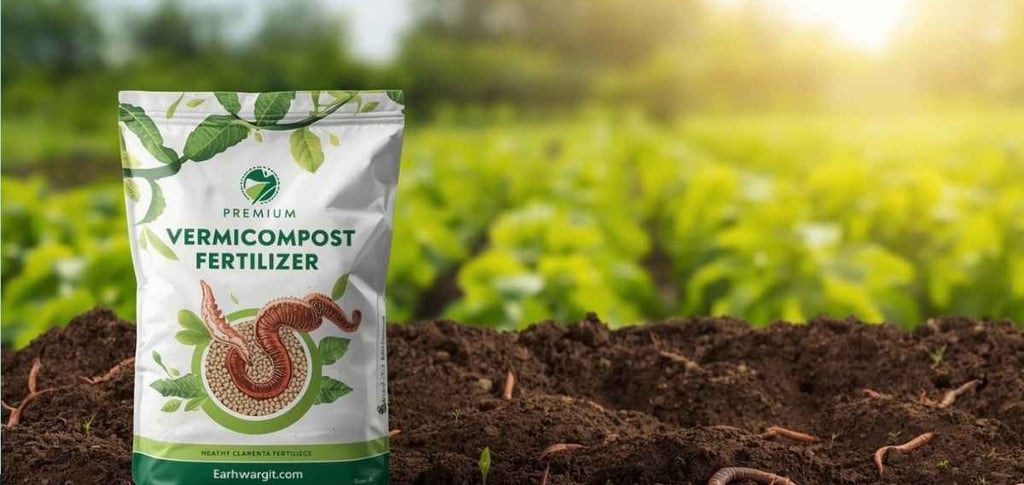
Vermicompost is a nutrient-rich organic fertilizer produced through the natural decomposition of organic waste facilitated by specific species of earthworms, primarily those belonging to the Eisenia genus. The process, known as vermicomposting, transforms kitchen scraps, garden residues, and other organic materials into a potent soil amendment that enhances soil quality and fertility. As the earthworms consume the organic matter, they break it down into smaller particles and excrete it in a more chemically rich form, resulting in vermicast, which is the final product.
The production of vermicompost involves assembling organic waste in a controlled environment where earthworms can thrive. The process typically starts with selecting a suitable location, followed by preparing bedding materials such as shredded paper, coconut coir, or dry leaves to create a hospitable habitat for the worms. Once the bedding is in place, organic waste is layered on top, and the vermicomposting system is monitored for moisture and temperature to ensure optimal conditions for the worms.
Vermicomposting is not only an environmentally sustainable practice but also a significant agricultural innovation, especially in Bangladesh, where agricultural practices frequently face challenges such as soil degradation and declining fertility. The use of vermicompost serves to improve soil structure, enhance moisture retention, and increase microbial activity, which are all crucial for sustainable farming. Additionally, vermicomposting contributes to waste reduction by recycling organic materials that would otherwise end up in landfills, thereby promoting a circular economy. By embracing vermicomposting, farmers can achieve improved crop yields while also contributing positively to the environment.
Nutrient Composition of Vermicompost
Vermicompost is widely recognized for its rich nutrient composition, making it a valuable organic fertilizer for agricultural and horticultural applications. The primary nutrients it provides include nitrogen (N), phosphorus (P), and potassium (K)—collectively referred to as NPK. The levels of these nutrients in vermicompost tend to be balanced and can vary based on the types of organic materials used in the composting process. Typically, vermicompost contains approximately 1-3% nitrogen, 0.5-2% phosphorus, and 1-3% potassium, which contribute to healthy plant development.
In addition to NPK, vermicompost is also rich in essential micronutrients such as calcium, magnesium, sulfur, and iron, as well as trace elements like manganese, copper, and zinc. These micronutrients play crucial roles in plant metabolism and stimulate biochemical processes necessary for growth. The availability of these nutrients in vermicompost is often higher than in conventional fertilizers, as they exist in forms that are more easily absorbed by plants.
When compared to traditional synthetic fertilizers, vermicompost stands out due to its holistic approach to nutrient supply. Conventional fertilizers typically provide a narrow range of nutrients in concentrated forms but can lead to soil degradation over time. In contrast, vermicompost enhances soil structure, promotes microbial health, and increases soil fertility. This organic fertilizer not only provides nutrition to plants but also strengthens the soil ecosystem, resulting in long-term benefits for both crop yield and soil sustainability.
The Role of Earthworms in Soil Biology
Earthworms play a pivotal role in maintaining soil health and promoting fertility, establishing themselves as essential components of the ecosystem. Their activities contribute substantially to soil aeration, ensuring that air, water, and nutrients penetrate deeper soil layers. As earthworms burrow through the soil, they create channels that facilitate this movement, thus enhancing root growth and overall plant health.
Furthermore, earthworms are instrumental in the mineral absorption process. They consume organic matter, breaking it down and transforming it into a more accessible form for plant uptake. This transformation not only enriches the soil with essential nutrients but also aids in the solubilization of minerals, making them bioavailable to plants. The digestive process of earthworms results in the production of vermicompost, a nutrient-rich organic fertilizer that significantly improves soil structure and fertility.
Another significant aspect of earthworms is their symbiotic relationship with soil microbes. As they process organic waste, they provide favorable conditions for beneficial bacteria and fungi to thrive. This collaboration enhances nutrient cycling, where nutrients are made available through the decomposition of organic materials. In this manner, earthworms aid in accelerating the natural processes that recycle organic matter into nutritious soil components.
The combined impact of these functions underscores the importance of earthworms in sustainable agriculture. By promoting soil aeration, enabling mineral absorption, and enhancing nutrient cycling, earthworms contribute to a healthier soil ecosystem. Ultimately, the role of these organisms exemplifies the importance of vermicomposting as a sustainable agricultural practice that benefits soil health and productivity.
Impact of Vermicompost on Soil Structure and Water Retention
Vermicomposting is a process that utilizes earthworms to decompose organic waste, transforming it into nutrient-rich vermicompost. This organic amendment plays a significant role in enhancing soil structure and improving water retention capabilities, particularly in the context of Bangladesh, where diverse climatic conditions impact agricultural productivity.
Research indicates that the application of vermicompost has profound effects on soil texture and porosity. The addition of vermicompost not only enriches the soil with essential nutrients but also encourages the formation of stable soil aggregates. These aggregates improve soil aeration and provide enhanced pathways for water infiltration. Such changes ultimately lead to a reduction in soil compaction, facilitating better root growth and nutrient uptake by plants.
In terms of water retention, vermicompost significantly increases the soil’s ability to hold moisture. This is particularly beneficial in regions like Bangladesh, which periodically experience droughts. The organic matter present in vermicompost enhances the soil's moisture-holding capacity, reducing the need for frequent irrigation and ensuring crops receive the necessary water for optimal growth. During dry spells, the improved soil structure minimizes water runoff and maximizes water availability within the root zone, thereby sustaining plant health.
Scientific findings support these advantages; studies conducted across various regions demonstrate noticeable differences in both water retention and soil structure following the incorporation of vermicompost. Furthermore, the improved moisture retention contributes to soil biodiversity, as beneficial microorganisms thrive in nutrient-rich, well-structured soils. Thus, vermicompost emerges not only as a sustainable amendment for enhancing soil health but also as a strategic solution for addressing the challenges posed by Bangladesh’s variable climatic conditions.
Crop Yield Comparison Data
In recent years, numerous studies have evaluated the effectiveness of vermicompost in enhancing crop yields compared to conventional fertilizers. Data from a research conducted in rural Bangladesh revealed that utilizing vermicompost significantly improved the growth rates and yields of staple crops such as rice, wheat, and vegetables. For instance, the study highlighted an average yield increase of 22% in rice production when incorporating vermicompost into the soil compared to those treated with synthetic fertilizers. This notable enhancement is attributed not only to the nutrient release profile of vermicompost but also its ability to enrich the soil structure, promoting better water retention and aeration.
Further, a comparative analysis involving tomato crops showcased similarly promising results. Fields treated with vermicompost yielded approximately 30% more tomatoes than those receiving conventional synthetic inputs. This disparity underscores the ability of vermicompost to provide a balanced source of nutrients and beneficial microorganisms, which aid in plant health and resistance to disease.
Moreover, several research papers emphasize the long-term benefits of leveraging vermicompost as a soil amendment. For example, when assessing the performance of various vegetable crops including cucumbers and peppers, it was found that plants nourished with vermicompost maintained a consistent yield increase of 15-25% over multiple growing seasons. Additionally, the studies pointed out that vermicompost not only enhanced crop yields but also improved overall soil fertility and biodiversity, leading to a more sustainable agricultural practice.
In conclusion, the integration of vermicompost into farming practices represents a viable strategy for increasing crop yields while promoting environmentally sustainable agriculture. The documented increases in production, coupled with enhanced soil health, highlight the compelling advantages of this organic amendment in Bangladesh's agricultural landscape.
Use Cases of Vermicompost in the Bangladeshi Climate
In Bangladesh, the application of vermicompost has gained significant traction among farmers, resulting in various successful case studies that demonstrate its efficacy as a sustainable organic fertilizer. One prominent example is the rice farmers in the Bogura district, where implementers of vermicompost have reported increased yield output by up to 20% per hectare. The natural nutrients present in vermicompost contribute to soil fertility, enhancing the growth and resilience of rice crops against local pests and diseases.
Another illustrative case can be found in the cultivation of vegetables, particularly in the northern regions where farmers have transitioned from chemical fertilizers to vermicompost. As a result, these farmers have witnessed enhanced flavor and nutritional quality in crops such as tomatoes and spinach. They have also improved their economic condition by reducing input costs associated with chemical fertilizers, thus bolstering local food security while promoting sustainable practices.
Additionally, the unique climatic challenges faced in the coastal areas of Bangladesh, such as saline soil and unpredictable rainfall patterns, create significant hurdles for agricultural sustainability. Farmers in these regions have adopted vermicompost to mitigate these challenges effectively. The organic matter in vermicompost helps improve soil structure, retaining moisture and reducing salinity effects, which aids in the growth of crops such as mustard and local pulses.
These case studies underscore the versatility and adaptability of vermicompost in various agricultural contexts throughout Bangladesh. They illustrate not just the ecological advantages but also the economic benefits that come from this organic revolution. Farmers who embrace vermicomposting benefit from reduced dependency on chemical fertilizers and an increase in crop yield, fostering both financial stability and environmental stewardship.
FAQs about Vermicompost
Vermicomposting has gained significant attention in Bangladesh as an effective organic fertilizer, yet many questions surround its practical use. Here are some common inquiries and their answers, aimed at demystifying the application of vermicompost.
What is the recommended application rate for vermicompost? Application rates may vary based on the crop and soil type, but a general guideline suggests applying 2 to 5 tons of vermicompost per hectare annually. For vegetable crops, integrating around 1 kg of vermicompost per plant can significantly enhance growth and yield.
How should vermicompost be stored? To maximize its efficacy, vermicompost should be kept in a dry, cool, and aerated environment. A moisture level of around 30% is ideal. If stored correctly, it can retain its nutritional properties for several months, making it convenient for farmers and gardeners alike.
Is vermicompost safe for food crops? Yes, vermicompost is completely safe for food crops. It is produced through the natural decomposition process facilitated by earthworms, thus ensuring no harmful pathogens or chemicals are present. This makes it a preferable choice for organic farming.
Can vermicompost be used in combination with other fertilizers? Certainly, vermicompost can complement other organic or inorganic fertilizers. However, it is advisable to manage the ratios carefully, as excessive application of chemical fertilizers may negate the benefits of vermicompost.
How quickly will results from vermicompost be seen? The positive effects of using vermicompost may be observed within a few weeks, especially in terms of plant health and soil fertility. Long-term benefits, including enhanced soil structure and microbial activity, become increasingly apparent over time.
Address:
264/5, Kamal Soroni Road, Mirpur, Dhaka-1216
Contact
Your Quaries on pest control askings
pestexterminatorbd@gmail.com
+8801642008383 +8801988300003, 01723057746
© 2025. All rights reserved. to Urban Pest Control Pvt. Ltd. this site is powered by Our Own IT Team