
Virus vs Bacteria: Why Antibiotics Don’t Work on Viral Infections
2/20/20267 min read
Introduction to Microbiology: Viruses and Bacteria
Microbiology is a vital field of science that examines organisms that are too small to be seen with the naked eye, such as viruses and bacteria. Understanding the differences between these two types of microorganisms is essential for students, healthcare professionals, and the general public, especially as misconceptions about them can lead to inappropriate treatments and health policies.
Viruses and bacteria are distinct entities that differ in several fundamental ways. Bacteria are single-celled organisms that have a prokaryotic cell structure, meaning they lack a nucleus and other membrane-bound organelles. They possess the machinery for replication and metabolism, allowing them to reproduce independently. Bacteria can be beneficial, forming part of the human microbiome, influencing digestion, and providing protection against harmful pathogens, or harmful, causing diseases such as tuberculosis and strep throat.
In contrast, viruses are much smaller and are acellular, meaning they cannot function independently. They consist of genetic material, either DNA or RNA, surrounded by a protein coat. Viruses do not possess the necessary cellular machinery to replicate on their own and must invade host cells to reproduce, leading to various infections ranging from the common cold to more severe illnesses like HIV/AIDS.
Understanding the virus vs bacteria difference is crucial because it informs medical treatment and public health strategies. Vaccines, antibiotics, and antiviral medications target these microorganisms differently. For instance, antibiotics can effectively treat bacterial infections but are ineffective against viral ones, underscoring the importance of accurate diagnosis and knowledge about these pathogens.
Structural Differences: How Viruses and Bacteria are Built
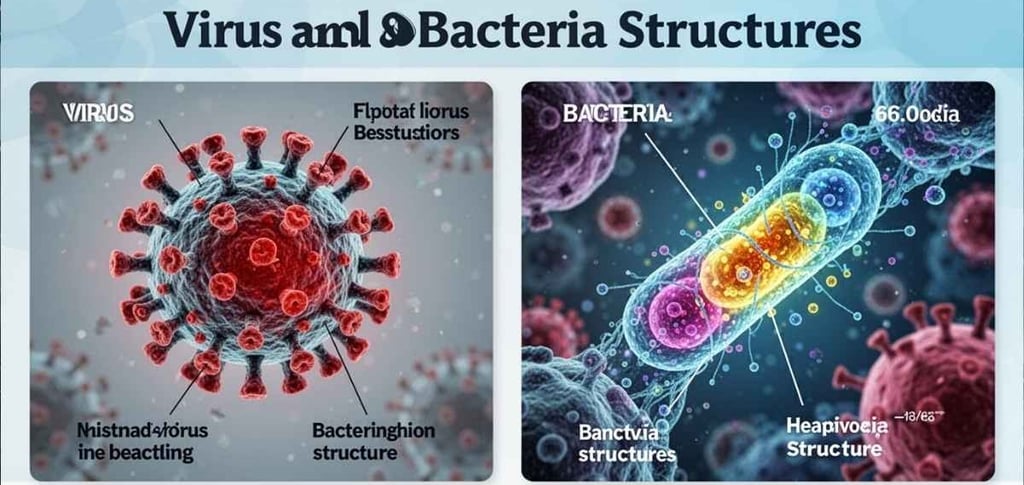
Understanding the structural differences between viruses and bacteria is fundamental to grasping their role in biological systems. Bacteria are classified as prokaryotic cells, meaning they possess a complete cellular structure. They are characterized by their cell wall, cell membrane, cytoplasm, and often share genetic material in the form of a single circular DNA molecule, alongside plasmids which are smaller, independent DNA fragments. The complexity of bacteria allows them to perform essential life functions independently, as they contain the necessary machinery to synthesize proteins and convert nutrients into energy.
In contrast, viruses present a starkly simpler structure. They are acellular entities and do not possess the cellular machinery required for independent life. A typical virus comprises a protein coat, known as a capsid, which encases its genetic material—either DNA or RNA. This genetic material can be linear or circular and may be single-stranded or double-stranded. Viruses lack a cellular structure and cannot perform metabolic functions necessary for life; they are inherently dependent on a host cell for replication and proliferation.
To facilitate comprehension of these differences, visual aids such as diagrams or tables can be highly beneficial. They can illustrate the size disparity between bacteria and viruses, along with their respective structural components. For instance, while bacteria can be several micrometers in length, viruses are typically measured in nanometers. This size difference, coupled with divergent structural characteristics, underscores the distinction between living organisms and acellular structures. In summary, while bacteria exhibit complexity and autonomy as living entities, viruses remain fundamentally simplistic and require host organisms to carry out their life cycles.
Reproduction: How Viruses and Bacteria Multiply
Understanding how viruses and bacteria reproduce is crucial for differentiating between these two types of microorganisms. Bacteria primarily reproduce asexually through a method known as binary fission. In this process, a single bacterial cell divides into two identical daughter cells. Initially, the bacterial DNA replicates, resulting in two copies of the genetic material. Once the DNA has been duplicated, the cell elongates, and a septum forms in the middle of the cell, eventually splitting it into two separate cells. This method allows bacteria to multiply rapidly under favorable conditions, leading to exponential growth.
On the other hand, the reproduction of viruses follows a different approach, as they are not capable of independent reproduction. Viruses require host cells to replicate, making them unique in the biological world. The viral replication process begins when a virus attaches to a susceptible host cell. The virus injects its genetic material into the host, hijacking the cell's machinery to produce copies of itself. Depending on the type of virus, this may involve either incorporating its DNA into the host's genetic material or using the host's ribosomes to translate viral RNA into proteins. Once sufficient copies of the virus have been made, new viral particles assemble and often burst out of the host cell, leading to cell death. This release infects neighboring cells, thus continuing the cycle of infection.
In essence, while bacteria reproduce efficiently and independently through binary fission, viruses rely on a host's cellular machinery to replicate, showcasing the fundamental differences in their reproductive strategies. These contrasting methods highlight the complexities of microbial life and the implications they have for human health, particularly in understanding infections and the development of treatments.
Treatment Methods: Antibiotics vs. Antivirals
Treatment for infections varies significantly depending on whether the causative agent is a bacterium or a virus. Antibiotics are the primary treatment for bacterial infections; they work by targeting specific bacterial functions or structures, ultimately leading to the death of the bacteria or inhibiting their growth. Common antibiotics include penicillin, amoxicillin, and ciprofloxacin, which are effective against various bacterial pathogens. It is crucial to complete the prescribed course of antibiotics to prevent resistance, where bacteria adapt and become less susceptible to the medication.
However, antibiotics are ineffective against viral infections. This ineffectiveness often leads to the misconception that antibiotics can be used universally to treat infections. Viral infections, such as the flu, common cold, or COVID-19, are caused by pathogens that do not possess the cellular structures that antibiotics target. Consequently, treating a viral infection with antibiotics does not only fail to alleviate the condition but can also contribute to antibiotic resistance within the bacterial population.
For viral infections, antiviral medications are the appropriate treatment. These drugs work by inhibiting the virus's ability to replicate within the host cells, thereby reducing the severity and duration of the illness. Antivirals, such as oseltamivir (Tamiflu) for influenza and acyclovir for herpes related infections, are specifically designed to target viral mechanisms, making them effective against certain viral agents.
In conclusion, understanding the differences in treatment methods for bacterial and viral infections is crucial for effective healthcare. Antibiotics are essential in managing bacterial infections, whereas antiviral treatments are necessary for combating viral illnesses. Awareness of these distinctions not only aids in proper treatment but also contributes to overall public health by helping to reduce the risk of antibiotic resistance.
The Antibiotic Resistance Crisis: A Growing Concern
The global issue of antibiotic resistance has emerged as a significant public health challenge that affects individuals, healthcare systems, and economies worldwide. Antibiotics, which are designed to combat bacterial infections, are becoming increasingly ineffective due to the overuse and misuse of these critical medications. As a result, infections that were once easily treatable are becoming life-threatening, leading to higher medical costs, prolonged hospital stays, and increased mortality rates.
One of the primary contributors to antibiotic resistance is the inappropriate prescribing of antibiotics, often for viral infections, where they provide no therapeutic benefit. This misuse not only fails to treat the illness effectively but also promotes the development of antibiotic-resistant bacteria. Misunderstanding the differences between bacteria and viruses can lead patients to seek antibiotics for viral infections such as the common cold or influenza, which exacerbates the crisis.
Additionally, the agricultural sector plays a significant role in this dilemma. The routine use of antibiotics in livestock, aimed at promoting growth and preventing disease, enables the spread of resistant bacteria that can make their way into the food chain. When humans ingest such bacteria, it can result in infections that are difficult to treat, necessitating the need for stricter regulations and a shift towards more sustainable farming practices.
To combat this growing concern, public health initiatives advocate for increased education about the proper use of antibiotics, highlighting the importance of obtaining an accurate diagnosis and understanding when antibiotics are genuinely necessary. By fostering awareness and implementing sound practices, the medical community and the public can work together to mitigate the rise of antibiotic resistance and preserve the efficacy of these vital medications.
Prevention Tips: Staying Healthy Against Viruses and Bacteria
Maintaining health and preventing infections caused by viruses and bacteria is crucial in everyday life. One of the most effective strategies for protection is vaccination. Vaccines are designed to prime the immune system against specific pathogens, offering long-lasting immunity. Many viruses, such as influenza and COVID-19, have effective vaccines available, which can significantly reduce the risk of infection and serious illness.
In addition to vaccination, practicing proper hygiene is essential in minimizing the risk of infections. Regular hand washing is one of the simplest yet most effective ways to eliminate harmful pathogens from the skin. Using soap and water, it is important to wash hands thoroughly for at least 20 seconds, especially after using the restroom or before preparing food. When soap and water are unavailable, hand sanitizers containing at least 60% alcohol can be an effective alternative.
Another critical aspect of staying healthy involves avoiding close contact with sick individuals. Bacteria and viruses are often transmitted through respiratory droplets when an infected person coughs or sneezes. Keeping a respectful distance, especially in crowded places during flu season, can help reduce exposure rates. Additionally, promoting a healthy lifestyle that includes a balanced diet, regular physical activity, and adequate sleep strengthens the immune system, making the body more resilient against infections.
Moreover, avoiding touching the face, particularly the eyes, nose, and mouth, can prevent the introduction of pathogens into the body. These areas are gateways for viruses and bacteria, and minimizing touching can significantly lower the risk of contracting infections.
By incorporating these preventive measures into daily life, individuals can effectively reduce their risk of infections caused by viruses and bacteria, fostering a healthier community overall. Implementing these practices requires consistency and awareness, but the outcome can lead to improved health and well-being.
FAQs: Common Questions About Viruses and Bacteria
Understanding the distinctions between viruses and bacteria can be complex, leading to numerous frequently asked questions. One common query involves the basic differences between viruses and bacteria. While both are microscopic entities that can cause diseases, they differ significantly in structure and function. Bacteria are single-celled organisms that can live independently and reproduce on their own, whereas viruses are much smaller and need to invade a host cell to replicate.
Another prevalent misconception is regarding how viral infections occur. A viral infection is initiated when a virus attaches itself to a host cell's surface, penetrating it and utilizing the cell's machinery to replicate itself. Unlike bacteria, which can often be treated with antibiotics, viral infections typically require different management strategies, such as antiviral medications or vaccination, to prevent their occurrence.
Additionally, people often wonder how the immune system responds to these pathogens. The immune response to bacteria involves white blood cells that can engulf and destroy bacteria, while the response to viruses includes the production of antibodies specifically designed to target viral particles, highlighting the need for an adept understanding of microbial threats. This emphasizes the importance of distinguishing between bacteria and viruses in medical sciences.
Moreover, many individuals seek clarification on whether all bacteria are harmful. In reality, not all bacteria are detrimental; in fact, numerous bacteria are beneficial and play crucial roles in processes like digestion and nutrient absorption. This distinction underscores the complexity of microbiology and reinforces the necessity for accurate knowledge regarding different microbial entities.
By addressing these frequently asked questions and clarifying misconceptions, we contribute to a greater understanding of viruses and bacteria. Recognizing these foundational concepts is essential in promoting public knowledge about health and disease management in an increasingly microbial world.
Address:
264/5, Kamal Soroni Road, Mirpur, Dhaka-1216
Contact
Your Quaries on pest control askings
pestexterminatorbd@gmail.com
+8801642008383 +8801988300003, 01723057746
© 2025. All rights reserved. to Urban Pest Control Pvt. Ltd. this site is powered by Our Own IT Team