
What Is a Termite Treatment Certificate? Importance, Validity & Property Value Impact
2/14/20267 min read
What is a Termite Treatment Certificate?
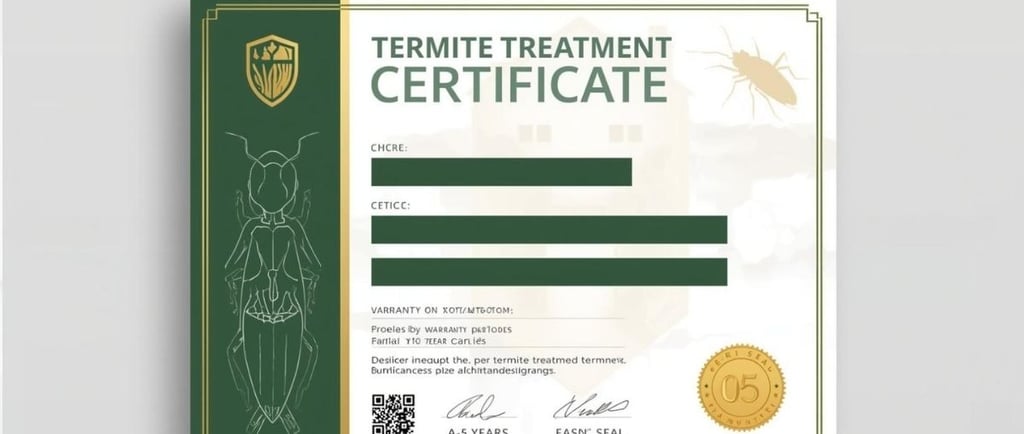
A termite treatment certificate is a vital document issued by pest control professionals following the completion of a termite treatment procedure. This certificate serves an essential role within the pest control industry, acting as official confirmation that the assessment and treatment of termites have been conducted according to relevant standards and regulations. It is particularly important for homeowners, as it provides evidence of proactive measures taken to address termite infestations, thereby safeguarding the structural integrity of their properties.
Typically, a termite treatment certificate includes detailed information about the type of treatment performed, the species of termites that were identified and treated, and the date of the inspection and treatment. Furthermore, it will invariably contain the name and contact details of the pest control company that executed the treatment, supporting accountability and transparency. In some cases, the certificate may also list any recommendations for ongoing monitoring or property maintenance to prevent future infestations.
The significance of a termite treatment certificate extends beyond mere documentation. For prospective buyers, this certificate serves as a crucial tool in evaluating the condition of a property prior to purchase. It reassures buyers that the property has received the necessary attention and care to manage termite-related issues. Additionally, a certificate can sometimes aid in negotiations during real estate transactions, providing leverage for buyers concerned about potential termite damage prior to finalizing a purchase.
In summary, understanding the components and significance of a termite treatment certificate is essential for both current homeowners and prospective buyers. It not only affirms the successful management of termite infestations but also contributes to informed decision-making in the real estate market.
Difference Between Pre-construction & Post-construction Certificates
Termite treatment certificates represent an essential aspect of property management, particularly in regions prone to termite infestations. Understanding the differences between pre-construction and post-construction termite treatment certificates is crucial for property developers and homeowners alike.
Pre-construction certificates are issued before a structure is built. This type of certificate ensures that preventative measures against termites are in place during the early stages of construction. Treatments typically involve soil treatments with chemical barriers, which are designed to deter termite activities before the foundation is laid. These certificates are advantageous for new constructions, providing long-term protection against potential infestations and enhancing the property's viability in the market.
On the other hand, post-construction certificates are issued after a property has been completed and occupied. This certification signifies that termite inspections and potential treatments have been conducted on an existing structure. Methods employed for post-construction treatments may include targeted chemical treatments, baiting systems, or physical barriers, depending on the extent of the infestation and the property’s design. This approach is particularly beneficial for homeowners who may wish to safeguard their investment or rectify existing problems.
The choice between pre-construction and post-construction termite treatment certificates ultimately depends on the property stage and the specific needs for protection. Each serves a unique purpose in ensuring the longevity and integrity of the structure. Both certifications provide essential assurance to buyers and inspectors regarding the property’s defense against termites, enhancing peace of mind and potential resale value.
Warranty Period (1–5 Years)
Termite treatment certificates typically feature a warranty period that spans from one to five years, which plays a crucial role in protecting homeowners against potential termite infestations. During this warranty period, the treatment provider guarantees the effectiveness of their termite control measures, often covering any re-treatment needed if termites are detected during this timeframe. However, it is essential to understand what this warranty entails, as it may differ between companies and specific products used.
The warranty often stipulates certain conditions that homeowners must meet to maintain its validity. For instance, it may require routine inspections or specific maintenance actions to ensure continued protection against termites. Homeowners should remain vigilant in adhering to these requirements to avoid any complications should termite issues arise during the warranty period. Furthermore, real estate agents play a significant role when navigating property transactions, as they must verify the validity of any existing termite treatment warranties to assure potential buyers of the home's condition.
As the warranty approaches its expiration, homeowners should consider their options for renewal. Some treatment providers may offer extended warranties, while others may require the homeowner to undergo a new assessment or treatment before a renewal can be issued. Understanding these nuances can significantly affect a homeowner's investment in their property and help maintain its value over time.
Additionally, once the warranty expires, the responsibility shifts entirely to the homeowner. It becomes imperative to conduct periodic inspections and treatment as needed. Awareness of the timeline for the warranty’s expiration and renewal options are vital for homeowners seeking long-term protection against termites and for maintaining the integrity of their property.
Importance During Property Buying/Selling
In the real estate market, a termite treatment certificate holds significant importance for both buyers and sellers. This document verifies that a property has undergone proper pest control measures targeting termites, which are notorious for causing structural damage. For buyers, having a termite treatment certificate can instill confidence in the property’s condition, ensuring that they are making a sound investment. It acts as a safeguard against unforeseen expenses related to termite damage post-purchase, thus reinforcing the value of the investment.
Moreover, during negotiations, a termite treatment certificate can be a pivotal factor. If a seller possesses a current and valid certificate, this can aid in reinforcing the property's market value, as it reflects a proactive approach in maintaining the property’s integrity. Conversely, if a property lacks this crucial documentation, buyers may request a price reduction or demand immediate pest control measures before proceeding with the transaction. This dynamic emphasizes how critical this certificate can be in influencing the terms of the sale.
Legal implications also factor into the importance of termite treatment certificates. Many areas mandate these certificates as part of the real estate transaction process, and failing to present one can lead to legal complications or liability for undisclosed pest issues. Buyers should always request to see this certificate before finalizing a purchase to ensure there are no underlying pest problems that may not have been disclosed clearly. In this context, termite treatment certificates not only reflect the current pest control status of a property but also serve as a protective measure for buyers against potential future liabilities and repair costs.
In the realm of real estate transactions, acquiring a termite treatment certificate is often a non-negotiable requirement. Lenders and banks implement stringent guidelines to safeguard their investments, which considerably influence property assessments and financing approvals. A termite treatment certificate serves as a confirmation that the property has undergone a comprehensive pest inspection and, if necessary, treatment. This certification is crucial for lenders as it demonstrates that the property is structurally sound and free from any potential termite infestations, which could compromise its integrity and overall value.
When potential buyers seek financing, banks typically request proof of a termite treatment certificate as part of the loan approval process. This documentation provides assurance that the buyer is making a sound investment, minimizing the lender's risk. Without such certification, banks may be reluctant to approve loans or might impose additional conditions, delaying the purchasing process.
Furthermore, the presence of a termite treatment certificate can also enhance a property's value and aid in negotiations. Properties with a valid certificate tend to attract more interest from buyers and real estate agents alike, as it reduces the perceived risk associated with termite damage. Conversely, properties lacking this important certification may be viewed with skepticism, potentially leading to price reductions or even failed transactions.
In some regions, real estate regulations mandate that a termite treatment certificate be presented during the sale of a property. These guidelines promote transparency and protect consumers from unforeseen liabilities associated with termite infestations. In essence, understanding the requirements for termite treatment certificates in the context of bank loans and real estate is essential for buyers, sellers, and real estate professionals, as it plays a pivotal role in ensuring a smooth transaction process.
How Professional Companies Issue QR-Verified Certificates
In the realm of termite treatment services, ensuring the authenticity of service delivery is critical. Professional pest control companies are increasingly adopting QR-verified certificates as a means of providing a reliable and efficient solution to this issue. QR verification involves the issuance of unique QR codes that are linked to a database containing detailed information about the treatment performed. This technology not only enhances convenience for customers but also strengthens the credibility of the pest control services rendered.
The process begins when a pest control technician completes a termite treatment. Following the completion of the service, the company generates a certificate that includes specific details such as the type of treatment applied, the date of service, and the technician's credentials. Upon generation, a unique QR code is embedded within the certificate. When scanned, this code directs users to a secure online platform where they can access the complete service record, including any warranties or follow-up services provided.
One of the primary benefits of QR verification is its ability to combat fraudulent practices. Customers can easily ascertain the legitimacy of the treatment they received by scanning the QR code, thereby minimizing the risk of falling victim to unprofessional pest control services. Additionally, this method streamlines communication between the company and the client, allowing for quick access to treatment histories and service feedback.
Reputable companies in Dhaka, such as XYZ Pest Control and ABC Termite Solutions, have adopted QR verification as part of their service offerings. These firms emphasize transparency and professionalism, utilizing this technology to assure clients of their commitment to high-quality service. As the pest control industry evolves, the use of QR-verified certificates is becoming a standard practice, reinforcing trust and reliability in the services provided.
Why Certification Increases Property Resale Value and Common Mistakes Homeowners Make
Acquiring a termite treatment certificate can significantly enhance the resale value of a property. Potential buyers are increasingly discerning, often preferring homes that come with proven pest control measures, including termite treatments. With termite infestations leading to costly repairs and structural damage, buyers exhibit a marked inclination towards properties with a certification, ensuring that the property is safeguarded against pest-related deterioration. A property with a current termite treatment certificate can create a competitive edge in the housing market, signaling to buyers that the seller is proactive about maintaining the home and has taken steps to protect their investment.
Market analyses reveal a trend where certified properties are perceived as more trustworthy, boosting buyer confidence which translates into higher offers. Furthermore, a termite treatment certificate can potentially expedite the sales process as it alleviates buyer concerns regarding possible infestations or damage. Thus, this document not only assures buyers of the property's maintained condition but also reflects the seller's commitment to responsible property management.
Despite its evident benefits, homeowners often encounter pitfalls regarding termite treatment certifications. One common mistake is neglecting to renew these certificates at the scheduled intervals, which can lead to gaps in pest control oversight, diminishing the property's appeal. Additionally, miscommunication with service providers often results in misunderstandings about the extent and efficacy of treatments performed. Homeowners may also mistakenly assume that their home remains termite-free indefinitely after treatment, overlooking the necessity of routine inspections and ongoing preventive measures. Recognizing and addressing these frequent missteps can ensure that property owners maintain and maximize their termite treatment certifications effectively.
Address:
264/5, Kamal Soroni Road, Mirpur, Dhaka-1216
Contact
Your Quaries on pest control askings
pestexterminatorbd@gmail.com
+8801642008383 +8801988300003, 01723057746
© 2025. All rights reserved. to Urban Pest Control Pvt. Ltd. this site is powered by Our Own IT Team