
What is DNA? Structure, Function & Discovery – Simple Guide for Students
2/20/20268 min read
What is DNA?
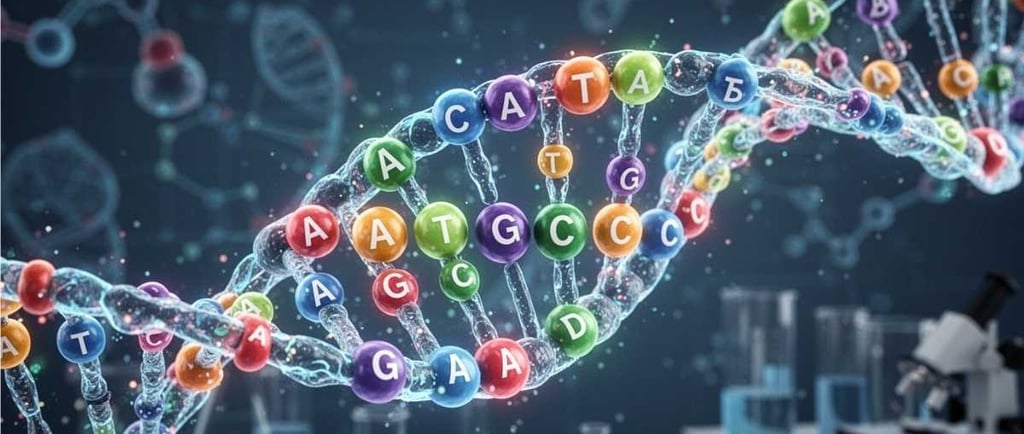
Deoxyribonucleic acid, commonly known as DNA, is the fundamental hereditary material found in all living organisms. Its primary role is to store and transmit the genetic instructions necessary for the growth, development, reproduction, and functioning of life. The structure of DNA is often described as a double helix, resembling a twisted ladder, where the rungs are composed of pairs of nitrogenous bases. These bases include adenine (A), thymine (T), cytosine (C), and guanine (G). Each sequence of these bases forms a unique genetic code that dictates the biological characteristics of an organism.
The composition of DNA consists of two long strands of nucleotides, which are the building blocks of the molecule. Each nucleotide comprises a phosphate group, a sugar molecule, and one of the four nitrogenous bases. The sugar in DNA is deoxyribose, which distinguishes it from RNA (ribonucleic acid) that contains ribose. The specific pairing of the bases is critical for the accurate replication and repair of DNA, resulting in genetic fidelity across generations.
As the hereditary material, DNA plays a pivotal role in heredity by passing genetic information from parents to offspring. The genes, which are segments of DNA, code for proteins that carry out various functions in the body, ultimately influencing physical traits and potentials for certain diseases. The study of DNA has profound implications in various fields, including medicine, genetics, and biotechnology, enabling advancements in understanding heredity, evolution, and the genetic basis of diseases.
The Structure of DNA: Exploring the Double Helix
The double helix structure of DNA is a remarkable feature that plays a crucial role in genetics. DNA, or deoxyribonucleic acid, consists of two long strands of nucleotides that twist around each other, forming a helical shape. This structure was first elucidated by James Watson and Francis Crick in 1953, and it fundamentally changed our understanding of heredity and biological information transfer.
Each strand of DNA contains a sugar-phosphate backbone, which is composed of alternating sugar (deoxyribose) and phosphate groups. The strands are held together by nitrogenous base pairs: adenine (A) pairs with thymine (T), while cytosine (C) pairs with guanine (G). These base pairs form the “rungs” of the helical ladder. The specific pairing of these bases is essential, as it enables accurate replication and the transmission of genetic information.
The twisting nature of the double helix serves multiple functions. Firstly, it allows the compact packaging of DNA within the confines of a cell. In eukaryotic organisms, DNA is wrapped around histone proteins, further coiling to fit inside the cell nucleus. Secondly, the spiral configuration aids in the stability of the molecule, protecting it from external damage. Moreover, it facilitates the precise unwinding of the strands during DNA replication and transcription, ensuring that the genetic code can be appropriately accessed and copied.
Illustrations of the double helix typically depict its major and minor grooves, which play vital roles in protein binding and gene regulation. Understanding the intricate structure of DNA is pivotal for further exploration into its numerous functions in biological systems and the underlying principles of genetics.
Nucleotides: The Building Blocks of DNA
Nucleotides serve as the fundamental units that constitute deoxyribonucleic acid (DNA), and their intricate arrangement is crucial for the genetic blueprint of organisms. Each nucleotide comprises three essential components: a deoxyribose sugar, a phosphate group, and a nitrogenous base. The combination of these components not only forms the building blocks of DNA but also plays a significant role in encoding genetic information.
There are four primary types of nitrogenous bases found in DNA: adenine (A), thymine (T), cytosine (C), and guanine (G). These bases are classified into two categories based on their structure: purines and pyrimidines. Adenine and guanine are the purines, characterized by a two-ring structure, whereas cytosine and thymine belong to the pyrimidines, which possess a single-ring structure. The unique pairing of these nitrogenous bases—adenine with thymine and cytosine with guanine—further establishes the double helix structure of DNA.
The arrangement of nucleotides in a DNA sequence is critical for its function, as it dictates the synthesis of proteins and the regulation of cellular activities. The sequence of the nitrogenous bases encodes the genetic instructions necessary for the development, functioning, and reproduction of living organisms. This language of nucleotides is essential for various biological processes, including replication and transcription, where genetic information is copied and converted into functional products such as proteins.
Moreover, the variation in nucleotide sequences among different organisms results in genetic diversity, a fundamental aspect of evolution. This diversity not only manifests in physical traits but also in the functionalities of biological systems. An understanding of nucleotides and their roles is pivotal for advancements in genetic research, biotechnology, and medicine.
Base Pairing: The Key to Genetic Information
Base pairing is a fundamental aspect of the DNA structure that underlies its role in genetics. In the DNA molecule, there are four primary nitrogenous bases: adenine (A), thymine (T), cytosine (C), and guanine (G). These bases pair specifically: adenine pairs with thymine, and cytosine pairs with guanine. This specificity is critical for the integrity of the genetic code and ensures that the information contained within DNA can be accurately replicated and transmitted during cell division.
The base pairing occurs through hydrogen bonds, where adenine forms two hydrogen bonds with thymine, and cytosine forms three hydrogen bonds with guanine. This complementary nature of the base pairs not only helps in the formation of the double helix structure of DNA but also contributes significantly to the stability of the DNA molecule. The precise nature of these pairings prevents any errors during replication, as each base can be predicted and matched with its complementary partner.
Moreover, the significance of base pairing extends beyond mere structural integrity. During processes such as DNA replication and transcription, the accurate pairing of bases ensures that the genetic information is faithfully copied. In replication, each strand of DNA serves as a template, with nucleotides being added according to the rules of base pairing, which guarantees that the resulting DNA molecules are identical to the original. Errors in this process can lead to mutations, which may have profound implications for an organism's development and function.
In essence, the principle of base pairing plays an indispensable role in the maintenance and propagation of genetic information. Understanding this mechanism not only provides insights into fundamental biological processes but also highlights the importance of DNA in genetics and heredity.
DNA's Role in Heredity
Deoxyribonucleic acid, commonly known as DNA, plays a fundamental role in heredity by serving as the genetic blueprint that dictates the characteristics of living organisms. DNA is organized into structures called chromosomes, which are located in the cell nucleus, with humans typically having 46 chromosomes arranged in 23 pairs. Each chromosome contains numerous genes, sequences of DNA that encode the instructions for building proteins and influencing various traits.
Genes can exist in different forms known as alleles. Alleles arise through mutations or variations in the DNA sequence. These variations can result in different traits, such as eye color, height, or susceptibility to certain diseases. When offspring are conceived, they inherit one allele from each parent, resulting in a combination that determines their specific traits. This process of genetic inheritance forms the foundation of heredity, allowing traits to be passed down from generation to generation.
The principles surrounding inheritance can be illustrated through Gregor Mendel's work with pea plants, where he identified dominant and recessive alleles. This provided the framework for understanding how certain traits can become expressed in an offspring while remaining hidden in others. For example, if a child inherits a dominant allele for brown eyes and a recessive allele for blue eyes, the child will typically exhibit brown eyes due to the dominance of the brown allele.
Furthermore, the interactions between genes and environmental factors also play a significant role in shaping an individual's traits. The study of these complex relationships forms the basis of genetics and offers deeper insights into heredity beyond mere inheritance patterns. Understanding DNA's role in heredity not only enhances our knowledge of biological diversity but also highlights the importance of genetics in fields ranging from medicine to agriculture.
The History of DNA Discovery
The journey to understanding DNA began in the 19th century, with Swiss physician Friedrich Miescher first isolating nuclein from pus cells in 1869. This early discovery marked the first step in the identification of DNA, yet its significance remained largely unrecognized at that time. Miescher described nuclein as a substance that carried rich phosphorus content and was localized within the cell nucleus, laying groundwork for future explorations.
In the 20th century, the field woke from its slumber with the emergence of key figures who would shape our understanding of genetic material. One of the most significant contributions came from Rosalind Franklin. Through her work with X-ray crystallography in the early 1950s, she produced critical images of DNA, most notably Photo 51, which revealed a helical structure. Despite her pivotal role, her contributions weren't fully acknowledged until later findings unfolded.
The culmination of this work was seen in 1953, when James Watson and Francis Crick, building on Franklin's research along with data from Miescher and others, published their groundbreaking paper detailing the double helix structure of DNA. Their model suggested that the structure of DNA was fundamental to its function in genetic inheritance. This discovery not only transformed the field of genetics but also paved the way for advancements in molecular biology, biotechnology, and medicine.
The collaborative science behind these discoveries highlights the importance of collective effort in unraveling the complexities of DNA. This foundational knowledge led to further research, enhancing our grasp of genetic codes, replication processes, and their implications in heredity, disease, and evolution. As we understand DNA today, we owe much to the persistence and ingenuity of these early scientists, whose insights continue to influence genetics and its applications profoundly.
Importance of DNA in Modern Genetics
Deoxyribonucleic acid (DNA) plays a pivotal role in the realm of modern genetics. It serves as the blueprint for living organisms, dictating the synthesis of proteins essential for cellular functions and the expression of genetic traits. Advances in genetic study and technology have emphasized its importance in various fields, including medicine, forensic science, and biotechnology.
In medicine, DNA analysis has transformed the approach to disease diagnosis and treatment. The identification of genetic variants associated with diseases enables healthcare professionals to develop personalized treatment plans, improving patient outcomes. For instance, precision medicine tailors therapies to individual genetic profiles, enhancing effectiveness and minimizing adverse effects. Additionally, DNA sequencing has facilitated the discovery of genetic disorders, allowing for earlier interventions and better management strategies.
Forensic science has also witnessed significant advancements due to DNA technology. The ability to analyze and match DNA samples has revolutionized criminal investigations and exoneration efforts. From crime scene analysis to paternity testing, DNA profiling provides a high level of accuracy in identifying individuals, making it an invaluable tool in the judicial system.
Furthermore, biotechnology has expanded the utility of DNA in various applications, such as genetic engineering and synthetic biology. Techniques like CRISPR-Cas9 have enabled researchers to edit genes with unprecedented precision, paving the way for advancements in agriculture, medicine, and environmental science. This ability not only enhances our understanding of genetic functions but also offers solutions to pressing global challenges, such as food security and disease eradication.
In conclusion, the significance of DNA in modern genetics cannot be overstated. Its applications in medicine, forensic science, and biotechnology underline its importance in advancing scientific knowledge and improving human health. The continued exploration and understanding of DNA will likely yield further innovations, driving us toward a future where genetic information is integral to various aspects of life.
FAQs about DNA
As the building block of genetics, DNA often raises many questions. One common query is, "Who discovered DNA?" The discovery of DNA can be credited to multiple scientists. However, the pivotal moment came in 1953 when James Watson and Francis Crick, building on the work of Rosalind Franklin and Maurice Wilkins, elucidated the double helix structure of DNA. This discovery was monumental in genetics, providing a framework for understanding how genetic information is stored and passed down through generations.
Another frequently asked question is, "What is DNA made of?" DNA, or deoxyribonucleic acid, is a complex molecule composed of long chains of nucleotides. Each nucleotide consists of three components: a phosphate group, a deoxyribose sugar, and a nitrogenous base. There are four types of nitrogenous bases in DNA—adenine (A), thymine (T), cytosine (C), and guanine (G)—which pair in specific ways (A with T and C with G) to form the rungs of the double helix structure. The sequence of these bases encodes the genetic information essential for the development and functioning of all living organisms.
A third question often posed is, "What is the difference between DNA and RNA?" While both DNA (deoxyribonucleic acid) and RNA (ribonucleic acid) are nucleic acids that play critical roles in genetics, they differ in several key aspects. DNA is double-stranded, while RNA is typically single-stranded. Additionally, DNA contains the sugar deoxyribose, whereas RNA has ribose. Furthermore, the base thymine found in DNA is replaced by uracil in RNA. Despite these differences, both molecules are essential for life's processes, serving as templates for protein synthesis and carrying genetic information.
Address:
264/5, Kamal Soroni Road, Mirpur, Dhaka-1216
Contact
Your Quaries on pest control askings
pestexterminatorbd@gmail.com
+8801642008383 +8801988300003, 01723057746
© 2025. All rights reserved. to Urban Pest Control Pvt. Ltd. this site is powered by Our Own IT Team