
What is the Difference Between Virus and Bacteria? Complete Comparison for Students
2/20/20267 min read
Introduction to Microbiology Basics
Microbiology is a pivotal branch of science that delves into the study of microorganisms, which encompass a diverse array of entities including bacteria, viruses, fungi, protozoa, and algae. This field plays a crucial role in enhancing our understanding of the micro-world that significantly impacts human health, environmental processes, and industrial applications. By investigating these microscopic organisms, microbiologists aim to uncover their characteristics, behaviors, interactions, and the roles they play in various ecosystems.
This article focuses specifically on two fundamental categories of microorganisms: viruses and bacteria. Despite both being microscopic and often causing diseases, these entities differ vastly in their structure, reproduction mechanisms, and the implications they hold for health and medicine. Understanding the distinctions between viruses and bacteria is vital in various contexts, particularly in the realms of disease prevention, treatment options, and public health strategies.
Recognizing the characteristics of viruses and bacteria helps healthcare professionals identify appropriate treatment methods, as these microorganisms invoke different immune responses and require varied therapeutic approaches. For instance, bacterial infections can often be treated with antibiotics, while viral infections demand antiviral medications or supportive care since antibiotics are ineffective against viruses. This critical knowledge equips individuals and healthcare providers to better manage health risks associated with these pathogens.
In summary, the study of microbiology, especially the comparison between viruses and bacteria, is essential for comprehending the complexities of infectious diseases and enhancing strategies for prevention and treatment. As we move further into this exploration, we will examine the unique traits and impacts of these microorganisms on human health.
Definitions: What are Viruses and Bacteria?
Viruses and bacteria are two distinct types of microorganisms, each with unique characteristics and behaviors. Understanding these differences is essential for comprehending their roles in health and disease.
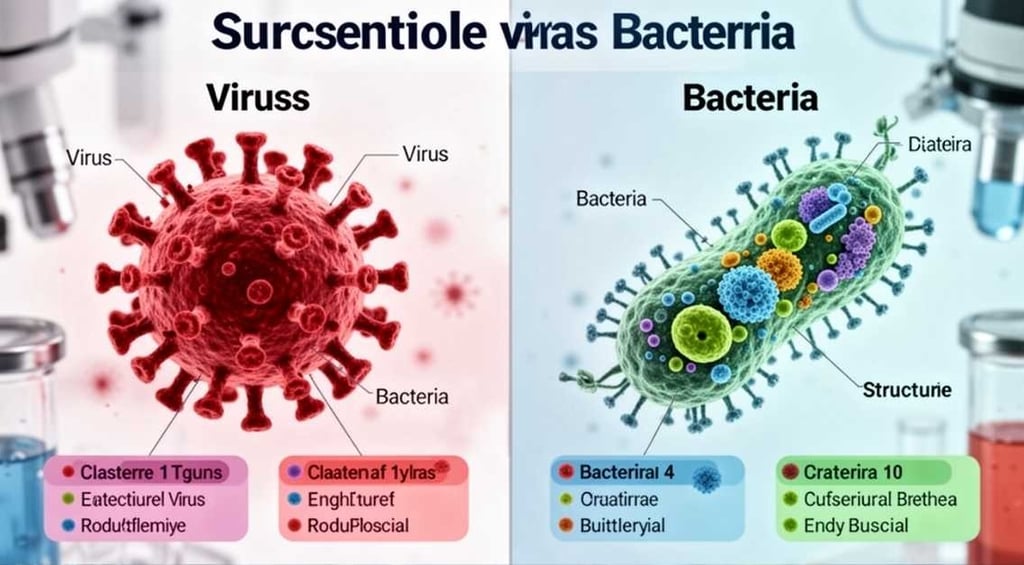
Bacteria are single-celled living organisms classified under the domain Bacteria, a group within the prokaryotic life forms. They can thrive in diverse environments, ranging from soil to deep-sea vents, and some even inhabit the human gut, aiding in digestion and maintaining a balanced microbiome. Structurally, bacteria possess a cell wall, cell membrane, cytoplasm, and genetic material in the form of DNA. They are capable of independent metabolism and reproduction, which enables them to grow and multiply on their own.
In contrast, viruses are acellular entities that lack the characteristics associated with living organisms. Viruses are composed of genetic material, either DNA or RNA, surrounded by a protein coat, and sometimes a lipid envelope. Unlike bacteria, viruses cannot reproduce independently; they require a host cell’s machinery to replicate and produce new viral particles. Once a virus infects a compatible host cell, it hijacks that cell's biochemical processes, contributing to viral reproduction, often leading to cell damage or death.
One fundamental difference between viruses and bacteria lies in their classification as living entities. Bacteria are undoubtedly classified as living organisms due to their cellular structure and metabolic capabilities. Conversely, the classification of viruses remains contentious; they exhibit characteristics of life when within a host but cannot survive or reproduce outside of it, rendering them non-living entities in classical terms. This distinction highlights the complexity of defining life at a microscopic level.
Size Comparison: Viruses vs. Bacteria
One of the most significant differences between viruses and bacteria lies in their size. Understanding these dimensions is crucial in the field of microbiology, as it plays a role in how these microorganisms interact with other biological entities.
Viruses are considerably smaller than bacteria, overall measuring between 20 to 300 nanometers (nm) in diameter. To put this into perspective, a nanometer is one-billionth of a meter, highlighting just how minuscule these entities are. For example, the common cold virus, rhinovirus, has a diameter of approximately 30 nm, while the influenza virus is about 80 to 120 nm in size. This small size allows viruses to infiltrate host cells with relative ease, as they can attach to specific receptors and invade other organisms.
On the other hand, bacteria are larger, typically ranging from 1,000 to 5,000 nm, with most averaging around 1,000 nm or 1 micrometer (µm). A good example of a common bacterium is *Escherichia coli*, which varies in size but is generally about 1,100 nm in length. This size difference is not merely a matter of scale; it affects how bacteria and viruses are studied and treated in medical science. For instance, while antibiotics can target specific bacterial structures or functions, they are ineffective against viruses due to their lack of cellular machinery.
The substantial difference in size between viruses and bacteria plays a critical role in their biology and pathology. This distinction becomes particularly relevant in the context of laboratory tests, treatment strategies, and understanding infectious diseases. Recognizing that viruses are smaller than bacteria not only broadens our understanding of microbiological diversity but also underscores the complexities involved in treatment options and preventive measures.
Structure: How Viruses and Bacteria Differ
The structural differences between viruses and bacteria play a crucial role in their classification and biological functions. Viruses are fundamentally simpler organisms. They are typically composed of just a strand of genetic material, either DNA or RNA, encased in a protein coat known as a capsid. In some instances, viruses may also have an envelope derived from the host cell membrane. This basic architecture allows viruses to inject their genetic material into a host cell, directing the cellular machinery to produce more virus particles without possessing the necessary cellular structures for independent life.
In contrast, bacteria are more complex and possess a fully developed cellular structure. They are classified as prokaryotic cells, which, unlike eukaryotic cells, do not have a defined nucleus. Instead, bacterial DNA is typically found in a single circular strand within the cytoplasm, sometimes accompanied by additional small DNA circles called plasmids. Bacteria are bounded by a cell wall, which provides structural support and protection, and they possess various internal components such as ribosomes, which are essential for protein synthesis. Additionally, many bacteria have specialized structures, like flagella and pili, which allow for movement and attachment to surfaces.
This delineation between viruses and bacteria is significant in understanding their behavior and interaction with living organisms. While bacteria can exist independently, performing vital processes such as metabolism and reproduction, viruses are obligate parasites that can only replicate within a host. This intrinsic difference in structure and functionality is fundamental to the study of microbiology and aids in the development of targeted treatments for viral infections and bacterial diseases.
Reproduction Method: How Do They Multiply?
Understanding the reproduction methods of viruses and bacteria is essential in comprehending their biological functions and impacts. The fundamental difference lies in how each entity replicates itself. Bacteria are unicellular organisms that reproduce independently through a process known as binary fission. In this method, a single bacterium grows and divides into two identical daughter cells. This process can occur rapidly, under optimal conditions, allowing bacterial populations to increase exponentially in a relatively short time.
On the other hand, viruses lack the necessary cellular machinery for reproduction. They are not considered living organisms because they cannot replicate on their own. Instead, viruses rely on hijacking the cellular mechanisms of host organisms. When a virus infects a cell, it injects its genetic material into the host. This genetic material takes over the host cell’s machinery, redirecting it to produce viral components instead of the cell's usual functions. Subsequently, newly formed viral particles are assembled and released, often destroying the host cell in the process.
This contrasting reproductive strategy highlights the dependency of viruses on their hosts for replication, firmly placing them in a category distinct from bacteria. Understanding these reproductive methods is crucial for developing effective treatments and interventions in infectious diseases. In essence, while bacteria can thrive and multiply independently, viruses demonstrate a much more parasitic approach to reproduction, highlighting the intricate relationships that exist within biological ecosystems.
Diseases Caused: Viruses vs. Bacteria
Understanding the distinction between viruses and bacteria is critical, particularly when examining the diseases caused by each. Bacteria are single-celled organisms that can cause a wide range of diseases, including strep throat, tuberculosis, and urinary tract infections. Many bacterial infections can be effectively treated with antibiotics, which target specific bacterial functions not found in human cells. For instance, streptococcal infections treated with penicillin demonstrate the effectiveness of antibiotic therapy in combating bacterial diseases.
In contrast, viruses are much smaller entities that require a host cell to replicate. Viral diseases include influenza, HIV/AIDS, and the common cold. Treatment for viral infections often focuses on symptom relief and immune system support, with antiviral medications like oseltamivir for influenza offering some specific therapeutic options. Notably, unlike bacterial infections, viruses do not respond to antibiotics, which can lead to challenges in treatment.
The nature of the diseases caused by bacteria and viruses informs treatment approaches significantly. Bacterial infections can sometimes be rapidly diagnosed through laboratory tests and can often be treated with tailored antibiotics. However, in cases of viral infections, accurate diagnosis is crucial to avoid unnecessary antibiotic use and potential adverse effects. Additionally, the emergence of antibiotic resistance has made the treatment of bacterial infections more complicated, requiring ongoing monitoring and a careful selection of therapeutic strategies.
The clinical implications of these differences emphasize the importance of understanding the underlying cause of infections. Each treatment approach is designed based on the specific characteristics of either viruses or bacteria, reaffirming the necessity for accurate diagnosis and targeted therapies.
Treatment Differences: Antibiotics vs. Antivirals
Treatment approaches for infections caused by bacteria and viruses differ significantly due to the distinct biological mechanisms of these pathogens. Bacterial infections are typically treated with antibiotics, which are substances designed to kill or inhibit the growth of bacteria. These antimicrobial agents target specific bacterial features, such as cell wall synthesis or protein production, making them effective against a wide range of bacterial infections. Common examples of antibiotics include penicillin, amoxicillin, and tetracycline. It's crucial to note that antibiotics are only effective against bacterial pathogens and have no impact on viral infections.
In contrast, viral infections require a different treatment strategy. Antiviral medications are used to manage viral diseases by inhibiting specific stages of the viral life cycle. These medications may prevent the virus from replicating, thereby reducing the severity and duration of the illness. Unlike antibiotics, antiviral agents target the virus directly and can include drugs such as oseltamivir (Tamiflu) for influenza or acyclovir for herpes simplex virus infections. Antivirals, however, are not universally effective against all viruses, and their effectiveness can depend on the type of virus and the timing of administration.
To summarize the differences clearly, here is a chart comparing the key treatment methods for bacterial and viral infections:
| Aspect | Bacterial Infections | Viral Infections |
|---|---|---|
| Treatment | Antibiotics (e.g., penicillin) | Antivirals (e.g., oseltamivir) |
| Mechanism | Kills bacteria or inhibits growth | Inhibits viral replication |
| Effectiveness | Effective for bacterial infections only | Effective for specific viral infections |
| Common Conditions Treated | Strep throat, pneumonia | Influenza, HIV |
This comparison highlights the fundamental distinctions in treating bacterial versus viral infections, emphasizing the importance of accurate diagnosis and appropriate therapeutic decisions in clinical practice.
Address:
264/5, Kamal Soroni Road, Mirpur, Dhaka-1216
Contact
Your Quaries on pest control askings
pestexterminatorbd@gmail.com
+8801642008383 +8801988300003, 01723057746
© 2025. All rights reserved. to Urban Pest Control Pvt. Ltd. this site is powered by Our Own IT Team