
What Kills Bed Bugs Instantly: Pest Control Services vs. Chemicals
2/14/20268 min read
Understanding Bed Bugs and Their Behavior
Bed bugs, scientifically known as Cimex lectularius, are small, nocturnal insects that primarily feed on human blood. Their presence within domestic environments has become a significant concern due to their resilience and ability to multiply rapidly. Adult bed bugs are approximately 5-7 mm in length, resembling apple seeds; they have flat bodies, which allow them to hide in tiny crevices. Understanding their life cycle is essential for effective pest control.
The life cycle of bed bugs comprises several stages: egg, nymph, and adult. A female bed bug can lay anywhere from 200 to 500 eggs during her lifetime, usually in clusters of 10 to 50, making their rapid reproduction a primary factor for their infestation. The eggs hatch within a week, leading to nymphs which undergo five molts before reaching adulthood. This expeditious development cycle allows bed bug populations to grow exponentially, making infestations challenging to control.
Bed bugs primarily thrive in locations that provide close proximity to their human hosts, such as beds, couches, and other upholstered furniture. During the night, they emerge from their hiding spots to feed, typically feeding for about 5-10 minutes. Their preferred feeding times align with human sleep cycles, making detection difficult. Furthermore, bed bugs are not associated with unclean environments but can be found in even the most hygienic spaces.
Understanding the behavior and biology of bed bugs is crucial when determining appropriate extermination methods. Their capacity to hide in various locations and their rapid reproduction rate necessitate a well-structured pest control plan, whether through chemical treatments or professional extermination services. By knowing how these pests operate, homeowners can better equip themselves to face and eliminate bed bug infestations effectively.
Pest Control Services: Professional Approaches
When dealing with a bed bug infestation, many homeowners consider enlisting professional pest control services as a potent means of eradication. These services utilize various industry-recognized methods designed to eliminate these insidious pests effectively. Among the most notable approaches are thermal remediation, fumigation, and targeted insecticide applications.
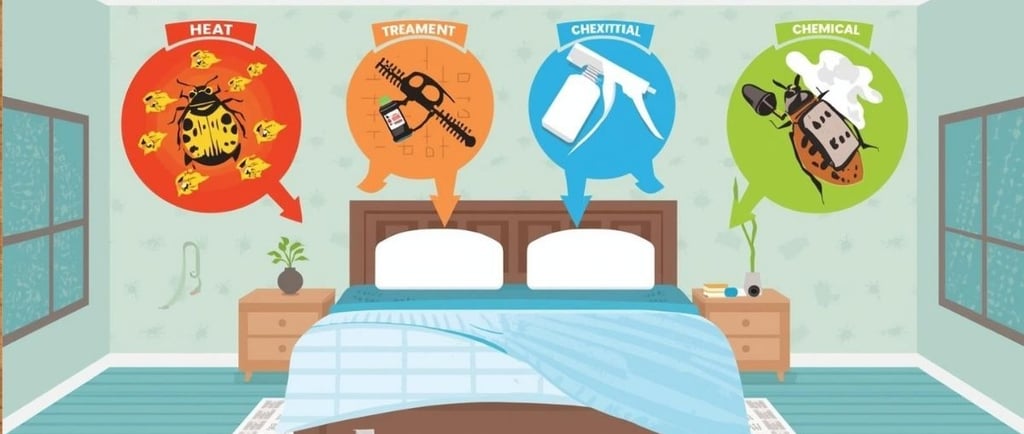
Thermal remediation, often referred to as heat treatment, involves raising the ambient temperature within infested environments to levels lethal to bed bugs. This method is notable for its ability to penetrate cracks and crevices where bed bugs are known to hide, ensuring that even the most elusive specimens are eradicated. The key advantage of this approach lies in its ability to avoid chemical residues, making it a preferred choice for families with children or pets. However, it requires specialized equipment and trained professionals, which can come at a higher cost.
Fumigation is another professional service frequently employed in severe infestations. This process entails sealing the entire structure and introducing a gas that penetrates and kills bed bugs in all stages of their lifecycle. While incredibly effective on large infestations, fumigation may necessitate the temporary relocation of residents and their belongings, thereby increasing the disruption of daily life.
Additionally, pest control services may use insecticides that are safe for residential application. Professionals will often select products that are environmentally friendly yet potent enough to eliminate bed bug populations. These targeted treatments are typically employed as part of an integrated pest management strategy, which combines various methods for maximum effectiveness.
While opting for professional pest control services can initially seem costly, the long-term benefits of effectively eliminating bed bugs often outweigh the advantages of DIY methods which may only provide temporary relief. Ultimately, understanding these professional approaches can assist homeowners in making informed decisions on the best course of action against bed bug infestations.
Chemical Treatments: Types and Effectiveness
When addressing bed bug infestations, understanding the various types of chemical treatments available is crucial for effective eradication. One of the most commonly utilized substances for bed bug control are insecticides. These chemicals are specifically designed to target and kill bed bugs on contact or through ingestion. Insecticides can be divided into several categories, including pyrethroids, neonicotinoids, and insect growth regulators (IGRs). Pyrethroids are synthetic chemicals that mimic natural pyrethrins found in chrysanthemum flowers, which serve as repellents and toxins for insects.
Neonicotinoids act on the nervous system of bed bugs, disrupting their ability to carry out essential functions, ultimately leading to their death. In contrast, IGRs do not kill bed bugs directly; instead, they prevent the insects from reaching maturity, thereby inhibiting their reproduction and further infestation.
Pesticides are another class of chemical treatments that can be employed against bed bugs. These include formulations that are applied to surfaces where bed bugs are known to hide. While effective, some bed bugs have developed resistance to certain types of pesticides, complicating treatment efforts. This resistance can result from the excessive and repeated use of the same product, highlighting the importance of rotating different classes of chemicals to maintain effectiveness.
Additionally, organic options have gained popularity in recent years, addressing concerns regarding toxicity to humans and pets. These may include diatomaceous earth, which dehydrated insects, and natural oils that have insecticidal properties. However, while these products are considered safer, their efficacy and speed of action may differ significantly from traditional chemical treatments.
Regardless of the type of chemical treatment selected, safety precautions are imperative. Proper ventilation, protective gear, and adherence to product instructions enhance safety during application. Furthermore, it is recommended to consult with pest control professionals for the most effective approach, considering factors such as the severity of the infestation, the type of bed bugs, and potential health concerns related to chemical exposure.
Comparison of Instant Kills: Pest Control vs. Chemicals
When it comes to eradicating bed bugs swiftly, choosing the right method can significantly impact the outcome. Two primary approaches are pest control services and chemical treatments, each with their own set of advantages and limitations regarding instant efficacy.
Pest control services often employ integrated pest management techniques that combine physical, biological, and chemical measures. Studies indicate that professional pest control can eliminate bed bugs rapidly, often within 24 hours of application, when procedures are properly carried out. For instance, heat treatments are an effective method used by pest control professionals. This method exposes the infested environment to temperatures exceeding 120°F, leading to the instant death of bed bugs within minutes. Experts recommend this approach for severe infestations as it not only kills the adult bugs but also targets eggs and nymphs.
On the other hand, chemical treatments, which include insecticides specifically formulated to target bed bugs, may show varying results. The effectiveness of chemicals can depend on factors such as the formulation of the insecticide and the life stage of the bed bugs. While some chemical-based treatments claim rapid action, field studies reveal that residual effects may provide targeted results over a few hours to days, rather than an immediate kill. Certain insecticides act faster on younger pests compared to adults, which means timing and infestation level play crucial roles in efficacy.
Moreover, expert opinions suggest that while chemicals can be used effectively in conjunction with pest control services, overreliance on them may lead to resistance over time. Therefore, the choice between instant kills from pest control versus chemicals often depends on the specific situation, including the severity of the infestation, the type of environment, and existing resistance profiles of the bed bugs in question. Comprehensive assessments by pest control professionals can guide the most appropriate method to ensure a quick resolution to bed bug problems.
The Risks of Chemical Overuse and Resistance
The application of chemical treatments is a common method employed in the fight against bed bugs. However, over-reliance on these pesticides poses significant risks both to the environment and the effectiveness of pest control efforts. One of the most pressing concerns related to chemical overuse is the development of resistance among bed bug populations. As these pests are exposed to various pesticides, they can adapt and evolve, leading to strains that are increasingly difficult to eradicate.
Bed bugs that survive initial treatment are more likely to pass on their resistant traits to subsequent generations. This phenomenon can result in infestations that are not only more challenging to control but also require stronger, potentially more harmful chemicals. Such resistance is a growing concern in pest management, rendering some chemical treatments ineffective over time. Therefore, pest control services that rely heavily on insecticides may find their efforts undermined by this resistance cycle.
Moreover, the environmental impacts associated with chemical overuse cannot be overlooked. Pesticides can contaminate soil, water, and air, posing risks not only to non-target insect species but also to human health. Prolonged exposure to chemical treatments may lead to adverse effects, including respiratory illnesses and other health complications. As such, the importance of utilizing sustainable pest management strategies cannot be overstated.
Integrated pest management (IPM) strategies that emphasize a combination of methods – such as sanitation, physical removal, and biological control techniques – can significantly reduce the need for chemical treatments. By employing a holistic approach, property owners can minimize the risks associated with chemical overuse while enhancing the long-term effectiveness of their pest control efforts. Adaptation to such strategies not only curtails environmental impact but also promotes a healthier ecosystem and a more successful resolution to bed bug infestations.
DIY Solutions: What Works and What Doesn’t
When faced with a bed bug infestation, many individuals seek do-it-yourself (DIY) solutions. There are numerous home remedies and methods purported to eliminate these pests, but understanding which ones are effective and which are not is crucial.
One of the most commonly discussed methods is the use of heat treatments. Bed bugs are vulnerable to high temperatures, and exposing them to heat above 118°F (48°C) can effectively kill them. Homeowners often utilize steamers or place infested items in a hot dryer for 30 minutes, which can be successful in eradicating both bugs and their eggs. However, it is important to ensure that the heat penetrates all areas of furniture and fabrics, as incomplete treatment can result in undetected survivors.
Another method that often comes up in conversation is vacuuming. Thoroughly vacuuming areas where bed bugs are suspected can help remove adults, nymphs, and eggs. It is advisable to vacuum mattresses, carpets, and crevices. Nevertheless, vacuuming alone may not completely eliminate bed bugs, as it does not address those hiding in hard-to-reach spaces or deep within furniture. After vacuuming, it is essential to discard the vacuum bag immediately to prevent re-infestation.
Natural repellents, including essential oils like lavender or tea tree oil, are frequently suggested as potential solutions. While these might deter bed bugs temporarily, there is little scientific evidence to confirm their effectiveness as a complete eradication method. In fact, relying solely on these options may lead to a false sense of security.
Ultimately, while DIY solutions can be part of an integrated approach to bed bug control, their effectiveness is often limited. Understanding the strengths and weaknesses of each method is essential for any homeowner looking to tackle a bed bug problem effectively.
Conclusion and Recommendations
In evaluating effective strategies for exterminating bed bugs swiftly, it is essential to weigh the merits of pest control services against chemical treatments. Multiple factors play a critical role in this decision-making process, including the severity of the infestation, the location of the problem, and the preferences of the affected individuals.
Professional pest control services often provide comprehensive solutions that not only target the immediate problem but also help prevent future occurrences. These services employ trained technicians equipped with specialized tools and knowledge, enabling them to address the infestation effectively and efficiently. Moreover, pest control experts can assess the unique circumstances of a residence or business, tailoring their approach to achieve optimal results.
On the other hand, chemical treatments, such as insecticides and aerosols, present a more accessible and potentially cost-effective solution for some homeowners. These products can be purchased from local stores, allowing individuals the freedom to address minor infestations without the need for external intervention. However, it is crucial to follow the manufacturer's instructions carefully as improper use can lead to ineffective results or hazardous situations.
Ultimately, the choice between pest control services and chemical treatments hinges on personal circumstances. Those who grapple with severe infestations or seek a more thorough resolution may find it advantageous to enlist the expertise of pest control professionals. Conversely, for those dealing with isolated cases and lower budgets, chemical solutions may suffice. Regardless of the chosen method, thorough research and careful application remain imperative to ensure swift and effective eradication of bed bugs from living environments.
Address:
264/5, Kamal Soroni Road, Mirpur, Dhaka-1216
Contact
Your Quaries on pest control askings
pestexterminatorbd@gmail.com
+8801642008383 +8801988300003, 01723057746
© 2025. All rights reserved. to Urban Pest Control Pvt. Ltd. this site is powered by Our Own IT Team