
Why Do Cockroaches Come OWhy cockroaches come at night onlyut at Night?
Why cockroaches come at night only
1/28/20267 min read
Introduction to Cockroach Behavior
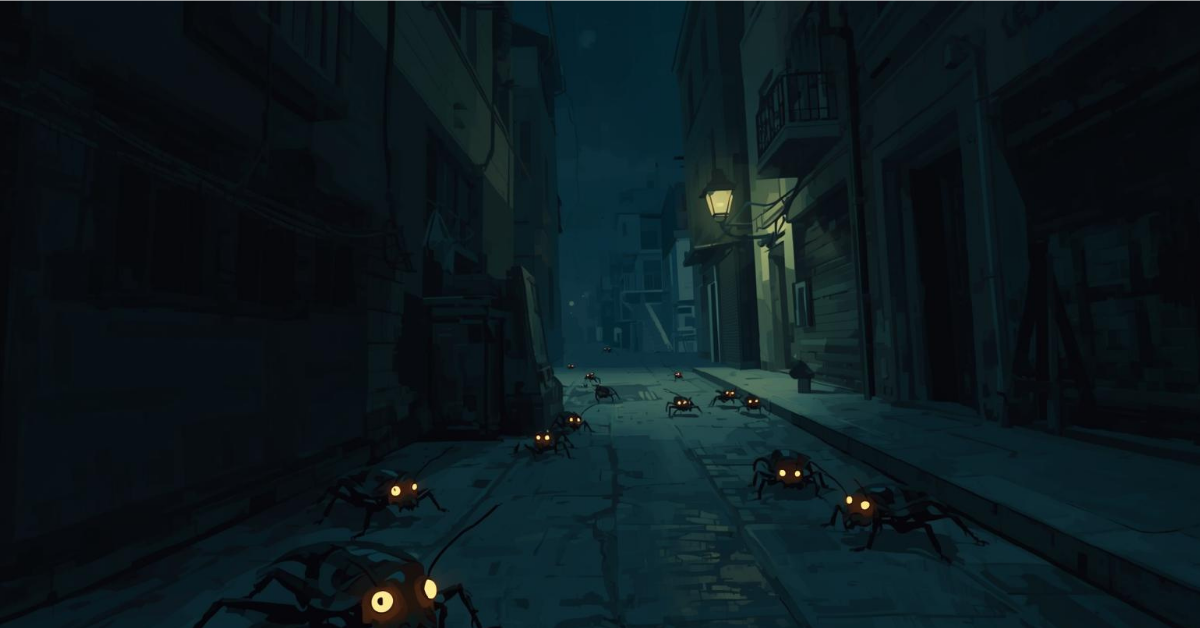
Cockroaches are commonly perceived as nocturnal insects, a characteristic that shapes many individuals' perceptions and experiences with them. This nocturnal behavior is not merely a quirk; it is a critical survival strategy that has evolved over time. Understanding why cockroaches come out at night provides valuable insights into their life cycle, feeding habits, and overall ecology.
Due to their nature, cockroaches tend to prefer dimly lit, secluded spaces during the day. This tendency to be active at night helps them evade predators and enhances their chances of survival. In urban environments, the interior of buildings often provides ample hiding spots and food sources, which further entices these insects to forage after sunset. When the lights go out, cockroaches venture out to search for food and water, taking advantage of the absence of disturbing human activities.
The evolution of cockroach behavior is also interconnected with their physiological needs. These insects are highly adaptable and possess sensory systems that enable them to detect changes in their environment effectively. They rely on chemical signals, humidity levels, and temperature variations, all of which are often more favorable during the night. This adaptability allows cockroaches not only to navigate but also to thrive in various settings, making them persistent inhabitants of human dwellings.
Moreover, research shows that most species of cockroaches exhibit a peak activity period during the hours after dark, leading to the common belief that they are strictly night dwellers. However, while this nocturnal behavior is prevalent, some cockroach species may also display diurnal activities depending on environmental conditions. By delving deeper into the behaviors of cockroaches, especially their preference for nighttime activity, we can grasp a better understanding of their impact on human environments and the biological imperatives driving their actions.
The Evolutionary Background of Cockroaches
Cockroaches have a long and varied evolutionary history that has shaped their behavior and habits, particularly their tendency to be active during the night. These insects belong to the order Blattodea, with origins tracing back approximately 300 million years. This longevity in terms of evolutionary adaptation has allowed cockroaches to develop several traits that have contributed to their survival in diverse environments.
One of the key survival mechanisms that has emerged over time is their nocturnal lifestyle. Cockroaches are primarily scavengers, feeding on organic matter, which is often more abundant at night when other animals are less active. Their evolution has favored this adaptation, as being active during the cooler, darker hours reduces their exposure to predators such as birds and mammals that are diurnal by nature. This stealthy feeding strategy exemplifies how evolutionary pressures have favored traits that enhance survival.
Cockroaches are also highly sensitive to environmental changes, which has informed their behavioral patterns. Their compound eyes are capable of detecting minute light changes, allowing them to navigate safely in the dark. Furthermore, their acute sense of smell aids in locating food and sensing danger. This heightened sensory perception supports their active hours and enables them to thrive in various habitats, from forests to urban areas.
The nocturnal behavior of cockroaches is thus an evolutionary response that maximizes their chances of survival by taking advantage of ecological niches that are less saturated with predators and competition during nightfall. Such adaptations have not only allowed cockroaches to persist through major extinction events but have also established them as successful survivors in a changing world.
Predator Avoidance: A Survival Mechanism
Cockroaches are primarily nocturnal creatures, and this behavior is significantly influenced by their instinctual need to avoid predators. Being active during the night allows these insects to navigate their environment while minimizing encounters with various threats. The darkness provides a protective cover that aids cockroaches in evading potential predators.
Many animals prey on cockroaches, including birds, rodents, and various reptiles. For instance, certain bird species have keen eyesight and can spot cockroaches during daylight hours, making them particularly dangerous during the day. Rodents, such as mice and rats, also pose a substantial threat as they are active both at dawn and dusk, frequently hunting for food. By emerging at night, cockroaches reduce their interaction with these predators, enhancing their chances of survival.
In addition to terrestrial threats, spiders and various insects, like praying mantises, actively hunt cockroaches. These predators often utilize ambush tactics, making the element of surprise a key factor in their hunt. Consequently, cockroaches' nighttime activity significantly mitigates their risk of predation, allowing them to forage for food and reproduce without constant fear of being attacked.
Furthermore, being nocturnal not only serves as a predator avoidance strategy but also allows cockroaches to exploit the environmental conditions better suited for their survival. The cooler temperatures of the night reduce moisture loss, which is crucial for these insects, as dehydration can lead to increased mortality rates. Thus, their nocturnal behavior is a multifaceted survival mechanism, enhancing their ability to thrive despite the constant threat of predation.
Light Sensitivity and Cockroach Neurology
Cockroaches, belonging to the order Blattodea, exhibit distinct behavioral tendencies, particularly their nocturnal activities. A primary factor driving these behaviors is their remarkable sensitivity to light, which is intricately linked to their neurological adaptation. This sensitivity is a survival mechanism that allows cockroaches to thrive in environments where they can avoid predators and find food more effectively.
The eyes of cockroaches are structured to function optimally in low-light conditions. They possess compound eyes that contain thousands of tiny lenses, enabling them to detect even minimal light. Each ommatidium, or individual unit of the compound eye, contributes to a broad field of view, enhancing their ability to navigate in darkness. This adaptation allows cockroaches to venture out at night without the hindrance of brighter environmental light, making them proficient scavengers.
Furthermore, the neurological processes of cockroaches play a critical role in their light-sensitive behavior. Their nervous system allows for rapid reflexes and response to stimuli, which is essential when they sense danger or detect food sources. During their active nighttime foraging, cockroaches rely heavily on olfactory cues, in conjunction with their visual capabilities, to locate sustenance. This combination of sensory input is finely tuned, allowing them to efficiently navigate their environment.
Additionally, studies have shown that exposure to light can disrupt their circadian rhythms, driving them to seek shelter during illuminated periods. As a result, their light sensitivity not only influences their foraging habits but also their overall lifestyle, making night the optimal time for activity. By understanding these physiological aspects, we gain insight into why cockroaches prefer to emerge after sunset, highlighting the interplay between their sensory adaptations and nocturnal behaviors.
The Role of Temperature and Humidity
Cockroaches are known for their nocturnal behavior, which is significantly influenced by environmental factors such as temperature and humidity. These insects thrive best in warm, humid conditions, which directly affects their activity levels and foraging habits. As the temperature drops at night, cockroaches find it much more comfortable to emerge from their hiding places to search for food and water. This aligns with their natural instincts, as cooler nights provide a respite from the heat of the day, making nocturnal activity more viable.
Temperature plays a critical role in determining the overall behavior and metabolism of cockroaches. At higher temperatures, these insects may be more lethargic, seeking refuge in the cool, dark spaces of homes. Conversely, as daylight fades and temperatures moderate, they become more active. This shift is essential for their survival, as foraging during the night minimizes the risks of predation and dehydration. Moreover, decreased night temperatures signal a more suitable atmosphere for cockroaches, allowing them to navigate with greater ease.
Humidity levels are equally important in attracting cockroaches to certain environments. These insects thrive in humid areas, often found in kitchens, bathrooms, and basements where moisture is abundant. High humidity enhances their chances of finding food sources, as it often corresponds with decaying organic matter in damp environments. Locations like sewers, compost heaps, and garbage areas provide optimal conditions with both the necessary humidity levels and food sources for cockroaches to sustain their populations. Consequently, temperature and humidity together create an environment conducive to the nocturnal lifestyle of cockroaches, enabling them to forage effectively and thrive in their habitats.
Food Availability and Foraging Patterns
Cockroaches are primarily nocturnal creatures, and their foraging habits play a crucial role in the timing of their activity. These insects are scavengers and have evolved to utilize food resources that become more accessible during the night. One of the significant factors influencing their emergence is the availability of food, which tends to be abundant when humans are less active.
During nighttime, cockroaches exploit various food sources that are often left behind by human households. Their diet is quite diverse, including food residues, organic matter, and even materials that may be overlooked during the day, such as crumbs or spills. The scavenging habit of these pests allows them to thrive in environments that are not only rich in food but also provide adequate shelter against predators.
The foraging patterns of cockroaches are intricately linked to the search for food, and their nighttime activity aligns with the peaks in food availability. This adaptation minimizes competition with other species and maximizes their survival rate. Specifically, cockroaches are attracted to the scent of food, which can stimulate their foraging behavior during the night. They have an acute sense of smell allowing them to locate food sources even in low-light conditions.
Thus, the nocturnal behavior of cockroaches primarily revolves around food availability. As scavengers, they are well adapted to take advantage of nighttime foraging opportunities, making it essential for households to maintain cleanliness and adopt preventive measures against attracting these pests. Addressing food sources in the home environment can significantly reduce cockroach sightings, particularly during their peak activity times at night.
Implications for Pest Control and Management
Understanding the nocturnal nature of cockroaches is vital for effective pest control and management strategies. These insects tend to emerge primarily at night, which is when they seek food and water, as well as conducive hiding spots. This behavior can significantly influence how homeowners approach pest control measures.
Firstly, recognizing that cockroaches are predominantly active during nighttime hours suggests that pest control efforts should be timed accordingly. Setting traps during the night or deploying bait stations can catch these pests at their peak activity times. Additionally, homeowners may consider using monitoring tools such as sticky traps placed in dark corners or hidden areas of the home. This proactive method helps in the early detection of cockroach activity and can guide subsequent pest management strategies.
Moreover, maintaining cleanliness becomes even more critical when addressing a cockroach infestation. Since these pests are attracted to food residues, garbage, and damp environments, it is essential to eliminate potential food sources, particularly at night. Homeowners should ensure that all food items are stored in sealed containers, and that surfaces are regularly cleaned to prevent attracting these nocturnal creatures. Regular inspections of plumbing fixtures can also help manage humidity, making the environment less hospitable for cockroaches.
In essence, effective pest control cannot rely solely on chemical treatments or traps. Understanding cockroaches' nighttime habits offers a holistic approach to pest management. By integrating knowledge of their behavior into practical strategies—timing interventions appropriately, maintaining cleanliness, and conducting regular inspections—homeowners can significantly reduce the likelihood of a cockroach infestation. Consequently, informed management leads to a healthier living environment and helps maintain the sanctity of one's home.
Address:
264/5, Kamal Soroni Road, Mirpur, Dhaka-1216
Contact
Your Quaries on pest control askings
pestexterminatorbd@gmail.com
+8801642008383 +8801988300003, 01723057746
© 2025. All rights reserved. to Urban Pest Control Pvt. Ltd. this site is powered by Our Own IT Team