
Why Is the World Getting Hotter in 2026? The Real Science Behind Global Warming
2/20/20267 min read
Introduction to Global Warming in 2026
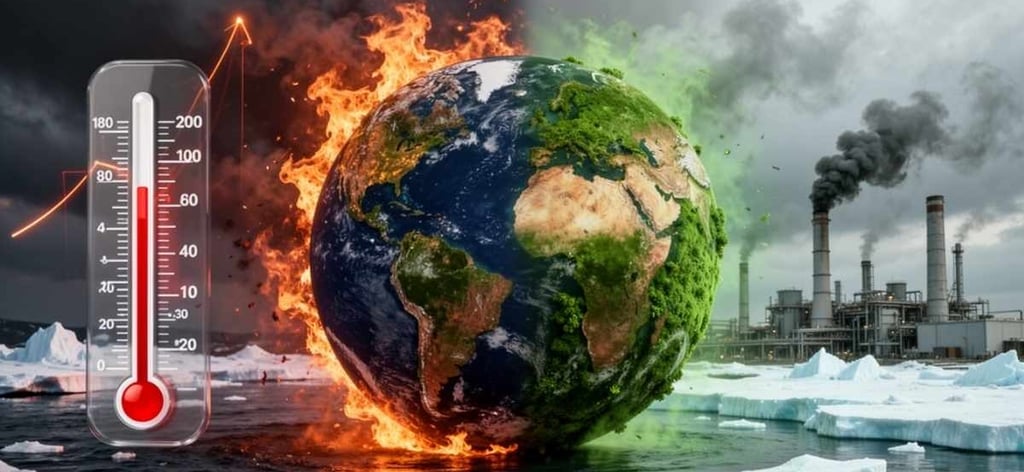
In 2026, the phenomenon of global warming has emerged as one of the most pressing environmental issues confronting humanity. This increase in global temperatures, driven primarily by human activities, has profound implications for ecosystems, weather patterns, and overall planetary health. As populations expand and industrialization persists, the release of greenhouse gases continues to escalate, exacerbating the effects of climate change.
The urgency of comprehending the current state of global warming cannot be overstated. Recent global temperature records indicate that the planet has warmed by approximately 1.2 degrees Celsius since the pre-industrial era. Such a change may appear modest; however, its repercussions are substantial, contributing to heightened frequency and intensity of extreme weather events, including but not limited to hurricanes, droughts, and heatwaves. These phenomena not only threaten biodiversity but also endanger human health and food security.
As we delve further into this topic, it is crucial to examine the key drivers behind rising temperatures. The combustion of fossil fuels, deforestation, and agricultural practices are significant contributors to the accumulation of carbon dioxide and other greenhouse gases in the atmosphere. Understanding these causes is essential to formulating effective strategies for mitigating climate change and adapting to its consequences.
This blog post aims to explore the multifaceted aspects of global warming as it stands in 2026. By discussing the underlying causes and the myriad consequences of this phenomenon, we hope to equip readers with a comprehensive understanding of the challenges posed by climate change. The ongoing dialogue surrounding global warming highlights the need for immediate action to address its impacts and ensure a sustainable future for the planet.
Causes of Climate Change
Climate change is largely driven by a combination of human activities that have significantly accelerated the natural processes governing our planet's climate. One of the primary contributors is the burning of fossil fuels, which releases large quantities of greenhouse gases, such as carbon dioxide (CO2) and methane (CH4), into the atmosphere. These gases trap heat from the sun, leading to a gradual increase in global temperatures, a phenomenon known as the greenhouse effect. The reliance on coal, oil, and natural gas for energy and transportation has markedly intensified this effect, underscoring the urgent need for alternative energy sources.
Another critical factor in climate change is deforestation. The world’s forests play a vital role in regulating the climate by absorbing CO2. When these trees are cut down, not only is this natural carbon sink eliminated, but the carbon stored in the trees is also released back into the atmosphere, further exacerbating global warming. Deforestation for agriculture, logging, and urban development disrupts local ecosystems and contributes significantly to the overall increase in greenhouse gas concentrations.
Additionally, agricultural practices are a significant source of emissions, primarily through the release of methane and nitrous oxide. Livestock production, rice cultivation, and the application of synthetic fertilizers contribute to these gas emissions. The expansion of agricultural land often leads to more deforestation, creating a vicious cycle of environmental impact. As human population growth continues to exert pressure on natural resources, understanding these drivers of climate change is crucial to developing effective solutions.
The Role of Greenhouse Gases
Greenhouse gases are critical components of Earth’s atmosphere, contributing significantly to the greenhouse effect, which is essential for maintaining temperatures conducive to life. The primary greenhouse gases include carbon dioxide (CO2), methane (CH4), and nitrous oxide (N2O). Each gas plays a distinct role in trapping heat within the atmosphere, leading to an increase in global temperatures.
Carbon dioxide is produced via various natural processes, such as respiration, volcanic eruptions, and ocean release, but human activities, including the burning of fossil fuels and deforestation, have significantly elevated its concentrations. The Intergovernmental Panel on Climate Change (IPCC) reports that atmospheric CO2 levels have risen over 40% since the pre-industrial era, a trend primarily attributed to industrialization and large-scale agriculture.
Methane, while less abundant than carbon dioxide, is over 25 times more effective at trapping heat over a 100-year period. Methane emissions largely stem from agriculture, particularly livestock production, landfills, and the extraction and transport of fossil fuels. Its remarkable potency exacerbates climate change, acting as a significant driver of temperature increases.
Nitrous oxide, another powerful greenhouse gas, is primarily released from agricultural and industrial activities, as well as during combustion of fossil fuels and solid waste. Although it exists in smaller quantities than CO2 and CH4, its global warming potential is approximately 298 times greater than that of carbon dioxide over a century, illustrating its severe impact on climate change.
Understanding the mechanisms through which these greenhouse gases influence Earth’s climate is crucial. Their interaction fosters a warming trend that threatens ecosystems, agriculture, and human health, asserting the need for immediate actions to mitigate emissions and curb their long-term effects.
Recent Climate Trends and Heat Records
The last few years have witnessed marked increases in global temperatures, influenced by several key climate trends. According to data collected from various meteorological organizations, 2026 is projected to record unprecedented heat levels, a reflection of the ongoing climate change crisis. The reported temperature records suggest an alarming rise in average temperatures, surpassing previous highs and causing concern among scientists and policymakers.
One significant trend is the accelerated melting of ice caps and glaciers, particularly in the Arctic and Antarctic regions. Satellite imagery and climate studies indicate that polar ice is diminishing at an alarming rate, contributing to rising sea levels. The loss of ice not only threatens coastal communities but also disrupts marine ecosystems, leading to changes in species migration patterns and habitat availability.
Moreover, ocean temperatures have also seen notable increases. Warmer ocean waters fuel more intense hurricanes and alter existing weather patterns, which can lead to more severe weather events across the globe. This increasing thermal energy in the oceans is a critical contributor to the phenomenon of coral bleaching, threatening coral reefs that are vital for marine biodiversity.
Another aspect of climate change is the prevalence of extreme weather events, which have become more common and severe over recent years. Events such as prolonged heatwaves, unprecedented rainfall, and severe droughts are being documented with greater frequency and intensity. These occurrences are a direct result of changing climate patterns, underscoring the urgency to address climate change and its far-reaching impacts on both human existence and the natural world.
The interplay of these factors not only highlights the seriousness of the climate crisis but also provides a foundation for understanding the shifts that have led to the dire state of global temperatures in 2026.
Extreme Weather Events Around the Globe
Extreme weather events have become increasingly frequent and intense, with a notable correlation to the rise in global temperatures. Hurricanes, droughts, and wildfires represent just a fraction of the severe climatic phenomena that communities worldwide are confronting. The warming of the planet is directly influencing these events, leading to a noticeable disruption in weather patterns that are otherwise considered typical for particular regions.
In recent years, hurricanes have intensified, exhibiting higher wind speeds and increased precipitation. This has led to catastrophic outcomes for coastal communities, which are frequently left overwhelmed by flooding and infrastructure damage. For example, Hurricane Ida in 2021 not only caused extensive destruction in Louisiana but also resulted in unusual rainfall and flash floods across areas as far north as New York City. Such examples underscore the extent to which warmer ocean temperatures fuel hurricane activity, subsequently threatening lives and livelihoods.
On the other hand, droughts present a different but equally concerning picture. Regions historically accustomed to consistent rainfall are experiencing prolonged dry periods that jeopardize water supplies, agricultural yields, and overall food security. The southwestern United States, for instance, has faced a multiyear drought that has devastated crops and strained water resources. This phenomenon is not isolated; various parts of Africa and Australia are also grappling with similar challenges as climate change continues to exacerbate water scarcity.
Wildfires have also seen a dramatic increase in both frequency and severity, particularly in areas characterized by dry vegetation and heat waves. California has witnessed some of the worst wildfires in its history, ignited by record-high temperatures and prolonged dry spells, resulting in the destruction of homes and ecosystems. This alarming trend exhibits a direct link between rising global temperatures and extreme weather incidents, highlighting the urgent need for comprehensive climate action.
Future Predictions: What Lies Ahead?
As we advance into the coming years, climate models provide valuable insights into the trajectory of global temperatures and environmental changes. These sophisticated models analyze a variety of factors, including greenhouse gas emissions, deforestation rates, and ocean currents, thereby offering a glimpse into potential future scenarios based on current trends. According to climate scientists, if the present trajectory of carbon emissions continues, the Earth could witness a rise in average global temperatures by 1.5 to 2 degrees Celsius by the year 2050, catalyzing severe ecological and socio-economic implications.
In light of these predictions, numerous scenarios emerge. The first scenario emphasizes the urgency of immediate action against climate change. It outlines the potential for significant warming, which could lead to increased frequency of extreme weather events, such as prolonged droughts, devastating floods, and more intense storm systems. Such occurrences would not only disrupt ecosystems but also pose a threat to human safety, agriculture, and infrastructure.
Alternatively, climate models project a more moderate temperature increase if global efforts to curtail emissions are implemented effectively. Actions such as transitioning to renewable energy sources, enhancing energy efficiency, and promoting reforestation could help mitigate the adverse effects of climate change. By prioritizing these measures, it is feasible to stabilize temperatures and reduce the risks associated with climate-related disasters.In this scenario, international cooperation becomes paramount. Countries must not only commit to individual goals but also collaborate to develop comprehensive strategies that support sustainable development and environmental preservation.
The future of our planet hinges on the decisions made today. Hence, understanding these predictions is critical in shaping policies and actions that could lead to a more resilient and sustainable world.
Steps Towards Prevention and Mitigation
As the world grapples with the increasing challenges posed by climate change, it becomes essential for both individuals and governments to take decisive steps toward prevention and mitigation. Collective action can substantially reduce greenhouse gas emissions and slow down global warming. One of the most effective measures individuals can adopt is the transition to renewable energy sources. Solar, wind, and hydroelectric power present viable alternatives to fossil fuels, significantly mitigating their adverse environmental impacts.
Governments play a critical role in implementing policies that encourage a shift towards sustainable energy practices. Legislating for the use of renewable resources, investing in green technology, and providing incentives for clean energy projects can accelerate this transition. Furthermore, enhancing public transportation systems and encouraging the use of electric vehicles contribute to reducing the carbon footprint on a significant scale.
Conservation efforts are another vital component in addressing climate change. Individuals can contribute by adopting more sustainable lifestyles, such as reducing waste, recycling, and supporting local ecosystems. Moreover, initiatives to conserve forests and biodiversity help maintain the planet’s natural carbon sinks, which absorb carbon dioxide from the atmosphere. Governments must support conservation through legislation aimed at protecting natural habitats and promoting sustainable land use practices.
Raising awareness is crucial for fostering a sense of responsibility among the public. Educational campaigns can inform citizens about the importance of climate action and empower them to participate in local and global initiatives. Grassroots movements, civic engagement, and collaboration with non-profit organizations can galvanize support for environmental causes.
In conclusion, meaningful steps toward climate change prevention and mitigation require the commitment of both individuals and governments. By embracing renewable energy, enacting supportive policies, and promoting conservation, society can steer towards a more sustainable future, ultimately combatting the rise in global temperatures.
Address:
264/5, Kamal Soroni Road, Mirpur, Dhaka-1216
Contact
Your Quaries on pest control askings
pestexterminatorbd@gmail.com
+8801642008383 +8801988300003, 01723057746
© 2025. All rights reserved. to Urban Pest Control Pvt. Ltd. this site is powered by Our Own IT Team