
Why Social Media Algorithms Behave Like Parasitic Pests
2/5/20267 min read
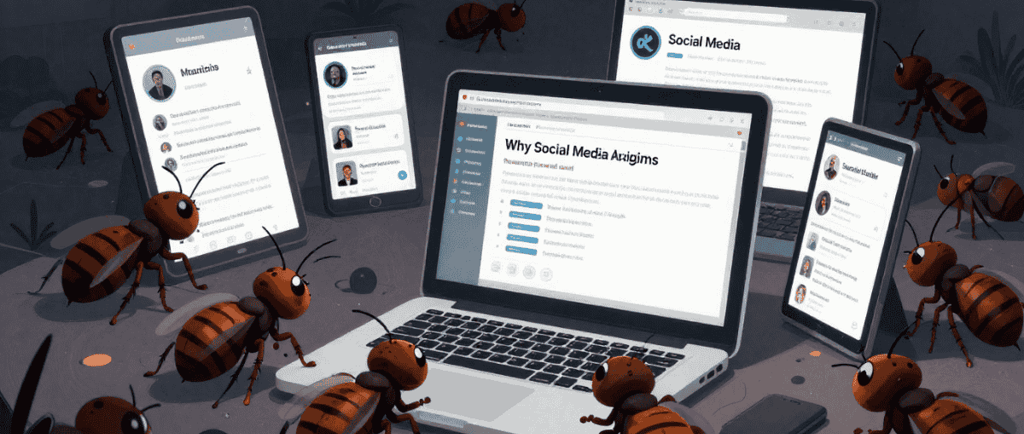
Understanding Social Media Algorithms
Social media algorithms are sophisticated computational formulas that govern how content is delivered to users on various platforms. At their core, these algorithms are designed to engage users by curating and presenting posts that are most likely to resonate with individual preferences. This objective leads to a more personalized user experience, ensuring that users encounter content relevant to their interests, behaviors, and interactions.
The primary purpose of social media algorithms is to enhance user engagement. By analyzing data from user interactions—such as likes, shares, comments, and the duration of content consumption—the algorithms can effectively determine which types of content are most appealing. As a result, the content that garners immediate user interaction is prioritized and more frequently showcased in a user's feed. This not only keeps users engaged but also encourages them to spend more time on the platform.
Furthermore, these algorithms adapt over time, learning from user behavior to refine their content curation strategies. For instance, if a user tends to engage with posts related to technology, the algorithm will increasingly prioritize similar content while reducing the visibility of unrelated topics. This recursive learning mechanism enhances relevance and, in turn, user satisfaction.
However, reliance on social media algorithms has led to criticisms regarding their influence on information diversity and echo chambers. By fostering an environment where users predominantly see content that aligns with their existing beliefs, these algorithms can inadvertently limit exposure to broader perspectives. As such, understanding how these algorithms function is crucial for individuals who wish to navigate social media landscapes more consciously and critically.
Characteristics of Parasitic Pests
Parasitic pests exhibit distinct characteristics that illustrate their unique survival strategies and adaptations. These organisms rely significantly on their hosts for sustenance, underscoring their dependency on another living entity for survival. This relationship is marked by the parasitic pest's ability to extract essential nutrients and resources from the host, often leading to the detriment of the host's health. The reliance on a host is a key aspect of parasitism, which leads to what can be described as a manipulative engagement where the parasite influences its host's behavior and physiology to its advantage.
Another defining characteristic of parasitic pests is their capacity for manipulation. These organisms often possess specialized mechanisms that enable them to control their hosts’ actions, leading to an increased likelihood of their own survival. For instance, certain pests can influence the host's immune response or metabolic processes, creating an environment that favors their proliferation. This manipulation can also extend to the behavioral changes of the host, which may engage in actions that inadvertently facilitate the proliferation of the parasite.
Resource depletion is a common consequence of the interaction between parasitic pests and their hosts. As parasites siphon off vital resources, the host may experience significant health declines or even mortality. This dynamic can lead to a cascading effect within the ecosystem, where the decline of one species may disrupt the ecological balance, affecting other species reliant on the same host. Survival in parasitic pests hinges on their ability to exploit their hosts fully, which forms the basis of their evolutionary success. By understanding these characteristics, parallels can be drawn to modern social media algorithms that likewise exhibit manipulative and dependency behaviors toward user engagement.
The Dependency of Users on Algorithms
In the digital era, social media has transformed how individuals connect, communicate, and consume content. Central to this experience are social media algorithms, which curate streams of information tailored to user behavior and preferences. These algorithms create a dependency among users, as they dictate which content is visible, often prioritizing engagement over relevance. As a result, users find themselves navigating a digital landscape heavily shaped by algorithmic choices.
The psychological impact of this dependency is profound. Users often rely on these algorithms for entertainment, information, and social interaction, which can amplify their connection to the platform. This dependency can lead to a narrowing of perspectives, as individuals are frequently exposed to content that aligns with their existing beliefs and preferences. Over time, this reinforces a feedback loop, where users' interactions further shape the content they receive, limiting exposure to diverse viewpoints.
Moreover, the algorithms’ design aims to drive engagement through compelling content, which can lead to addictive behaviors. As users continually seek affirmation through likes, shares, and comments, it cultivates a cycle of dependence that can negatively impact mental well-being. The constant need for validation often distracts from interactions in the real world, fostering an environment where individuals feel compelled to interact with social media platforms at the expense of genuine relationships.
The formulative influence of social media algorithms extends beyond content curation; it shapes user identity and social dynamics. As people increasingly turn to these platforms for social validation, their perceptions of community and value often hinge on algorithmic output, leading to a precarious relationship between users and the platforms they engage with. In this landscape, the line between convenience and control blurs, underscoring the significant role these algorithms play in shaping modern social interactions.
Manipulation of User Engagement
Social media algorithms have become increasingly sophisticated in their efforts to manipulate user engagement. These algorithms are designed to curate and present content that is tailored specifically to individual users, thereby enhancing the likelihood of interaction. By analyzing a multitude of data points, such as browsing history and search patterns, platforms can predict the types of content that are most likely to resonate with users. This personalized approach encourages a cycle of engagement that can become almost addictive.
One of the primary strategies employed by social media platforms to boost user engagement is the implementation of features designed to capitalize on users' psychological tendencies. For instance, features such as infinite scrolling and auto-play of videos can lead to longer periods of interaction with content, a phenomenon often referred to as 'doomscrolling.' This term describes the experience of continuously scrolling through negative news or distressing content, which not only keeps users engaged but can also affect mental well-being. The algorithms essentially thrive on creating a sense of urgency and the fear of missing out, driving users to consume content at an alarming rate.
This manipulation raises significant ethical concerns. While maximizing engagement can achieve business goals for social media companies, it can lead to detrimental effects on users' mental health and overall digital experience. The continuous churn of tailored, often sensational content can distort user perceptions of reality and can contribute to issues like anxiety and misinformation. Furthermore, the reliance on user engagement as a metric for success calls into question the long-term sustainability of these platforms, as well as the moral responsibility of companies to prioritize user welfare over profit margins. Understanding the implications of these algorithms is paramount for fostering a more balanced digital landscape.
Resource Depletion: Time and Attention
The intricate mechanics of social media algorithms are designed to maximize user engagement, often at the expense of individuals’ time and mental well-being. These algorithms curate content to keep users scrolling, clicking, and sharing, effectively creating an environment where time is consumed without meaningful benefit. As a result, social media platforms often become barriers to productivity and personal development. The design encourages prolonged interaction through notifications, likes, and comments, which can lead to excessive usage, commonly referred to as ‘doomscrolling.’ This phenomenon not only consumes valuable time but also diverts users from engaging in more enriching activities.
Moreover, the addictive nature of these platforms can have profound implications for users’ mental health. Frequent exposure to curated feeds can induce feelings of inadequacy, anxiety, and depression, particularly in younger demographics. Social media algorithms often prioritize sensational or emotionally charged content, further exacerbating these feelings and creating a cascade of psychological distress. Mental resources are depleted as users find themselves caught in cycles of negative thinking. The constant barrage of updates can overwhelm the mind, leading to cognitive fatigue, which detracts from one’s ability to focus on real-world endeavors.
As users’ attention spans become fragmented, the long-term consequences of such resource depletion can be staggering. Diminished attention can hinder academic performance, work output, and personal relationships. Social media algorithms, while sophisticated and compelling, often act as parasitic elements within the digital landscape, siphoning time and attention without providing adequate value in return. This dynamic raises crucial questions about the sustainability of such platforms and the need for more mindful engagement strategies among users.
The Feedback Loop of Algorithms and User Behavior
The interaction between social media algorithms and user behavior is defined by a continuous feedback loop that shapes both parties. Algorithms are designed to analyze vast amounts of data collected from user interactions, such as likes, shares, comments, and viewing duration. With each interaction, algorithms refine their understanding of user preferences and interests, subsequently adjusting the content they deliver to optimize engagement.
This adaptive mechanism profoundly influences user behavior, often leading to a cycling effect where users are inclined to engage with the content presented by the algorithm. For instance, when users consistently engage with certain types of content, the algorithm recognizes this pattern, amplifying similar content in the user’s feed. Consequently, users may find themselves gravitating towards specific topics or viewpoints, often unknowingly curating their digital experiences further into these niches. This dynamic not only fuels algorithmic efficiency but can limit exposure to diverse perspectives, inadvertently reinforcing existing beliefs.
The implications of this feedback loop extend to user autonomy, as individuals may unknowingly become entrapped in curated content bubbles. With each click, users signal to the algorithm their preferences, which then narrows the breadth of information presented to them. Such behavior might lead to an echo chamber effect, diminishing critical thinking and reducing the likelihood of encountering contrasting viewpoints.
As the algorithms continue to evolve, characterized by increasing sophistication, users might find it increasingly challenging to step outside of their tailored content streams. This situation raises critical concerns about the impact of social media platforms on public discourse and individual decision-making processes. Addressing these issues is vital for reclaiming user agency in an increasingly algorithm-controlled environment.
Conclusion: Reassessing Our Relationship with Algorithms
As we have explored throughout this discussion, social media algorithms can often resemble parasitic pests that invade our digital spaces, feeding on our attention and influencing our behaviors. These algorithms, designed to optimize user engagement and maximize profit, manipulate our content consumption without the awareness of the user. This manipulation raises critical questions regarding the extent to which we are in control of our online experiences.
It is imperative for users to recognize that their interactions on these platforms are curated and directed by more than mere chance; they are the result of sophisticated algorithms engineered to understand and anticipate user preferences. Such awareness is the first step toward reclaiming power in the complex web of social media. Individuals need to be proactive in their engagement, questioning the information that algorithms present, and seeking diverse content intentionally.
This reassessment entails a deliberate approach to social media usage, encouraging users to actively curate their feeds, limit exposure to echo chambers, and critically evaluate the reliability of sources. By acknowledging the parasitic nature of these algorithms, users can cultivate healthier relationships with their digital environments. This could involve setting limits on usage times, exploring alternative platforms that prioritize user well-being, or advocating for greater transparency and ethical practices from tech companies.
Ultimately, as we foster a more critical stance toward social media engagement, we not only enhance our own digital experiences but may also contribute to a broader cultural shift that demands accountability from the platforms we utilize. By regaining control over our interactions, we can reclaim autonomy in an age where algorithms dictate much of our online lives.
Address:
264/5, Kamal Soroni Road, Mirpur, Dhaka-1216
Contact
Your Quaries on pest control askings
pestexterminatorbd@gmail.com
+8801642008383 +8801988300003, 01723057746
© 2025. All rights reserved. to Urban Pest Control Pvt. Ltd. this site is powered by Our Own IT Team