
Why termites appear in concrete buildings
Why termites appear in concrete buildings
1/28/20267 min read
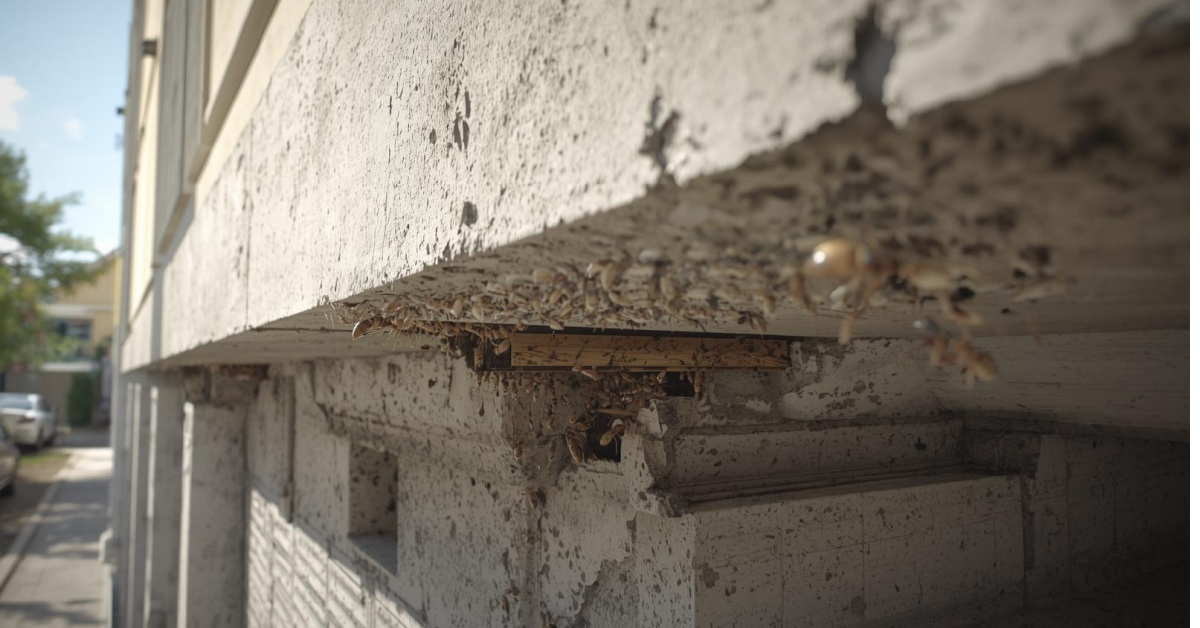
Introduction to Termites and Their Habitat
Termites are social insects belonging to the order Isoptera, primarily known for their wood-destroying habits. They play a critical role in the ecosystem by aiding in the decomposition of cellulose, which is present in plant materials. The biological characteristics of termites include a soft, segmented body, strong mandibles used for chewing, and a well-developed social structure comprising various castes such as workers, soldiers, and reproductive individuals.
There are over 2,600 known species of termites, broadly categorized into three main groups: subterranean, drywood, and dampwood termites. Subterranean termites are the most prevalent type, known for creating colonies in soil and establishing intricate tunnel systems. Drywood termites, as their name suggests, infest wood and require no contact with soil, whereas dampwood termites thrive in decayed wood that is often associated with moisture presence.
Termites are highly adaptable creatures, allowing them to colonize diverse environments. Even in what may appear to be inhospitable settings, such as concrete buildings, certain species can find favorable conditions. This adaptability is attributed to their need for moisture, which can often be sourced from humidity, leaks, or decaying organic material present within building infrastructures. Termites can enter through small cracks and gaps, demonstrating that even the most robust structures can become vulnerable to infestation.
Understanding the biology and habitats of termites is crucial, especially for property owners and those involved in pest control. Awareness of how termites thrive in unexpected environments like concrete buildings emphasizes the need for effective preventative measures. With their ability to adapt and find sustenance in a wide range of conditions, termites remain a significant concern for maintaining the integrity of both residential and commercial properties.
Concrete Buildings and Termite Vulnerability
Concrete buildings are often perceived as impervious to termite infestations due to their predominant use of concrete, a material that termites cannot consume. However, this perception is misleading, as certain structural features and common building practices can inadvertently create vulnerabilities that attract these pests.
One significant factor contributing to termite vulnerability in concrete structures is the accumulation of moisture. Termites thrive in humid environments, and if a concrete building has poor drainage or insufficient ventilation, moisture can become trapped within the walls and foundation. This damp environment can attract subterranean termites, which may tunnel through the soil and gain access through small cracks in the concrete.
Additionally, many concrete buildings have hidden wood structures, such as wooden beams, framing, or doors, which can become exposed to termites. These materials may be present in areas where moisture is prevalent, offering an enticing habitat for infestation. Furthermore, the common practice of using wood forms during the construction of concrete slabs can leave behind cellulose materials that are easily accessible to foraging termites.
Another crucial aspect to consider is soil contact. Concrete foundations that are directly in contact with the soil can create a bridge for termites to invade, especially if there are gaps or cracks. It is important for property owners to be vigilant about these potential entry points. Implementing a proper barrier system or regularly inspecting the foundation can significantly reduce the risk of termite infestations.
In essence, while concrete structures may limit the extent of termite damage compared to traditional wooden buildings, they are not entirely immune. By understanding the structural features that contribute to termite vulnerability, property owners can take preventative measures to mitigate the risk of infestation.
Environmental Conditions Favoring Termite Growth
Termites are notorious for causing significant structural damage, particularly in environments where certain conditions are favorable for their proliferation. Understanding these environmental factors can help in preventing infestations, especially in concrete buildings where they are less commonly expected.
Humidity is a primary factor that attracts termites. These pests thrive in moist conditions, which can often be found in areas with poor drainage or where water accumulates. Concrete structures, while inherently resistant to termites, can still provide conducive environments if humidity levels are high, such as in basements or crawl spaces that lack adequate ventilation. Termites require moisture to survive, so regions that experience high humidity or improper water management are particularly vulnerable.
Another crucial environmental condition is temperature. Termites are generally active in warmer climates, where temperatures consistently exceed 70 degrees Fahrenheit. However, they can also become active in milder conditions if other factors, such as humidity, support their survival. In cold climates, concrete buildings that have improper insulation can create localized warm zones conducive for termite activity. Monitoring temperature variations within buildings can reveal potential risks for infestation.
Furthermore, the proximity to soil and potential wood sources can significantly influence termite presence. Even concrete structures can be at risk if they are built near environmental sources of timber, such as trees, wooden fencing, or untreated building materials lying close to the foundation. Soil is an essential component of a termite’s habitat; it provides not just food but also a nesting environment. Therefore, maintaining clear barriers between soil and concrete structures can reduce the risk of termite intrusion.
In summary, multiple environmental conditions, including humidity levels, temperature, and proximity to soil and wood sources, play a critical role in fostering an environment favorable to termite growth. Awareness of these conditions can aid in the development of effective prevention and control strategies.
Types of Termites That Invade Concrete Structures
Termites are notorious pests known for their destructive impact on wooden structures, but they can also invade concrete buildings under certain conditions. The three primary types of termites that may be found in concrete structures include dampwood termites, drywood termites, and subterranean termites. Each species exhibits distinct behaviors and nesting habits that allow them to thrive even in seemingly unfriendly environments.
Dampwood termites are typically found in moist, decaying wood, but they can be lured to concrete buildings if there are sources of moisture nearby, such as leaking pipes or compromised drainage systems. These termites prefer to establish their colonies in damp wood, which can sometimes be hidden within the walls or foundations of a building. Their presence is often indicated by the wood's deterioration, which can eventually lead to structural issues.
Drywood termites, on the other hand, do not require contact with the soil and can invade concrete structures more easily. They typically infest dry, sound wood, and can enter buildings through small cracks or crevices in the concrete. Once inside, they create colonies within the wood framework or furniture, leading to significant damage without leaving many visible signs.
Subterranean termites are perhaps the most concerning species for concrete structures. They live in soil and require moisture to survive, which makes them formidable invaders of buildings. These termites can enter through cracks in the foundation or by tunneling through underground pathways beneath the concrete. Their behavior often leads to extensive damage, as they travel in colonies and can quickly establish themselves in a building’s structure.
Recognizing the types of termites that invade concrete buildings is critical for implementing effective pest control measures. Understanding their behaviors and nesting habits helps property owners mitigate risks and protect their investments.
Signs of Termite Infestation in Concrete Buildings
Identifying a termite infestation within concrete buildings is crucial for timely intervention and damage control. Termites, particularly subterranean varieties, can invade concrete structures in search of moisture and wood, making awareness of their signs essential for property owners.
One of the most noticeable indicators of a termite problem is the presence of mud tubes. These tubes, which resemble small, pencil-sized tunnels, are constructed by termites to travel between their nests and food sources while protecting themselves from predators and desiccation. Finding these mud tubes on the exterior or interior walls of a concrete building suggests that termites are present and actively seeking access to the wood within.
Another significant sign of a termite infestation includes the discovery of droppings, known as frass. These droppings resemble small pellets and can be found near areas where termite activity is noticeable, including entry points and areas of damage. Droppings indicate the presence of termites and can also suggest the stage of the infestation.
Aside from visible signs, auditory clues can provide insight into termite activity. Homeowners should listen for a soft clicking sound coming from wood elements within the structure. This noise is produced by worker termites as they communicate with each other, often indicating a substantial colony is present. This sound might not always be easy to detect, but heightened awareness can aid in early detection.
Finally, paint or drywall showing unexplained discoloration, blistering, or sagging may also indicate moisture damage linked to termite activity. Early detection of these signs can help mitigate extensive structural harm and costly repairs, emphasizing the importance of regular inspections in concrete buildings for potential termite presence.
Methods of Prevention and Control
Preventing termite infestations in concrete buildings is critical for maintaining structural integrity and reducing potential damage. With the right combination of construction practices, regular inspections, and proactive pest control strategies, property owners can significantly decrease the risk of termite issues.
One essential method of prevention involves selecting appropriate construction materials. Using concrete that contains high-density fiber or reinforced structures can deter termite entry. Additionally, incorporating physical barriers, such as stainless steel mesh or sand barriers, during construction can serve as an effective deterrent against termites. Ensuring that wooden elements, like beams and frames, are treated with anti-termite solutions before installation adds another layer of protection.
Regular inspections are paramount in identifying potential termite entry points early on. Building owners should conduct visual inspections at least twice a year, focusing on areas where wood and soil meet, such as foundations and basements. Professional pest control companies can also offer thermal imaging or moisture meters to detect hidden infestations before they become severe.
When termites are detected, immediate action is necessary. Integrated Pest Management (IPM) strategies combine physical, biological, and chemical methods for controlling termite populations while minimizing environmental impact. Baiting systems that attract and eliminate termites can be employed, while targeted insecticide applications may be necessary in severe infestations. Such treatments should ideally be conducted by licensed pest control professionals to ensure effectiveness and safety.
In summary, the combination of strategic construction practices, regular inspections, and expert pest control methods can significantly reduce the risk of termite infestations in concrete buildings. By adopting these preventative measures, property owners can protect their investments while promoting a safe living environment.
Conclusion and Key Takeaways
Understanding the dynamics of termite infestation in concrete buildings is essential for homeowners and property managers. Despite the general belief that concrete structures are impervious to termites, various factors can create vulnerabilities that allow these pests to invade. It is crucial to recognize that moisture-rich environments, wood materials used in construction, and even soil contact can facilitate termite entry.
Throughout this discussion, we explored the mechanisms through which termites can infiltrate concrete buildings, highlighting the significance of identifying and mitigating these risks. The presence of termites in concrete is a clear reminder of the necessity for regular inspections and maintenance to safeguard property integrity. Homeowners should be vigilant in monitoring for signs of termite activity, including mud tubes, discarded wings, or even the damage caused by these pests.
In addition, proactive measures can significantly reduce the risk of infestation. This includes ensuring that wooden structures are properly treated to resist termites, maintaining gutter systems to prevent water accumulation, and sealing cracks in concrete. It is advisable to engage professional pest control services for a comprehensive pest management plan. These experts can provide critical insights into effective treatments and preventive strategies tailored to specific building types.
In summary, understanding why termites may appear in concrete buildings is an important step in protecting one’s investment. By being informed and taking decisive action, property owners can effectively manage the risks associated with termite infestations, ensuring the longevity and safety of their structures.
Address:
264/5, Kamal Soroni Road, Mirpur, Dhaka-1216
Contact
Your Quaries on pest control askings
pestexterminatorbd@gmail.com
+8801642008383 +8801988300003, 01723057746
© 2025. All rights reserved. to Urban Pest Control Pvt. Ltd. this site is powered by Our Own IT Team