
Your Walls Are Not Empty. Something Is Moving Inside.
2/2/20264 min read
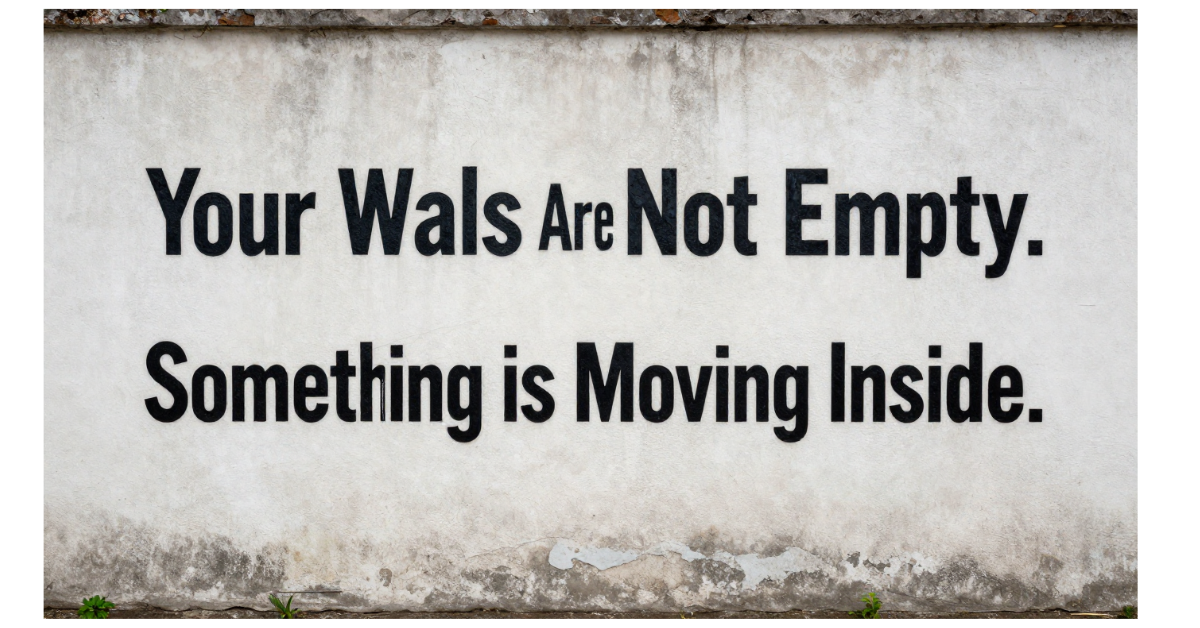
The Mystery of Empty Walls
Walls, often perceived merely as surrounding structures, possess an enigmatic quality that invites curiosity and contemplation. While they seem devoid of life, they can be likened to canvases that hold a multitude of unseen stories, waiting to be discovered. The notion that walls may harbor hidden secrets goes beyond figurative expressions; it encompasses both the physical and metaphorical layers that contribute to their complexity. From the raw materials used in construction to the memories they encapsulate, the very nature of walls invites scrutiny.
Behind these seemingly empty surfaces, there exists a realm of untapped narratives. Each scratch, dent, or discoloration could potentially tell tales of past occupants, events, and transient moments that have taken place within those four boundaries. For instance, one may come across remnants of previous wallpaper, faded photographs, or even graffiti that hint at the lives that have touched those walls. Each artifact serves as a reminder of the passage of time and the myriad of human experiences that once flourished in that space.
This exploration of what lies within the walls goes hand in hand with an inevitable sense of apprehension. It prompts individuals to question what they cannot see and to ponder the possibilities of discovery. The act of peeling back layers can evoke a fear of the unknown, but also leads to a deeper appreciation for the complexities of human existence. Thus, understanding the significance of walls in our lives transforms them from mere structures to repositories of intrigue. It opens a dialogue about the sensitive interplay between our environments and the histories they hold, urging us to look closely at the seemingly unremarkable aspects of our surroundings.
The Intrusions of Nature: Animals in Unexpected Places
Within the confines of our homes, a hidden world frequently flourishes, often unnoticed until it becomes problematic. Wildlife, particularly rodents, birds, and insects, have adapted to human environments, finding refuge in the warm and protected spaces behind our walls. These uninvited guests not only raise concerns regarding hygiene but can also lead to significant structural damage and costly repairs.
Rodents, such as mice and rats, are among the most common intruders. They are adept at finding tiny entry points into the home, often squeezing through cracks, openings, or vents. Once inside, these creatures can create nests and access food supplies, leading to potential health hazards due to the spread of diseases. Their chewing habits can also compromise electrical wiring, posing fire risks.
In addition to rodents, birds can find their way into attics and eaves, drawn by the warmth and relative safety such environments provide. Once inside, they may build nests, leaving behind feathers and droppings that can damage insulation and encourage the growth of mold, further endangering indoor air quality.
Insects, including ants, cockroaches, and termites, often go unnoticed until they establish colonies. Termites, in particular, are notorious for their destructive nature, feeding on wood and compromising the structural integrity of homes.
The intersection of human habitation and wildlife raises complex dynamics regarding coexistence. While many animals contribute positively to the ecosystem, their presence within residential areas can lead to conflicts. Understanding how these animals infiltrate our living spaces is crucial for effective prevention and management of wildlife intrusions, promoting a better balance between nature and home.
The Rise of Hidden Technologies: Smart Home Systems
The integration of smart home systems into our daily lives marks a significant evolution in home technology. These systems are not only enhancing convenience but also adding layers of connectivity and security that operate quietly behind the scenes. As we delve deeper into the unseen activities within our walls, it becomes essential to understand how these technologies are reshaping our living environments.
At the core of modern smart home technology are the electrical systems and devices that facilitate seamless communication. Hidden wiring and network infrastructure allow devices to operate efficiently, enabling functionalities such as automated lighting, temperature control, and security systems. Among these advancements, hidden speakers, smart thermostats, and security cameras exemplify how technological innovations can blend into the home, providing both entertainment and protection without compromising aesthetics.
In addition to convenience, the rise of smart home technology introduces a range of privacy considerations. As these devices collect user data to enhance functionality, concerns over surveillance and data security intensify. Homeowners must navigate the balance between enjoying the benefits of convenience and maintaining their personal privacy. The pervasive presence of these systems raises essential questions about data ownership, consent, and the implications of having technology consistently monitoring daily activities.
Moreover, the operational efficiency offered by smart home systems can lead to significant energy savings, underscoring their role in promoting sustainable living. By optimizing energy use, these technologies not only aid in reducing utility costs but also contribute to environmental conservation. Thus, while smart home systems operate invisibly, they profoundly impact our lives and the ecosystem.
In conclusion, the rise of hidden technologies like smart home systems underscores a transformative era in our homes. As these innovations continue to evolve, their role in enhancing convenience and addressing privacy concerns will remain pivotal in shaping the future of residential living.
The Unseen History: What Lies Beneath the Surface
When delving into the realm of hidden structures within our walls, one cannot ignore the rich history they encapsulate. Within the confines of these walls reside not just the materials of construction, but also remnants of time long past, such as outdated wiring, various insulation materials, and sometimes even artifacts left behind by previous occupants. These elements serve as a testament to the evolving nature of construction methods and lifestyles through the years.
Inspecting what lies beneath the surface can often lead to fascinating discoveries. For instance, old electrical systems may be remnants of a bygone era when safety standards were vastly different. Moreover, insulation materials, especially those predating contemporary regulations, may pose health hazards if not identified and addressed accordingly. This knowledge can be pivotal in preserving the structural integrity of a building while ensuring the safety of its inhabitants.
Furthermore, historical artifacts uncovered during renovations can provide insight into the lives of previous residents, connecting the current occupants with their home’s legacy. These stories might highlight the unique character of a house that distinguishes it from the mundane backdrop of modern living. This historical connection enhances the appreciation of a home, transforming it from mere dwelling to a repository of collective memory.
While contemporary living often emphasizes modern amenities, acknowledging and respecting the unseen history found within walls enriches our understanding of domestic spaces. By recognizing and preserving these remnants, homeowners can foster a dialogue between the past and the present, ensuring that the stories encapsulated within their walls continue to resonate for generations to come.
Address:
264/5, Kamal Soroni Road, Mirpur, Dhaka-1216
Contact
Your Quaries on pest control askings
pestexterminatorbd@gmail.com
+8801642008383 +8801988300003, 01723057746
© 2025. All rights reserved. to Urban Pest Control Pvt. Ltd. this site is powered by Our Own IT Team