
Zoonotic Spillover Events: Predicting the Next Global Pandemic
2/20/20267 min read
Introduction to Zoonotic Spillover
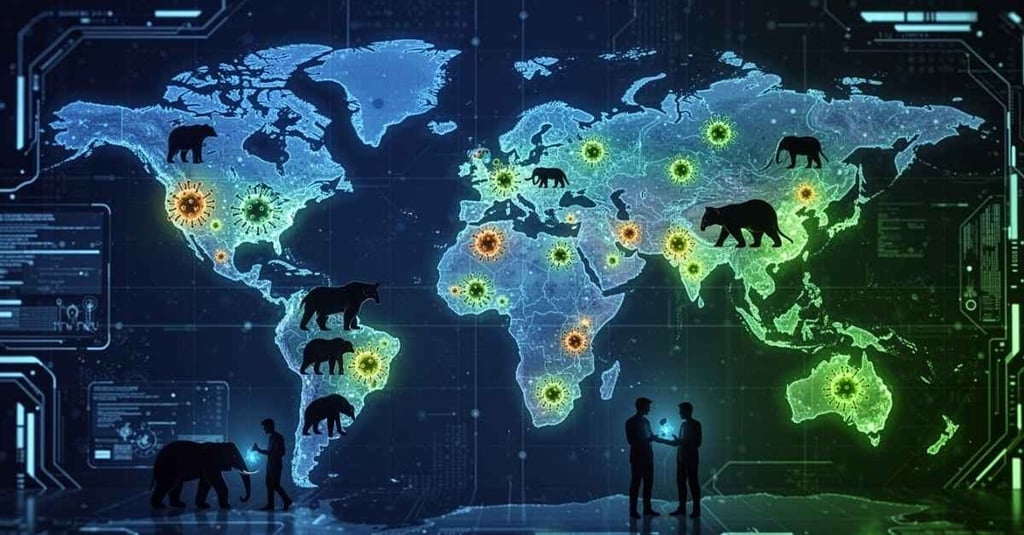
Zoonotic spillover refers to the phenomenon where pathogens that primarily exist in animals jump to humans, leading to the emergence of infectious diseases. This process highlights the intricate relationships between wildlife, ecosystems, and human health. Historical accounts of zoonotic diseases date back millennia, with notable examples including the bubonic plague, which originated from rodents, and influenza viruses associated with avian species. These instances illustrate that humans have long been susceptible to diseases harnessed by animals.
In recent years, the incidence of zoonotic spillover has alarmingly increased, driven by various anthropogenic factors. The expansion of agricultural practices, urbanization, and encroachment on wildlife habitats have intensified the interactions between humans and wildlife. As human populations grow and new geographical areas are exploited for resources, the likelihood of spillover events rises. Furthermore, climate change is altering ecosystems, thus affecting species distributions and elevating the risk of disease transmission.
Modern travel and trade also facilitate the rapid spread of zoonotic diseases, providing pathogens with opportunities to infect a diverse array of human populations across different regions. Notable recent examples of zoonotic diseases include Ebola, Zika virus, and the coronavirus responsible for COVID-19. Each of these instances has underscored the global interconnectedness of health, highlighting how disturbances in one area can have ramifications worldwide.
Understanding zoonotic spillover is crucial for developing effective disease preparedness strategies. By comprehending the mechanisms through which diseases are transmitted from animals to humans, public health officials can better anticipate potential outbreaks, implement preventative measures, and ultimately safeguard both human and animal health. Addressing zoonotic spillover requires a collaborative approach, involving various stakeholders from wildlife management to health services, to effectively monitor and curtail the spread of zoonotic diseases.
Wildlife-Human Interaction: A Growing Concern
The dynamics of wildlife-human interaction have evolved significantly over the past few decades, raising concerns about public health and disease preparedness. As human populations continue to expand, urbanization and habitat destruction have resulted in increasing encounters with wildlife. This interaction can facilitate the spillover of zoonotic diseases, which are pathogens that can be transmitted from animals to humans. Factors contributing to this growing concern encompass several interconnected elements, including urban expansion, alterations in land use, and climate change.
Urban areas are progressively encroaching into previously undisturbed habitats, leading to habitat fragmentation and loss. As humans develop homes, roads, and infrastructure, wildlife is often displaced, resulting in animals venturing into urban environments in search of food and shelter. This phenomenon is illustrated by examples such as raccoons foraging in trash cans and deer wandering into suburban neighborhoods. Such encounters pose heightened risks for transmission of zoonotic diseases, as evidenced in recent outbreaks of diseases like Hantavirus and West Nile Virus, both associated with wildlife interactions.
Moreover, climate change exacerbates these interactions by altering wildlife behaviors and migration patterns. Shifts in temperature and precipitation can drive animal populations into new territories, often overlapping with human settlements. Such changes have been linked to increased instances of zoonotic spillover, such as the emergence of the Ebola virus and the rise of Lyme disease cases in the United States. These incidents emphasize the critical need for proactive surveillance and management strategies that consider the interconnectedness of wildlife, human health, and environmental factors.
The Impact of Environmental Disruption
Environmental disruption, particularly through processes like deforestation and climate change, plays a vital role in the emergence of zoonotic diseases. The changing landscapes and climates influence the habitats of wildlife and, in turn, increase the likelihood of pathogens spilling over into human populations. As forests are fragmented, animals like bats or rodents often migrate into human-dominated areas, heightening opportunities for zoonotic transmission.
Numerous scientific studies have highlighted the link between ecological changes and the surge of infectious diseases. For instance, research published in prominent environmental health journals has revealed that deforestation can facilitate the spread of viruses, such as the Nipah virus, by disrupting natural ecosystems. Furthermore, climate change has been shown to alter the distribution of vectors like mosquitoes, leading to increased incidences of diseases such as malaria and dengue fever.
The emergence of zoonotic diseases is often correlated with changing environmental conditions that influence wildlife behavior and health. An insightful study in "Nature" emphasized how alterations in land use, such as agricultural expansion and urbanization, significantly impact the dynamics of wildlife populations. These disruptions can lead to higher concentrations of pathogens and modified interactions among species, thereby increasing spillover risks.
Moreover, our changing climate affects the seasonal patterns of disease transmission, leading to unpredictable outbreaks. The interdependence of human health and environmental integrity underscores the need for comprehensive strategies that address these issues. Ensuring environmental sustainability is crucial not only for preserving biodiversity but also for preventing the emergence of new zoonotic diseases and enhancing overall public health preparedness.
Predictive Disease Modeling: Anticipating Future Threats
The significance of predictive disease modeling in understanding and anticipating zoonotic spillovers cannot be overstated. Predictive modeling serves as a framework that utilizes historical data, environmental factors, and biological characteristics of pathogens to forecast potential outbreaks of diseases from wildlife to humans. This methodology is instrumental in developing preventive measures and ensuring public health safety.
One fundamental approach in predictive modeling is the incorporation of ecological and epidemiological data to identify patterns that may lead to spillover events. For instance, algorithms can analyze climate change effects on wildlife migration patterns, host-pathogen interactions, and human encroachment into natural habitats. Such detailed analyses allow for the identification of 'hotspots' where spillover events are likely to occur, thereby enabling targeted surveillance and intervention strategies.
Several case studies illustrate the effectiveness of predictive modeling in foreseeing disease outbreaks. A notable example is the modeling efforts during the Ebola outbreak in West Africa. Researchers successfully utilized satellite-based data to assess deforestation rates and animal movement, which contributed to understanding how the virus jumped from bats to humans. Similarly, predictive models have been employed in averting the spread of the H1N1 virus by analyzing human travel patterns and healthcare accessibility, assisting public health officials in deploying resources more efficiently.
By integrating technological advances and diverse data sources, predictive modeling can substantially improve health systems' readiness for zoonotic diseases. Its application can lead to timely interventions and ultimately save lives. Furthermore, as global connectivity increases due to trade and travel, the importance of predictive modeling in fully understanding pathogen behaviors and anticipating threats will only become more crucial for disease preparedness.
Global Preparedness Strategies for Zoonotic Diseases
The threat posed by zoonotic diseases necessitates comprehensive global preparedness strategies that unify efforts from various stakeholders, including governments, health organizations, and scientific research communities. One of the foremost frameworks in place is the One Health approach, emphasizing the interconnectedness of human, animal, and environmental health. This strategy fosters collaboration across sectors to enhance surveillance systems and improve response capacities when zoonotic threats arise.
International collaborations play a crucial role in combating zoonotic diseases. Initiatives such as the World Health Organization's (WHO) Health Emergencies Programme and the Food and Agriculture Organization (FAO) contribute significantly to global health security. These organizations work alongside countries to develop and implement policies that prioritize emergency preparedness plans tailored to potential zoonotic outbreaks. By sharing data and resources, such collaborations enhance the ability to monitor emerging diseases across species and geographic regions.
Additionally, the Framework for Global Health Security, endorsed by the Global Health Security Agenda (GHSA), outlines specific targets aimed at strengthening national and global capacity to prevent, detect, and respond to infectious disease threats. This framework promotes the development of national action plans that reflect the realities of each country's vulnerabilities and strengths, fostering a robust infrastructure to manage any zoonotic diseases that may arise.
Healthcare systems worldwide are increasingly being designed to integrate zoonotic disease surveillance into their regular operations. For instance, the implementation of rapid response teams and vaccination strategies is critical in areas prone to zoonotic spillover events. Moreover, the importance of community engagement and education cannot be overstated in ensuring preparedness and response efforts are effective.
By establishing interconnected mechanisms and policies at both national and international levels, the global community can better position itself to tackle zoonotic diseases and protect public health.
Scientific Data Trends: Learning from the Past
The analysis of scientific data trends over the past few decades provides significant insights into the behavior and emergence of zoonotic diseases. The World Health Organization (WHO) has documented a notable increase in the incidence of zoonotic diseases, emphasizing a correlation between environmental changes, human activities, and disease outbreaks. Such trends are particularly evident in regions where biodiversity is high, and human encroachment into wildlife habitats is prominent.
Reviewing patterns of zoonotic spillover, researchers have identified specific high-risk zones characterized by particular ecological and anthropogenic factors. For instance, a key study published in the journal Nature illustrated how deforestation and urbanization contribute to habitat fragmentation, thereby increasing the likelihood of pathogen spillover from wildlife to humans. In addition to ecological factors, human behaviors such as agricultural practices and wildlife trade also play a crucial role in the emergence of new zoonotic threats.
Geographic analysis reveals that tropical and subtropical regions are particularly vulnerable, exhibiting higher incidence rates of zoonotic diseases. Studies show that climate change has exacerbated the distribution of vector-borne diseases. For example, the spread of the Zika virus and its transmission dynamics are closely linked to climatic conditions that favor the proliferation of Aedes mosquitoes.
Furthermore, retrospective studies of past epidemics highlight that understanding historical patterns can guide current public health strategies. For instance, the 2003 outbreak of SARS drew attention to the role of civets as intermediate hosts, leading to intensified wildlife surveillance as part of disease preparedness initiatives. Such studies not only increase our awareness of how wildlife interacts with human health but also stress the imperative for integrated approaches to prevent future epidemics.
Preventative Frameworks and Community Engagement
The prevention of zoonotic spillover demands a multifaceted approach that integrates public education and community engagement at both local and global levels. A proactive framework can effectively minimize the risk of diseases transmitted from wildlife to humans by fostering awareness and promoting preventative measures within populations that interact closely with potential reservoirs of pathogens.
An essential component of this framework is public education, which serves to inform communities about the risks associated with zoonotic diseases, potential transmission pathways, and appropriate response strategies. Through educational initiatives, community members can be empowered to recognize and report unusual animal behavior or illness, thus enabling early detection and response to potential spillover events. Additionally, utilizing various communication platforms can ensure that information reaches diverse audiences, fostering a better understanding of the shared responsibility in disease prevention.
Community involvement also plays a pivotal role in reinforcing preventative measures. Local stakeholders, including health organizations, agricultural sectors, and conservation groups, must collaborate to design tailored strategies that address specific regional challenges related to zoonotic diseases. Engaging residents in these initiatives can cultivate a sense of ownership and encourage active participation, making it more likely for preventative practices to be implemented effectively. For example, community-based wildlife monitoring programs can be established to track wildlife health and movement patterns, thereby enhancing surveillance efforts.
At the global level, cross-sector collaboration is crucial for harmonizing efforts to prevent zoonotic spillover. International partnerships among governmental agencies, international organizations, and non-profits can facilitate the sharing of data, resources, and best practices. Collaborative frameworks promote collective action and can lead to the development of global standards in surveillance, response protocols, and research efforts dedicated to zoonotic diseases. Ultimately, strengthening the link between wildlife, ecosystems, and human health is indispensable in building a more robust response to prevent zoonotic spillover.
Address:
264/5, Kamal Soroni Road, Mirpur, Dhaka-1216
Contact
Your Quaries on pest control askings
pestexterminatorbd@gmail.com
+8801642008383 +8801988300003, 01723057746
© 2025. All rights reserved. to Urban Pest Control Pvt. Ltd. this site is powered by Our Own IT Team